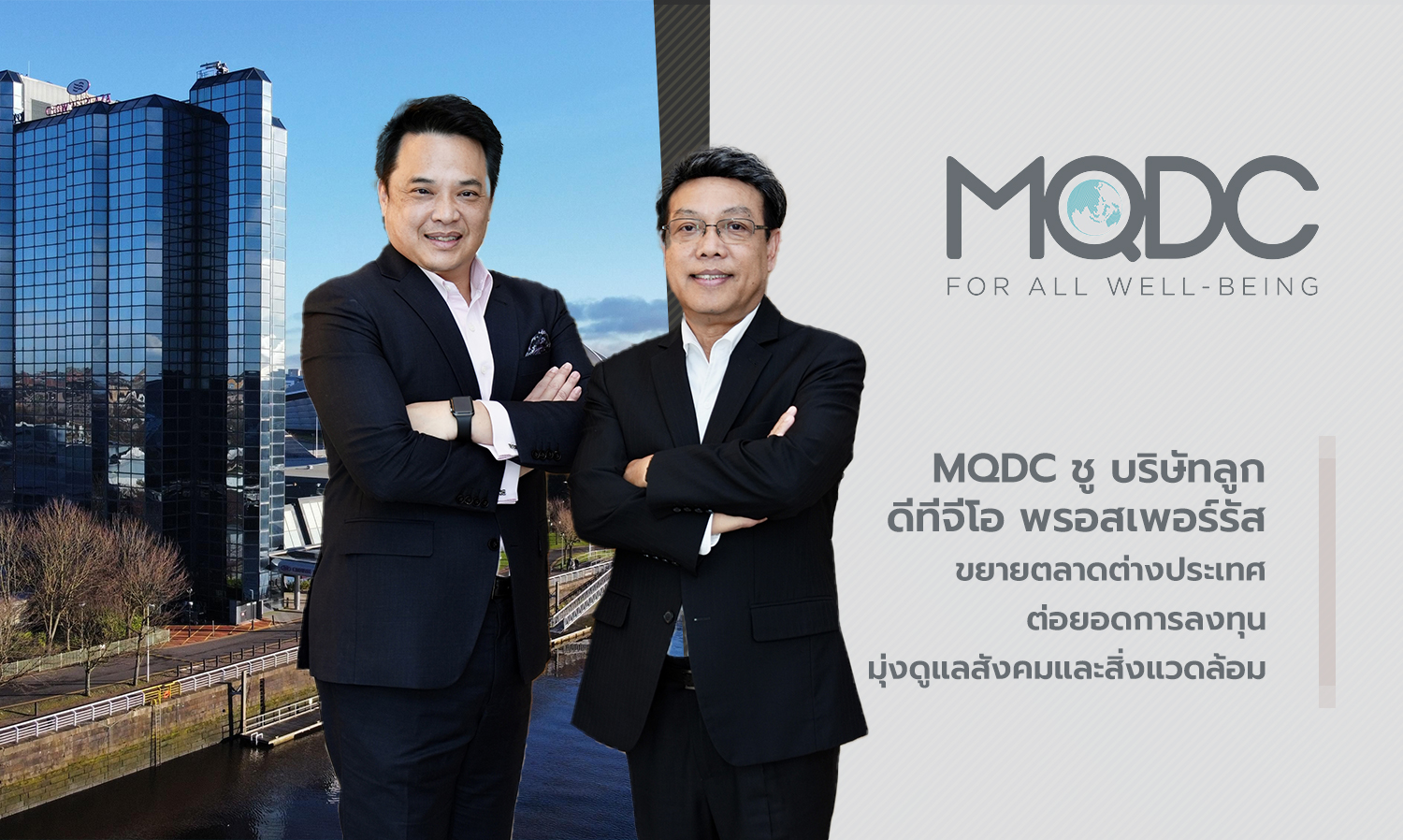
MQDC Highlights Subsidiary DTP's Expansion into International Markets, Continuing Investment Focus on Social and Environmental Care
DTP (DTGO Prosperous Co., Ltd.), a subsidiary of MQDC (Magnolia Quality Development Corporation Limited), which is part of DTGO Corporation Limited, has announced plans for investment and fundraising in quality assets both domestically and internationally. The focus is on four business sectors with growth potential, including investment, asset management, funds, and innovative business investments, through three investment strategies aimed at becoming a global investment company to create added value and continue the vision of sustainable social and environmental care.
Mr. Hansa Susayan, Chairman of DTP, revealed that DTP aims to be an international investment company by investing and raising funds globally, targeting quality assets and real estate that generate consistent income, as well as innovative investments to diversify the investment base, aligning with the mission of DTGO to conduct business that cares for society and the environment sustainably.
DTP was established approximately five years ago as the investment and fundraising arm of DTGO to support the group's goal of sustainable business practices that prioritize social and environmental care. The group has committed to allocating 2% of its revenue for social and environmental initiatives. Currently, DTP has structured its business operations into four groups:
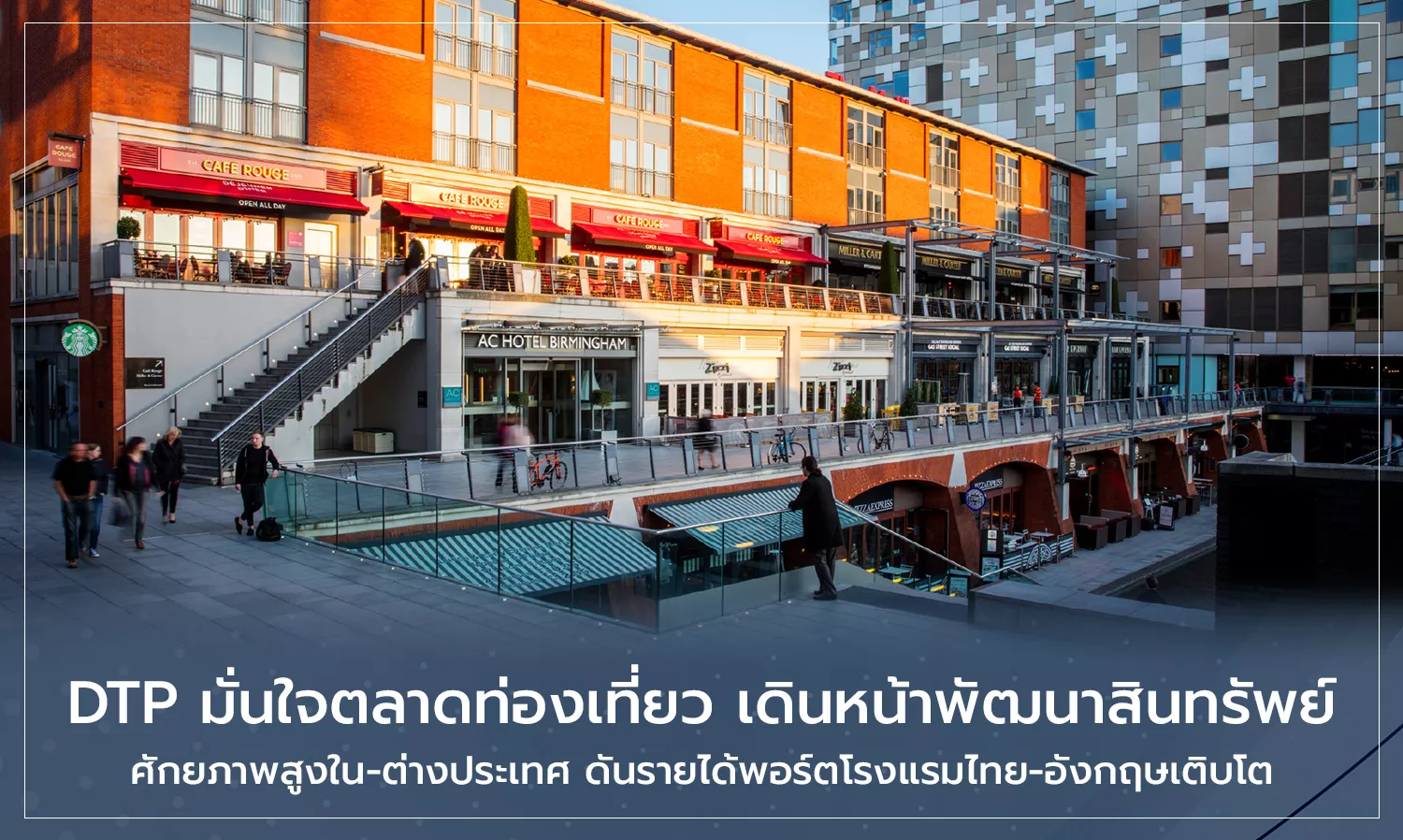
- Global Investment: Investing in quality real estate worldwide. In 2019, DTP acquired 17 hotels in the UK, totaling approximately 3,383 rooms, managed under leading international hotel brands such as Hilton, IHG, and Marriott. The value has grown and attracted investor interest.
- Assets Management: Managing assets to create added value not only for the business but also for employees, communities, and surrounding society. For instance, managing 17 hotels in the UK, DTP maintained its workforce of 1,200 employees without layoffs during the COVID-19 pandemic and developed gas-powered electricity generation to reduce environmental impact and energy costs, resulting in strong performance and profits upon reopening.
- Funds Management: Raising funds in various forms to seek opportunities and generate returns from future investments in Private Equity, with numerous quality assets available globally. Recently, DTP launched the "DTP Hospitality REIT" valued at 4.107 billion baht, focusing on properties like Waldorf Astoria Bangkok and U Khao Yai.
- VC & Innovative Investment: Investing in businesses with potential in technology and innovation to enhance well-being for all. Past investments include REDDS Technology Fund, reverse aging innovations, and MIND AI, representing long-term investments to adapt to changing societal trends.
Mr. Thiti Thongbenjamart, Chairman of DTP, stated that the company prioritizes investments across all four groups equally. In the next two years, DTP will seek investment opportunities in quality real estate worldwide, particularly in regions with growth potential in Europe, America, Asia, and the Middle East, which are attractive for innovation finance investments. Additionally, Thailand has numerous quality real estate projects affected by recent economic conditions.
Regarding DTP's investment strategy, the focus is on three main areas:
1. Business Synergy: Investments that can create added value, enhance business growth, and strengthen the DTGO group.2. Monetization: Investing in assets that can be developed for growth, sold for increased revenue, or used for fundraising through various financial instruments, creating continuous reinvestment opportunities.
3. Risk Diversification: Investments that help spread risk across asset types and locations with potential worldwide, as well as mitigating financial risks.
“We emphasize asset-light business management, reducing asset ownership by seeking partners interested in social and environmental issues to co-invest, allowing us to manage businesses more flexibly. We focus on supporting management and social initiatives wherever we invest, in line with DTGO's mission for sustainable business practices that prioritize ongoing social and environmental care,” Mr. Thiti concluded.