R&I Maintains Thailand's Credit Rating at A-
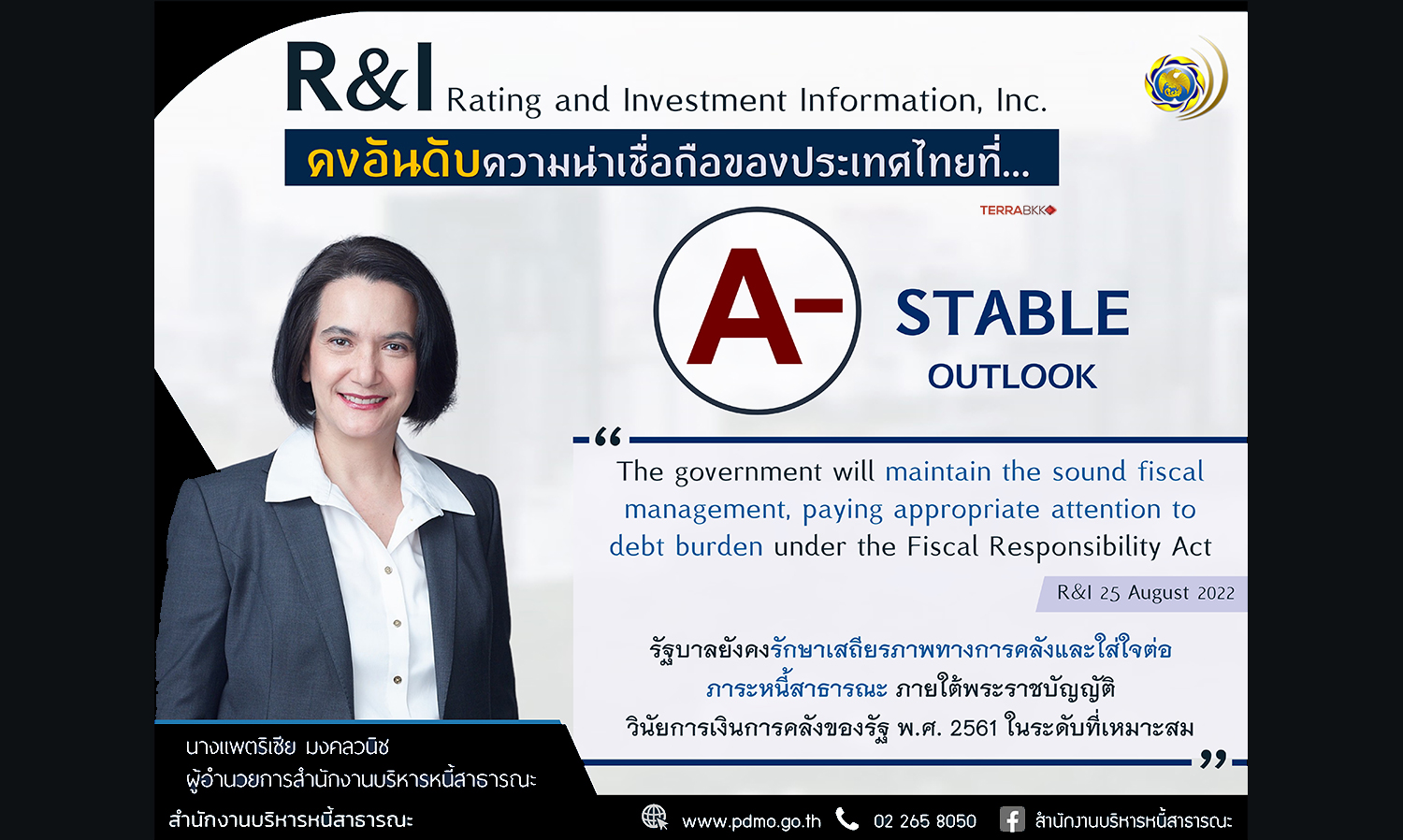
Patricia Mongkolwanich, Director of the Public Debt Management Office announced that on Thursday, August 25, 2022, Rating and Investment Information, Inc. (R&I), a leading credit rating agency in Japan, has maintained Thailand's Sovereign Credit Rating at A- and kept the outlook for Thailand's credit rating at Stable. The details are as follows:
1) Although the COVID-19 pandemic has severely impacted the Thai economy, particularly in tourism, the government's financial and fiscal measures, combined with the fundamental strengths of the Thai economy in manufacturing sectors such as electronics, electrical appliances, and automobiles through foreign direct investment, have led to a recovery in the Thai economy and consumption. The tourism sector is expected to be a key driver for a full economic recovery.
2) The government has implemented a budget deficit to support fiscal measures aimed at addressing and recovering from the impacts of COVID-19 and stimulating the economy. As a result, the public debt-to-GDP ratio increased to approximately 61% by the end of June 2022. However, R&I believes that the government continues to maintain fiscal stability and is mindful of the public debt burden under the Fiscal Discipline Act of 2018 at an appropriate level, due to prudent fiscal management and the ability to raise funds as needed.
3) Regarding external finance, R&I expects that although Thailand will continue to have a current account deficit in 2022 due to reduced tourism revenue, increased transportation costs from oil price impacts, semiconductor shortages, and new lockdowns in the People's Republic of China, the current account balance will return to surplus in 2023 due to the recovery of the tourism sector and declining energy prices. Additionally, the external financial sector remains strong, supported by high foreign reserves and robust external liquidity.
4) Key issues that R&I is closely monitoring include political uncertainties that could impact economic policy implementation, as well as demographic changes leading to a decline in the working-age population. Therefore, the government needs to proactively implement measures to develop high-value-added industries, develop the Eastern Economic Corridor (EEC), and continue investing in infrastructure projects to stimulate the economy and attract foreign investment, which will enhance long-term economic growth potential and help Thailand escape the middle-income trap.