Lumpini Wisdom Identifies 4 Key Factors for Developing Urban Housing
Lumpini Wisdom emphasizes that developing housing to meet the needs of urban living must consider four key factors: a good natural environment, health and well-being, recreational spaces, and accessibility to public transportation. These are essential elements in urban community development.
.jpeg)
Mr. Prabhan Sak Raksaiwan, Managing Director of Lumpini Wisdom and Solutions Co., Ltd., a research and development company under L.P.N. Development Public Company Limited (LPN), discussed the approach to developing housing that addresses urban living needs. He stated that it is crucial to consider four important factors: developing a good natural environment, designing project spaces and residences with health and wellness in mind, increasing recreational areas within residential spaces, and selecting locations that provide easy access to healthcare systems.
Good Natural Environment
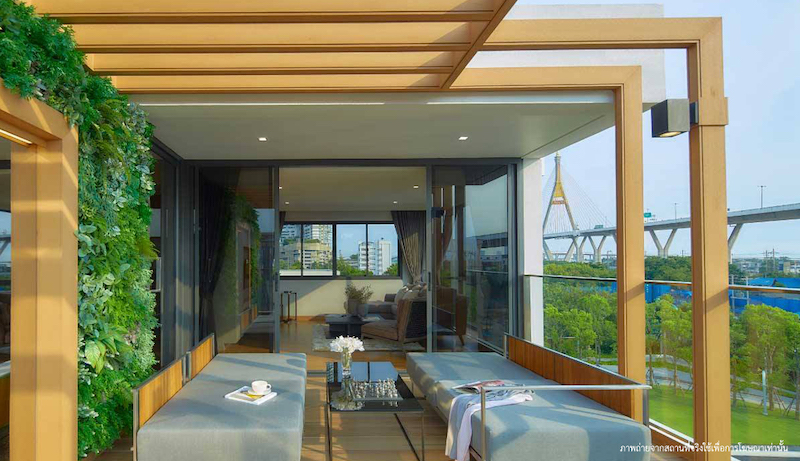
Mr. Prabhan noted that even though we live in cities surrounded by concrete buildings, people often yearn for nature. This aligns with the concept of Biophilia (Edward O. Wilson), which suggests that deep down, human consciousness is connected to and longs for natural elements and ecosystems. This idea is applied in building design, both directly—such as increasing green spaces inside and outside buildings—and indirectly, by incorporating natural elements, lines, and patterns into designs that promote well-being.

At the same time, following the crisis of the COVID-19 pandemic and the global shift towards aging societies, urban residents are increasingly focusing on health. They desire high-standard health services. In terms of housing, there is a growing emphasis on having communal areas that support health care, such as exercise spaces, as well as using construction materials that are non-toxic and health-friendly.
Recreational Spaces
“Recreational spaces” are crucial areas that cater to modern lifestyles, addressing the needs of people who prioritize social media and engage in various activities without leaving home. Therefore, housing has become more than just a place to sleep; it serves as a space for various activities. Current housing designs, whether houses or condominiums, often feature multifunctional areas both inside and in communal spaces that can be adapted to individual hobbies.
Easy Access to Public Transportation
Moreover, choosing housing locations that provide easy access to public transportation is a part of daily life. A good urban residence is one that is conveniently and safely reachable. Urban planning divides areas based on usage, such as residential, commercial, and business zones. Urban residents often spend time commuting to work or shopping centers. However, with the trend of working from home becoming popular, homes have become the center of daily life, with shops and restaurants increasingly distributed within residential areas. Cities are beginning to shift towards more decentralized layouts, often referred to as Mini-CBDs. Consequently, commuting has shifted from relying on mass transit systems to shorter-distance travel. Thus, walkways and bike paths are becoming more in demand, and the use of car-sharing or carpooling is increasing, making these amenities essential in housing development projects.
“All four factors are crucial for developing urban communities to meet the needs of the population both now and in the future,” Mr. Prabhan stated.
For more details, visit >>> http://bit.ly/PR-LPN-2020