Thai Exports Continue to Grow in February for the 12th Consecutive Month
Thai exports continue to grow for the 12th consecutive month
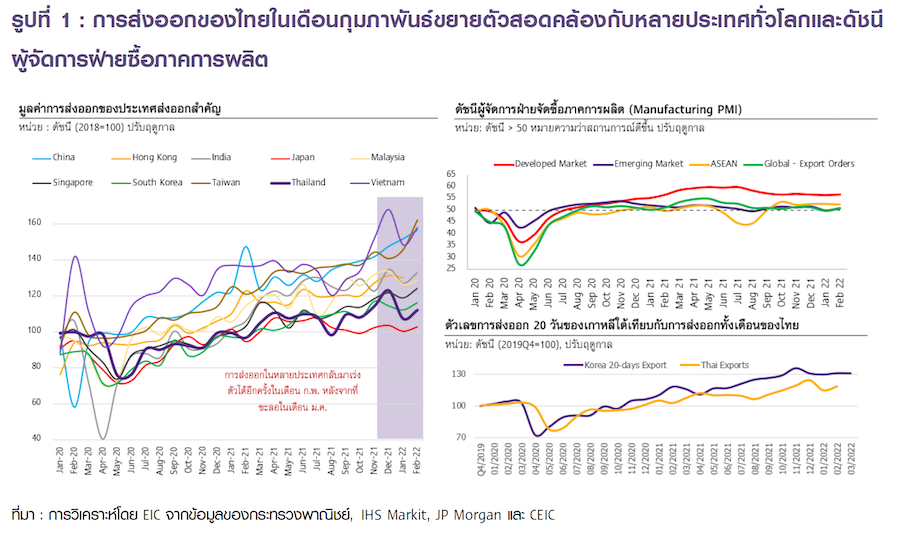
The impact of the war in Ukraine has not affected exports in February, with exports growing by 16.2%, accelerating from 8% in the previous month. When compared to January (seasonally adjusted), exports increased by 4.4% (MOM, SA), aligning with the export values of several major countries worldwide and the global manufacturing activity index, which rebounded in February after slowing down due to the Omicron variant in January.
EIC predicts both Thai exports and imports will grow in 2022 due to price factors
The EIC expects that Thai exports and imports in 2022 will grow more than previously anticipated, but this growth will be driven more by price factors rather than volume. This is different from the situation in 2021, where growth was primarily due to volume as the global economy gradually recovered. This year, the volume of Thai exports is expected to grow at a slower rate due to the effects of the Russia-Ukraine war, which may dampen global demand, especially in the European market. Additionally, there are impacts from rising global commodity prices, particularly for energy and raw materials, as well as supply chain disruptions due to various sanctions against Russia.
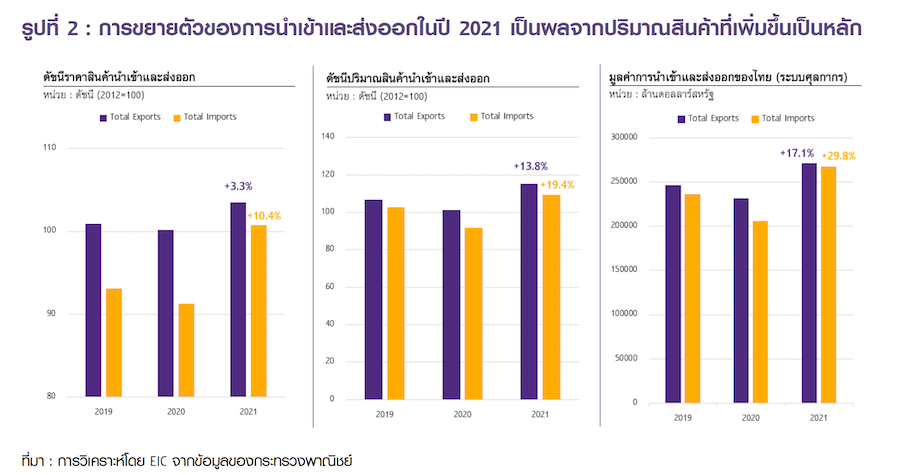
EIC forecasts that Thai exports and imports in 2022 will grow more than previously expected but will be driven more by price factors than volume, differing from the situation in 2021 where growth was primarily volume-driven due to the recovery of the global economy (Figure 2). The growth in export prices this year will be a result of rising prices of goods and commodities globally, especially energy products, due to the impacts of the Russia-Ukraine war, as both Russia and Ukraine are significant exporters of various commodities such as oil, natural gas, industrial metals, and agricultural raw materials. This will likely lead to increased import costs and export prices significantly this year. Although the global economy in 2022 is expected to grow at a slower rate due to the Russia-Ukraine war, which will affect global demand and supply chain disruptions, the rising price factors remain a crucial driver for the growth of Thai exports in the near future.
Moreover, this year there are additional positive factors supporting Thai exports, such as progress in restoring relations between Thailand and Saudi Arabia. Recently, the Saudi Food and Drug Authority has allowed imports of chicken from 11 Thai factories, with Thailand set to begin exporting chicken to Saudi Arabia in early April 2022. Additionally, Thailand has opportunities to penetrate the food, automotive, and consumer goods markets in Saudi Arabia moving forward. Furthermore, the signing of trade agreements between Thailand and various states or cities in India, China, South Korea, and Japan, as well as the gradual reopening of border trade with neighboring ASEAN countries, will also support exports in the second half of the year.
The EIC will revise its export forecasts for Thailand and various economic estimates and publish them in the EIC Outlook at the end of March.
Analysis by: https://www.scbeic.com/th/detail/product/8182
Authors of the analysis
Dr. Poonyawat Sreesing ([email protected])
Senior Economist
Vishal Gulati ([email protected])
Analyst