Fiscal Policy Office (FPO) Weekly Economic Report as of March 11, 2022
Fiscal Policy Office (FPO) Weekly Economic Report as of March 11, 2022 states the following:
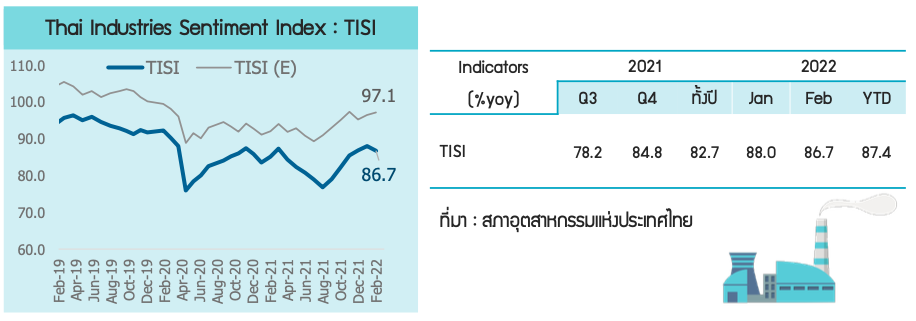
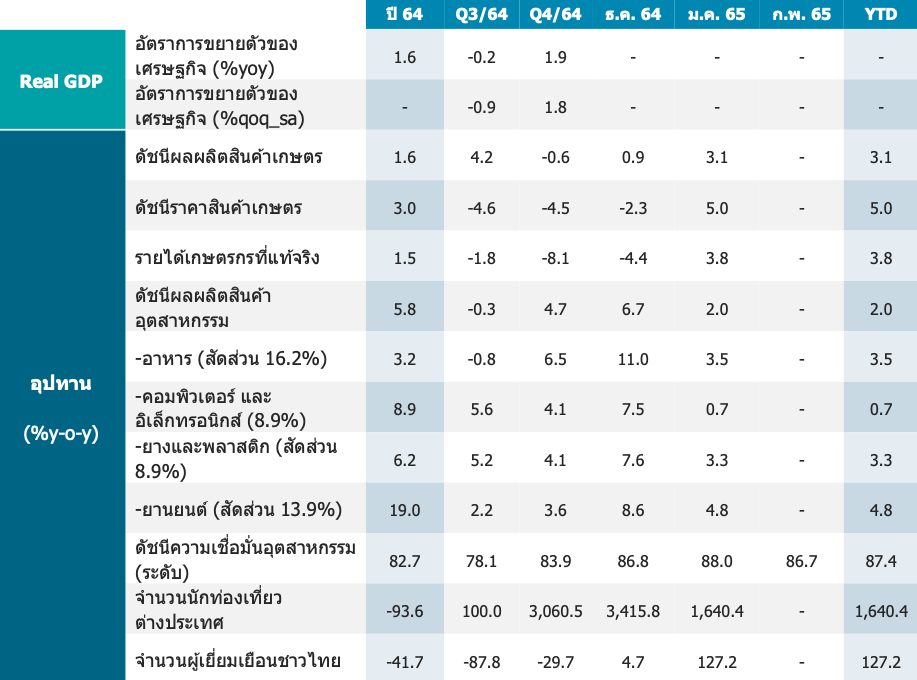
1. The Industrial Confidence Index (TISI) for February 2022 decreased to 86.7 from 88.0 in the previous month.
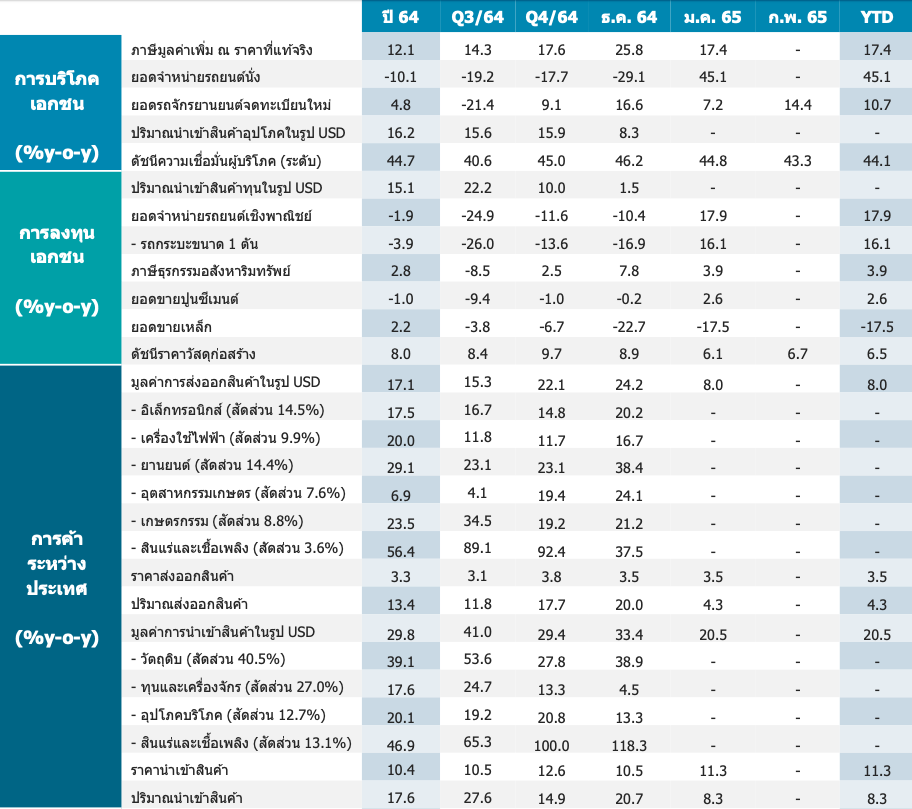
2. The Consumer Confidence Index for February 2022 dropped to 43.3 from 44.8 in the previous month.
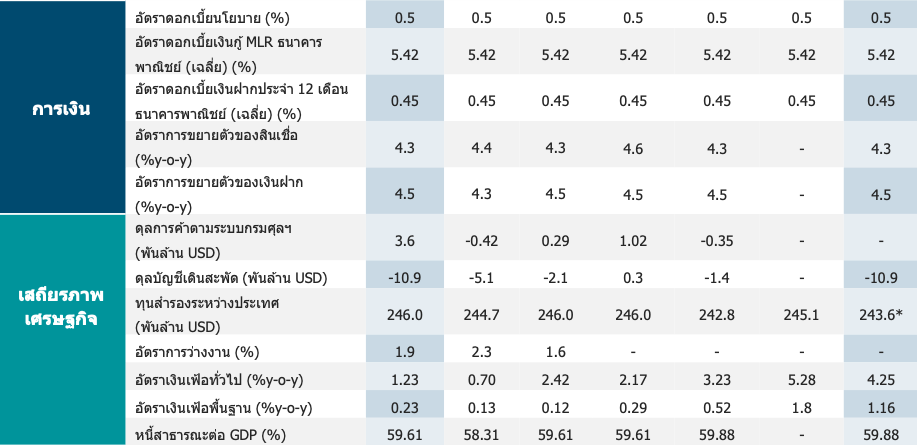
3. The liquidity asset level of commercial banks in January 2022 was 1.91 times the legally required liquidity assets.
Indicators of the Thai Economy
The Industrial Confidence Index (TISI) for February 2022 decreased to 86.7 from 88.0 in the previous month.
The TISI for February 2022 saw its first decline in six months, with all components of the index falling from the previous month, including overall orders, total sales, production volume, operating costs, and performance. Notably, operating costs have been continuously decreasing due to the spread of the Omicron variant of COVID-19, which has seen an increase in infections, coupled with rising production costs due to high energy prices stemming from the conflict between Russia and Ukraine. However, the impact from this outbreak is expected to be less severe than in previous periods, as economic activities can still proceed, and government stimulus measures have helped maintain domestic consumption to some extent. Additionally, the export sector continues to show signs of growth, resulting in a projected confidence index for the next three months rising to 97.1 from 96.4 in the previous month.
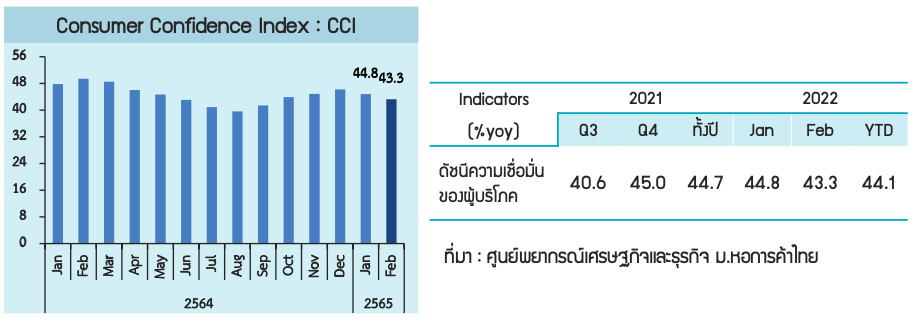
The Consumer Confidence Index for February 2022 decreased to 43.3 from 44.8 in the previous month.
This marks the second consecutive month of decline, driven by consumer concerns regarding the spread of the Omicron variant of COVID-19, as well as significant worries about the war between Russia and Ukraine, which may lead to rising global oil prices and impact production costs. This could slow down the recovery of the global economy and negatively affect Thai exports and the economy in the future.
Financial Sector Indicators
The liquidity asset level of commercial banks in January 2022 was 1.91 times the legally required liquidity assets.
The total liquidity assets of commercial banks in January 2022 stood at 5.4 trillion baht, slightly increasing from the previous month. The Bank of Thailand has adjusted the liquidity asset maintenance requirement from the previous standard of at least 6% of deposits to at least 100% (or 1.0 times) of the estimated net cash outflow in crisis situations (Liquidity Coverage Ratio: LCR) since January 2016.
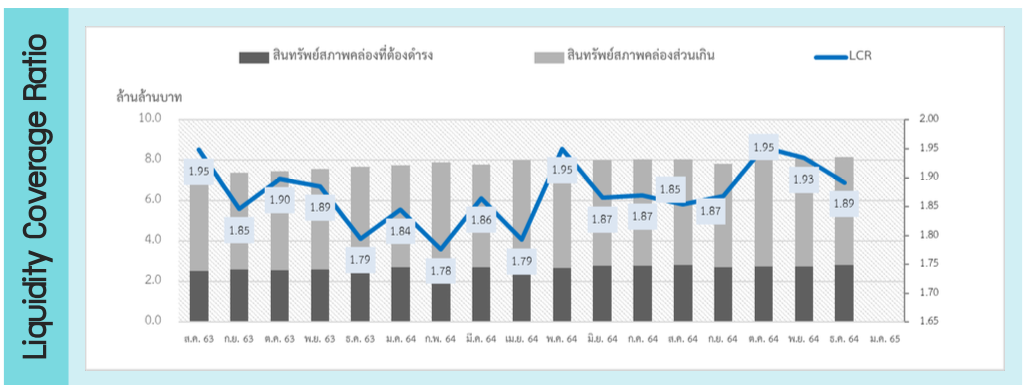
Source: Bank of Thailand
International Economic Indicators
United States
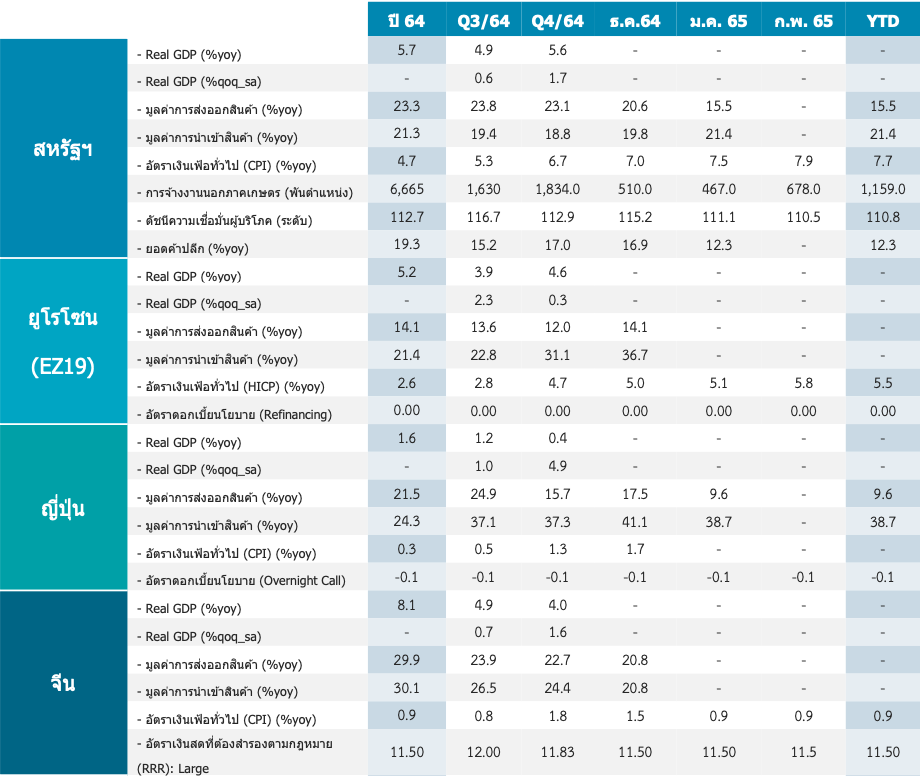
- Export value in January 2022 grew by 15.5% year-on-year, slowing from 20.6% growth in the previous month, marking the lowest level in 10 months.
- Import value in January 2022 grew by 21.4% year-on-year, accelerating from 19.9% growth in the previous month.
- Trade balance in January 2022 recorded a deficit of $102 billion, increasing from a $100 billion deficit in the previous month.
- Inflation rate in February 2022 was 7.9% year-on-year, up from 7.5% in the previous month.
- The number of first-time unemployment claims for the week (February 26 - March 5, 2022) was 227,000, increasing from 216,000 the previous week and exceeding market expectations, consistent with the four-week moving average of unemployment claims, which rose to 231,000.
China
- Export value for January-February 2022 grew by 16.3% year-on-year, slowing from 29.9% growth in December 2021, marking the lowest level since January 2021, as China combines data for two months to eliminate the effects of the long New Year holiday.
- Import value for January-February 2022 grew by 15.5% year-on-year, slowing from 30.1% growth in December 2021, marking the lowest level since January 2021.
- Trade balance for January-February 2022 recorded a surplus of $116 billion, increasing from a $94 billion surplus in December 2021.
- Inflation rate in February 2022 was 0.9% year-on-year, unchanged from the previous month, marking the lowest level since October 2021, with the inflation target for China in 2022 remaining at 3.0% year-on-year.
Eurozone
- The European Central Bank decided to maintain the policy interest rate at 0.0% per annum during the March 2022 meeting, stating that the conflict between Ukraine and Russia would lead to higher energy and commodity prices.
Australia
- The Consumer Confidence Index for March 2022 was at 96.6 points, down from 100.8 points in the previous month due to concerns over the Russia-Ukraine conflict, as well as expectations of rising inflation and interest rates in the future.
Indonesia
- The Consumer Confidence Index for February 2022 was at 113.1 points, down from 119.6 points in the previous month.
- Retail sales in February 2022 grew by 15.2% year-on-year, up from 13.8% growth in the previous month, driven primarily by fuel sales.
Taiwan
- Export value for February 2022 grew by 34.8% year-on-year, accelerating from 16.7% growth in the previous month, marking the highest level in 10 months.
- Import value for February 2022 grew by 35.3% year-on-year, accelerating from 24.9% growth in the previous month.
- Trade balance for February 2022 recorded a surplus of $5.8 billion, increasing from a $4.9 billion surplus in the previous month.
- Inflation rate in February 2022 was 2.4% year-on-year, down from 2.8% in the previous month.
Philippines
- Export value in January 2022 grew by 8.9% year-on-year, accelerating from 7.3% growth in the previous month.
- Import value in January 2022 grew by 27.5% year-on-year, slowing from 39.1% growth in the previous month.
- Trade balance in January 2022 recorded a deficit of $4.7 billion, decreasing from a $5.2 billion deficit in the previous month.
- Industrial production in January 2022 grew by 21.3% year-on-year, down from 22.1% in the previous month, primarily due to refined petroleum products.
Malaysia
- The unemployment rate in January 2022 was 4.2% of the total labor force, unchanged from the previous month.
Money Market and Exchange Rate Indicators
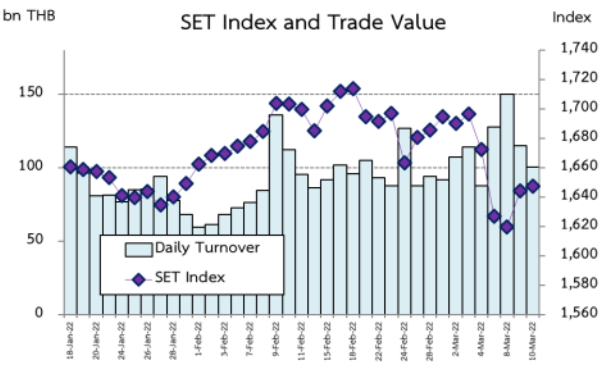
The SET Index decreased from the previous week, in line with other regional stock markets such as Nikkei225 (Japan), HSI (Hong Kong), and CSI300 (Shanghai), among others. On March 10, 2022, the index closed at 1,647.08 with an average trading value between March 7-10, 2022, of 123.24 billion baht per day. Foreign investors, domestic institutional investors, and securities company accounts were net sellers, while domestic retail investors were net buyers. During March 7-10, 2022, foreign investors sold securities net -2,807.93 million baht.
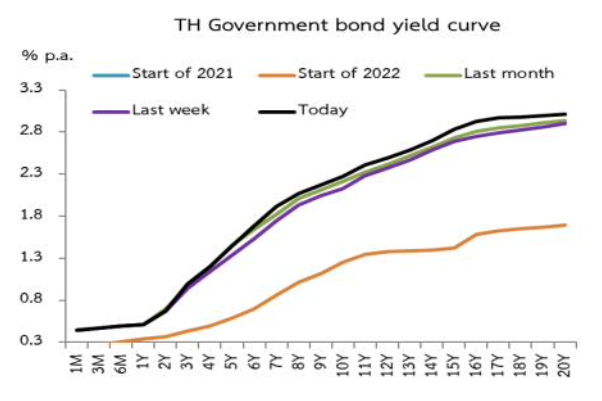
The overall yield on government bonds increased by 1 to 18 basis points as investors participated in the auction of 6 and 25-year government bonds, which saw interest from investors at 1.65 and 1.26 times the auction amount. During March 7-10, 2022, foreign investor capital outflow from the bond market was net -38,678.44 million baht, while from the beginning of the year until March 10, 2022, foreign investor capital inflow into the bond market was net 58,320.72 million baht.
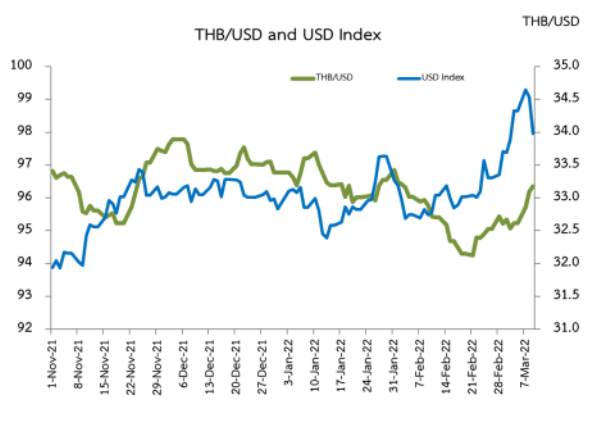
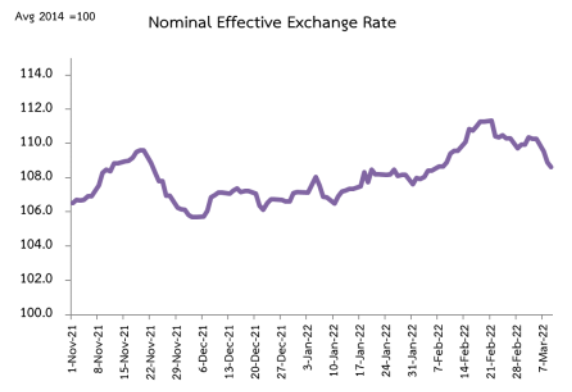
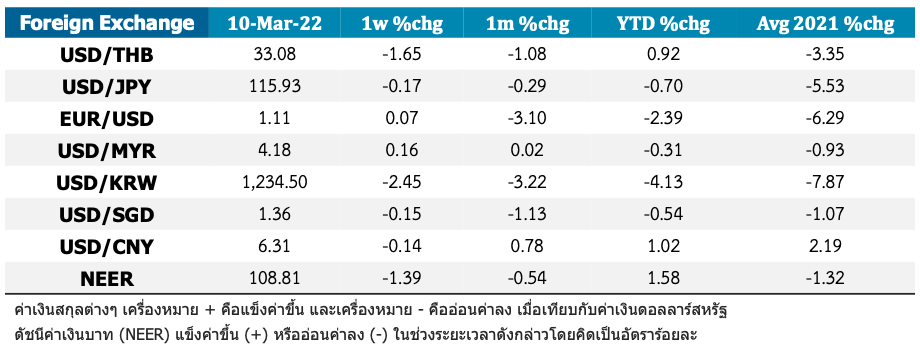
The Thai baht depreciated against the previous week, closing at 33.08 baht per US dollar on March 10, 2022, a depreciation of -1.65% from the previous week, in line with other regional currencies such as the yen, won, Singapore dollar, and yuan, which also depreciated against the US dollar. Meanwhile, the euro and ringgit appreciated against the US dollar compared to the previous week. The baht's depreciation was more pronounced than other regional currencies, resulting in the Nominal Effective Exchange Rate (NEER) index declining by -1.39% from the previous week.
Economic Indicators
Global Economic Indicators
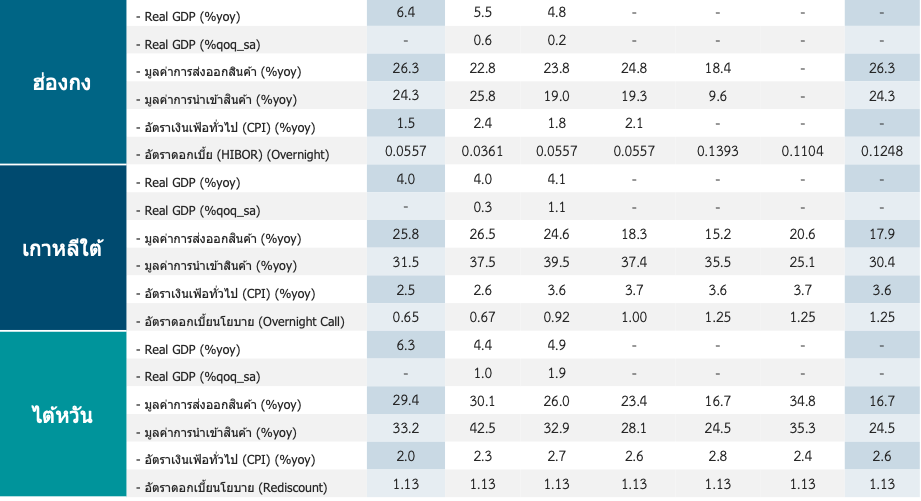
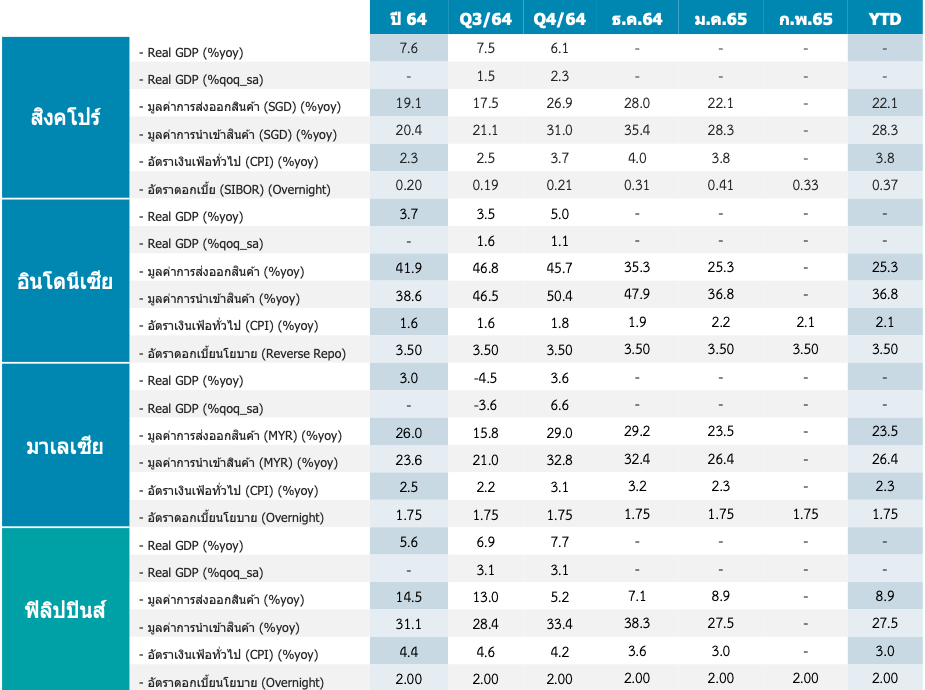
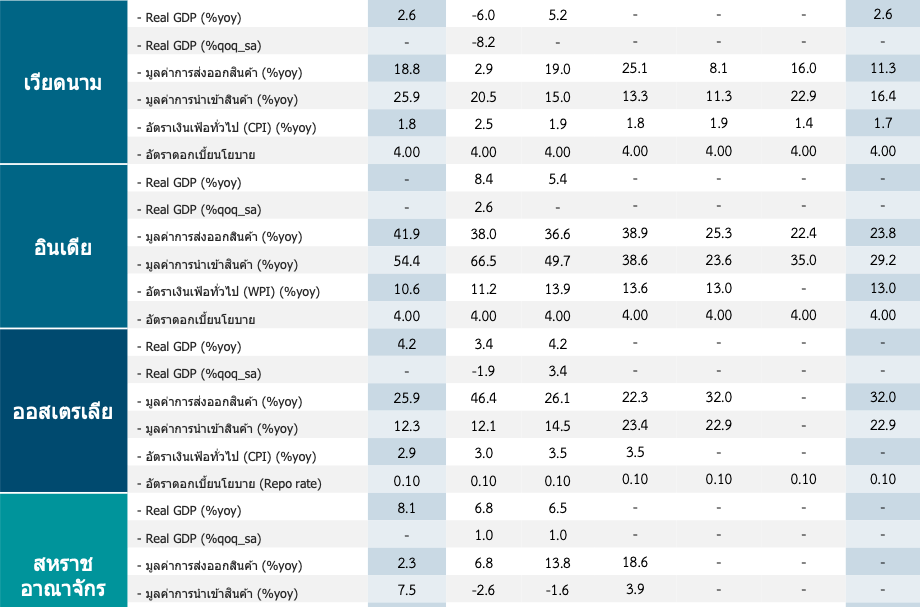
Thank you for the information from the Macroeconomic Policy Bureau, Fiscal Policy Office, Ministry of Finance, 02-273-9020 Ext. 3259