Ministry of Finance's Economic Situation Weekly Report (as of February 4, 2022)
Ministry of Finance's Economic Situation Weekly Report (as of February 4, 2022) is as follows:
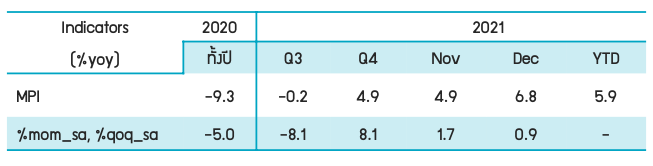
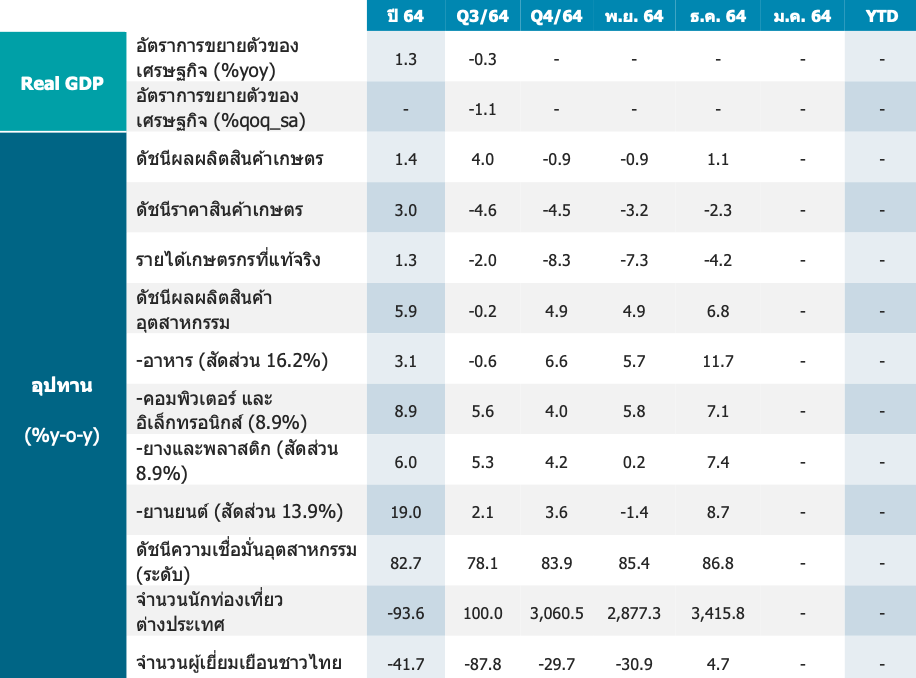
1. The Manufacturing Production Index (MPI) for December 2021 grew by 6.8% year-on-year.
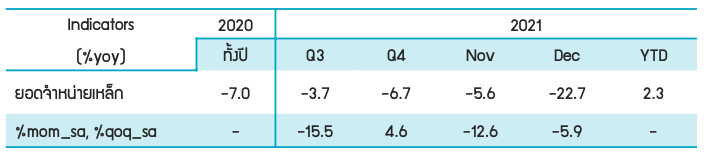
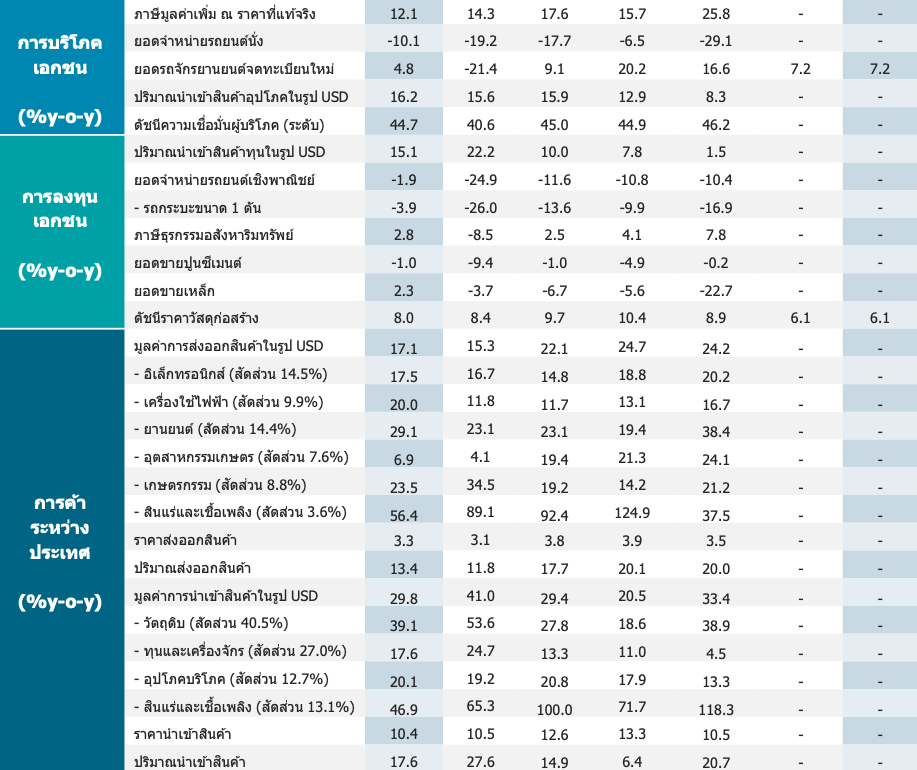
2. Domestic sales of steel and steel products in December 2021 contracted by -22.7% year-on-year.
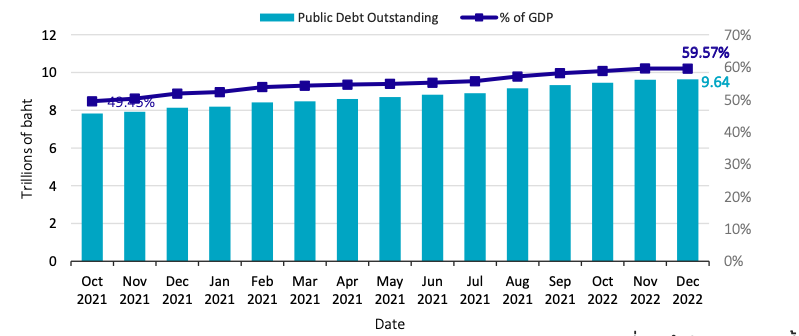
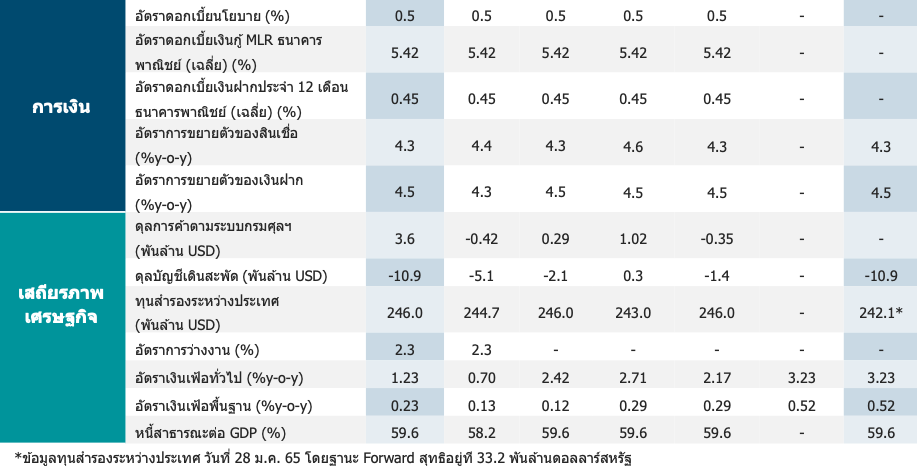
3. Public debt outstanding at the end of December 2021 stood at 59.6% of GDP.
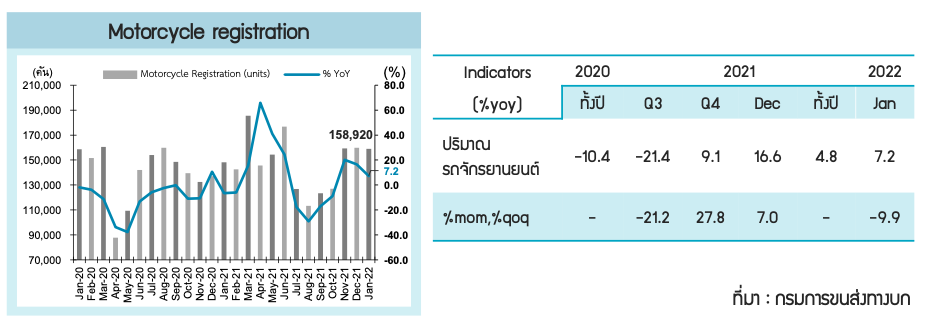
4. The number of newly registered motorcycles in January 2022 grew by 7.2% compared to the same period last year.
5. Inflation in January 2022 grew by 3.23% year-on-year, while core inflation grew by 0.52% year-on-year.
6. The construction material price index in January 2022 grew by 6.1% compared to the same period last year.
7. The current account balance in December 2021 recorded a deficit of -1,378.0 million USD.
8. Loans in financial institutions in December 2021 grew by 4.3% year-on-year, while deposits in financial institutions grew by 4.5% year-on-year.
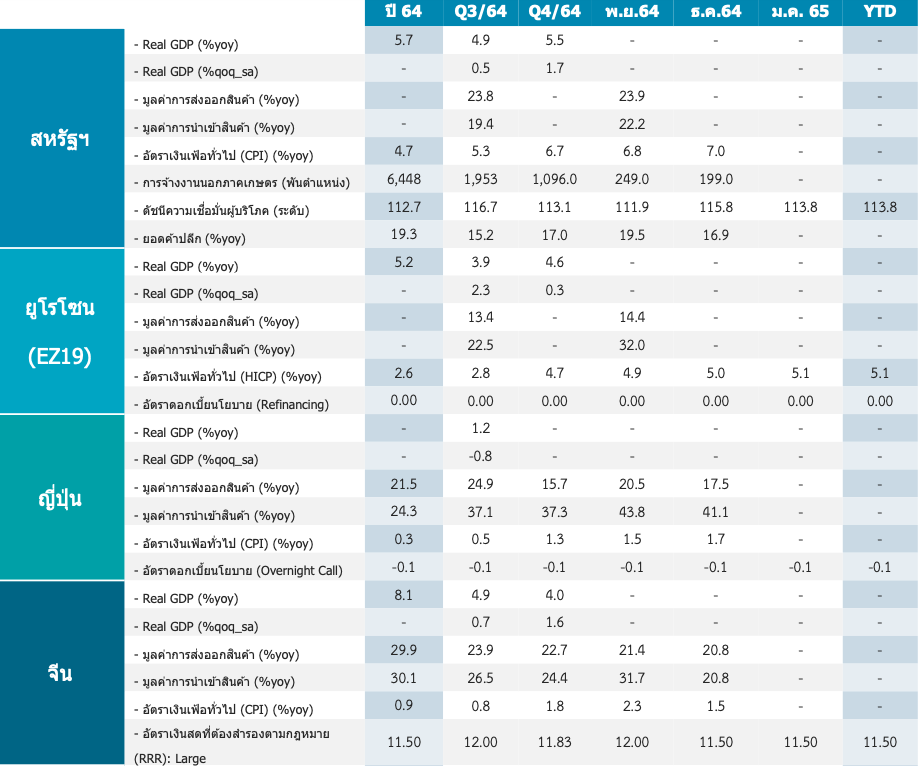
9. Eurozone GDP for Q4 2021 (preliminary) grew by 4.6% year-on-year.
Thai Economic Indicators
The Manufacturing Production Index (MPI) for December 2021 grew by 6.8% year-on-year and by 0.9% compared to the previous month after seasonal adjustments.
The growth of the MPI in December 2021 was driven by significant industrial sectors including automotive, petroleum refining products, sugar, electronic components and circuit boards, and other rubber products, which grew by 9.2%, 7.5%, 31.5%, 14.2%, and 16.1% year-on-year, respectively. In contrast, sectors that contracted included basic steel and iron, tobacco products, motorcycles, household appliances, and cement, which contracted by -11.8%, -42.0%, -11.3%, -8.8%, and -9.6% year-on-year, respectively (*ordered by proportion).
Domestic sales of steel and steel products in December 2021 contracted by -22.7% year-on-year and contracted by -5.9% compared to the previous month after seasonal adjustments.
The contraction in domestic steel sales accelerated from the previous month, primarily due to the decline in steel sales used in the construction sector, particularly rebar and wire, which contracted by -21.7% and -40.7% year-on-year, respectively, compared to -11.0% and -22.4% in the previous month. This was due to the slow recovery in private sector construction from the ongoing Omicron variant outbreak and rising production costs. However, steel sales in the industrial sector continued to grow in line with export activities.
Source: Office of Industrial Economics
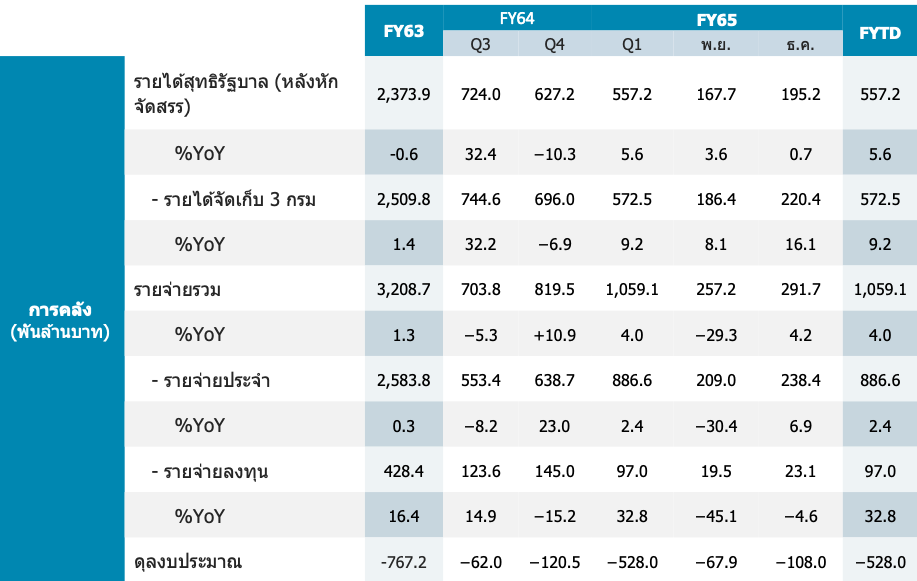
Public debt outstanding at the end of December 2021 totaled 9,644,257 million baht, or 59.57% of GDP, and compared to the previous month, public debt outstanding decreased by 23,951 million baht.
The status of Thailand's public debt is considered stable, as reflected in the ratio of public debt to GDP remaining below the fiscal discipline framework set at no more than 70% of GDP. Most public debt is long-term, with 85.34% of the total public debt being long-term and 98.1% being domestic debt.
Source: Public Debt Management Office
The number of newly registered motorcycles in January 2022 grew by 7.2% compared to the same period last year, but contracted by -9.9% compared to the previous month after seasonal adjustments.
This marks the third consecutive month of growth since November 2021, driven by the easing of COVID-19 control measures in the country, promotional activities in recent times, and continuously improving consumer confidence, leading to a recovery in purchasing power.
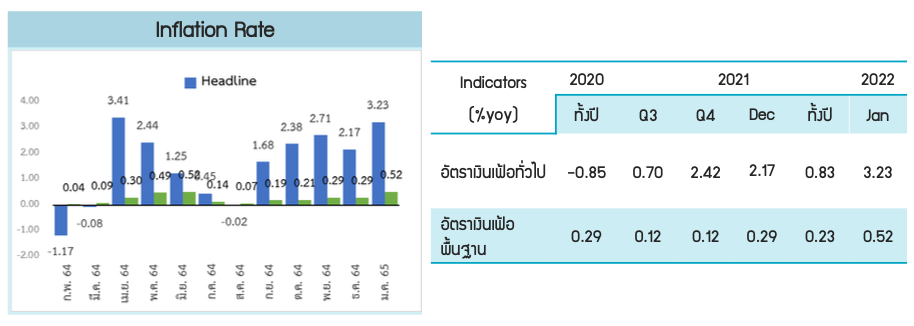
Inflation in January 2022 accelerated to 3.23% year-on-year.
The main reasons include the low base from the previous year, rising energy prices, adjustments in the variable electricity tariff (Ft), and higher retail fuel prices, along with increased prices for food items, particularly pork, vegetable oil, and household and dining food due to rising costs. However, prices for some key items, such as jasmine rice, sticky rice, and fresh vegetables, decreased due to a return to normal production levels and favorable weather conditions for cultivation. For other goods and services, prices remained stable, and when excluding fresh food and energy, core inflation grew by 0.52% year-on-year.
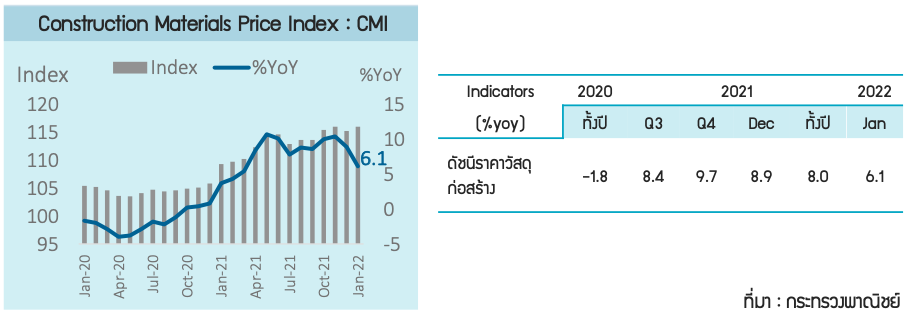
The construction material price index in January 2022 grew by 6.1% compared to the same period last year.
Core inflation has been growing for 16 consecutive months, primarily due to rising raw material costs, resulting in increased prices for all types of construction materials, especially in key categories such as steel, concrete products, cement, and electrical and plumbing equipment (these four categories account for over 64.6% of the overall index), which grew by 10.8%, 5.6%, 4.2%, and 5.8% year-on-year, respectively. In the near future, construction material prices are expected to continue rising but at a slower rate due to high raw material costs from economic stimulus measures in many countries worldwide, along with domestic factors such as labor shortages and increased living costs from rising consumer goods prices, leading to a slowdown in construction spending.
Financial Sector Indicators
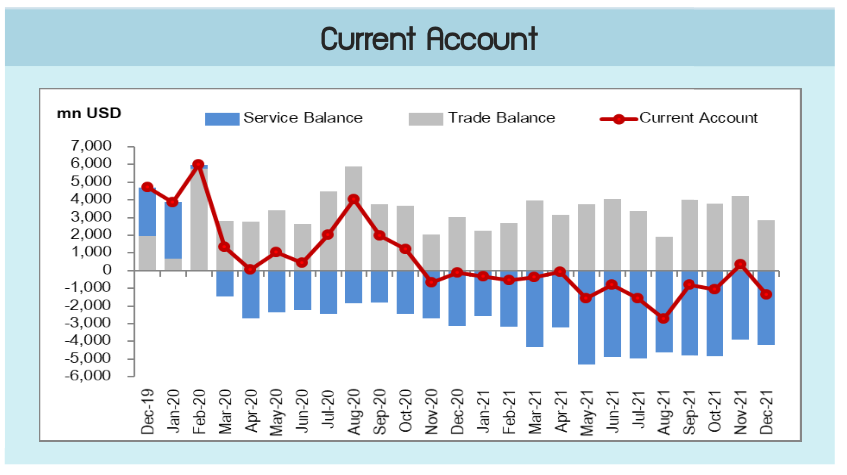
The current account balance in December 2021 recorded a deficit of -1,378.0 million USD, following a surplus in the previous month of 345.8 million USD.
The services, income, and transfer balance recorded a deficit of -4,212.6 million USD, an increase in deficit from the previous month, while the trade balance (BOP system) surplus decreased from the previous month to 2,834.6 million USD, resulting in a total current account deficit of -10,901.9 million USD for 2021.
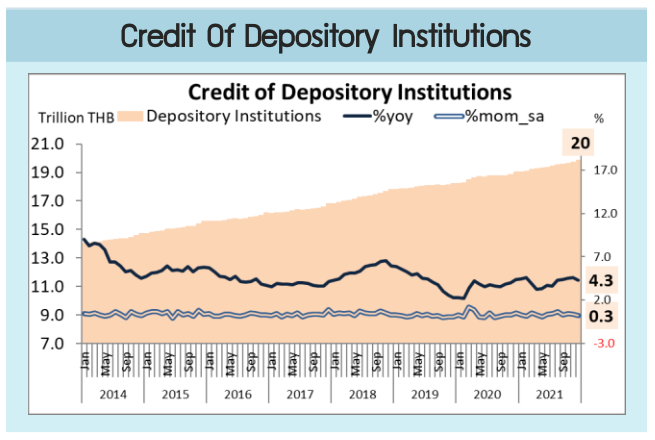
Loans in financial institutions in December 2021 totaled 19.9 trillion baht, representing a growth of 4.3% year-on-year.
This represents a slowdown in growth of 0.3% from the previous month (after seasonal adjustments). When categorized by loan type, business loans and consumer loans grew at a slower rate of 6.0% and 3.4% year-on-year, respectively.
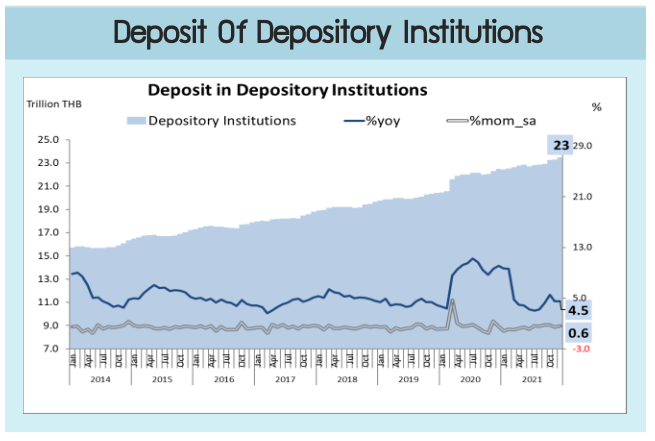
Deposits in financial institutions in December 2021 totaled 23.5 trillion baht, representing a growth of 4.5% year-on-year.
When adjusted for seasonal effects, this represents an acceleration in growth of 0.6% from the previous month. Deposits from commercial banks grew at a slower rate than the previous month at 4.3% year-on-year, while deposits from specialized financial institutions accelerated at 5.1% year-on-year.
Source: Bank of Thailand
International Economic Indicators
United States
- The PMI index for the manufacturing sector in January 2022 was at 57.6 points, down from 58.8 points in the previous month, marking the lowest level since December 2020, as the US manufacturing sector continues to be affected by supply chain disruptions, shortages of intermediate production materials, transportation issues, and labor shortages due to the Omicron outbreak.
- The PMI index for the non-manufacturing sector in January 2022 was at 59.9 points, down from 62.3 points in the previous month, marking the lowest level since March 2021.
- The median home price index in December 2021 grew by 1.1% from the previous month (seasonally adjusted), remaining stable from the previous month, and year-on-year, the index accelerated slightly to 17.5% from the same period last year.
- The number of initial unemployment claims for the week of January 23-29, 2022, was at 238,000, down from 261,000 in the previous week, marking a continuous decline for the second week as labor demand remains strong and the impact of the Omicron outbreak on the labor market begins to decrease.
Japan
- Retail sales in December 2021 grew by 1.4% year-on-year, slowing from 1.9% in the previous month.
- Industrial production in December 2021 grew by 2.7% year-on-year, slowing from 5.1% in the previous month.
- The PMI index for the manufacturing sector in January 2022 was at 55.4 points, up from 54.6 points in the previous month, marking the highest level in several years. However, Japan continues to face pressure from chip shortages in production.
- The PMI index for the services sector in January 2022 was at 47.6 points, down from 52.1 points in the previous month, marking the lowest level since September 2021 due to stricter control measures following an increase in the number of infections.
- The unemployment rate in December 2021 was at 2.7% of the total labor force, down from 2.8% in the previous month.
Hong Kong
- Retail sales in December 2021 grew by 3.4% year-on-year, slowing from 4.3% in the previous month.
Eurozone
- Eurozone GDP for Q4 2021 (preliminary) grew by 4.6% year-on-year, accelerating from 3.9% in the previous quarter, but slightly below market expectations of 4.7% growth.
- The unemployment rate in December 2021 was at 7.0% of the total labor force, down from 7.1% in the previous month, as labor demand improved amid a recovering economy.
- Inflation rate (preliminary) in January 2022 was at 5.1% year-on-year, up from 5.0% in the previous month, driven primarily by rising food and energy prices.
Malaysia
- The PMI index for the manufacturing sector in January 2022 was at 50.5 points, down from 52.8 points in the previous month.
Australia
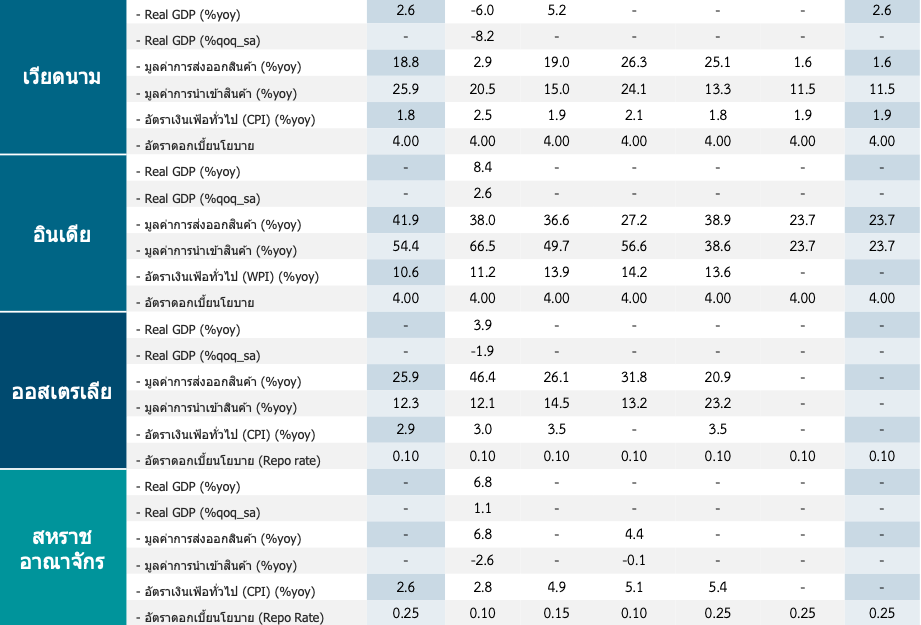
- The Reserve Bank of Australia decided to maintain the policy interest rate at 0.1% during the February 2022 meeting, stating that there would be no interest rate hikes until inflation numbers rise to the target range of 2-3%.
- Export value in December 2021 grew by 20.9% year-on-year, slowing from 31.8% in the previous month.
- Import value in December 2021 grew by 23.2% year-on-year, accelerating from 13.2% in the previous month.
- The trade balance in December 2021 recorded a surplus of 9.0 billion Australian dollars, increasing from a surplus of 6.7 billion Australian dollars in the previous month.
Singapore
- The business confidence index for Q4 2021 was at 8.0 points, down from 16.0 points in the previous month.
Indonesia
- The PMI index for the manufacturing sector in January 2022 was at 53.7 points, slightly up from 53.5 points in the previous month.
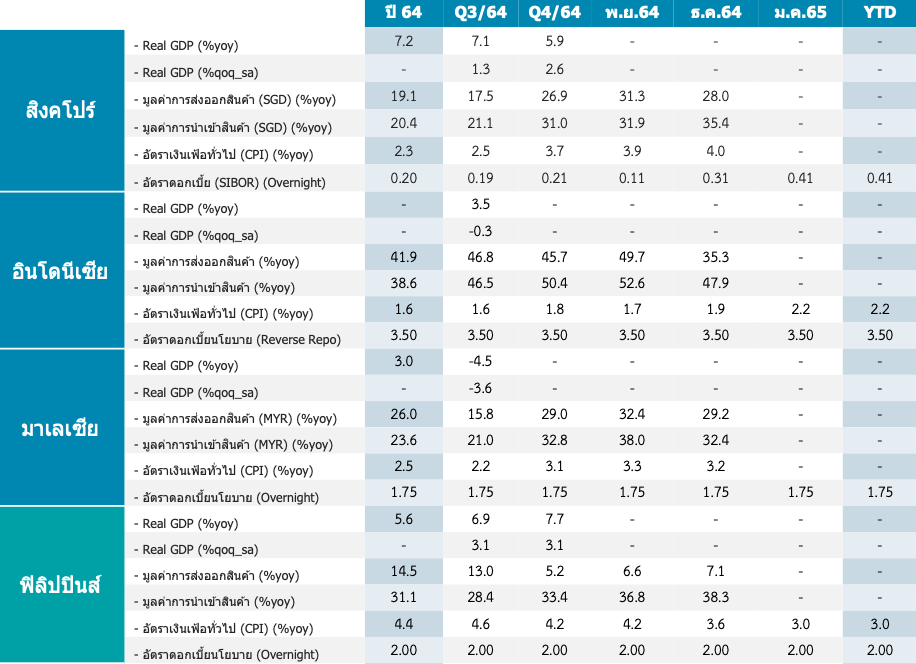
- Inflation in January 2022 was at 2.2% year-on-year, up from 1.9% in the previous month, primarily due to rising food, beverage, and tobacco prices.
India
- The PMI index for the manufacturing sector in January 2022 was at 54.0 points, down from 55.5 points in the previous month, marking the lowest level since October 2021.
- The PMI index for the services sector in January 2022 was at 51.5 points, down from 55.5 points in the previous month, marking the lowest level since August 2021.
Philippines
- Inflation in January 2022 was at 3.0% year-on-year, slowing from 3.6% in the previous month.
South Korea
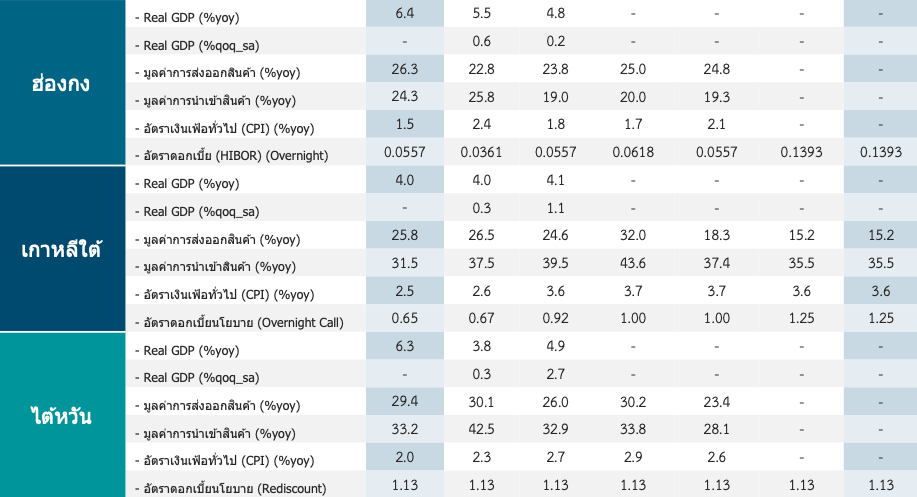
- Inflation in January 2022 was at 3.6% year-on-year, down from 3.7% in the previous month.
- The PMI index for the manufacturing sector in January 2022 was at 52.8 points, up from 51.9 points in the previous month, marking the fourth consecutive month of increase and the highest level since August 2021.
- Export value in January 2022 grew by 15.2% year-on-year, slowing from 18.3% in the previous month, marking the lowest level since March 2021 due to declining foreign demand from the Omicron outbreak, while supply chain disruptions persist.
- Import value in January 2022 grew by 35.5% year-on-year, slowing from 37.1% in the previous month.
- The trade balance in January 2022 recorded a deficit of -4.89 billion USD, increasing from a deficit of -0.45 billion USD in the previous month.
United Kingdom
- The PMI index for the manufacturing sector in January 2022 was at 57.3 points, down from 57.9 points in December 2021. However, the index remains above 50.0 points, indicating continued expansion in the manufacturing sector.
- The PMI index for the services sector in January 2022 was at 54.1 points, up from 53.6 points in December 2021, as the Omicron variant outbreak begins to ease and demand starts to recover.
- The Bank of England decided to raise the policy interest rate to 0.50% from 0.25% during the February 2022 meeting, aiming to curb rising inflation.
Money Market Indicators and Exchange Rates
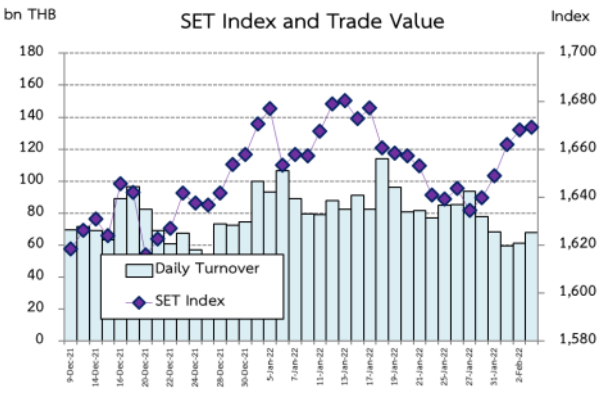
The SET index increased from the previous week, in line with other regional stock markets that declined from the previous week, such as Nikkei225 (Japan), STI (Singapore), and DJIA (USA). On February 3, 2022, the index closed at 1,669.050 points, with an average trading value between January 31 and February 3, 2022, at 64,285.50 million baht per day. Foreign investors, domestic institutional investors, and brokerage accounts were net buyers, while general domestic investors were net sellers. Between January 31 and February 3, 2022, foreign investors net purchased securities worth 716.30 million baht.
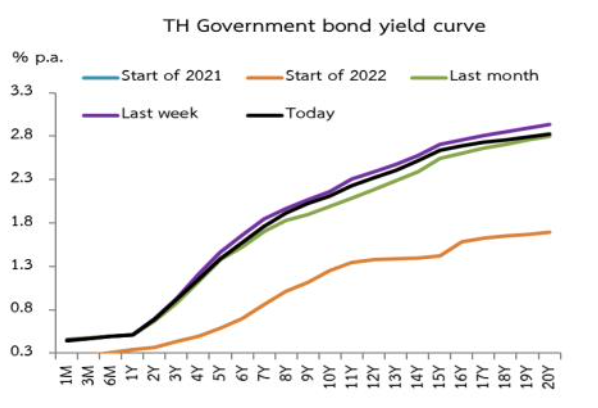
The overall yield on government bonds decreased by -1 to -11 bps. This week, investors participated in the auction of 10.6-year government bonds, which attracted 1.79 times the auction amount. Between January 31 and February 3, 2022, foreign investor capital flowed out of the bond market, netting -7,361.50 million baht. From the beginning of the year until February 3, 2022, foreign investor capital flowed into the bond market, netting 68,490.71 million baht.
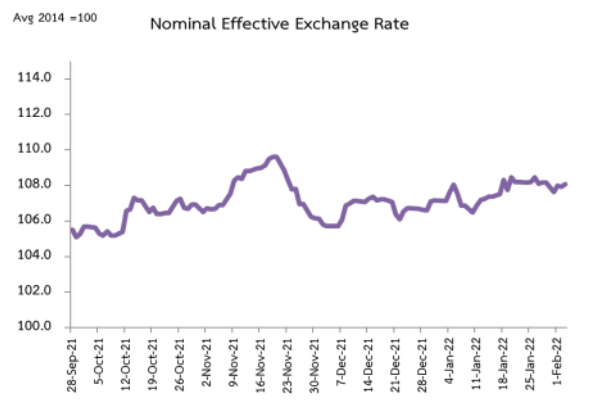
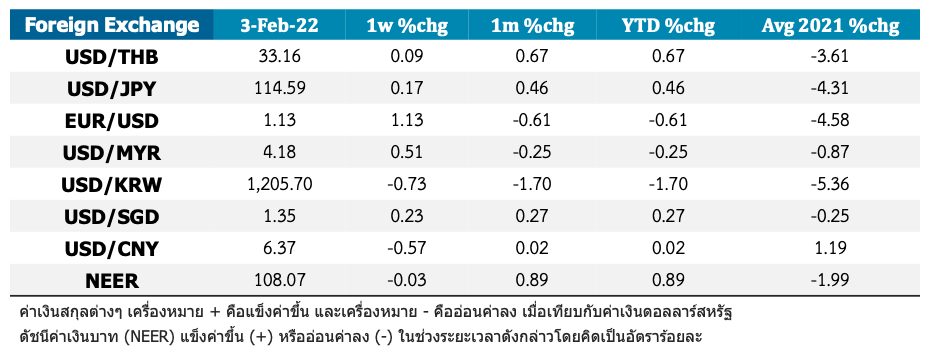
The Thai baht appreciated from the previous week, closing at 33.16 baht per USD on February 3, 2022, appreciating by 0.09% from the previous week, in line with other regional currencies such as the yen, euro, ringgit, and Singapore dollar, which also appreciated against the USD. Meanwhile, the won and yuan depreciated against the USD from the previous week. The Thai baht's appreciation was less than that of other regional currencies, resulting in the nominal effective exchange rate (NEER) index depreciating by -0.03% from the previous week.
Economic Indicators
Global Economic Indicators
Thank you for the information from the Macroeconomic Policy Bureau, Fiscal Policy Office, Ministry of Finance 02-273-9020 Ext. 3259