Fiscal Policy Office (FPO) Weekly Economic Report as of January 28, 2022
Fiscal Policy Office (FPO) Weekly Economic Report as of January 28, 2022 is as follows:
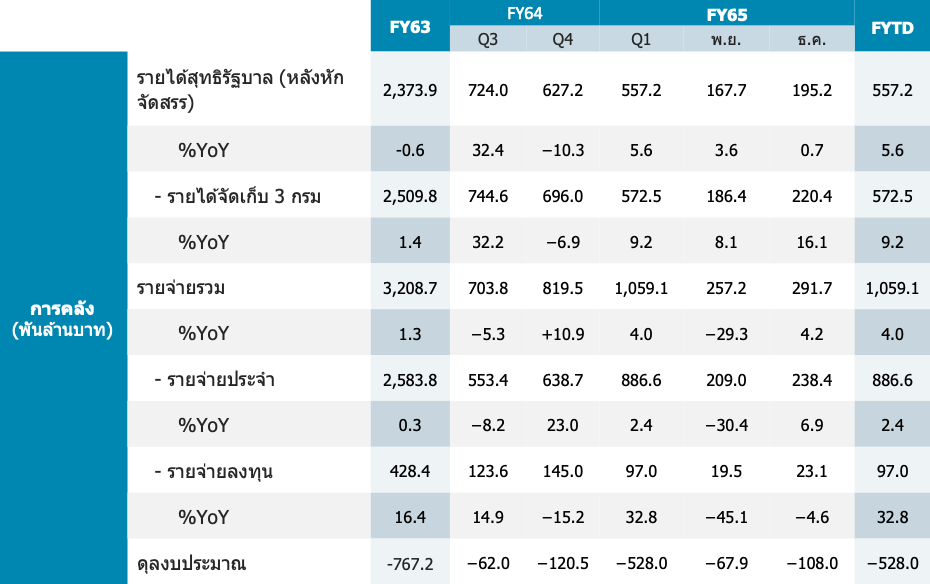
1. Total budget disbursement in December of fiscal year 2022 grew by 4.2% year-on-year.
2. The government collected net revenue (after allocations to local governments) in December of fiscal year 2022, which grew by 0.7% year-on-year.
3. The government's cash flow position in December of fiscal year 2022 showed a deficit of -107,965 million baht.
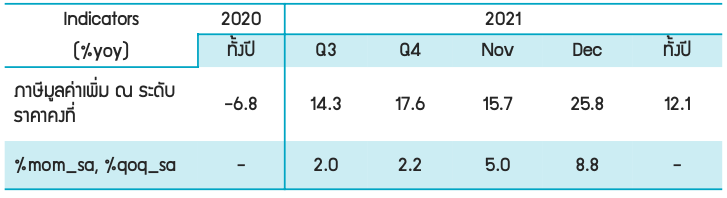
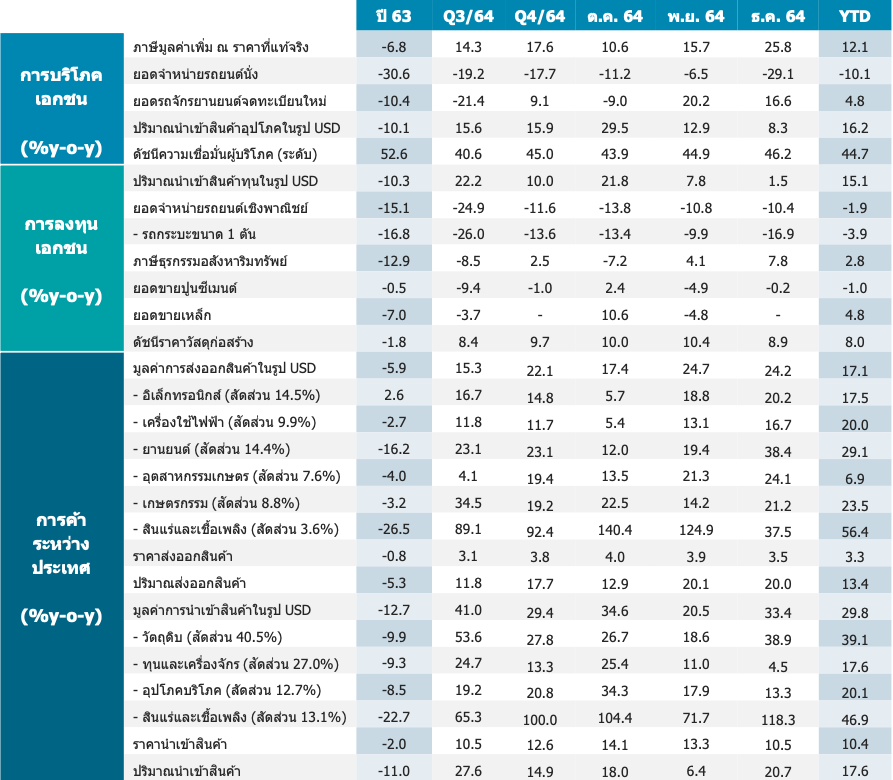
4. The value-added tax collected by the government at constant prices in December 2021 grew by 25.8% year-on-year.
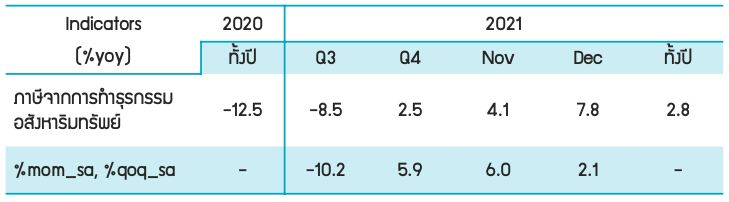
5. Tax from real estate transactions in December 2021 grew by 7.8% year-on-year.
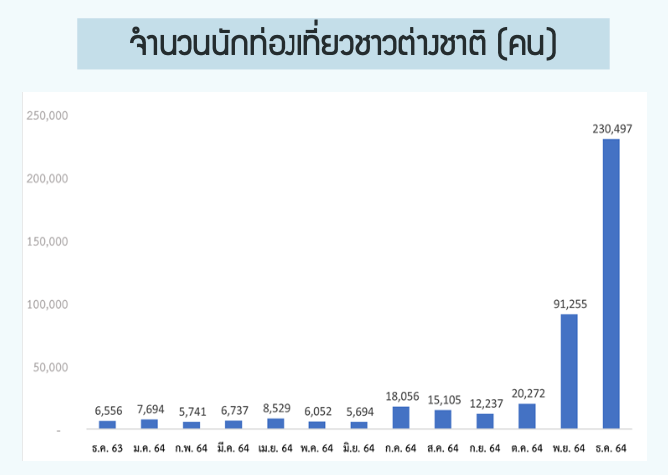
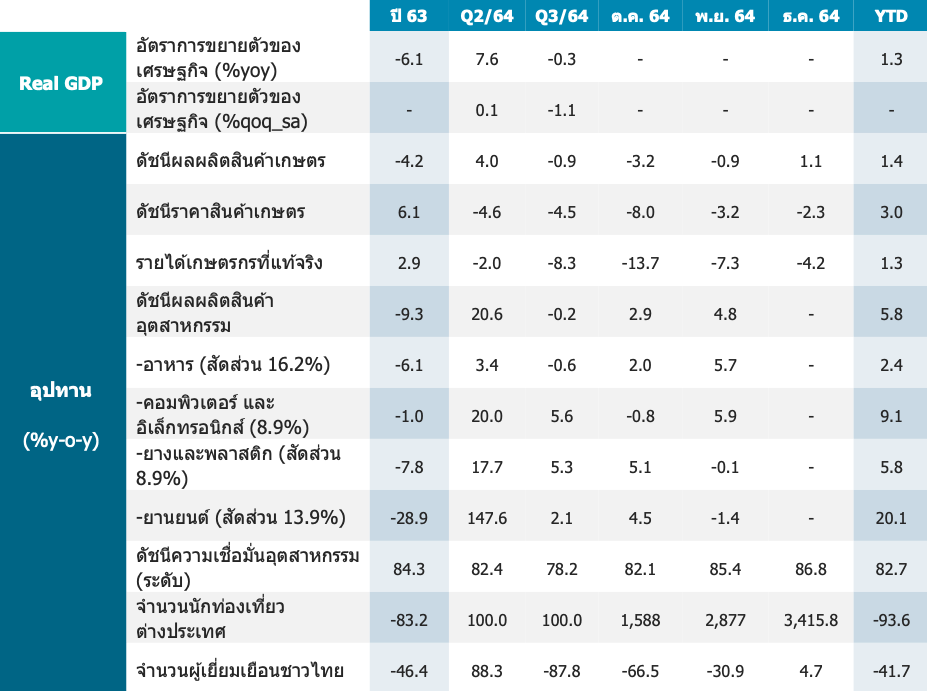
6. The number of foreign tourists entering Thailand in December 2021 grew by 3,415.8% year-on-year.
7. The sales volume of passenger cars in December 2021 contracted by -29.1% compared to the same period last year.
8. The sales volume of commercial vehicles in December 2021 contracted by -10.4% compared to the same period last year.
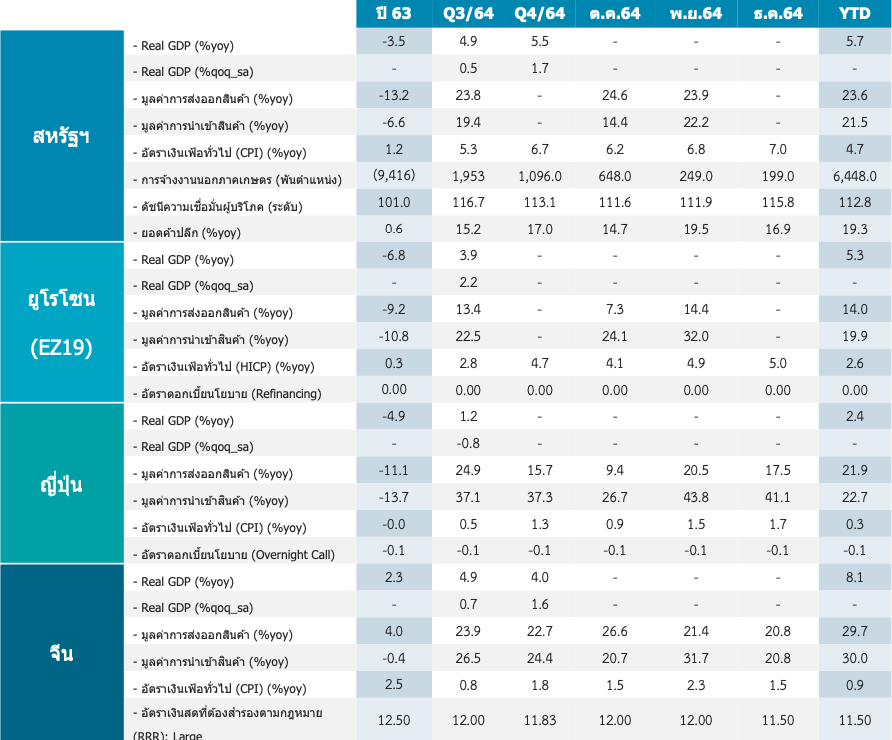
9. The GDP of the United States in the fourth quarter of 2021 grew by 5.5% year-on-year.
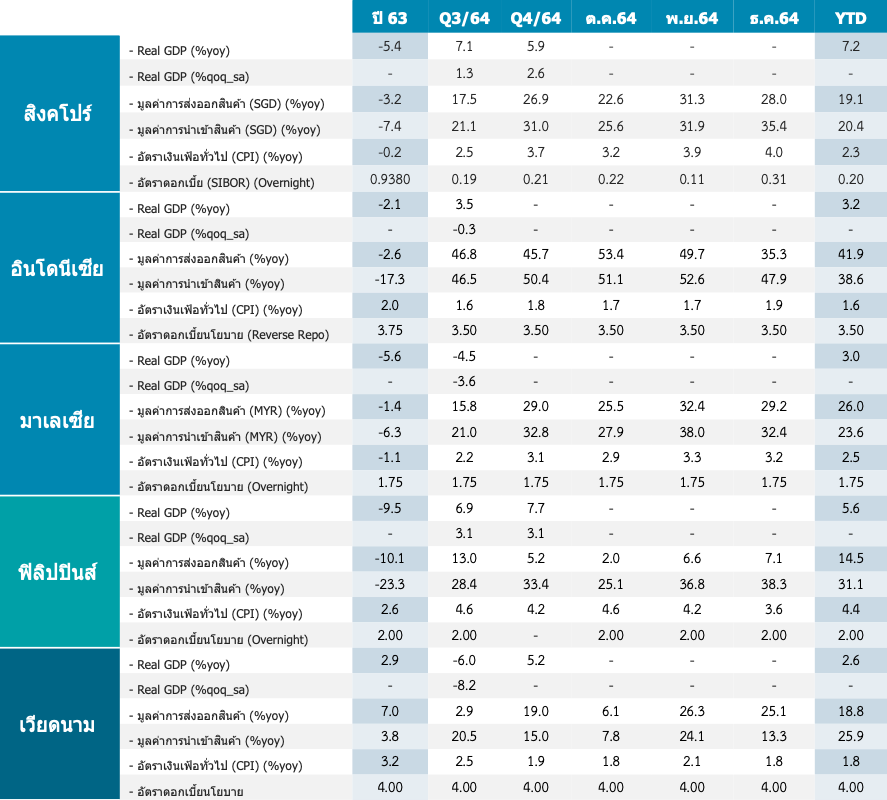
10. The GDP of the Philippines in the fourth quarter of 2021 grew by 7.7% year-on-year.
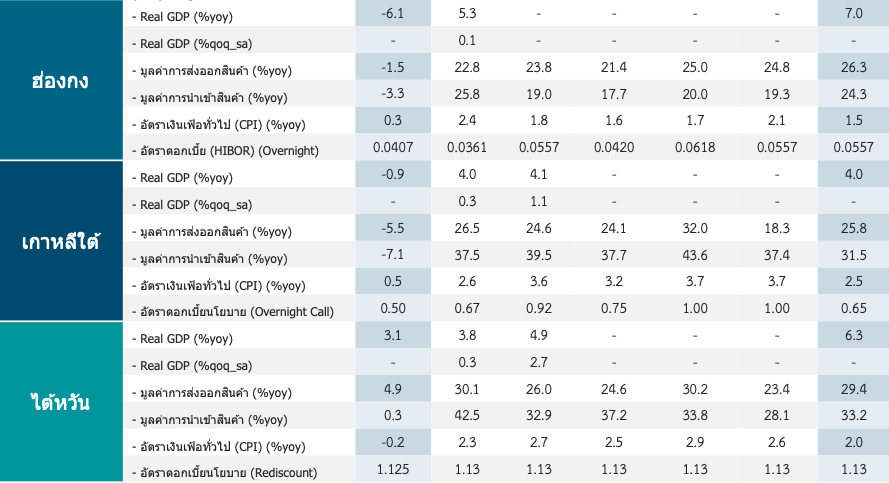
11. The GDP of South Korea in the fourth quarter of 2021 grew by 4.1% year-on-year.
12. The GDP of Taiwan in the fourth quarter of 2021 grew by 4.9% year-on-year.
Thai Economic Indicators
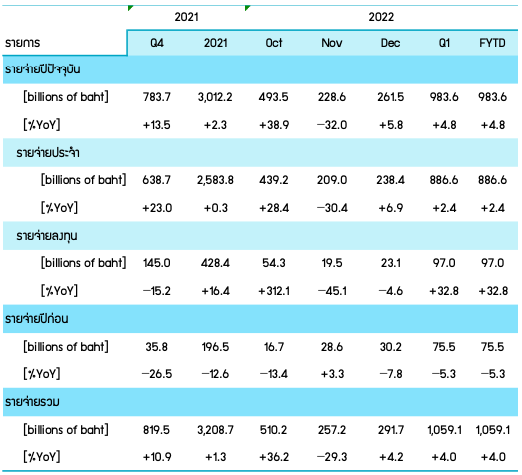
Total budget disbursement in December of fiscal year 2022 amounted to 291,744 million baht, growing by 4.2% year-on-year, resulting in a first-quarter disbursement of 1,059,145 million baht, growing by 4.0%, representing a cumulative disbursement rate of 31.7%.
(1) Current year expenditures amounted to 261,524 million baht, growing by 5.8% year-on-year, with a cumulative disbursement rate of 4.8%. This is divided into (1.1) regular expenditures of 238,407 million baht, growing by 6.9% year-on-year, with a cumulative disbursement rate of 2.4%, and (1.2) investment expenditures of 23,117 million baht, contracting by -4.6% year-on-year, with a cumulative disbursement rate of 32.8%.
(2) Previous year expenditures amounted to 30,221 million baht, contracting by -7.8% year-on-year, with a cumulative disbursement rate of -5.3% year-on-year.
Source: Revenue Department, calculated by FPO.
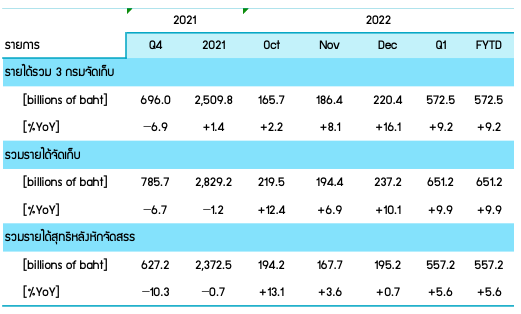
The government collected net revenue (after allocations to local governments) in December of fiscal year 2022, amounting to 195,243 million baht, growing by 0.7% year-on-year, resulting in a first-quarter collection of 557,174 million baht, growing by 5.6% year-on-year. Revenue growth was driven by value-added tax, which grew by 28.7% year-on-year, corporate income tax, which grew by 25.8% year-on-year, and personal income tax, which grew by 13.9% year-on-year, due to collections exceeding estimates.
Source: Revenue Department, calculated by FPO.
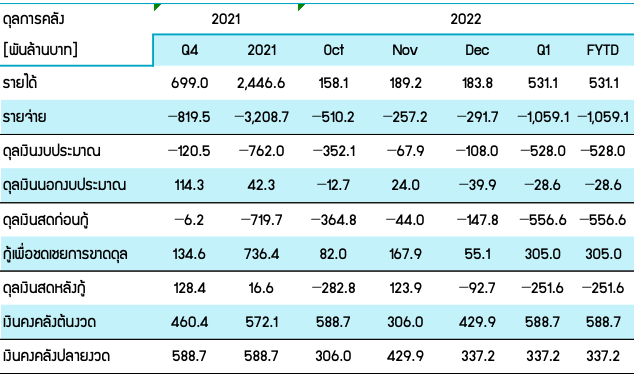
The government's cash flow position in December of fiscal year 2022 showed a budget deficit of -107,965 million baht. When combined with the off-budget balance, the deficit was -39,862 million baht. The cash balance before borrowing showed a deficit of -147,827 million baht. In this month, the government borrowed 55,105 million baht, resulting in a final cash balance after borrowing of -92,722 million baht. The ending cash balance stood at 337,182 million baht.
Source: Revenue Department, calculated by FPO.
The value-added tax collected by the government at constant prices in December 2021 grew by 25.8% year-on-year and, when compared to the previous month after seasonal adjustments, grew by 8.8%.
This growth is a continuation from the value-added tax collected from domestic spending, driven by increased purchasing power from government economic stimulus measures at the end of the year, including the easing of pandemic control measures and improved consumer confidence, as well as the value-added tax collected from imports, which has continuously grown due to the positive import trends, especially in fuel products, as travel and daily activities have increased, along with investment and purchasing power recovering after the pandemic in mid-year.
Source: Revenue Department, calculated by FPO.
Tax from real estate transactions in December 2021 grew by 7.8% year-on-year and grew by 2.1% compared to the previous month after seasonal adjustments.
The collection of tax from real estate transactions in December 2021 accelerated from the previous month, which grew by 4.1%, marking the second consecutive month of growth, in line with increased consumer confidence due to the relaxation of LTV measures, the distribution of COVID-19 vaccinations according to the government's plan, and the government's policies to open the country and various measures to stimulate the economy, resulting in domestic purchasing power beginning to recover. In 2022, the real estate sector is expected to recover well in line with the Thai economy's continuous growth, along with measures to support the real estate sector, including the extension of measures to reduce transfer and registration fees, economic and investment stimulus measures to attract high-potential foreign investors to Thailand, and the provision of a 10-year visa for four target groups, which will help increase housing demand from foreign investors.
Source: Revenue Department, calculated by FPO.
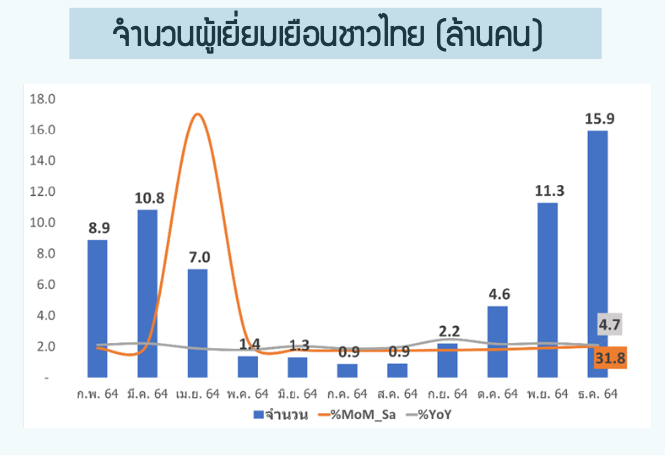
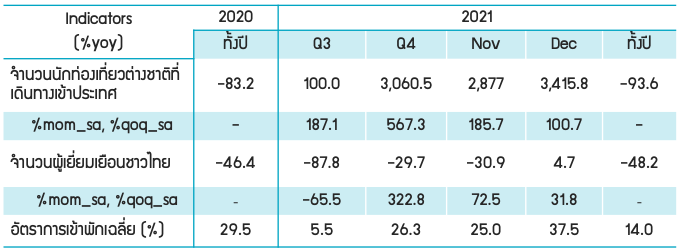
In December 2021, the number of foreign tourists entering Thailand reached the highest level in 21 months due to the benefits of the country reopening, while the number of Thai visitors continued to increase for the fifth consecutive month due to the improving domestic pandemic situation and the benefits from the year-end holidays.
In December 2021, the number of foreign tourists entering Thailand was 230,497, representing a significant growth of 3,415.8% year-on-year. After seasonal adjustments, this growth was 100.7%, benefiting from the government's measures to allow tourists from 63 countries to enter Thailand without quarantine (Test and Go). Although this program was suspended for registration starting December 22, 2021, due to the outbreak of the Omicron variant, it will reopen for registration again on February 1, 2022.
Source: Ministry of Tourism and Sports.
Meanwhile, domestic tourism, reflected by the number of Thai visitors in December 2021, reached 15.9 million, increasing for the fifth consecutive month, representing a growth of 4.7% year-on-year, marking the first growth in six months. Compared to the previous month after seasonal adjustments, this growth was 31.8%, driven by the improving COVID-19 situation in Thailand during this period and the peak tourist season during the year-end and New Year holidays.
Source: Ministry of Tourism and Sports.
For Thailand's tourism sector in 2021, it was still significantly impacted by the COVID-19 pandemic, resulting in only 430,000 foreign tourists visiting Thailand, a decrease of 93.6% year-on-year, which was higher than the FPO's forecast of 180,000 tourists for the entire year. Meanwhile, the number of Thai visitors reached 77.9 million, contracting by 41.7% year-on-year.
Source: Ministry of Tourism and Sports.
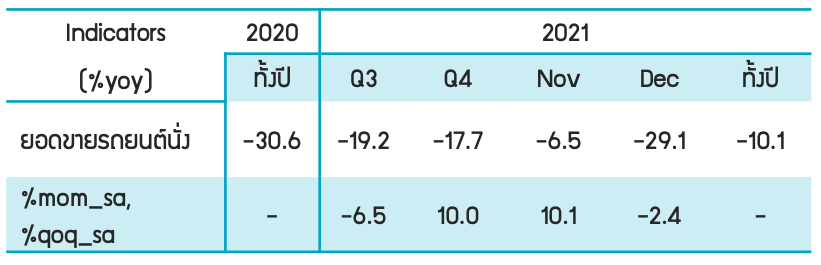
The sales volume of passenger cars in December 2021 was 27,052 units, contracting by -29.1% compared to the same period last year, and when compared to the previous month after seasonal adjustments, it contracted by -2.4%.
This was due to the outbreak of the new variant of the virus, “OMICRON,” affecting consumers' purchasing decisions and future income. The ongoing shortage of parts and semiconductors has led the automotive production sector to temporarily slow down production of certain models, along with high base effects from the previous year, as December 2020 was a month when domestic car sales exceeded 100,000 units after the end of the first car project, reflecting a recovering car market at that time.
Source: Toyota Motor Thailand Co., Ltd. and the Federation of Thai Industries (FTI).
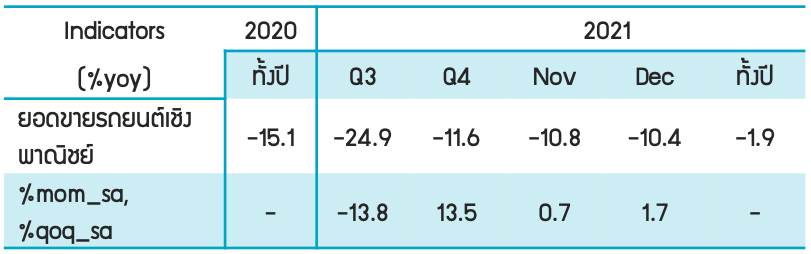
The sales volume of commercial vehicles in December 2021 was 59,093 units, contracting by -10.4% compared to the same period last year but growing by 1.7% compared to the previous month after seasonal adjustments.
The sales of commercial vehicles in December contracted due to the sales of one-ton pickup trucks, which contracted by -16.9% compared to the same period last year, due to the impact of the COVID-19 outbreak affecting vehicle bookings at the 2021 Motor Expo, which decreased by -6.4% from the previous year, and the ongoing chip shortage that has led to intermittent halts in production of certain models. However, when considering month-on-month comparisons after seasonal adjustments, the sales of commercial vehicles showed signs of improvement. In 2022, the COVID-19 outbreak situation is expected to show signs of better control, which will help economic activities recover more, along with the easing of the chip shortage and continuous government measures, including economic and consumption stimulus measures that will boost consumer confidence and positively impact vehicle sales.
Source: Toyota Motor Thailand Co., Ltd. and the Federation of Thai Industries (FTI).
Foreign Economic Indicators
United States
- The GDP in the fourth quarter of 2021 accelerated to grow by 5.5% year-on-year, or 6.9% when calculated on an annualized rate, and grew by 1.7% compared to the previous quarter (after seasonal adjustments), resulting in a GDP growth of 5.7% for the year 2021.
- New home sales in December 2021 amounted to 811,000 units per year, representing an increase of 11.9% from the previous month (seasonally adjusted), driven by sales in the Midwest and South, which accelerated from the previous month.
- The median home price index in December 2021 grew by 1.1% from the previous month (seasonally adjusted), remaining stable from the previous month, and when compared year-on-year, the index accelerated slightly to 17.5% from the same period last year.
- The number of first-time unemployment claims for the week of January 16-22, 2022, stood at 260,000, decreasing from the previous week’s level of 290,000, marking the first decline in four weeks, indicating that the impact of the Omicron outbreak on the labor market is beginning to decrease.
- The Federal Open Market Committee (FOMC) unanimously decided to maintain the policy interest rate at a low level of 0.00-0.25% per year and signaled plans to raise the policy interest rate soon, along with a subsequent reduction in the balance sheet.
Eurozone
- The preliminary PMI index for the manufacturing sector in January 2022 stood at 59.0 points, up from 58.0 points in the previous month due to easing supply chain disruptions.
- The preliminary PMI index for the services sector in January 2022 stood at 51.2 points, down from 53.1 points in the previous month due to some travel restrictions to control the rising COVID-19 infections.
Australia
- The preliminary PMI index for the manufacturing sector in January 2022 stood at 55.3 points, down from 57.7 points in December 2021 due to shortages of production factors and labor quarantined due to COVID-19 infections.
- The preliminary PMI index for the services sector in January 2022 stood at 45.0 points, down from 55.1 points in December 2021 due to the Omicron variant outbreak affecting economic activities in the services sector.
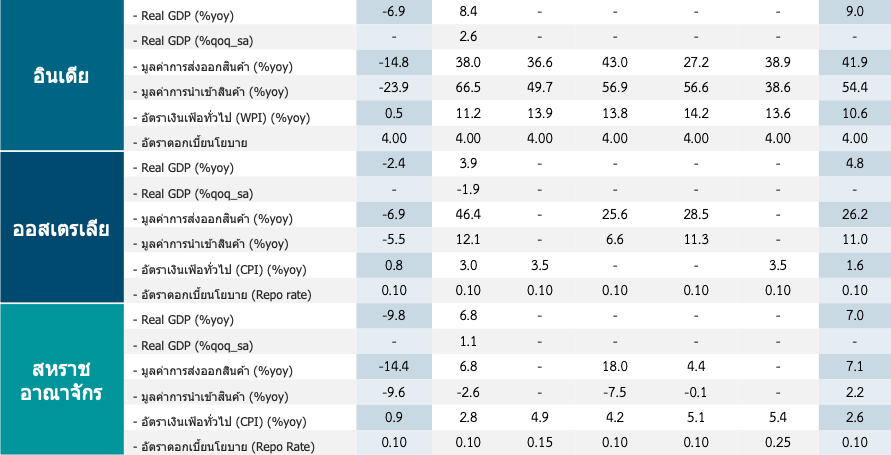
- The inflation rate in the fourth quarter of 2021 stood at 3.5% compared to the same period last year, up from 3.0% in the previous quarter, driven by rising energy prices and recovering demand.
Vietnam
- The PMI index for the manufacturing sector in January 2022 stood at 53.7 points, up from 52.5 points in the previous month.
Singapore
- Industrial production in December 2021 grew by 15.6% year-on-year, improving from 14.1% in the previous month.
- The inflation rate in December 2021 stood at 4.0% year-on-year, up from 3.8% in the previous month.
- The unemployment rate in the fourth quarter of 2021 (preliminary) stood at 2.4% of the total labor force, down from 2.6% in the previous quarter.
Malaysia
- The value of exports in December 2021 grew by 29.2% year-on-year, down from 32.4% in the previous month.
- The value of imports in December 2021 grew by 23.6% year-on-year, down from 38.0% in the previous month.
- The trade balance in December 2021 recorded a surplus of 31.0 billion Malaysian ringgit, up from a surplus of 18.9 billion Malaysian ringgit in the previous month.
Hong Kong
- The value of exports in December 2021 grew by 24.8% year-on-year, slowing from 25.0% in the previous month.
- The value of imports in December 2021 grew by 19.3% year-on-year, slowing from 20.0% in the previous month.
- The trade balance in December 2021 recorded a deficit of 32.8 billion Hong Kong dollars, increasing from a deficit of 11.6 billion Hong Kong dollars in the previous month.
United Kingdom
- The preliminary PMI index for the manufacturing sector in January 2022 stood at 56.9 points, down from 57.9 points in December 2021 due to the control measures for the Omicron variant outbreak affecting sales.
- The preliminary PMI index for the services sector in January 2022 stood at 53.3 points, down from 53.6 points in December 2021, contrary to market expectations of an increase to 54.8 points.
Philippines
- The GDP in the fourth quarter of 2021 grew by 7.7% year-on-year, accelerating from 6.9% in the previous quarter, or 3.1% when compared to the previous quarter (after seasonal adjustments), resulting in a GDP growth of 5.6% for the entire year 2021.
- The value of exports in December 2021 grew by 7.1% year-on-year, increasing from 6.6% in the previous month.
- The value of imports in December 2021 grew by 38.3% year-on-year, increasing from 36.8% in the previous month.
- The trade balance in December 2021 recorded a deficit of 5.2 billion Singapore dollars, increasing from a deficit of 4.7 billion Singapore dollars in the previous month.
South Korea
- The GDP in the fourth quarter of 2021 grew by 4.1% year-on-year, accelerating from 4.0% in the previous quarter, or 1.1% when compared to the previous quarter (after seasonal adjustments), resulting in a GDP growth of 4.0% for the entire year 2021.
- Industrial production in December 2021 grew by 6.2% year-on-year, slowing from 6.3% in the previous month.
- Retail sales in December 2021 grew by 6.5% year-on-year, accelerating from 4.6% in the previous month.
Taiwan
- The GDP in the fourth quarter of 2021 grew by 4.9% year-on-year, accelerating from 3.7% in the previous quarter, or 11.1% when compared to the previous quarter (after seasonal adjustments), resulting in a GDP growth of 6.3% for the entire year 2021.
- Industrial production in December 2021 grew by 9.98% year-on-year, slowing from 11.37% in the previous month, marking the lowest level in five months.
- Retail sales in December 2021 grew by 3.72% year-on-year, slowing from 6.85% in the previous month.
- The PMI index for the manufacturing sector in January 2022 stood at 55.1 points, down from 55.5 points in the previous month.
Monetary Market Indicators and Exchange Rates
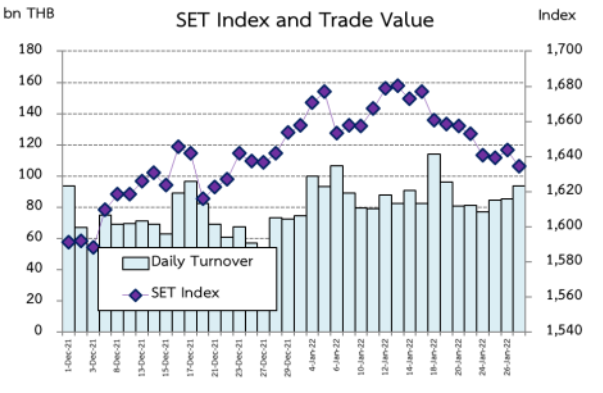
The SET index decreased from the previous week, in line with other regional stock markets that also declined, such as Nikkei225 (Japan), HSI (Hong Kong), and CSI300 (Shanghai). On January 27, 2022, the index closed at 1,634.17 points, with an average trading value between January 24-27, 2022, of 85,248.14 million baht per day. Foreign investors and domestic retail investors were net buyers, while domestic institutional investors and securities company accounts were net sellers. During January 24-27, 2022, foreign investors net purchased securities worth 5,382.99 million baht.
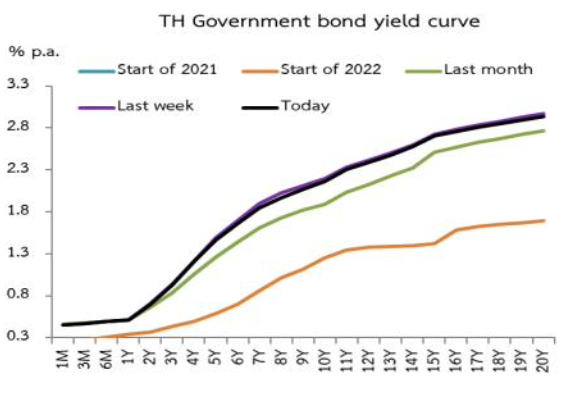
The overall yield on government bonds decreased by -1 to -6 bps. This week, investors participated in the auction of 31-year government bonds, which saw demand of 1.75 times the auction amount. During January 24-27, 2022, foreign capital inflow in the bond market was net 12,826.87 million baht, and from the beginning of the year until January 27, 2022, foreign capital inflow in the bond market was net 79,201.69 million baht.
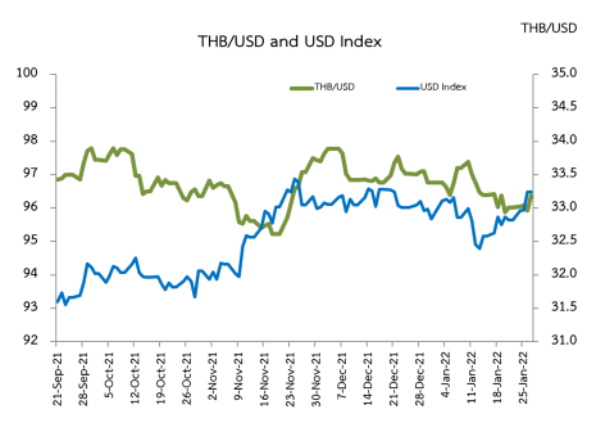
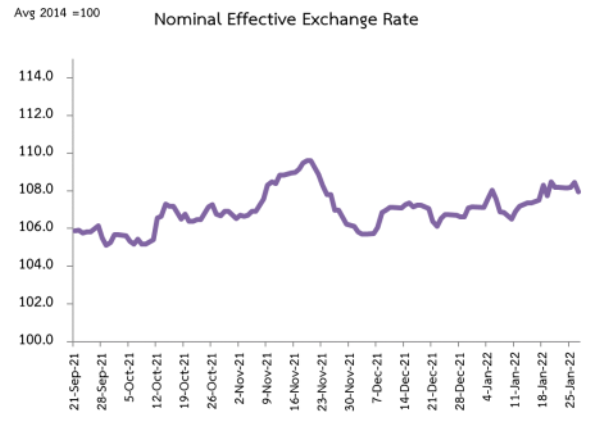
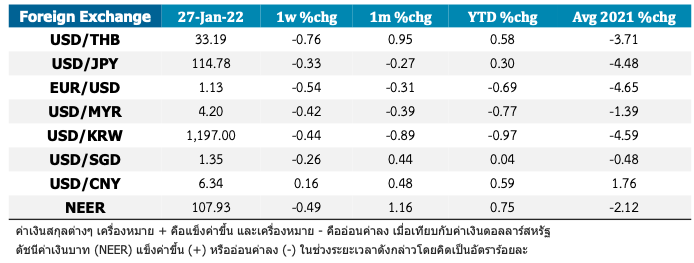
The Thai baht weakened against the previous week, closing at 33.19 baht per US dollar on January 27, 2022, a decrease of -0.76% from the previous week, in line with other regional currencies such as the yen, euro, won, ringgit, and Singapore dollar, which also depreciated against the US dollar. Meanwhile, the yuan appreciated against the US dollar compared to the previous week. The baht's depreciation was greater than that of other regional currencies, resulting in the nominal effective exchange rate (NEER) decreasing by -0.49% from the previous week.
Economic Indicators
Global Economic Indicators
Thank you for the information from the Macroeconomic Policy Bureau, Fiscal Policy Office, Ministry of Finance 02-273-9020 Ext. 3259