Monitoring the Global Economy: A Sustainable Investment Plan for 2022 - Analysis by KBank Private Banking - Lombard Odier
KBank Private Banking in collaboration with Lombard Odier forecasts that the global economy will continue to grow this year, albeit at a slower rate. The impacts of the Omicron variant, inflation, and FED policies will only temporarily affect investment markets. It is recommended to invest in value stocks, cyclical stocks, and alternative assets, with Europe and Japan being the standout regions this year, along with high-yield private bonds in Asia. Risk management should focus on reducing volatility through diversified investments in various assets via mixed funds and alternative assets.

Mr. Jirawat Supornpaibul, Private Banking Group Head at KBank stated that this year, the bank expects the global economy to grow by around 3-4%, based on the overall economic activities of major countries worldwide, including trade, production, consumption, and travel, which remain in good condition and are returning to pre-COVID-19 levels of economic expansion.
However, there are several risk factors that could negatively impact the investment sector, such as the significantly rising inflation in the U.S., which recently reached 7% in December 2021, raising concerns that inflation may remain high if supply chain bottlenecks are not resolved soon. This could prompt the FED to tighten its policies sooner than anticipated, potentially undermining economic recovery.
Meanwhile, the Chinese economy is slowing down, and there are control measures in various industries, particularly in technology, along with geopolitical risks, including issues related to Taiwan, Iran, the elections in France, and conflicts between the U.S. and other countries.
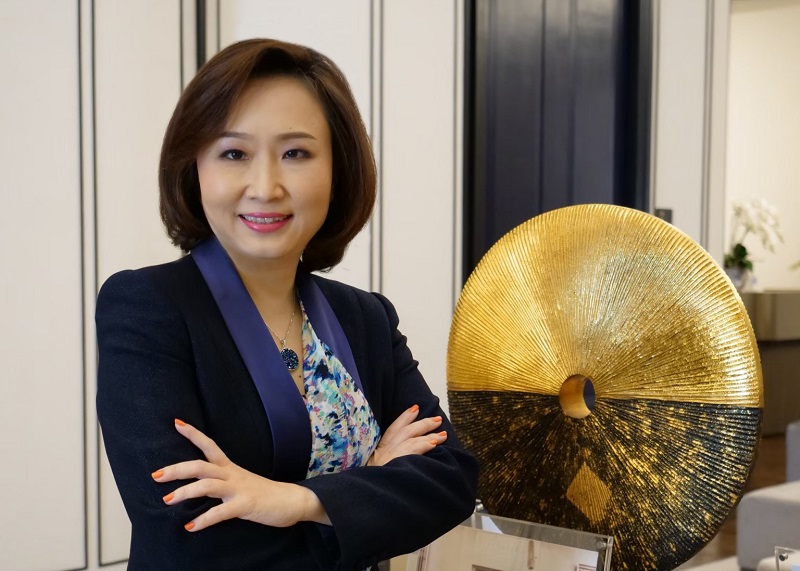
Ms. Siriporn Suwannakarn, Senior Managing Director - Financial Advisory Head at KBank mentioned that Lombard Odier predicts that inflation will gradually decrease this year from the high of 7% at the end of 2021, as the factors driving inflation up will ease due to increasing supply, as supply chain bottlenecks begin to resolve and commodity prices show signs of decline.
This aligns with the purchasing demand, which is expected to decrease as large-scale government relief measures that injected money into citizens come to an end.
Lombard Odier believes that the U.S. Federal Reserve (FED) will raise interest rates only 2-3 times this year, depending on economic developments and inflation. The rate hikes are expected to begin in late 2022 to early 2023, and it is believed that even if the FED raises rates this year, it will not hinder economic recovery, as borrowing costs remain low following rapid rate cuts during the COVID-19 pandemic.

Dr. Triphon Phumiwasana, Senior Managing Director - Private Banking Business Head at KBank stated that last year was a good year for the global stock market, especially the U.S. stock market (S&P 500 index), which delivered the most outstanding returns at 28%, supported by the energy, technology, and financial sectors.
For investment strategies and recommendations for 2022, it is suggested that Lombard Odier maintains a positive outlook on risk assets like stocks over bonds. Selecting regions or industry sectors will be crucial for investments this year, as stock valuations in some markets may be too high, and the likelihood of all markets performing well like last year may be lower.
Therefore, it is recommended to focus investments on cyclical stocks and value stocks, as they tend to benefit from rising inflation and increasing bond yields, such as financial sector stocks. Regionally, it is advised to focus on investments in Europe and Japan, where monetary policies are expected to remain accommodative throughout the year, unlike the U.S., which is tightening.
As for bonds, it is recommended to reduce the proportion of long-term government bonds and high-rated investment-grade bonds, as they offer relatively low returns in the form of interest that cannot compensate for the price pressures from rising bond yields. Instead, it is suggested to invest in lower-rated high-yield private bonds in Asia and Chinese government bonds that offer higher returns, while increasing cash proportions in the portfolio to manage higher market volatility. If the market corrects, it can provide opportunities to buy at lower prices.
Moreover, the bank continues to recommend diversifying investments across various assets through mixed funds to reduce overall portfolio risk, including diversifying into other alternative assets such as private equity funds and private debt, which are less volatile than the market, with investment values dependent on actual fundamentals. Additionally, KIKO bonds linked to a basket of Thai stocks that provide monthly interest returns can be used to diversify risk and generate satisfactory returns for clients' investment portfolios in 2022.