Unlocking the Secrets of the Metaverse: A Transformative Technology for Every Dimension of the World
At the "Metaverse Unlimited" Forum, a New Dimension of Knowledge aims to inspire people to engage with the Translucia Metaverse. Global experts agree that the Metaverse, an advanced virtual technology, holds limitless potential worldwide, focusing on research to create a new realm that connects with the real world, fostering sustainable happiness across all dimensions.
The "Metaverse Unlimited" online forum, the first of its kind in Thailand, took place on December 15-16, organized by Translucia Metaverse and T&B Media Global (Thailand) Co., Ltd. Leading international experts in virtual reality technology shared their knowledge, experiences, and various research projects aimed at merging the virtual realm with reality to enhance global development.
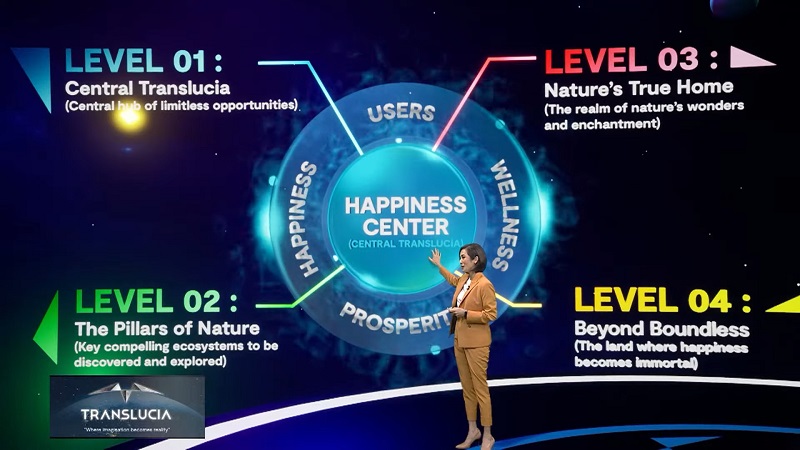
PP - Pattharanu Thaporn is a Thai researcher and innovator from the MIT Media Lab. He stated that the development of the Metaverse is progressing towards a point where it can process, identify problems, find solutions, and produce consumable items in the real world using a single device.
He cited an example of a biotechnology project at MIT Media Lab currently under research, which is a smart wearable device designed to address health issues comprehensively. This device, called a wisdom device, can accurately detect illnesses and indicate abnormal organ functions in the wearer’s body, diagnosing diseases and producing medication to treat these conditions autonomously.
He also proposed that artificial intelligence (AI) technology could revolutionize the education system. For instance, using AI to create characters in the virtual world, such as historical figures like Albert Einstein or famous characters like Harry Potter, to teach children instead of real teachers. “This method will help increase motivation for online learning,” as students feel a connection with these characters.
On the other hand, Jeremy Bailenson founder and director of the Virtual Human Interaction Lab at Stanford University stated that VR can positively impact social development. He cited a study where students interacted with avatars of themselves, which had different ages, genders, and ethnicities than their real selves. The study found that this experience helped students develop greater empathy for people from different backgrounds.
Moreover, VR technology also encourages individuals to participate in environmental conservation and improve their basic knowledge. In the virtual world, people can engage in activities and learn experiences that are not possible in reality.
“This technology will change your perspective on others and serve as a tool to help you see the world from a new viewpoint,”
.jpg)
Meanwhile, David Brereton CEO of LeadDoAdapt Ventures and a senior fellow at the Stimson Center and Atlantic Council pointed out that Metaverse technology can be applied as a tool to promote peace and address social issues by allowing residents from different parts of the world to connect with people from diverse cultures in the virtual realm without having to travel physically.
The virtual experiences people gain from the Metaverse will help them become aware of the conflicts, inequalities, and biases faced by people in those countries, fostering greater understanding.
As for Kathy Hackl CEO and Executive Chair of Metaverse The Futures Intelligent Group, known as the Godmother of the Metaverse in the global branding industry, defined the “Metaverse” as a fusion of the digital and real worlds, a place where anything is possible and offers endless opportunities.
The Metaverse is a new world created by integrating various technologies, such as AR, VR, blockchain, and non-fungible tokens (NFTs), allowing this virtual universe to be utilized in multiple ways, not just for online gaming but also in other entertainment industries, including branding and marketing, transcending the limitations of the real world. The Metaverse should be a space where everyone participates in its creation, development, and effective utilization.
“In this realm, there is not just one technology or one company. In this virtual world, no one should be left behind. In the Metaverse universe, we are all co-creators,”
At the same time, Allen Chesney data analytics and computer graphics expert behind Maya 3D, the software used to create scenes in the famous movie “Avatar,” stated that the Metaverse is not a new concept. In fact, Harvard University has been researching and developing this technology for over five decades, but it gained widespread recognition through its evolution into online games, allowing gamers to create their avatars in the virtual world, leading to its immense popularity and the development of various platforms and advanced equipment to meet demand.
Today, the virtual universe has evolved to a point where everyone must be involved in one way or another. For this reason, major players in the technology industry should accept standards for content management and collaborative usage.
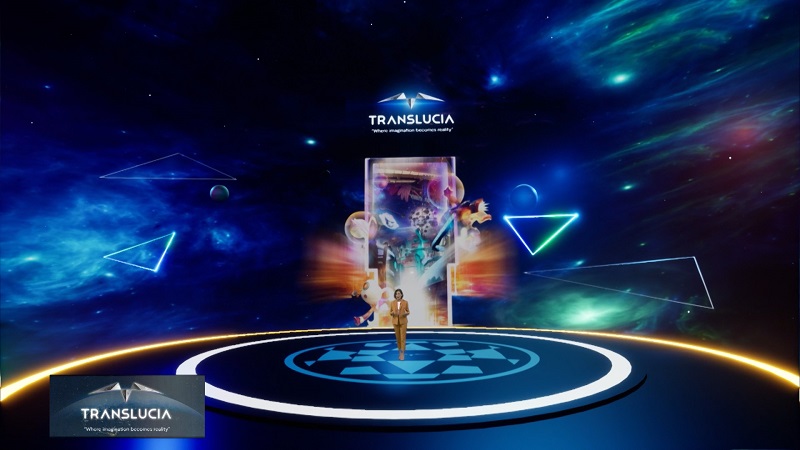
The architecture industry is also utilizing virtual technology in design, not only addressing aesthetic needs but also preserving cultural values. Senawi Chatawethiwong founder of DesireSynthesis architectural design studio stated that creating designs in the virtual world allows residents to genuinely participate in designing their homes and gain a correct understanding through experiences in the virtual realm. It also ensures that all parties involved, from designers to builders to residents, have a mutual understanding throughout the process, significantly reducing the chances of problems and losses.
Additionally, this technology allows him to create designs that seamlessly blend traditional Thai architectural elements with modern styles. He believes that in the future, Thais will be able to preserve traditional craftsmanship in the virtual universe, helping future generations better understand Thai cultural history.
On the other hand, Shajay Boozhan executive director from the renowned design firm Zaha Hadid Architects added that using the Metaverse in design can transform congested cities filled with vehicles and machinery into people-friendly environments, creating urban communities with a better quality of life where large populations can coexist harmoniously with the environment.
He proposed that real estate developers could leverage the online gaming community of over 3 billion people to share ideas and perspectives on what makes a livable city. He emphasized that this approach would promote responsible architectural design. Although the development of advanced technology brings immense benefits, users should engage with it cautiously and within a framework of shared ethical guidelines, taking social responsibility to prevent threats from technology.
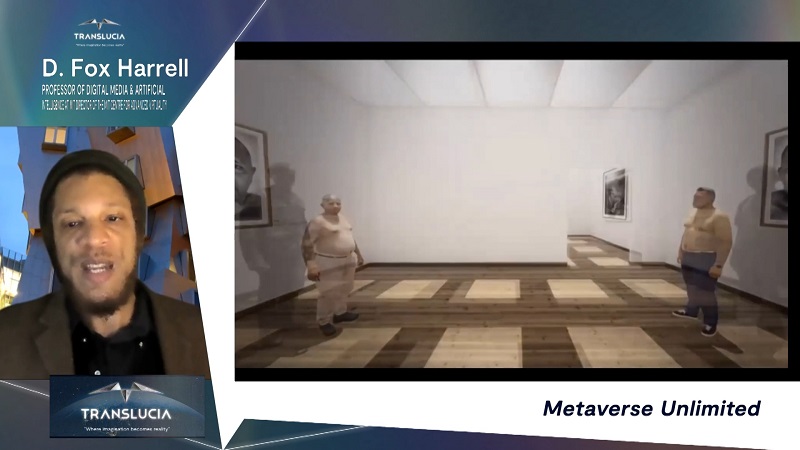
D. Fogg Harrell director of the MIT Center for Advanced Virtuality stated at the forum that AI technology has immense potential but can also pose threats. He cited research from the institute regarding societal biases related to race, skin color, and gender that are evident in online games and social media.
“Negative biases can infiltrate the virtual universe if users lack caution,” he referenced his findings, which showed that online gamers can express their biases regarding race and gender within the gaming community, adversely affecting the development of children, a significant demographic in that community.
Ashley Kazavan executive director of the Responsible AI Institute, a non-profit organization promoting the use of “AI responsibly,” emphasized that negative biases are also disseminated into the virtual world. She provided examples of using virtual technology to categorize users based on sexual orientation, skin color, and programming methods that exhibit their biases, leading to unequal treatment through technology, restricting access to basic services, and creating conflicts with chatbots programmed to use hate speech.
For this reason, Ashley called for all sectors to collaborate in using the Metaverse responsibly within appropriate standards and regulations to ensure that the virtual universe is a safe space for all users, equitably and inclusively.
Meanwhile, AI expert Jin Lim, co-founder and CEO of BeingAI and one of the creators of the famous AI robot “Sophia,” stated that concerns about AI robots being a threat to humanity stem from a lack of understanding of AI. Conversely, what should be considered is how to utilize this technology to its fullest potential.
Dr. Kan Dee Liao Phairoj executive director of FutureTales Lab, Magnolia Quality Development Corporation Limited (FutureTales Lab By MQDC) and Foresight Researcher at the Metaverse Unlimited event stated that the knowledge shared by all speakers at this event proves that the vision of Dr. Chavalwat Ariyaworarom, chairman and founder of T&B Media Global (Thailand) Co., Ltd., and founder of Translucia Metaverse, is achievable. Dr. Chavalwat aims to create a virtual kingdom that serves as a bridge connecting the real world and the virtual world to drive the development of sustainable happiness by balancing society and the economy.
“The knowledge and ideas from this forum have inspired people worldwide to join our Metaverse project at Translucia Metaverse, where imagination becomes reality,”