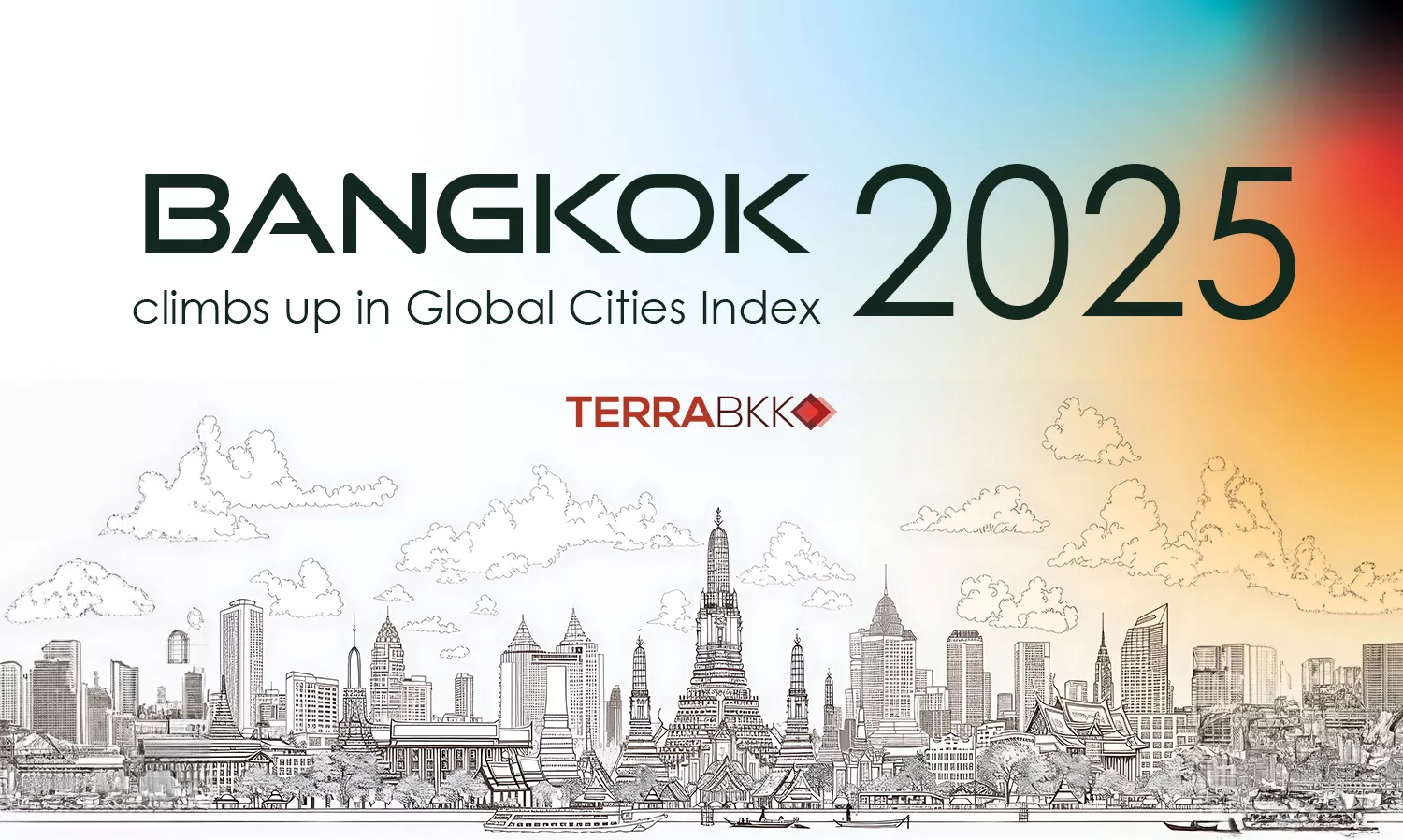
Bangkok Rises in the Global Cities Index 2025
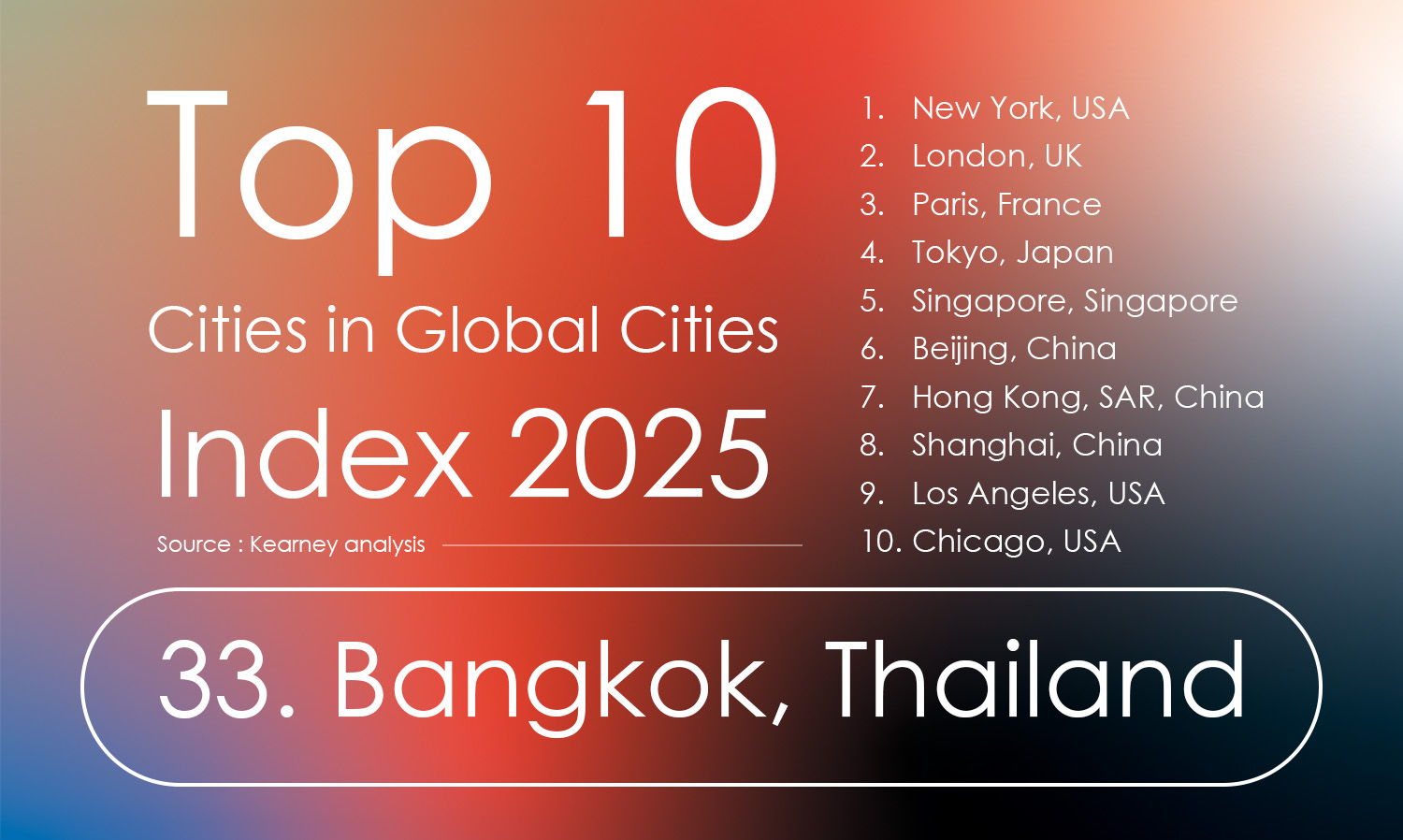
The Global Cities Index 2025 report by Kearney reflects the competitive potential and resilience of cities around the world amidst challenges from a volatile global economy and geopolitical tensions. This report ranks the most internationally connected and influential cities in the world for this year.
For 2025, Bangkok has moved up one spot from 34th in 2024 to 33rd this year. A key factor driving this growth is the business activity dimension, where Bangkok improved by seven ranks, particularly in international conference hosting (according to ICCA metrics) and capital market development. Additionally, the expansion of regional trade has played a significant role in supporting these results, even amidst the complexities of the current global situation.
The Increasing Role of Asia
Asian cities are increasingly prominent in the Global Cities Index (GCI) due to ongoing investments in infrastructure, human resource development, and digital readiness. These efforts have led to significant advancements in various dimensions, particularly in business activities. Notable examples include Taipei and Kuala Lumpur, which moved up 13 and 9 ranks respectively.
In the Asia-Pacific region, there is a distinct advantage over other regions in terms of information exchange, with all regions showing improved scores in this dimension. This reflects the growing importance of digital infrastructure and global integration affecting the competitiveness of cities. Cities like Shenyang, Osaka, Taipei, and Mumbai have shown remarkable progress, each continuously investing in connectivity and service sector development.

Opportunities and Strengths of Bangkok
Bangkok is demonstrating significant progress in various areas, aiming to become a global city with digital readiness and adaptability. One interesting point is the continuous improvement in the information exchange dimension, particularly the rise of data centers from 78th in 2024 to 55th in 2025. Although the internet speed ranking has slightly decreased, Bangkok remains high at 22nd, reflecting Thailand's potential for economic development driven by technology and digitalization.
Another significant growth opportunity is the expansion of broadband access and subscription rates, with Bangkok currently ranked 118th. Promoting digital equity will enable citizens and businesses to fully leverage the existing high-quality infrastructure and connectivity.
Although Bangkok ranks 97th in terms of the number of foreign-born residents, which is still lower than cities like Jakarta (37th), Kuala Lumpur (40th), and Singapore (12th), this gap presents an opportunity for future development. A diverse and international population can enhance collaborative networks, foster innovation, and increase the city's economic resilience, all of which are crucial factors for competitiveness and adaptability in the current era.

Future Perspectives
From the 2025 report, it can be summarized that the long-term competitiveness of cities depends on three interconnected factors: energy efficiency, growth alongside livability and adaptability of the city, and the development of human resources ready for the era of artificial intelligence (AI).
Cities that can systematically integrate these factors under a clear and unified vision will not only effectively cope with changes but also lead a new era of global leadership.
Source: https://www.kearney.com/service/national-transformations-institute/gcr