The Growth of 'Zen': Why the Japanese-Style Condo Trend Dominates the Market in Bangkok and Manila
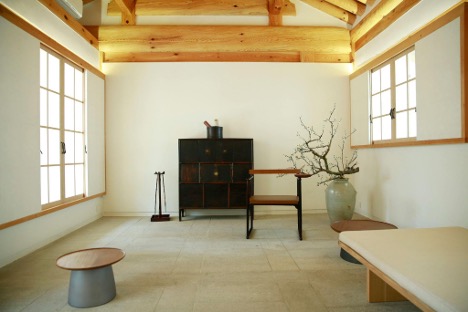
Photo by Junseob Yoon
The Growth of 'Zen': Why the Japanese-Style Condo Trend Dominates the Market in Bangkok and Manila
The skyline of Southeast Asia is undergoing changes in both aesthetics and structure. By 2026, just a glance at new projects in Bangkok's Thonglor area or Bonifacio Global City (BGC) in Manila reveals a similar architectural language. Luxurious glass buildings are being replaced by tranquility, precision, and simplicity that emphasize functionality. This 'Japanese-style' condominium trend has shifted from a niche preference to a major driving force in the market.
As investors and homeowners seek more than just a square room, collaborations between major local real estate companies and Japanese experts have established a new standard of excellence. At the heart of this movement is the philosophy that a home should be a 'sanctuary' — a space where the chaotic energy of the city meets the calming influence of 'Zen.'
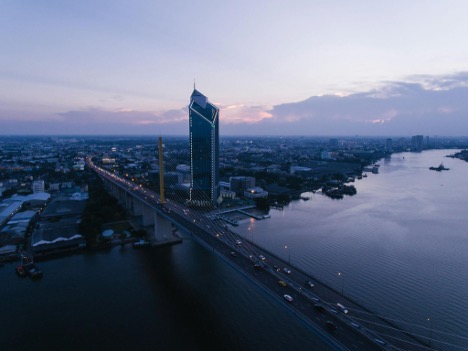
Rama IX Bridge in Bangkok | Photo by Mikhail Nilov
Blueprint from Bangkok: A Hub of Joint Ventures with Japan
Bangkok has long been a leader in integrating Japanese service and design into residential spaces. The city's connection to Japanese culture is evident in the 'Little Japan' area in Sukhumvit, especially around Phrom Phong and Thonglor. A market report for 2026 indicates that Japanese real estate developers remain the strongest foreign partners in Thailand's real estate sector, with key players such as Nomura Real Estate Development, Mitsui Fudosan and Tokyo Tatemono.
This trend is characterized by a shift towards wellness-centric living and Japandi aesthetics, which blend Japanese minimalism with Scandinavian functionality. Projects developed in collaboration with partners like Origin Property often feature special amenities such as onsen-style spas, automated parking systems, and 'genkan' (a traditional Japanese entryway) that have been carefully adapted to suit Thailand's climate.
Statistical data for 2025-2026 indicates that luxury branded residences in Thailand hold approximately 18% market share. Projects like The Estelle Phrom Phong and Tait Sathorn 12 exemplify this trend, emphasizing high-quality materials and the principle of 'shakkei' (borrowing scenery) to connect indoor spaces with green areas outside, even in the heart of a dense city.
Changes in Manila: Setting New Standards in BGC
The Philippines is also experiencing a revival inspired by Japan, centered in Metro Manila, which currently has the highest number of urban-branded residences, exceeding 7,100 units by early 2026. The expanding middle class and elite groups who value the legendary precision of Japanese engineering are key drivers.
Leading this drive is a significant partnership between Federal Land and Nomura Real Estate Development, with the joint venture Federal Land NRE Global (FNG) setting the gold standard for cross-cultural real estate development by merging the 'heart of the Filipinos' (service and community importance) with the 'precision of the Japanese' (detailed planning and technological innovation). FNG is redefining luxury condominiums.
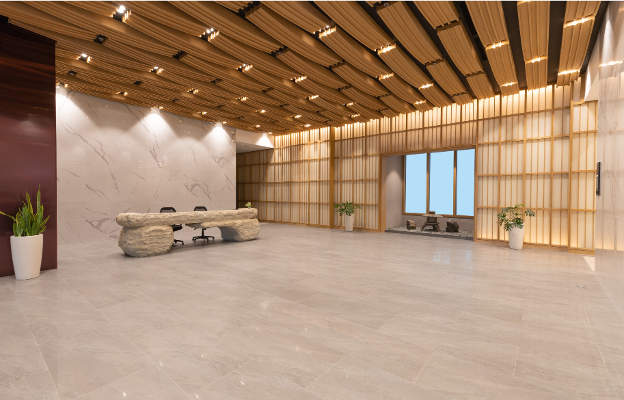
Photo from Federal Land Website
One significant influence is the incorporation of contemporary Japanese art in the Philippines, which goes beyond simply placing bonsai trees in lobbies to creating 'Beautiful harmony' inspired by the Reiwa era in every condo unit. Projects like The Seasons Residences in BGC allow residents to experience a lifestyle that reflects the orderly yet vibrant atmosphere of Tokyo, and the presence of the first Mitsukoshi department store in the country proves that the market is craving authentic Japanese experiences.
Benchmarking: Quality and Innovation
When comparing the Japanese-style trends in Bangkok and Manila, several similarities explain this overwhelming popularity:
- Spatial Efficiency: Both markets are shifting from having large wasted spaces to smart layouts, including underfloor storage, flexible room dividers, and multifunctional furniture.
- Technological Integration: From keyless entry systems to AI-powered energy management, Japan's Smart Living trend has become a foundation for today's high-end projects.
- Nature Connection: Natural light and ventilation, which are central to Japanese architecture, help alleviate heat in tropical cities and promote the well-being of residents.
Investment Appeal: Why Japanese-Style Condos Win Hearts
For savvy investors, Japanese-style condos are not just beautiful homes but strong assets. By 2026, properties with 'Japanese DNA' tend to have higher resale prices and rental rates.
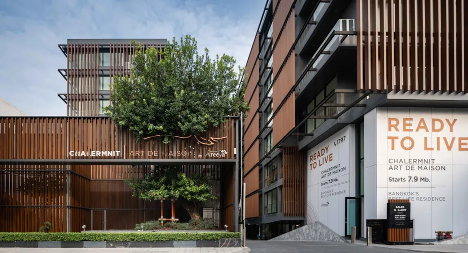
Chalermnit Art De Maison in Watthana, Bangkok | Photo from Hip Flat Website
In Manila, condos with joint venture trademarks with Japan often see rapid value appreciation due to construction standards that appear 'futuristic,' while in Bangkok, high demand from Japanese expatriates helps ensure high occupancy rates and attractive returns for Japanese-style condos in Sukhumvit.
Redefining Home Experience
The adoption of this trend is rooted in lifestyle changes. Modern urban dwellers no longer seek chaos but are looking for a 'Slow Living' experience. The aesthetics of luxury condos are shifting from status symbols to tools for mental well-being.
Concepts like 'Ma' (the beauty of empty space) and 'Wabi-sabi' (finding beauty in imperfection) have influenced the design, resulting in open hallways, Zen gardens that serve as the building's 'green lungs,' and interiors that utilize natural textures like light-colored stone and wood.
For the new generation of workers, the charm of projects under brands like FNG lies in the promise of 'order' amidst the chaos of the big city. The moment one steps into a Japanese-style condo, the atmosphere shifts; the light becomes softer, noise diminishes, and the intuitive layout and 'invisible' design are what the Japanese truly offer to real estate in Southeast Asia.
A Future Built on Precision and Harmony
It is clear that the Japanese-style condo trend is not a fleeting fad but a market growth. Real estate developers are no longer competing solely on height or amenities but are now competing for the 'soul' of the project, prioritizing quality over quantity and harmony over marketing trends to create communities that are not only beautiful but also truly enhance quality of life.
AUTHOR PHOTO AND BIO

Martin is an experienced marketer with over 16 years of experience across various industries including real estate, banking and finance, technology, and advertising. Having held marketing positions at companies such as Ayala Land, BDO Unibank, Federal Land, 917 Ventures, and McCann Erickson, Martin has a broad range of expertise in having handled campaigns, brand launches, activations both in the traditional and digital space. Currently serving as the Digital Marketing Head at Federal Land, Martin leads a team focused on managing digital sales and platforms for the residential, estates and commercial business units.
https://awards.marketing-interactive.com/marketing-excellence-ph/martin-g-arranz-iv/
URLs:
https://www.nomura-re.co.jp/english/
https://www.morihamada.com/en/practices/cases/14
https://tatemono.com/english/news/20250114.html
https://www.mitsuifudosan.co.jp/english/corporate/news/2026/0216/
https://fng.ph/news-events/fng-bets-on-japanese-inspired-smart-living-trend-in-philippines/
https://www.cbre.co.th/press-releases/cbre-thailand-2026-outlook
https://philstarlife.com/living/231890-rising-together-shared-legacy-concrete-culture
https://www.latimes.com/spaces/decor/designers/story/japandi-interior-design-trend-2026
https://realestateasia.com/residential/news/bangkok-see-eight-new-condo-projects-end-2026
https://iqiglobal.com/index.php/th/global-market-insights/philippines