The Role of Buildings and Construction in Adapting to Climate Change
Key Summary
- The world is undoubtedly going to get hotter, and buildings and construction will play a crucial role in both mitigating the impacts of climate change and adapting to a warmer world.
- The growth of the home and building renovation business aimed at energy efficiency will be primarily driven by the demand to reduce greenhouse gas emissions, supported by government policies and corporate goals, pushing large buildings to be designed according to green building standards.
- Constructing energy-efficient buildings or those meeting Green Building standards presents an opportunity for entrepreneurs to respond to the trend of energy use standards and customer demands, especially for office buildings looking to attract corporate clients aiming to reduce greenhouse gas emissions. The global Green Building market is projected to grow by about 14% annually from 2020 to 2027.
July 2021 was the hottest month on record
Currently, global temperatures have risen by 1.1°C compared to pre-industrial levels (1850-1900). The latest report from the Intergovernmental Panel on Climate Change (IPCC) confirms that human activities have contributed to global warming, leading to widespread, rapid, and unprecedented changes in the Earth's climate. The report also states that the climate will not return to its past state. Extreme weather events such as wildfires, floods, storms, and heatwaves are becoming more frequent and intense. The world is certain to get hotter, and urgent action is needed to reduce greenhouse gas emissions to slow the rise in temperatures, as the impacts of climate change are expected to worsen with increasing temperatures.
Figure 1: Global land temperatures have increased by more than 1 degree Celsius compared to the average between 1901–2000 and are expected to continue rising. Additionally, the frequency of natural disasters is also on the rise.
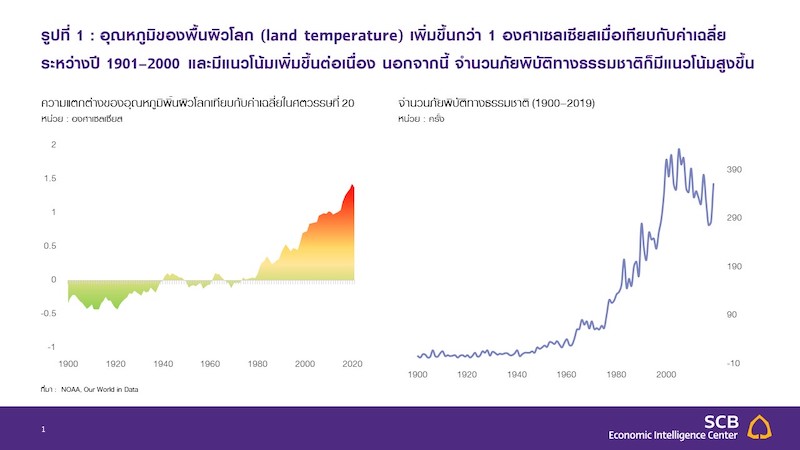
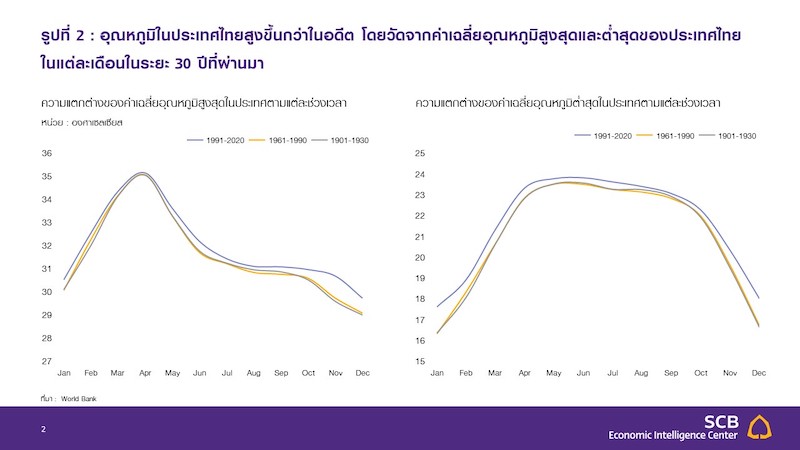
Figure 2: Temperatures in Thailand have risen compared to the past, measured by the average maximum and minimum temperatures in Thailand over the past 30 years.
A hotter world will directly impact health and the economy
According to a study by The Lancet, heat-related deaths worldwide from 2000 to 2019 reached 489,075. In Thailand, the Department of Disease Control reported that in 2019, 57 people died from heat-related causes. Additionally, extreme heat increases the workload on the heart, raising the risk for heart disease patients in a hotter world. Furthermore, the continuously rising global temperatures will exacerbate the urban heat island effect, directly affecting the living conditions of urban residents. This phenomenon occurs when natural areas are replaced by roads, buildings, and other structures that retain heat from sunlight, combined with heat released from energy-consuming engines, such as air conditioning compressors and vehicles. As a result, urban temperatures are significantly higher than surrounding areas, leading to increased heat-related illnesses and deaths.
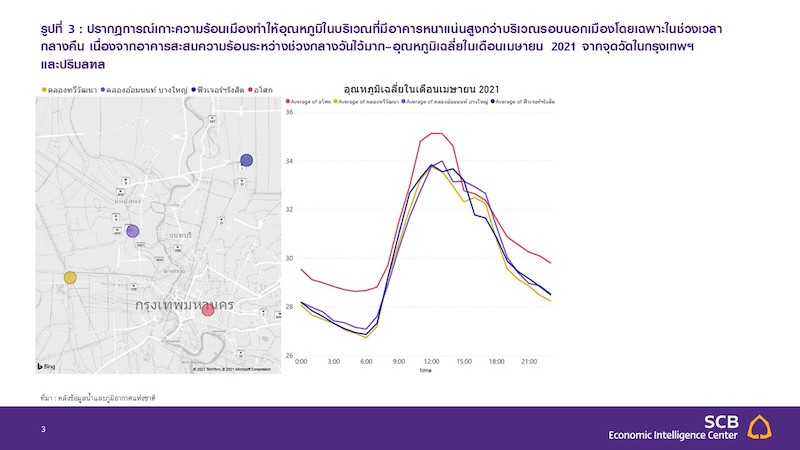
Figure 3: The urban heat island effect causes temperatures in densely built areas to be higher than in the outskirts, especially at night, as buildings retain heat accumulated during the day.
Average temperatures in April 2021 from measurement points in Bangkok and its vicinity.
In terms of the economy, extreme weather and increasingly frequent natural disasters not only cause direct damage to property, agricultural production, and disruptions in manufacturing but also have indirect economic impacts. For instance, a 2020 report from the Commodity Futures Trading Commission (CFTC) indicated that intensified wildfires in the western United States could lead to an economic crisis due to various factors, such as decreased tourism, difficulties in attracting talent and investment due to lower quality of life, and declining home prices in wildfire-prone areas, leading to increased mortgage defaults. Therefore, climate change and rising global temperatures are not distant issues, especially in the context of housing and living conditions. Increased reliance on air conditioning means higher electricity bills, while more frequent flash floods from intense rainfall can damage property and affect home and land prices in flood-prone areas. Additionally, PM 2.5 pollution from increasingly frequent and severe wildfires has been shown to significantly impact public health, with Thailand ranking second globally in the proportion of the population dying from wildfire smoke.
Buildings and construction play a crucial role in mitigating climate change impacts and adapting to a hotter future
Reducing energy use in buildings and designing them to cope with changing weather conditions will be key mechanisms for mitigating the impacts of climate change and adapting to a warmer world. The building and construction industry can contribute to reducing greenhouse gas emissions, which will slow and limit the severity of climate change impacts, as well as help adapt to a hotter world.
In terms of mitigation, green building standards and low carbon building designs, such as Germany's Passivhaus, the US Green Building Council's LEED, the UK's BREEAM, Singapore's Green Mark, and Thailand's TREES, are becoming widely adopted. One of the main objectives of these standards is to reduce energy and resource consumption in buildings, which will help lower greenhouse gas emissions and slow the rise in global temperatures.
Regarding adaptation, designing buildings and the built environment to withstand a hotter world and extreme weather is a focus for cities worldwide. For example, New York's Building Resiliency Task Force was established in collaboration with the US Green Building Council after Hurricane Sandy caused significant damage in 2012, and the 2017 report Strategies for Cooling Singapore aimed to reduce the urban heat island effect in the long term.
As the world heats up, the demand for home and building renovations to enhance energy efficiency and cope with extreme weather is expected to rise. The growth of the home and building renovation market will be primarily driven by the need to reduce greenhouse gas emissions, propelled by government policies and corporate goals. Globally, energy use in buildings accounts for about 28% of total greenhouse gas emissions from energy use, with residential buildings contributing approximately 17% and commercial buildings about 11%. Given the long lifespan of buildings, constructing energy-efficient buildings or net zero energy buildings will help reduce greenhouse gas emissions in the long term. Various governments' greenhouse gas reduction and net zero plans emphasize energy use in buildings and homes. For example:
Boston has enacted legislation requiring buildings over 20,000 square feet to achieve net zero carbon by 2050, covering about 4% of buildings that emit 60% of the city's greenhouse gases. The European Union, aiming for net zero by 2050, has announced the Renovation Wave plan, targeting the energy efficiency improvement of 220 million buildings by 2025, or about 150,000 buildings per week. Goldman Sachs predicts that by 2050, half of Europe's buildings will be new or renovated to meet the EU's energy-saving criteria, stimulating investments in the construction sector and related businesses for energy efficiency improvements of around €20 billion and creating additional jobs.
Thailand has also set a net zero target by 2065-2070 and has implemented energy standards for buildings (Building Energy Code) for construction permits for buildings larger than 2,000 square meters to meet energy conservation standards as mandated by the Ministry of Energy. However, there are currently no standards or requirements for the energy efficiency of existing buildings or those already permitted, which account for a significant portion of energy use. Achieving Thailand's net zero target will thus require addressing the energy efficiency of existing buildings.
Constructing energy-efficient buildings or those meeting Green Building standards presents an opportunity for entrepreneurs to respond to the trend of energy use standards and customer demands, especially for office buildings looking to attract corporate clients aiming to reduce greenhouse gas emissions. According to the Science Based Targets initiative (SBTi), which supports the private sector globally in setting greenhouse gas reduction targets, as of May 2021, over 700 companies had set targets using SBTi methodologies, and more than 500 companies signed the Business Ambition for 1.5°C commitment letter, committing to achieving net-zero emissions by 2050. Improving energy efficiency in buildings will help reduce tenants' indirect greenhouse gas emissions (scope 2 emissions). Therefore, obtaining green building certification will increasingly attract tenants, especially those with operational greenhouse gas reduction goals or net zero targets. The global Green Building market is projected to grow by about 14% annually from 2020 to 2027.
Moreover, Green Building standards like LEED emphasize the health of building occupants. Air pollutants such as nitrogen dioxide, sulfur dioxide, viruses, bacteria, dust, and various allergens can accumulate in buildings and impact residents' health. The interest in indoor air quality has been rising, particularly due to the COVID-19 pandemic, which is an airborne virus, and the increase in PM 2.5 dust. Leading organizations are prioritizing indoor air quality to ensure that employees have a good and safe working environment, which is a critical factor in attracting and retaining talent.
Figure 4: Thai consumers are increasingly concerned about indoor air quality due to PM2.5 issues, as reflected in the volume of searches for air purifiers on Google.
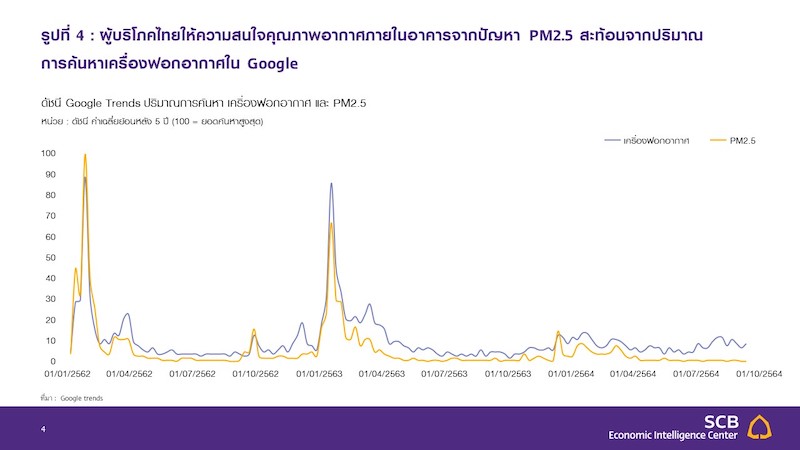
Thai consumers are increasingly concerned about indoor air quality due to PM2.5 issues, as reflected in the volume of searches for air purifiers on Google.
Integrating digital technology into buildings not only enhances energy efficiency but also contributes to the health of building occupants. Energy use in buildings is not solely for temperature control; other systems within buildings, such as lighting, water systems, and various building controls, also present opportunities for energy efficiency improvements. Therefore, using digital technology to manage building operations through Building Management Systems (BMS) is an attractive option for large buildings. BMS can address both energy savings and occupant health. For example, controlling HVAC systems using data from sensors that measure temperature and humidity both inside and outside the building, as well as sensors that monitor indoor air quality, can enhance energy efficiency while maintaining indoor air quality.
Additionally, using BMS to control indoor lighting can also reduce energy consumption. Two organizations supporting energy efficiency and lighting control systems analyzed data from 194 buildings using lighting controls in North America and found that buildings with lighting control systems, such as dimming lights when sufficient daylight enters (daylight harvesting), occupancy sensors, and timed lighting, can save an average of 35% in lighting energy use. For buildings using more complex control systems, such as AI for light quantity control, energy savings can reach up to 63%.
However, investing in energy-saving projects poses challenges in proving cost-effectiveness, especially in existing buildings. Therefore, conducting energy audits to establish baseline electricity usage and identify areas for energy efficiency improvements, along with modeling energy use post-investment to determine payback periods, is essential. Furthermore, using Building Energy Modeling (BEM) in designing new buildings and planning renovations will help project owners design buildings and internal systems for high energy efficiency. Operators who can create business cases that address commercial building renovations to reduce costs and enhance resilience, such as the ability to withstand and recover from climate change impacts, can create business opportunities among corporate clients aiming to reduce greenhouse gas emissions and adapt to climate change. New buildings can also access this customer segment by presenting designs that accommodate future climate conditions.
In the residential market, existing homes face more marketing challenges than commercial or large buildings driven by government regulations or large customer demands. Homeowners' decisions to improve energy efficiency will primarily consider cost-effectiveness and payback periods. Additionally, reducing household energy costs is often achievable by homeowners themselves, such as upgrading to more efficient appliances, adding insulation, and painting buildings with reflective colors. This trend suggests that the market for energy-efficient appliances and construction materials will likely grow faster than non-energy-efficient products.
The energy-saving trend presents opportunities in the home renovation market that small contractors can tap into, but it is a challenging market due to its decentralized nature and the diverse needs of homeowners and individual house characteristics. Therefore, it is advisable to start building a customer base from those already interested in energy use or environmental issues, such as those considering solar rooftop installations. Additionally, providing information and consulting on energy-saving options during home renovations or repairs will raise awareness and offer customers choices to adapt to a hotter world. Forming partnerships or becoming representatives for installing energy-efficient equipment and materials, such as heat-resistant glass or roofing, is another way to build a customer base.
It is clear that mitigating and adapting to climate change requires collaboration from all sectors. Large-scale projects, such as urban planning improvements, increasing urban green spaces, and installing biofiltration planters to reduce runoff during heavy rains, as well as constructing flood barriers, must be undertaken by the government or organizations capable of investment. At the same time, businesses and individuals should consider investing in buildings that help reduce energy costs, which mitigates environmental impacts and enhances their resilience to prepare for the ongoing and increasingly severe effects of global warming.
Analysis from https://www.scbeic.com/th/detail/product/7882
Author: Pimjai Hoontrakul ([email protected])
Director of Digital and New Business Model
Siam Commercial Bank Public Company Limited
EIC Online: www.scbeic.com
Line: @scbeic