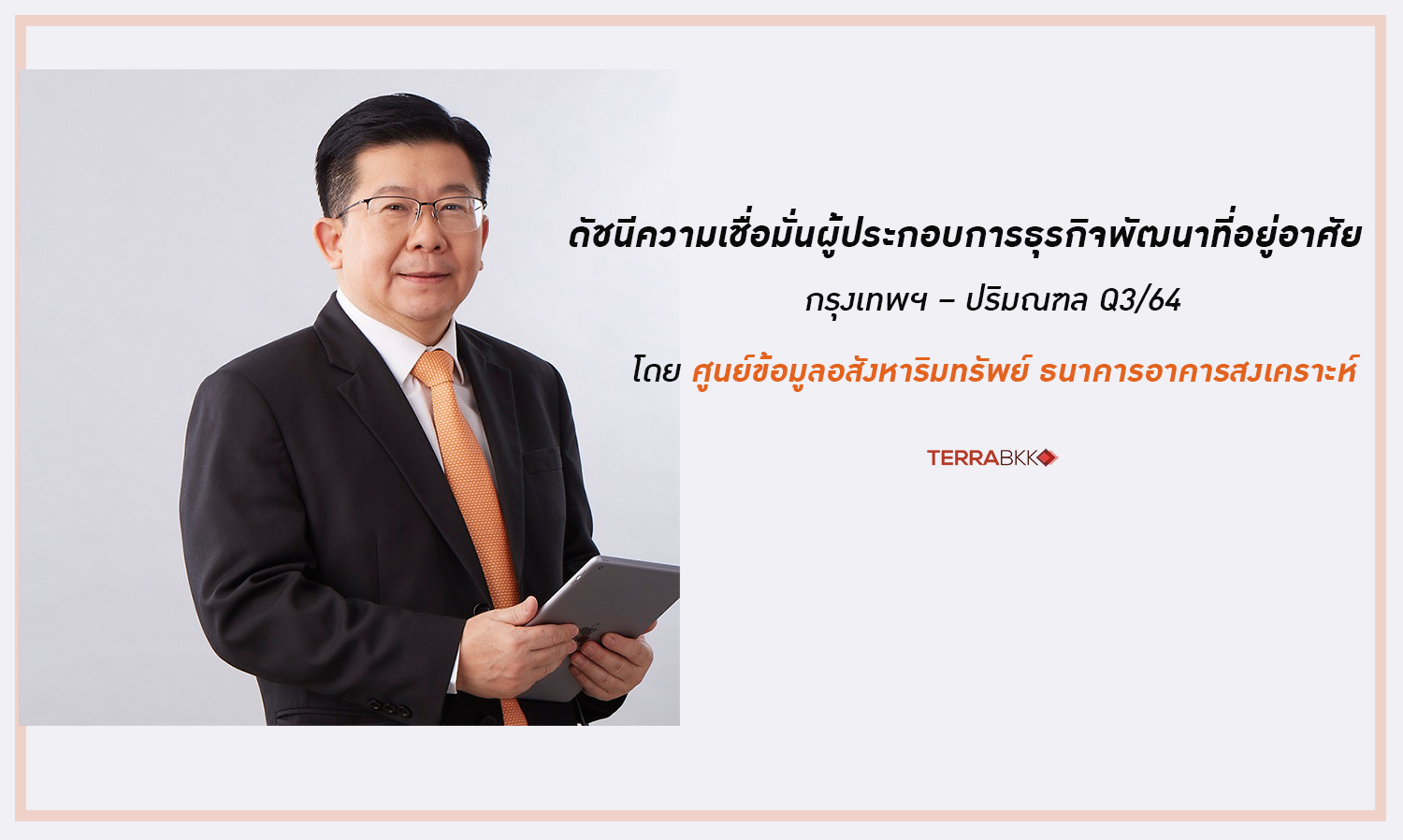
Business Confidence Index for Residential Development in Bangkok and Surrounding Areas Q3/2021
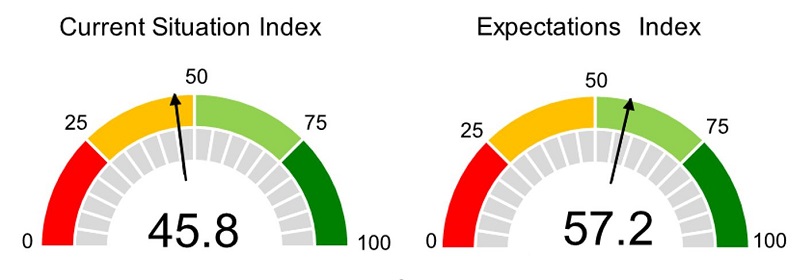
The Real Estate Information Center of the Government Housing Bank has reported the Current Situation Index for business operators in residential development in Bangkok and its vicinity for the third quarter of 2021, which stands at 45.8. This marks a slight decrease compared to the previous quarter (QoQ), and the index remains below the neutral level of 50.0, indicating that operators still lack confidence in conducting business. This trend has persisted since the second quarter of 2019, totaling ten consecutive quarters.
2.jpg)
Dr. Vichai Viratakpan, Acting Director of the Real Estate Information Center at the Government Housing Bank stated that the index remains below 50.0, primarily due to the enforcement of the Loan-to-Value (LTV) control measures by the Bank of Thailand in the second quarter of 2019, which has been a significant factor contributing to the slowdown in the real estate market.
Since the beginning of 2020 until the third quarter of 2021, Thailand has faced the COVID-19 pandemic, which has also significantly impacted the real estate market in terms of both demand and supply. In the third quarter of 2021, the COVID-19 situation worsened, as evidenced by the average daily infection rate rising to approximately 15,000 cases per day, up from about 2,500 cases per day in the second quarter of 2021. Lockdowns were implemented in certain areas, particularly in Bangkok and its surrounding regions, which are the country's economic hubs, from late July to September 2021. This directly affected the economy and continued to cause significant concern among residential development operators regarding the current situation.
When categorizing operators by company type, it was found that the confidence level of Listed Companies in the third quarter of 2021 is at 48.6, which is below the neutral level of 50 and lower than the previous quarter's index of 51.1. This indicates a decline in confidence among Listed Companies compared to the previous quarter, primarily due to a significant drop in sales, with the index falling below the neutral level and a decrease in the launch of new projects or phases compared to the previous quarter.
Meanwhile, Non-listed Companies in the third quarter of 2021 have an index of 41.6, which is a slight increase from the previous quarter's index of 39.3. This suggests that confidence has improved compared to the previous quarter. However, the index remains below the neutral level of 50, indicating that Non-listed Companies still have low confidence in the current business environment and significantly lower than that of Listed Companies.
1.JPG)
1.JPG)
For the Expectations Index of business operators in residential development in Bangkok and its vicinity over the next six months stands at 57.2, showing a clear increase from the previous quarter's level of 50.5, with improvements across all factors, reflecting that operators are more optimistic about the development of the real estate business in the next six months compared to the previous quarter.
This may be due to the government's announcement of free booster vaccine doses, combined with the donation of Pfizer vaccines from the United States, which are being administered to frontline workers, vulnerable groups, and students aged 12-18. The government aims to vaccinate 70% of the population with two doses by the end of 2021. Additionally, the Economic Situation Administration Center has proposed to the Cabinet measures to stimulate the real estate business, including a draft amendment to the law to expand the ceiling for foreign ownership of real estate in Thailand, allowing foreigners to own more than 49% of condominium units and granting additional rights for single-family homes to encourage foreign investors to purchase Thai real estate and invest more in Thailand. This has garnered significant interest from residential development operators.
Another significant positive factor that has increased operators' confidence in the Thai economy is the government's easing of lockdown measures, allowing businesses to partially reopen, such as restaurants, beauty salons, and massage parlors. Airlines are also preparing to resume services, resulting in a noticeable increase in confidence regarding the development of the real estate business in the next six months.
When categorizing operators by company type, it was found that Listed Companies have an Expectations Index of 62.9, up from 55.7 in the previous quarter, exceeding the neutral level of 50.0, with increases across all factors.
Meanwhile, Non-listed Companies have an index of 48.7, also an increase from the previous quarter's level of 42.7, with improvements across all factors as well. It is clear that both Non-listed and Listed Companies are becoming more confident about the next six months.
1.JPG)
1.JPG)
Methodology
The Real Estate Information Center of the Government Housing Bank has designed a questionnaire to create the "Business Confidence Index for Residential Development in Bangkok and its vicinity" on a quarterly basis, starting from the fourth quarter of 2007.
The confidence index is divided into the Current Situation Index and the Expectations Index for the next six months, each consisting of six questions regarding company performance, sales, investment situation, employment, operational costs, and new project launches.
In processing the data, the center gives more weight to listed companies (60%) compared to non-listed companies (40%) because more than 60% of residential projects currently for sale in Bangkok and its vicinity are from listed companies. The sample surveyed consists of operators developing residential projects in Bangkok and its vicinity, covering five provinces: Bangkok, Nonthaburi, Pathum Thani, Samut Prakan, Samut Sakhon, and Nakhon Pathom.
Interpretation
The neutral value of the index is set at 50.0 points. Therefore, if the index is above the neutral level, it indicates that operators have confidence and a positive outlook on the business situation. Conversely, if the index is below the neutral level, it indicates that operators have reduced confidence and a negative outlook on the business situation.