The Housing Market in the Remaining Months of 2021 Remains Highly Vulnerable (Kasikorn Research Center)
Analysis from Kasikorn Research Center
The trend of the housing market in the remaining months of 2021 continues to face significant challenges and high vulnerability. Although many developers managed to turn their sales revenue positive in the first half of the year, it remains below potential. Even though the COVID situation shows signs of stabilizing with a decrease in daily new infections, the impact of this severe and prolonged wave of COVID has broadly affected economic activities, indicating that the recovery of the residential real estate sector will take longer to return to pre-crisis levels.
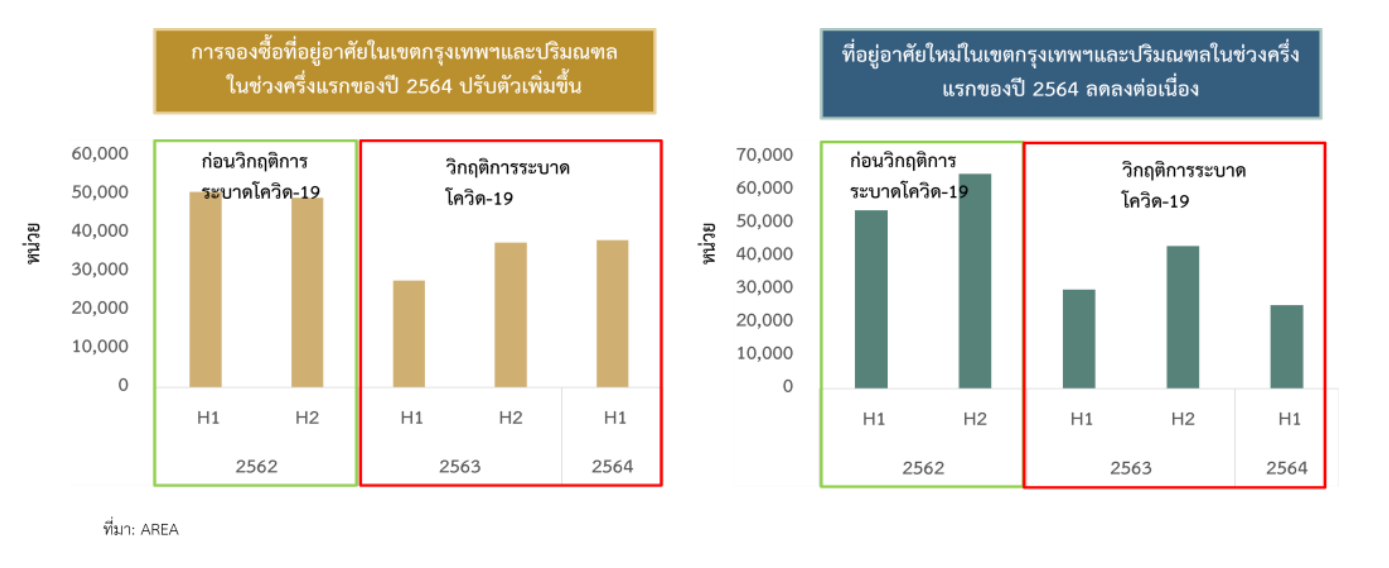
• In the first half of 2021, the launch of new projects continued to decline while sales increased, driven by intense marketing campaigns and promotions from developers to clear unsold inventory.
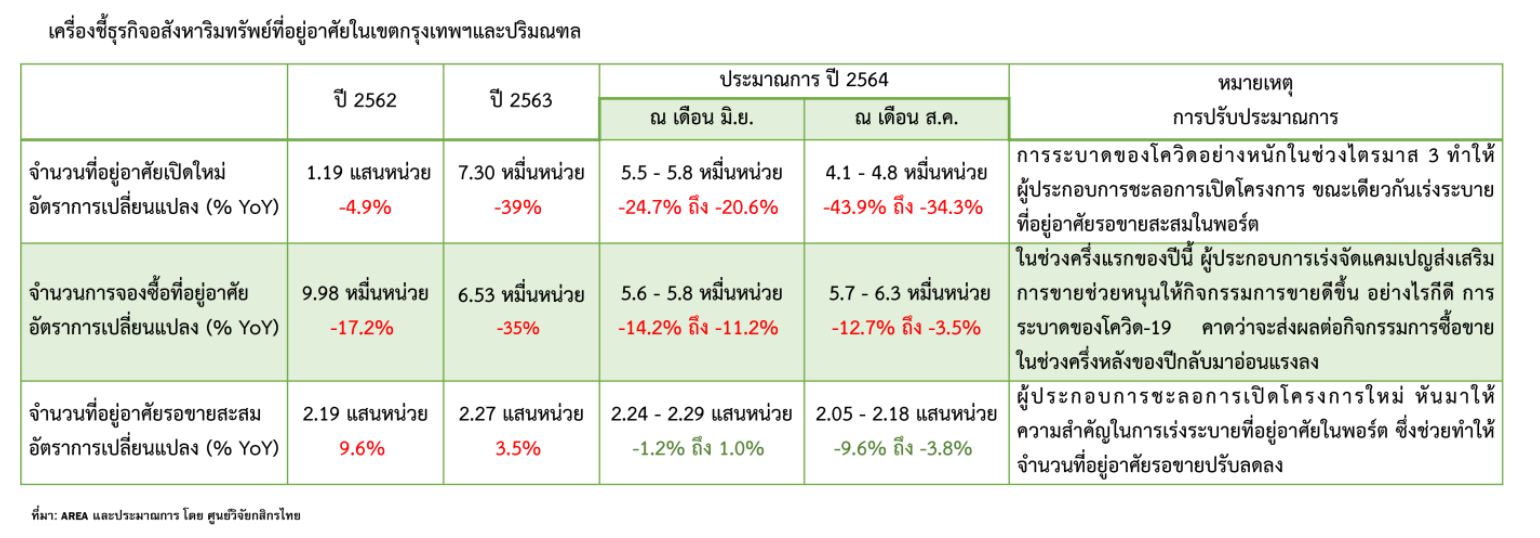
Since the beginning of 2021, most residential property developers have delayed launching new projects due to unfavorable market conditions and a high level of accumulated unsold inventory. This has forced developers to adjust their business strategies to align with market conditions. According to data from the Agency for Real Estate Affairs, in the first half of 2021, the launch of new residential units in Bangkok and its vicinity totaled 25,257 units, a decrease of 15.9% compared to the same period last year. The launch of new condominium projects has significantly decreased due to the high number of unsold units, coupled with developers shifting their focus to low-rise housing, which has real demand for living, shorter construction times, and easier risk management.
However, to mitigate risks and enhance liquidity, developers continue to run marketing campaigns and offer special promotions to entice customers, such as price reductions, free living campaigns, special interest rates, and giveaways. This presents a good opportunity for those ready to purchase housing, helping to push sales back up, even though they remain lower than pre-COVID levels. Data from the Agency for Real Estate Affairs indicates that in the first half of 2021, new housing reservations in Bangkok and its vicinity increased by 37.7% compared to the same period last year, totaling 38,174 units. Most of the sold units were completed homes waiting for sale and projects launched in previous years, accounting for 84%, while the number of units sold from new projects launched this year made up about 16% of total sales. As developers delayed launching new projects and managed to clear some unsold inventory, the accumulated unsold housing units in Bangkok and its vicinity decreased to 214,000 units, down 5.7% from the end of 2020, which is a positive sign for the market.
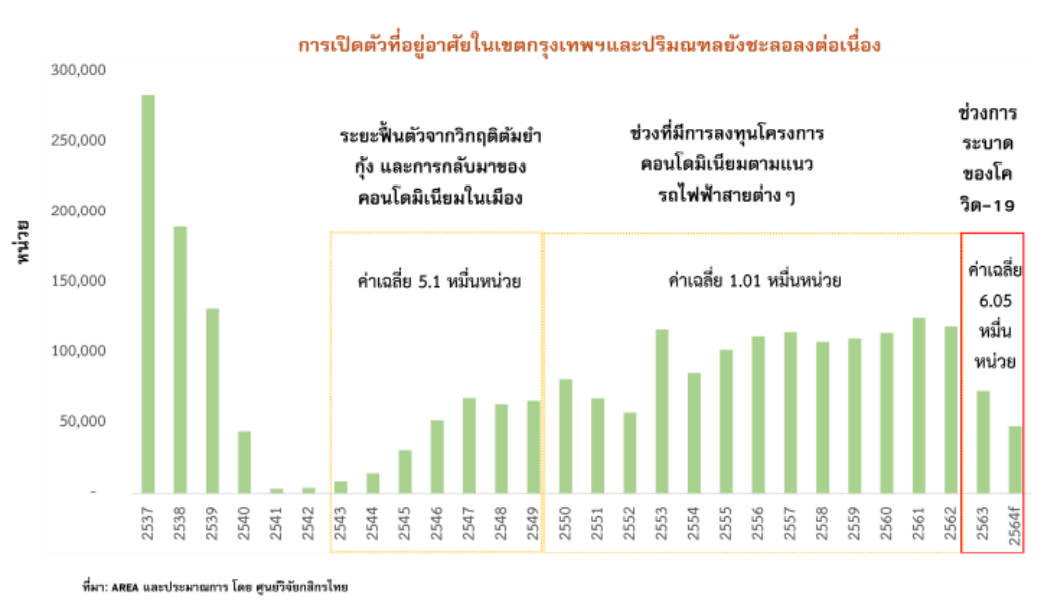
• The direction of the housing market in the remaining months of 2021 remains highly vulnerable due to various challenging factors, potentially leading to the lowest level of housing project investments in 18 years.
Although some indicators of residential real estate activity in the first half of this year reflect positive trends, the housing market in the remaining months faces weak supporting factors, such as measures to reduce transaction fees for residential real estate, including reductions in transfer and mortgage fees for properties priced below 3 million baht, which will expire on December 31, 2021 (there is a possibility that authorities will consider extending these measures to alleviate the financial burden on citizens purchasing homes). Meanwhile, the housing market still faces significant challenges ahead, particularly the impacts of the severe and prolonged COVID outbreak, such as:
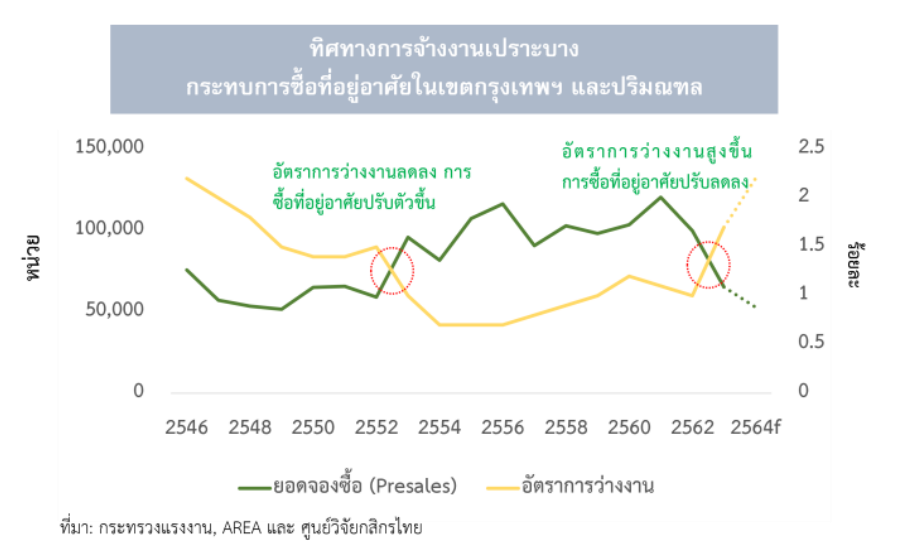
The prolonged COVID outbreak affects job security, household income, and savings, leading to a slowdown in housing demand. The direction of new private sector employment remains fragile, impacting job availability and consumer purchasing power, especially among young workers and recent graduates, who are key target groups in the housing market and are likely to be significantly affected.
Specific business challenges arise from the high level of accumulated unsold housing units in the market (over 200,000 units in a slowing economy, which may take over 3 years to clear), creating investment constraints. Some developers with high unsold inventory must expedite sales, while those with low stock need to launch new projects to generate revenue. At the same time, developers must manage risks from cancellations or buyers failing to secure financing, which will revert to unsold inventory in the market. This suggests that the launch of new housing projects in the remaining months of this year will likely proceed cautiously, with the total number of new housing units launched in Bangkok and its vicinity for 2021 expected to be around 41,000 to 48,000 units, the lowest in 18 years (some developers planning to launch projects this year may delay or postpone until next year when the COVID situation improves).
Some developers face higher financial costs, particularly in raising funds in the capital market. During 2020-2021, the financial costs for developers raising funds through the bond market have significantly increased compared to the period before the COVID outbreak. Looking ahead, financial costs are expected to rise due to increased liquidity demands in the financial system. In the remaining months of 2021, there are bonds and promissory notes maturing in the residential property development sector amounting to over 40 billion baht, with another over 100 billion baht maturing in 2022.
Finally, the ongoing COVID-19 outbreak both domestically and internationally remains unresolved, leaving businesses in a state of uncertainty. The intense competition among developers in a market with limited demand means that those with strong marketing capabilities, diverse products, and flexibility in adapting their business strategies will likely have an advantage. To align with market conditions, the Kasikorn Research Center has adjusted its projections for residential real estate indicators in Bangkok and its vicinity for the entire year of 2021 as follows: