Fiscal Policy Office Reports Weekly Economic Indicators as of August 20, 2021
The Fiscal Policy Office presents the weekly economic indicators as of August 20, 2021, as follows:
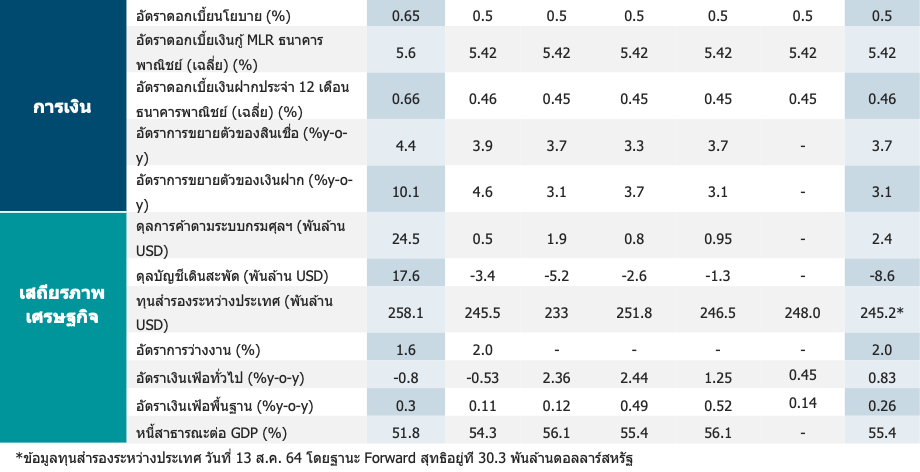
1. The Thai economy grew by 7.5% year-on-year in the second quarter of 2021, improving from a decline of -2.6% year-on-year in the previous quarter.
2. In July 2021, the number of foreign tourists entering Thailand under the Special Tourist Visa (STV), Thailand Privilege Card, and business travelers reached 18,056, marking a 100.0% year-on-year increase.
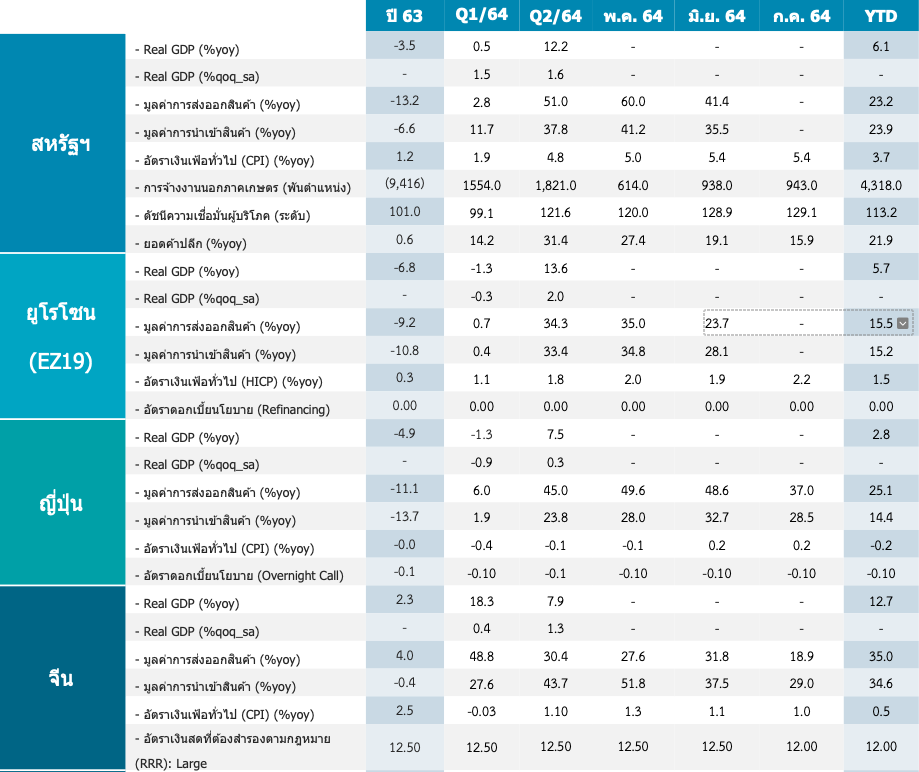
3. The Eurozone GDP for the second quarter of 2021 (second estimate) grew by 13.6% compared to the same period last year.
Thai Economic Indicators
The Thai economy expanded by 7.5% year-on-year in the second quarter of 2021, a significant improvement from the -2.6% decline in the previous quarter. After seasonal adjustments, the Thai economy grew by 0.4% from the first quarter of 2021, resulting in a 2.0% year-on-year growth for the first half of 2021.
The above figures slightly decreased from the previous month due to a new wave of COVID-19 outbreaks both domestically and internationally, along with increased public health measures that extended the quarantine period for travelers entering Thailand from 7-10 days to 14 days, effective May 1, 2021. The Thai economy in the second quarter was significantly supported by exports, which grew by 30.7% year-on-year, driven by increases in both the volume and prices of exported goods, particularly in industrial products such as vehicles, electronics, electrical appliances, and metals, in line with the recovery of the global economy and trade volume. Private sector investment grew by 9.2% year-on-year, reflecting increased investment in machinery, consistent with the accelerated growth of the industrial production sector and exports. Private consumption expanded by 4.6% year-on-year, partly due to a low base from the same period last year and support from government stimulus measures.
In the manufacturing sector, industrial production grew by 16.8% year-on-year, with growth across all industrial groups, including light industrial goods, raw materials, and capital goods and technology. Agricultural production grew by 2.0% year-on-year, driven by increased yields of key crops such as paddy, rubber, pineapple, and cassava. Meanwhile, the services sector grew by 5.0% year-on-year, with notable growth in accommodation and food services, which expanded by 13.2% year-on-year, transportation and storage services grew by 11.6% year-on-year, information and communication services grew by 5.8% year-on-year, and wholesale and retail trade grew by 5.5% year-on-year.
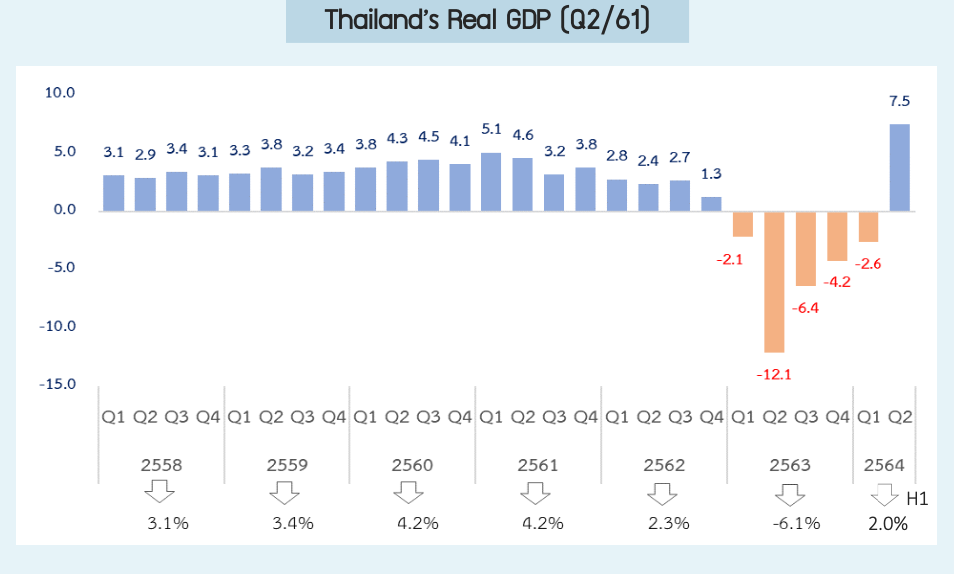
Source: NESDC.
In July 2021, the number of foreign tourists visiting Thailand reached the highest level in 15 months, benefiting from the Phuket Sandbox project, while domestic tourism continued to be affected by the ongoing COVID-19 outbreak in the country, resulting in the lowest number of Thai visitors in 14 months.
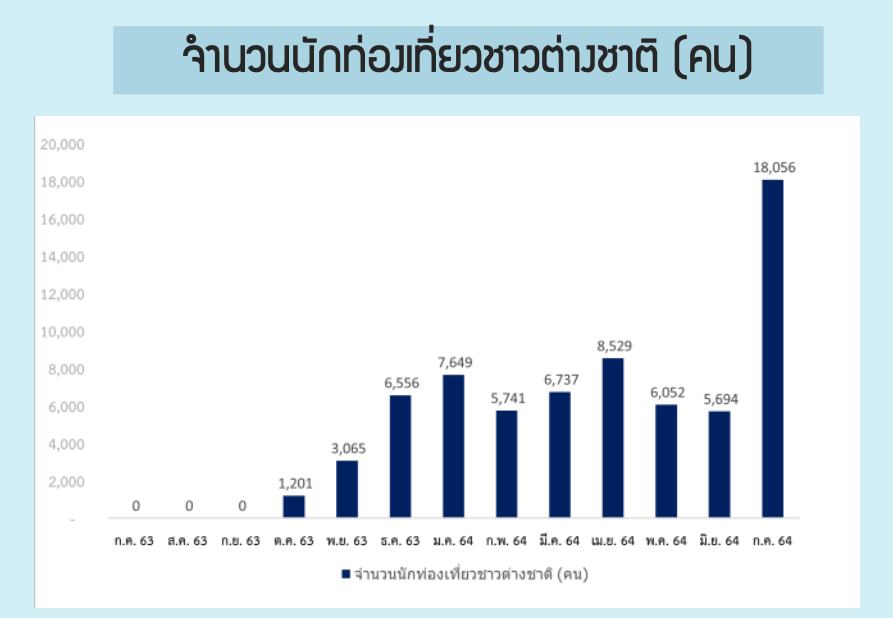
In July 2021, the number of foreign tourists under the Special Tourist Visa (STV), Thailand Privilege Card, and business travelers entering the country was 18,056, representing a 100% year-on-year growth, the highest in 15 months following the lockdown in April 2020 and the gradual easing of restrictions for foreign tourists starting in October 2020. Most of these tourists came from the United States, the United Kingdom, Israel, France, and Germany, with 14,055 tourists entering under the "Phuket Sandbox" project, which allows tourists to visit Phuket without quarantine and travel to other provinces after 14 days.
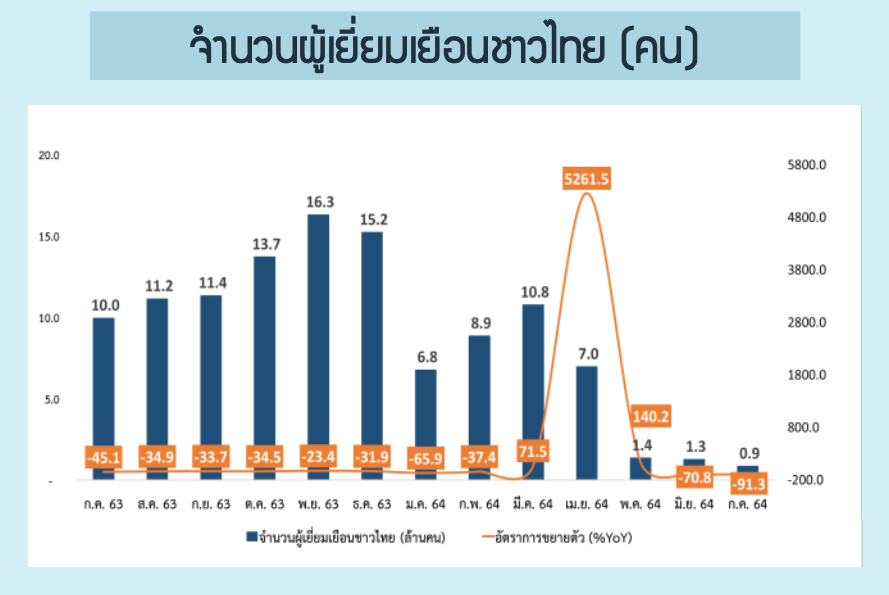
Meanwhile, domestic tourism, reflected by the number of Thai visitors in July, stood at 869,248, the lowest in 14 months, contracting by -91.3% year-on-year. This was due to the severe COVID-19 outbreak in Thailand, leading the Center for COVID-19 Situation Administration (CCSA) to decide to lockdown high-risk areas starting July 10, 2021. On July 21, 2021, the Civil Aviation Authority of Thailand (CAAT) announced control over flights in and out of dark red zones, prohibiting all commercial airlines from operating domestic flights for an initial period of 14 days, except for flights related to areas preparing to reopen or emergency landings.
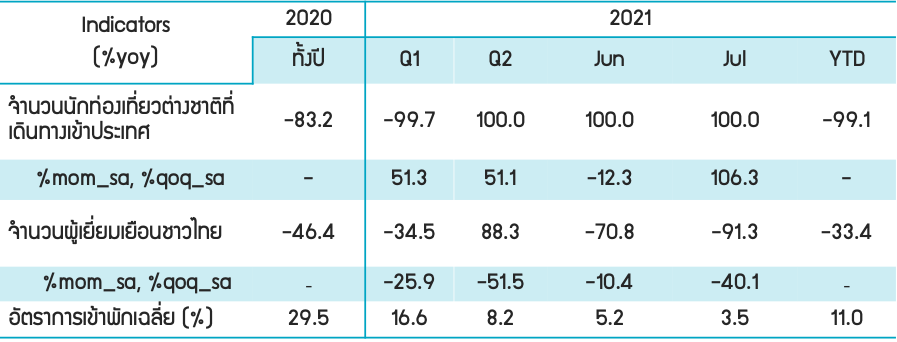
Source: Ministry of Tourism and Sports.
Foreign Economic Indicators
United States
Industrial production in July 2021 grew by 6.6% year-on-year, slowing down from 9.9% in the previous month and marking the third consecutive month of slowdown due to reduced production in the utilities and mining sectors.
The National Association of Home Builders (NAHB) index in August 2021 stood at 75 points, down from 80 points in the previous month, marking the lowest level in a year due to limited housing stock, labor shortages, and rising home prices and construction costs. New housing starts in July 2021 contracted by -7.0% from the previous month (seasonally adjusted), while June 2021 grew by 3.5% from the previous month (seasonally adjusted), resulting from declines in condominium and single-family home construction. However, year-on-year comparisons show that new housing starts in July 2021 still expanded, albeit at a slower rate than the previous month at 2.5%. The number of new building permits in July 2021 grew by 2.6% from the previous month (seasonally adjusted), with increases in permits for townhomes and condominiums in the western and central regions.
Retail sales in July 2021 grew by 15.8% year-on-year, slowing down from 18.7% in the previous month and marking the third consecutive month of slowdown.
The number of initial unemployment claims for the week of August 8-14, 2021, was 348,000, continuing to decline for the fourth consecutive week from 377,000 the previous week, reflecting a gradual recovery in the U.S. labor market amid the Delta variant COVID-19 outbreak. Nonetheless, this remains higher than the weekly average prior to the COVID-19 pandemic in the U.S., which was around 230,000.
China
Industrial production in July 2021 grew by 6.4% year-on-year, slowing down from 8.3% in the previous month and marking the lowest growth since September 2020 due to the rapid spread of the Delta variant COVID-19, rising raw material prices, and supply chain disruptions.
Retail sales in July 2021 grew by 8.5% year-on-year, slowing down from 12.1% in the previous month and marking the lowest level in 2021 due to sluggish consumption amid the new wave of COVID-19 outbreaks in some areas.
The unemployment rate in July 2021 stood at 5.1% of the total labor force, up from 5.0% in the previous month.
Japan
The inflation rate in July 2021 decreased to -0.3% year-on-year, from -0.5% in June 2021 due to the COVID-19 outbreak.
The value of exports in July 2021 increased by 37% compared to the same month last year, driven by a continuous recovery in overseas sales.
The value of imports in July 2021 increased by 28% compared to the same month last year, due to the recovery in domestic demand.
The trade balance in July 2021 recorded a surplus of 441.02 billion yen, resulting from the increase in export value at 7,356 billion yen, while import value stood at 6,915 billion yen.
Europe
The GDP for the second quarter of 2021 (second estimate) grew by 13.6% year-on-year, an increase from the -1.3% contraction in the previous quarter due to the reopening of the economy and low base effects.
The inflation rate in July 2021 grew by 2.2% year-on-year, up from 1.9% in the previous month, supported by recovering demand and low base effects.
Hong Kong
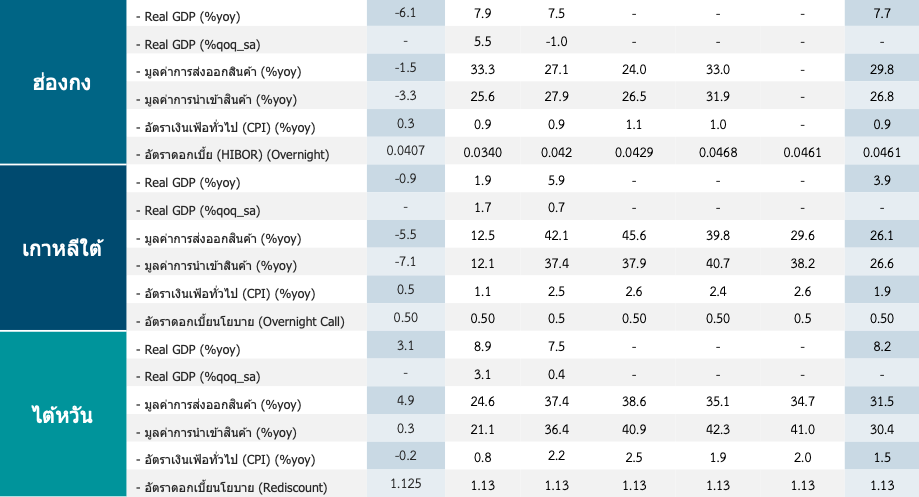
The inflation rate in July 2021 stood at 3.7% year-on-year, up from 0.7% in the previous month, marking the highest level since September 2016 due to low base effects and government support measures for housing rents.
The unemployment rate in July 2021 stood at 5.0% of the total labor force, down from 5.5% in the previous month, marking the lowest unemployment rate since the first quarter of 2020, reflecting the recovery of the labor market in line with the recovery of the Hong Kong economy.
Singapore
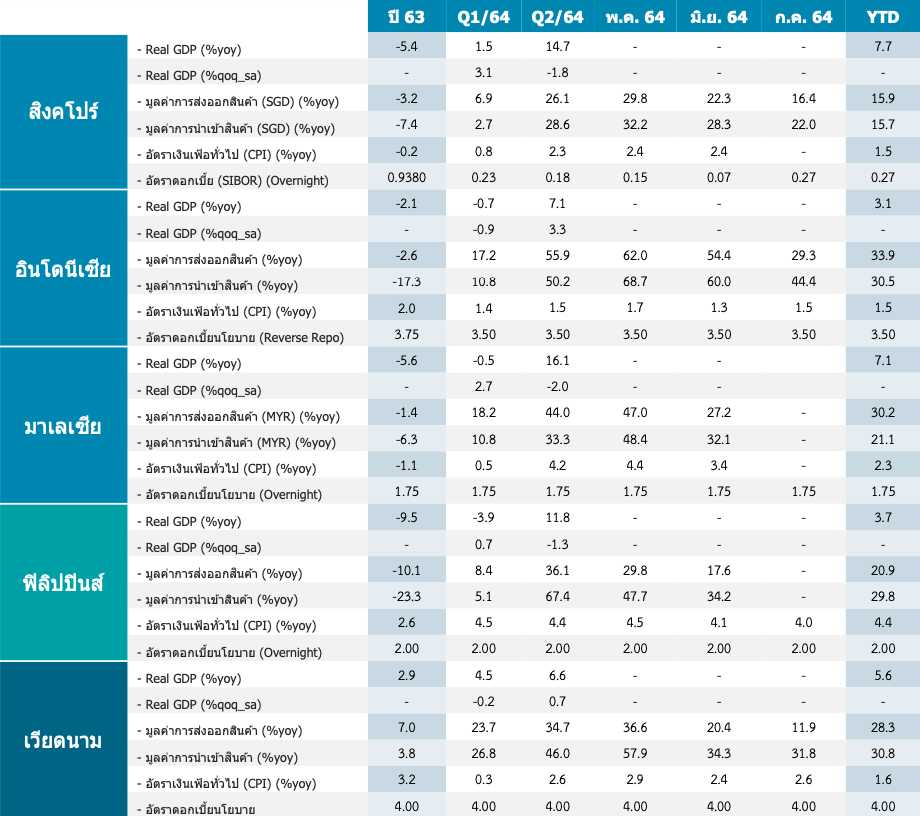
The value of exports in July 2021 grew by 16.4% year-on-year, slowing down from 22.3% in the previous month.
The value of imports in July 2021 grew by 22.0% year-on-year, slowing down from 28.2% in the previous month.
The trade balance in July 2021 recorded a surplus of 3.74 billion Singapore dollars, down from a surplus of 4.64 billion Singapore dollars in the previous month.
Indonesia
The Bank of Indonesia announced to maintain the policy interest rate at 3.5% per annum. The value of exports in July 2021 grew by 29.3% year-on-year, slowing down from 54.4% in the previous month.
The value of imports in July 2021 grew by 44.4% year-on-year, slowing down from 60.0% in the previous month.
The trade balance in July 2021 recorded a surplus of 2.59 billion U.S. dollars, up from a surplus of 1.32 billion U.S. dollars in the previous month.
South Korea
The unemployment rate in July 2021 stood at 3.3% of the total labor force, down from 3.7% in the previous month, marking the lowest unemployment rate since August 2020 amid the recovery from the COVID-19 outbreak in some areas.
Money Market and Exchange Rate Indicators
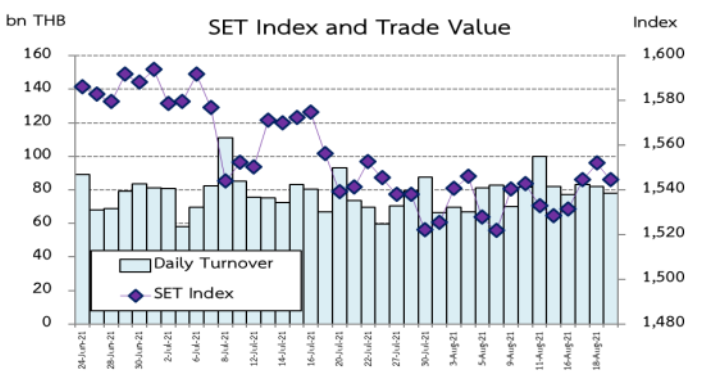
The SET index slightly increased from the previous week, contrary to other regional stock markets that declined, such as HSI (Hong Kong), Nikkei225 (Japan), and TWSE (Taiwan). On August 19, 2021, the index closed at 1,544.28 points, with an average trading value between August 16-19, 2021, at 80,092.55 million baht per day. Foreign investors and securities company accounts were net buyers, while domestic retail investors and domestic institutional investors were net sellers. During August 16-19, 2021, foreign investors net bought securities worth 8.33 million baht.
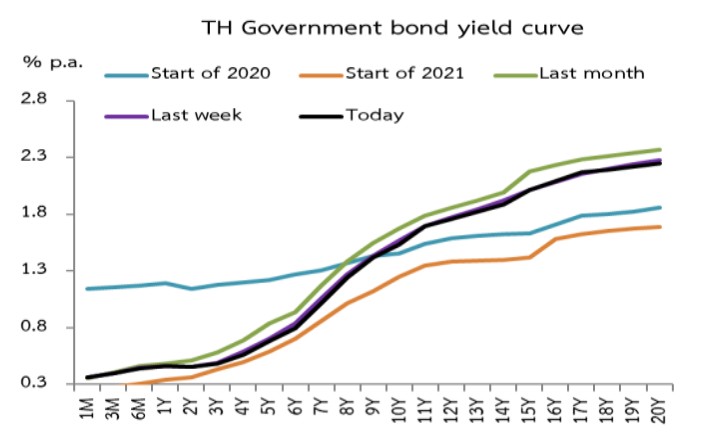
The overall yield on government bonds decreased by -1 to -4 bps. This week, investors participated in the auction of 6-year and 51-year government bonds, with investor interest at 3.40 and 2.14 times the auction amount. During August 16-19, 2021, foreign capital outflow from the bond market was -4,464.06 million baht. From the beginning of the year until August 19, 2021, foreign capital inflow into the bond market was 80,780.47 million baht.
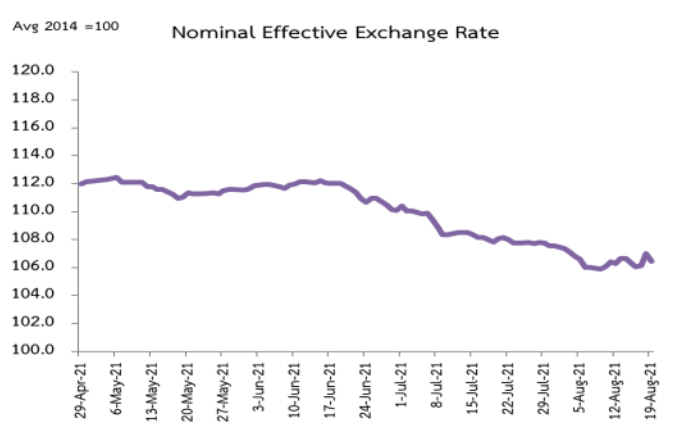
The Thai baht depreciated from the previous week, closing at 33.41 baht per U.S. dollar on August 19, 2021, a depreciation of -0.08% from the previous week, in line with the depreciation of the euro, won, Singapore dollar, and yuan against the U.S. dollar, while the yen appreciated against the U.S. dollar compared to the previous week. The baht's depreciation was less than that of other major currencies in the region, resulting in the Nominal Effective Exchange Rate (NEER) appreciating by 0.13% from the previous week.
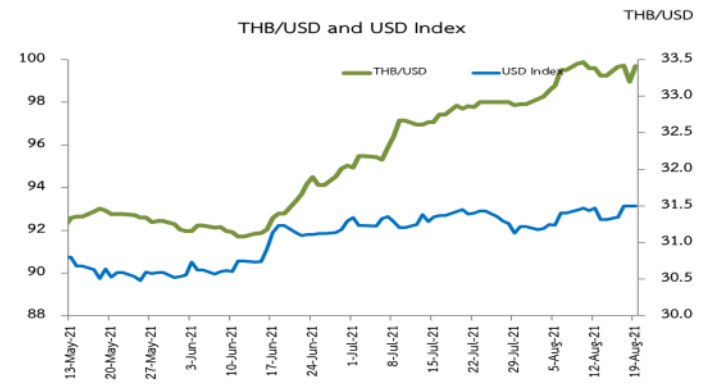
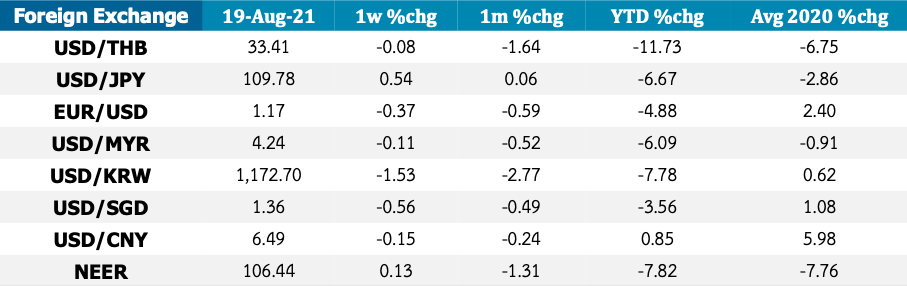
Exchange rates of various currencies: A + indicates appreciation and a - indicates depreciation against the U.S. dollar.
The NEER index appreciates (+) or depreciates (-) during the specified period, expressed as a percentage.
Economic Indicators
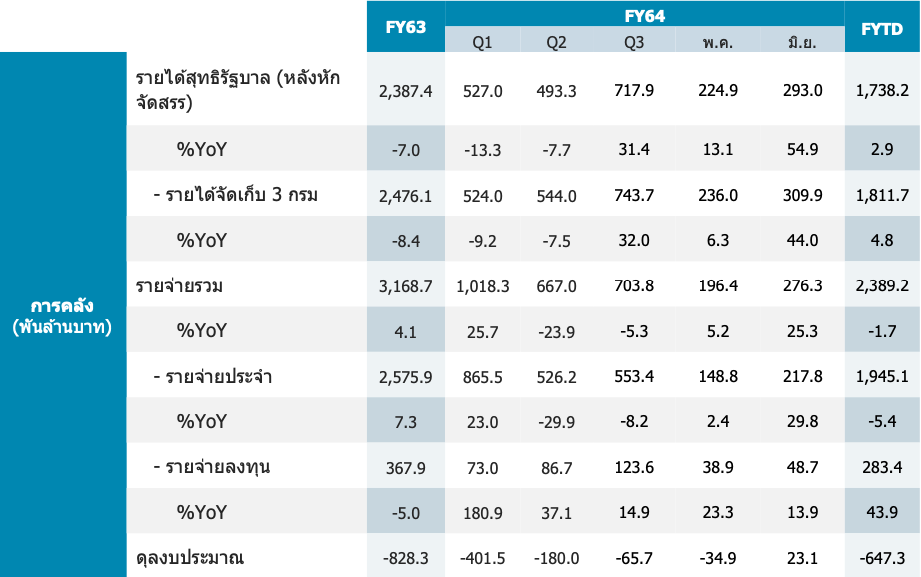
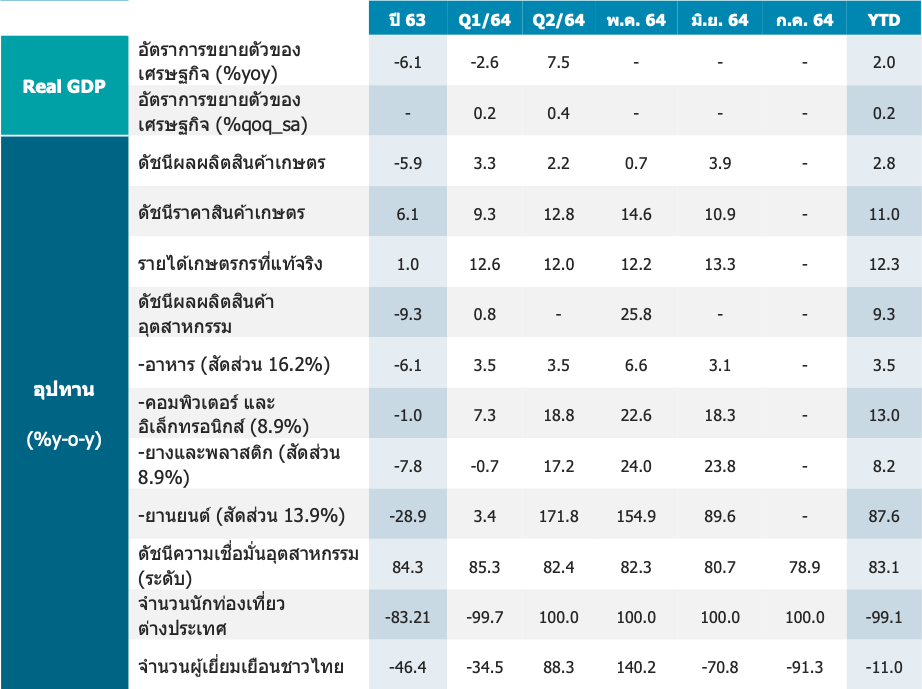
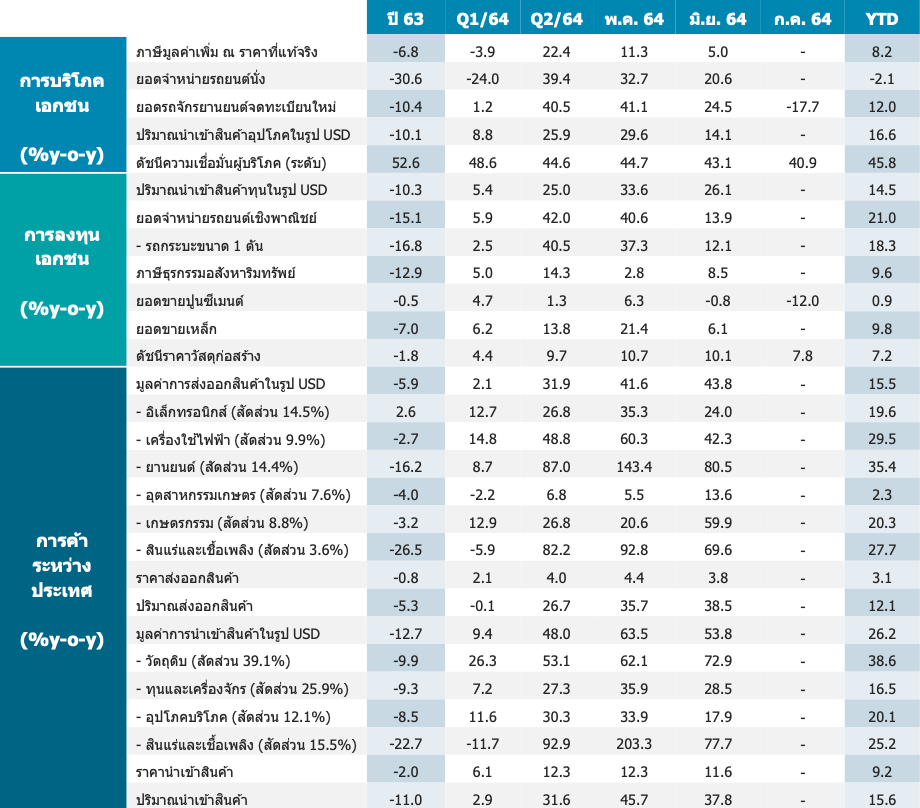
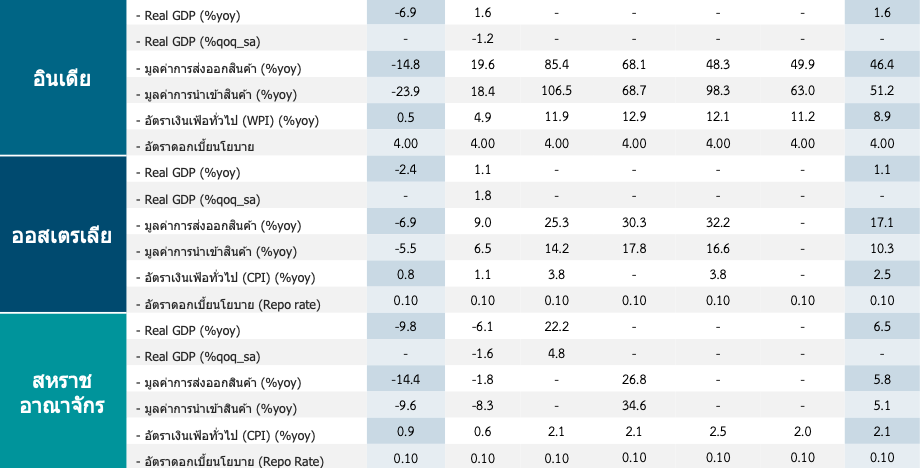
Global Economic Indicators
Thank you for the information from: Macroeconomic Policy Bureau, Fiscal Policy Office, Ministry of Finance 02-273-9020 Ext. 3259