"Home Isolation" for COVID Patients: How to Stay Safe
The concept of Home Isolation arose from the severe outbreak of COVID-19, with thousands of confirmed cases leading to a shortage of hospital beds. Additionally, COVID-19 patients with mild symptoms may not require hospitalization or may only need a short stay in the hospital before recovering at home or at a designated facility provided by the government.
Home Isolation is applicable for COVID-19 patients who meet the following criteria:
1. COVID-19 patients awaiting admission or treatment at a hospital, who have been assessed by a doctor as suitable for home care.
2. COVID-19 patients who have been hospitalized or in a government facility for at least 10 days and have been deemed by a doctor to be suitable for continuing Home Isolation.
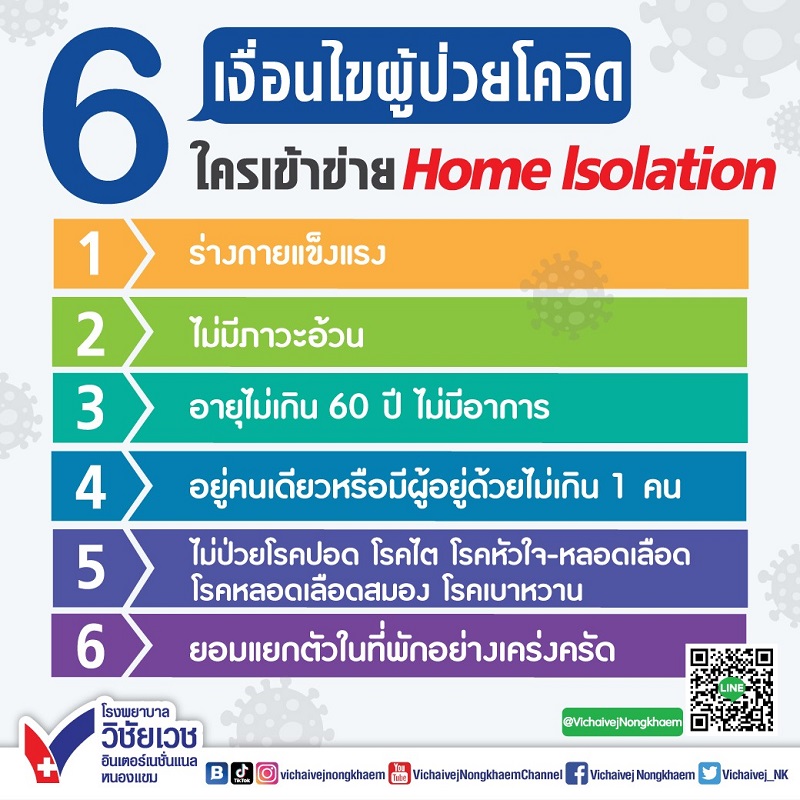
Criteria for Home Isolation:
1. The patient is asymptomatic or feels well.
2. Age under 60 years.
3. Good physical health.
4. No obesity or body mass index (BMI) > 30 kg/m² or weight > 90 kg.
5. No comorbidities such as chronic obstructive pulmonary disease (COPD), chronic kidney disease (CKD stage 3, 4), cardiovascular diseases, stroke, uncontrolled diabetes, or other conditions at the discretion of the doctor.
6. Living alone or with no more than one other person.
7. Willing to isolate in their own accommodation.
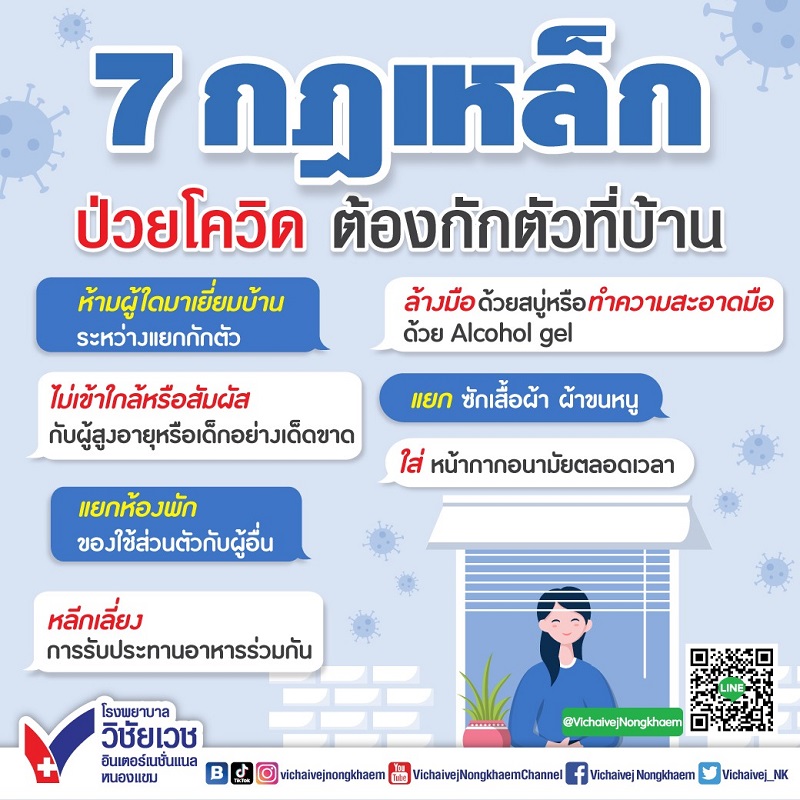
Guidelines for COVID-19 Patients During Home Isolation:
1. Do not leave the accommodation and do not allow visitors.
2. Maintain a distance of at least 2 meters from others.
3. Separate personal items and living spaces from others. If separation is not possible, keep as much distance as possible and ensure windows are open for ventilation.
4. Do not share meals with others.
5. Wear a mask at all times if not alone.
6. Wash hands with soap or alcohol gel whenever touching shared items.
7. Wash clothes and bedding separately with water and soap or detergent.
8. Use a separate bathroom if possible.
9. Separate waste and tie garbage bags securely.
Additional Recommendations:
If the home has sufficient space, the patient should stay in a private room alone, preferably with an attached bathroom. Personal items should be separated, and meals can be left outside the room for the patient to pick up to minimize contact.
If living in a condo, rental, or flat with insufficient space for clear separation, it is recommended that the patient stay in a room alone while non-infected individuals temporarily relocate to reduce the risk of transmission within the household.
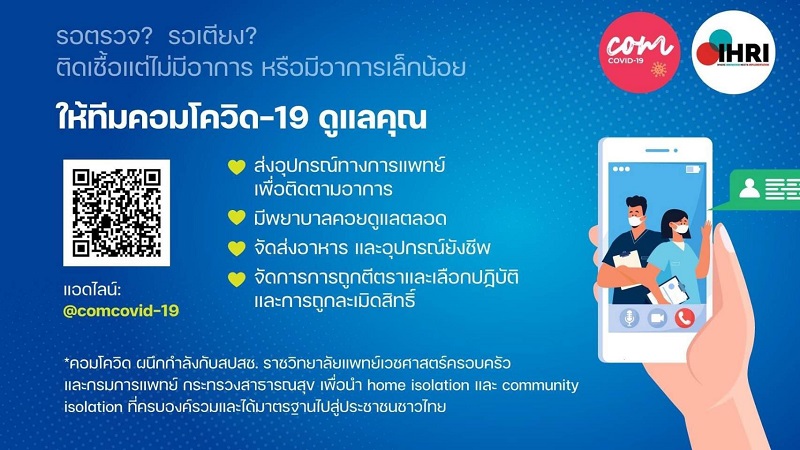
Support for COVID-19 Patients Undergoing Home Isolation:
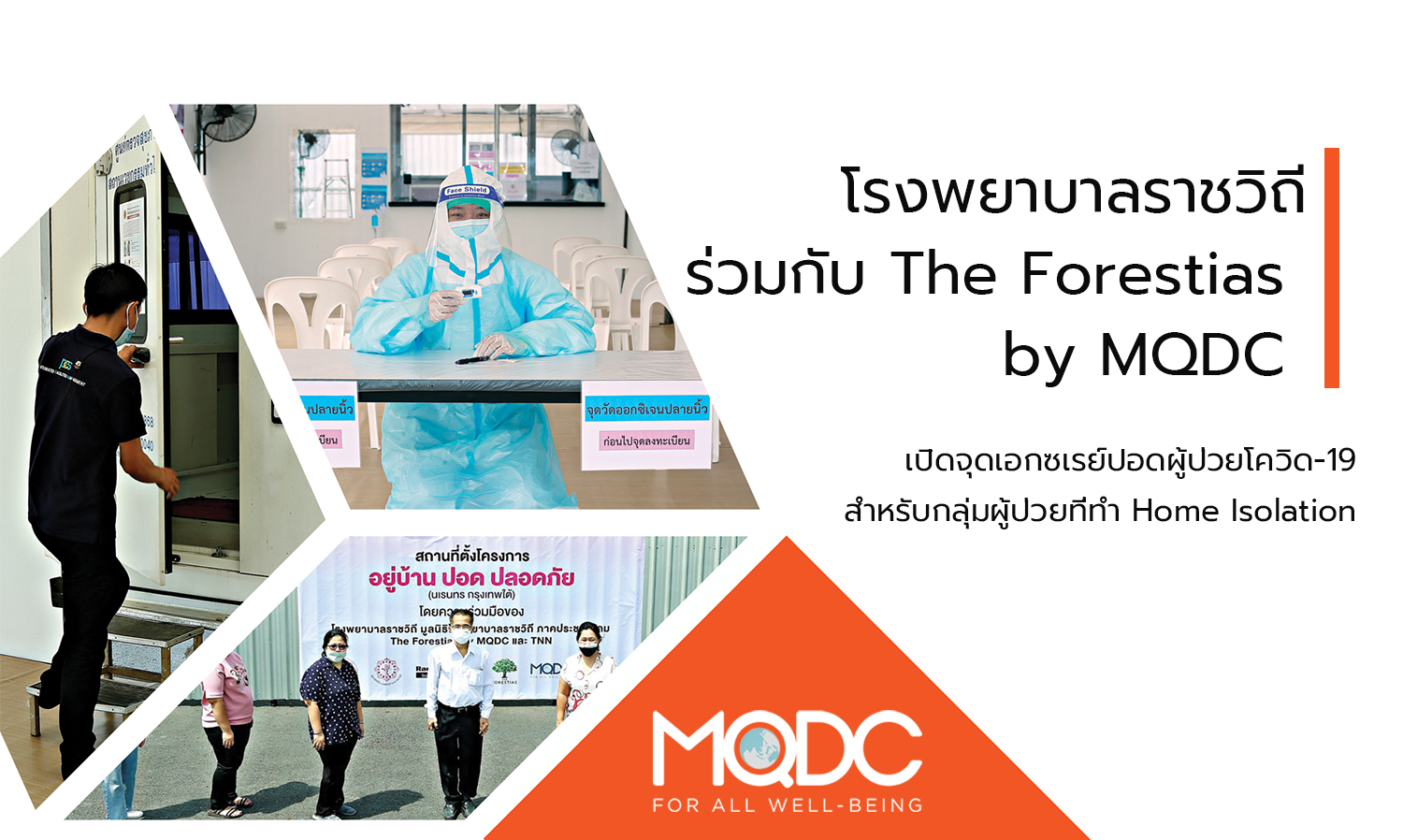
Monitoring equipment includes a thermometer and a fingertip pulse oximeter to assess lung gas exchange. Normal levels are around 97-100%. If levels drop to 94% or lower, this indicates a need for monitoring as there is a risk of COVID-19 progressing to the lungs. Symptom assessment can be conducted via telemedicine, allowing real-time communication between patients and healthcare professionals daily.
1. Medication as prescribed by the doctor.
2. Three meals a day.
3. Monitoring of symptoms and consultations.
If symptoms change or worsen, notify the medical team and seek immediate hospital care.
It is crucial to monitor your own symptoms. Measure your temperature daily. If symptoms worsen, such as difficulty breathing, high fever, or inability to perform daily activities, contact the treating hospital. The hospital will send a vehicle to pick you up for treatment. If you must travel to the hospital yourself, it is recommended to use a private vehicle, avoid public transport, and wear a mask at all times. If traveling with others, keep windows open for ventilation to ensure safety.
Dr. Somsak Arkhasilp, Director-General of the Department of Medical Services, stated that Home Isolation is a way to admit new patients for care at home first. If their condition worsens, they will be transferred to the hospital. This approach optimizes bed management, allowing patients who have been hospitalized for 7-10 days and are improving to isolate at home, potentially increasing bed availability by about 40-50% for new patients.
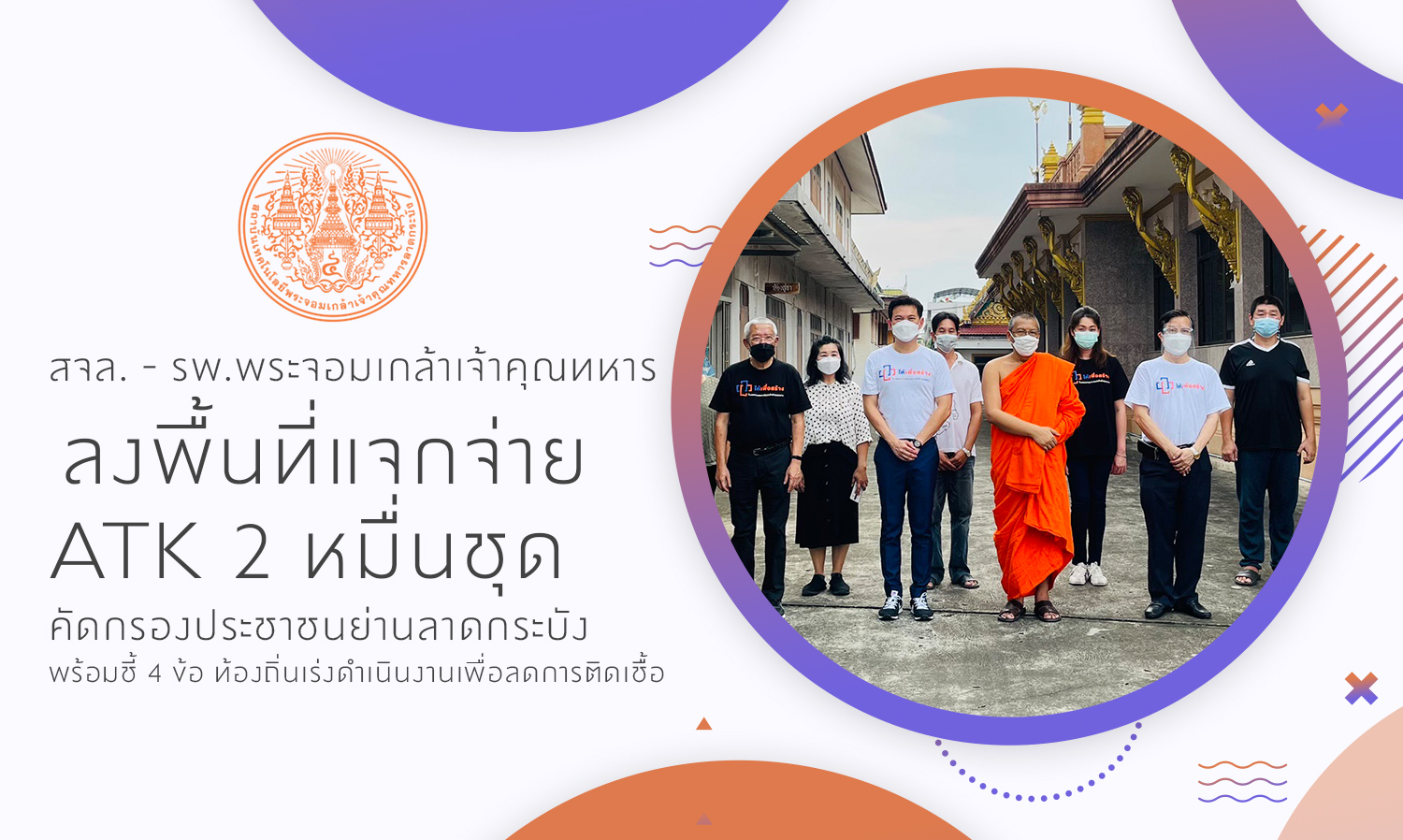
For community isolation, the Department of Medical Services and medical schools have prepared facilities, primarily using open spaces such as temple halls or school auditoriums. Worker camps or villages with isolation facilities for infected individuals can also be utilized, with a limit of 200 people to reduce crowding and ensure a hygienic environment, separating wastewater and waste from the community. This is for patients who are asymptomatic or have mild symptoms and do not require oxygen. Thanks to civil society and various pages that help coordinate the registration of patients and provide food support.
For Home Isolation and community isolation, criteria for infected individuals must be voluntary and they must be able to follow the guidelines. Suitable locations leverage Thailand's strengths: homes, temples, and schools. Home Isolation requires a separate bedroom, while Community Isolation can use temples or schools, with communication channels through teleconferencing and video calls to monitor symptoms daily by doctors and nurses twice a day, along with emergency contact options. Registration with healthcare facilities is also required (with plans to expand to warm communities and nearby healthcare facilities).
Infected individuals will receive a thermometer and a pulse oximeter, along with simple testing methods if lung issues are suspected. For example, measure blood oxygen levels before and after standing up for one minute. If oxygen levels drop more than 3%, they will be admitted to the hospital, and there is a referral system for emergencies.
Thank you for the information from: Vichaiyut International Hospital, Nong Kham, and the Department of Medical Services, Ministry of Public Health.