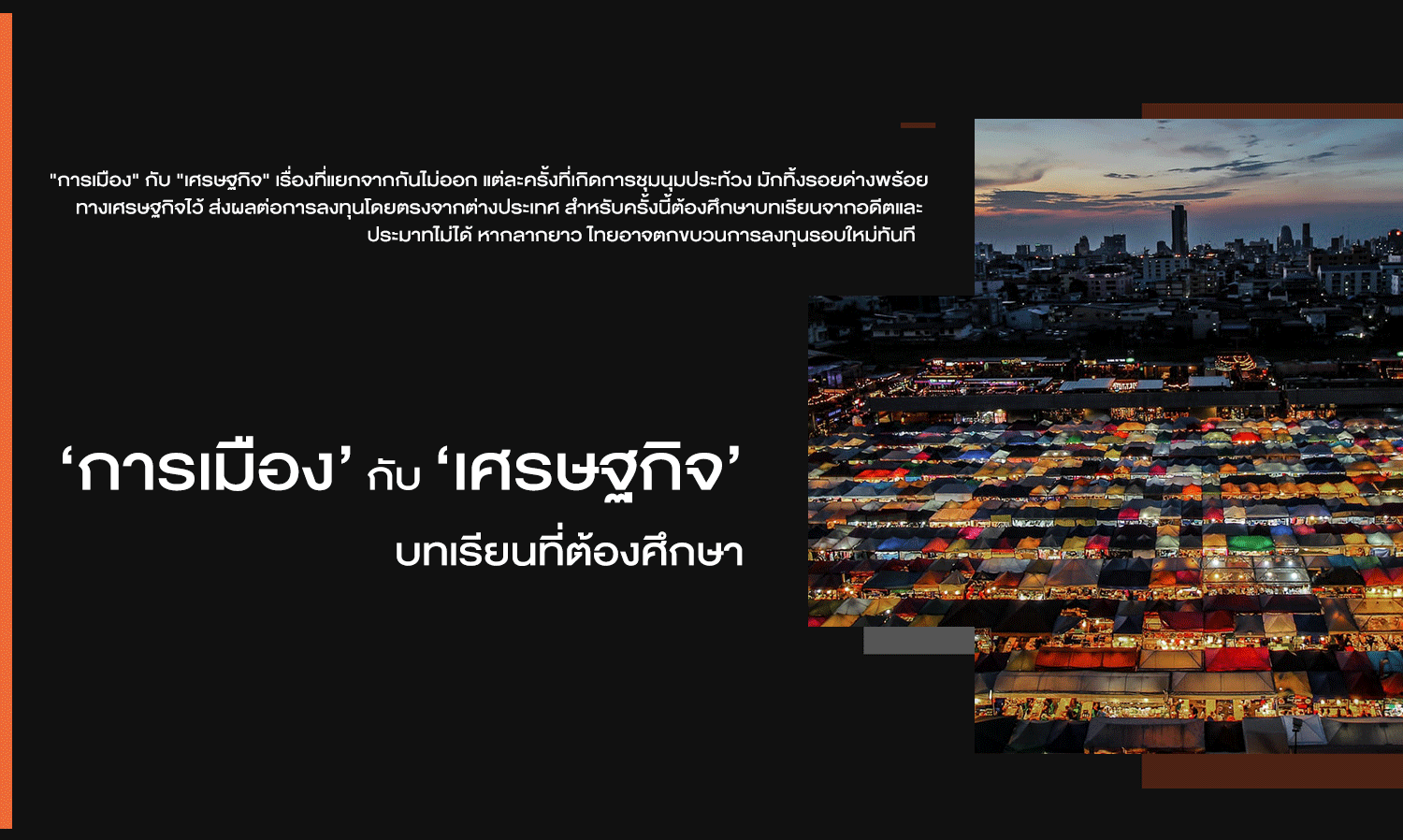
'Politics' and 'Economics': Lessons to Learn
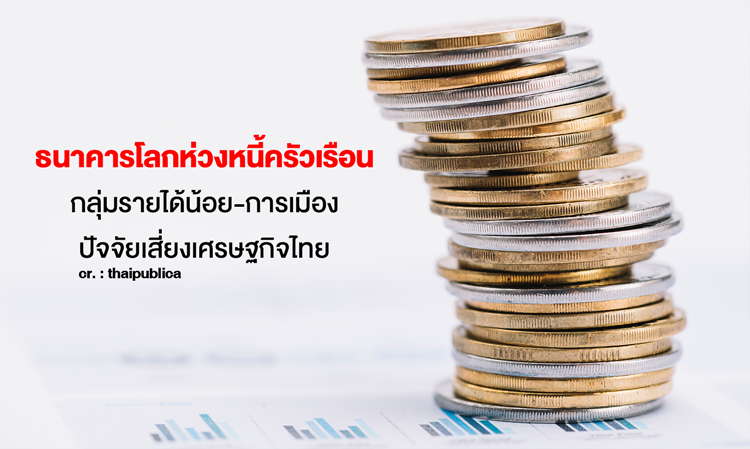
'Politics' and 'Economics' are inseparable. Each time a protest occurs, it often leaves a blemish on the economy, directly affecting foreign investment. This time, we must learn from past lessons and not be complacent. If the situation drags on, Thailand may miss out on the new wave of investment.
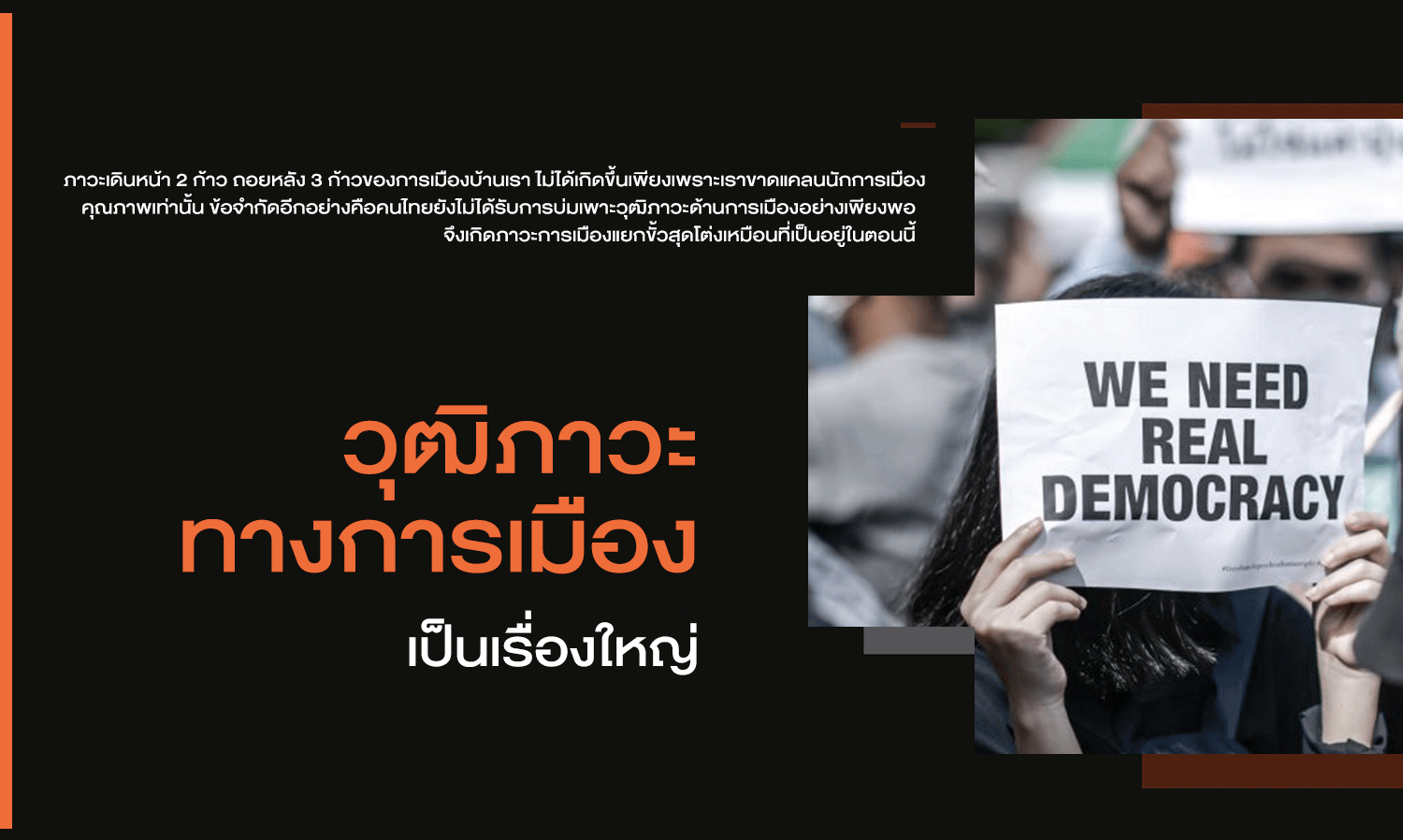
No one can deny that domestic political unrest, especially various protests, impacts economic growth both in the short and long term. It undermines the confidence of foreign investors and even the assurance of domestic consumers and investors. Looking back at the history of protests, we see that each instance has left significant economic scars and has been a crucial factor in the decline of foreign direct investment (FDI), in contrast to neighboring countries like Vietnam, which continue to grow.
Over the past 12 years, there have been three major protest events. The first was in 2008, led by the People's Alliance for Democracy, during which two international airports were closed in November 2008, hindering the transportation of goods and international travel. This occurred during a time when the global economy was facing a crisis, exacerbating the economic slowdown, as reflected in the economic figures for the fourth quarter of 2008, which showed a contraction of 4.3%.
The second protest occurred in 2010, led by the United Front for Democracy Against Dictatorship. Protesters began their demonstrations at the Ratchaprasong intersection in April, a central economic area and a significant hub for trade and tourism in Thailand. At that time, the Thai economy was starting to recover in line with the global economic situation, but the protests led to a 3.6% decline in tourist numbers in the second quarter of 2010 and reduced consumer and investor confidence, despite an overall improvement in the economy due to the global recovery.
The third protest took place in 2014, continuing from 2013, led by the People's Committee for Absolute Democracy with the King as Head of State (PDRC). This protest escalated significantly in the first quarter of the year, resulting in a 0.6% contraction in the economy, with consumption and investment affected by political concerns, while tourist numbers fell by 5.8%, marking the first decline in nine quarters.
For this protest, many analysts agree that the economic impact will likely be 'not as severe' as in previous instances because the economy is already facing a crisis due to COVID-19. At least it shouldn't affect tourism since no tourists are currently arriving. Moreover, the protests are merely in the 'preheating' stage, with smoke but no flames yet. However, it is crucial for all parties not to be complacent. If the situation drags on amidst the easing of COVID-19, Thailand could immediately miss out on the new wave of investment. Many countries are currently deciding whether to relocate their production bases from 'China' to various ASEAN countries. If the political situation remains as it is, Thailand's name will likely be at the end of the list!
SOURCE: www.bangkokbiznews.com