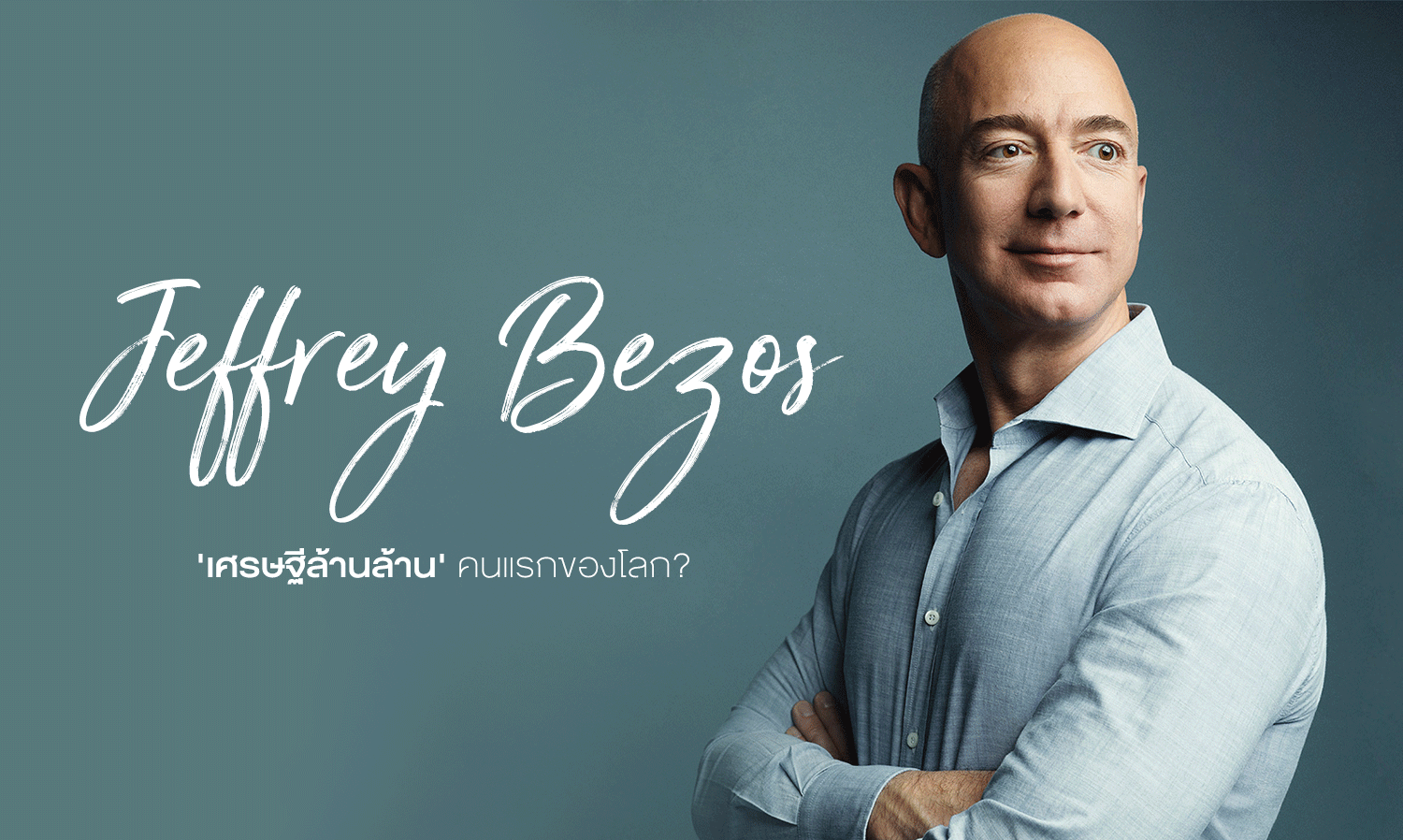
Why Will 'Jeff Bezos' Be the First 'Trillionaire' in the World?
While many businesses around the world have been severely impacted by COVID-19, causing a decline in the wealth of numerous billionaires, for "Jeff Bezos," it has been quite the opposite. His e-commerce business has significantly increased his wealth, and he may become the world's first trillionaire within six years.
Three years ago, Jeff Bezos, the CEO and founder of Amazon.com, the giant online retailer in the United States, was still struggling to maintain his position as the richest billionaire in the world.
However, since the beginning of 2020, despite the outbreak of the novel coronavirus, the cause of COVID-19, the skyrocketing demand on Amazon's e-commerce platform has led to an increase in Bezos's asset value by over $28 billion, totaling $143 billion, according to Bloomberg's Billionaire Index.
The recent increase in wealth (of $28 billion) is not insignificant; it is equivalent to the GDP of Honduras.
As of May 9, the total asset value of $143 billion, or about 4.57 trillion baht, of the Amazon CEO leaves his competitors far behind. The second richest billionaire in the world, "Bill Gates" of Microsoft, has a net worth of $106 billion, trailing Bezos by one-third.
Meanwhile, the third richest billionaire in the world, "Mark Zuckerberg" of Facebook, has total assets of $78 billion.
- The Rise of "Amazon"
Amazon reported that in the first three months of this year, revenue reached $75.5 billion, while its share in the online retail business increased by over 40% since mid-March.
The giant's business has thrived during this pandemic, expanding its delivery services, entertainment, and cloud computing, all of which have seen a significant increase in demand as people stay home.
Amazon's remarkable success, which has grown rapidly during lockdowns to combat COVID-19, makes it highly likely that the founder of Amazon will become the world's first trillionaire.
- First Trillionaire by 2026
Analysis from the website "Comparisun" predicts that Bezos, the Amazon CEO, could become the world's first trillionaire if his assets continue to grow by over 30% annually as they are now. His wealth, at 56 years old, could reach $1 trillion (about 32 trillion baht) by 2026 when he turns 62.
Comparisun notes that the value of the Amazon CEO's assets has increased by an average of 34% per year over the past five years. Even after paying a settlement to his ex-wife, "MacKenzie Bezos," with Amazon shares worth about $38 billion, it seems to have had no impact on his wealth.
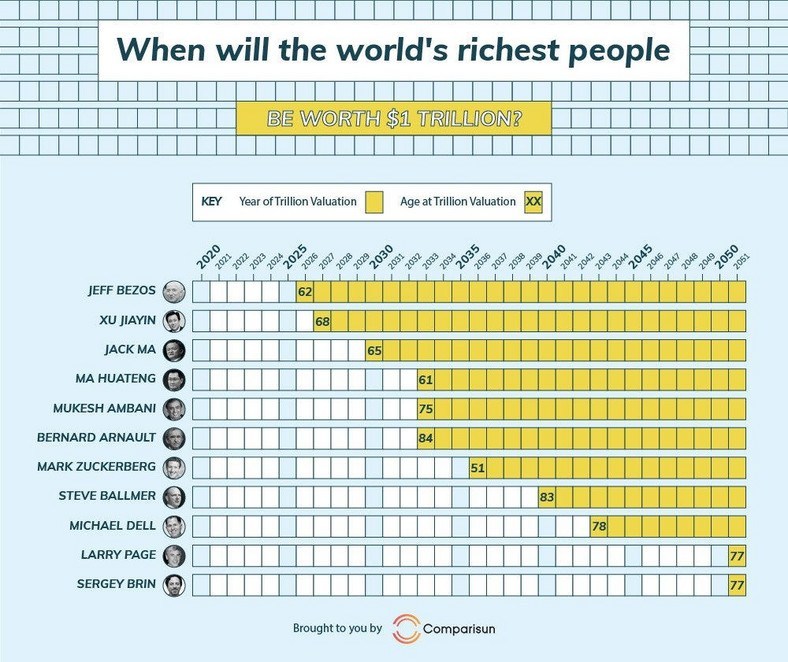
Additionally, Comparisun predicts that the next person likely to become a trillionaire after Bezos is "Xu Jiayin," a Chinese businessman and chairman of Evergrande Group, a major real estate developer in China, who is expected to reach a net worth of $1 trillion by 2027 when he turns 68.
“On another note, the COVID-19 pandemic has almost acted as fuel for Amazon's growth in both retail and cloud businesses,” said Dan Ives, an analyst at Wedbush.
Ives added that in terms of e-commerce, the pandemic has forced companies to expand operations and gain market share by becoming the primary purchasing channel for consumers. In terms of cloud services, more companies are turning to the cloud, which greatly benefits Amazon Web Services (AWS).
-
The Path to Amazon's Mega Wealth
Bezos, whose full name is Jeffrey Preston Bezos, was born on January 12, 1964. He is the most famous figure among Americans as the founder, CEO, and chairman of the online retail giant Amazon.
Since founding the company in 1994, Bezos has transformed the e-commerce industry and is regarded as a leading industrialist and investor.
In 2017, Forbes magazine's wealth index named Bezos the first "centibillionaire" with a net worth of $112 billion. He was later recognized as the “richest person in modern history” after his wealth increased to $150 billion in July 2018.
At the same time, Bezos's Amazon empire became the second company in history to reach a market value of $1 trillion, following Apple, the first company to achieve a $1 trillion valuation.
- Challenges Ahead
Despite being on a business upswing, Bezos's Amazon faces criticism regarding the treatment of employees, which has increasingly come under scrutiny during the COVID-19 pandemic.
For example, the company's recent move to cut hourly wages by $2 for warehouse workers has caused public outrage.
Employee groups have protested several times in recent weeks, demanding fair working conditions, as more workers contract this deadly virus.
As a result, regulatory agencies and U.S. politicians have begun to scrutinize the retail giant more closely. Recently, Democratic members of Congress called for a federal investigation into the working conditions of Amazon's warehouse employees.
However, the debate continues as to whether governments will dare to “break up” with organizations that have risen to become giants like Amazon, similar to others like Facebook, Google, and Apple that have become wealthier than many countries today.