What Will Global Travel Signals Be Like When COVID Isn't Over?
The tourism industry is a vital source of income for many countries, leveraging the richness of nature and cultural attractions to draw in a massive number of international tourists. However, the outbreak of COVID-19 has severely impacted the tourism sector, causing services to come to a sudden halt.
According to the report “ASEAN Key Figures 2019”, the number of tourists surveyed indicated that in 2018, “Thailand” had the highest number of international tourists in ASEAN at approximately 38.3 million, followed by “Malaysia” with 25.8 million, Singapore with 18.5 million, Indonesia with 15.8 million, and Vietnam with 15.5 million. Over the past decade, the number of tourists in ASEAN countries has surged from 66 million in 2009 to 133 million in 2019, primarily driven by an increase in Chinese tourists.
However, due to the COVID-19 pandemic, the Pacific Asia Travel Association (PATA) estimates that this virus has caused damage to the tourism industry in the Asia-Pacific region amounting to $34.6 billion and may alter tourist behavior, with many likely to spend less and travel for shorter durations. Consequently, countries need to reassess their domestic tourism promotion policies amidst a continuing global economic downturn.
“Restarting” Tourism
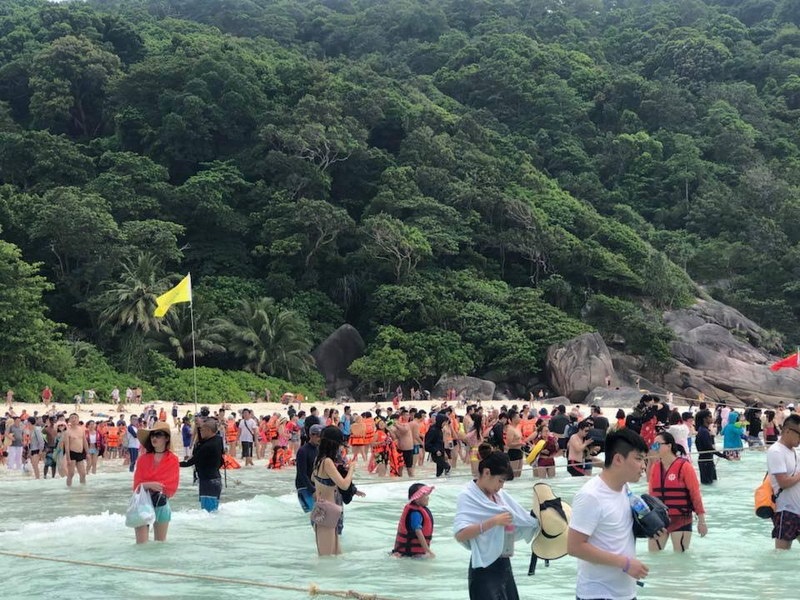
Data from the World Tourism Organization (WTO) indicates that the COVID-19 crisis has led to a global decline in international tourist numbers by 60-80% and has resulted in a drop in international tourist revenue worldwide by over $850-1,100 million, putting 100-120 million jobs in the tourism sector at risk.
Certainly, the Asia region has seen a decrease in tourists by over 35%, followed by Europe with a decline of over 19%, the Americas with a 15% drop, Africa with a 12% decrease, and the Middle East with an 11% reduction. Almost 100% of tourist areas and destinations worldwide have been closed.
Looking at data from March to assess the situation, it can be categorized into three scenarios:
Scenario 1: It is expected that the number of tourists in 2020 will decrease by 58%, with borders reopening for tourism in July.
Scenario 2: It is anticipated that the number of tourists will decrease by 70%, with borders reopening for tourism in September.
Scenario 3: It is projected that the number of tourists will decrease by 78%, with borders reopening for tourism in December.
"Although preliminary data analysis has been conducted, the situation must be continuously monitored. If it follows Scenario 1, global tourism is expected to return to normal by December 2020 to January 2021. However, if it aligns with Scenarios 2 and 3, recovery will take longer."
Nonetheless, the WTO believes that to restart tourism quickly, it is essential to reopen international travel so that tourists can travel normally, adhering to health regulations of each country. Clear protocols must be established, and accurate travel information should be shared by tourists, utilizing digital technology as a support tool, while maintaining hygiene measures until better alternatives are available.
WTTC Recommends Establishing “Guidelines” for Opening Travel Bubbles to Revive Tourism
The World Travel and Tourism Council (WTTC) has stated that to revive tourism as quickly as possible, countries must coordinate to reopen borders, especially in countries with similar pandemic control situations, lifting bans or travel advisories that are unnecessary. They should systematically monitor tourist movements from one point to another to enhance disease prevention while facilitating travel for international tourists, and each nation should accept the health and safety protocols established by the tourism sector and health experts, including government authorities.
“Japan” Signals Interest in Traveling to Thailand
Japanese tourists are among the groups that frequently travel to Thailand. In 2019, over 1.8 million Japanese tourists visited Thailand, marking a growth of 9.96%. Thailand was the fourth most popular destination after Korea, China, and Taiwan, with peak travel months being March-April and August.
According to the Tourism Authority of Thailand's Tokyo office, the current COVID-19 situation in Japan is relatively stable, with very few new infections. It is believed that Japanese people will begin traveling again around September-October, with business travelers and independent travelers (FIT) being the first groups to resume travel. Group tours, educational trips, and MICE (Meetings, Incentives, Conferences, and Exhibitions) are expected to start traveling in early next year.
Data shows that post-COVID-19, Japanese tourists will avoid “senmitsutsu” or prioritize the 3-Cs: comfortable, avoiding crowded places in popular tourist spots, maintaining social distance, preferring single rooms or separate villas, cleanliness, ensuring cleanliness and disinfection of facilities and staff in tourist areas and during travel, and care, paying more attention to separate arrangements for food and transportation.

Thailand Prepares to Open Travel Bubble Targeting “Phuket-Krabi-Surat Thani” for Foreign Tourists
Minister of Tourism and Sports, Mr. Pipat Ratchakitprakarn, stated that despite concerns about a second wave of outbreaks if a “travel bubble” is opened, to mitigate potential economic impacts and achieve a tourism revenue target of 1.23 trillion baht, the Ministry of Tourism will push forward the opening of travel bubbles in September to generate at least 200 billion baht in tourist revenue before hotels face losses and closures of over 60% by the end of this year.
"The proposed model for the “travel bubble” will limit tourists' travel areas to designated provinces for 14 days, requiring a health check for infection from the country of origin once before entering Thailand and once after 14 days to confirm they are virus-free before traveling to other areas of Thailand. Tourists will be grouped and may travel via charter flights for convenience, safety, and effective quarantine control, and will be transported to designated provinces by specified vehicles."
Currently, several provinces interested in participating in the project have exceeded 80% public approval, including Phuket, Phi Phi Islands (Krabi), Koh Samui, Koh Phangan, Koh Tao, and Koh Nang Yuan (Surat Thani), all of which rely on tourism revenue.
In the second phase, it is expected that the pilot area can be expanded to other provinces, with eight provinces already offering to welcome tourists, including Bangkok, Pattaya (Chonburi), Chiang Mai, Chiang Rai, etc.