
Global Corporate Debt Surges to $1 Trillion Due to COVID-19
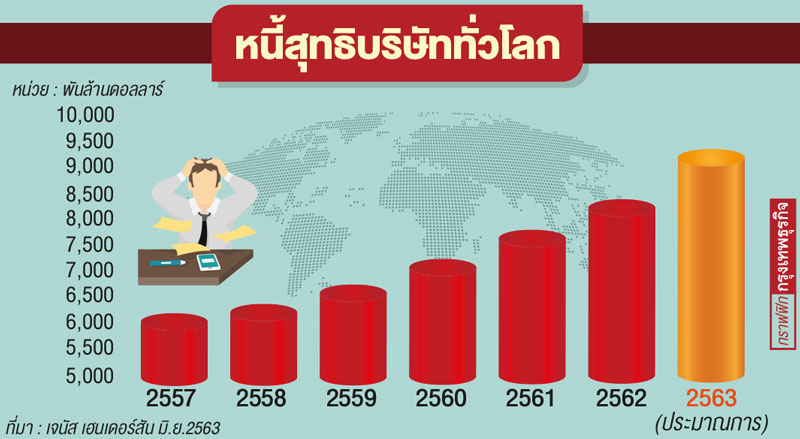
Another noteworthy issue is that COVID-19 has caused the debt of major companies worldwide to increase significantly. A study of over 900 firms indicates that in 2020, corporate debt will rise by $1 trillion, pushing the total global debt to approximately $9.3 trillion.
The latest study from 900 leading companies worldwide, aimed at creating a new corporate debt index, reveals that this year, companies will incur an additional $1 trillion in debt as a result of efforts to increase liquidity in response to the coronavirus.
According to Reuters, in 2020, corporate debt among leading companies globally has increased unprecedentedly, resulting in a 12% rise in total corporate debt worldwide, reaching around $9.3 trillion. When combined with accumulated debt from previous years, the world's most indebted companies now have debt levels comparable to those of medium-sized countries.
Last year, corporate debt also rose by 8%, driven by mergers and acquisitions (M&A) and companies borrowing to fund stock buybacks and pay dividends. However, this year's surge in debt is due to entirely different reasons, namely borrowing to build reserves to cope with the profit losses caused by the virus.
“COVID has changed everything. Companies now need to conserve capital and build strong balance sheets,” said Seth Meyer, an investment manager at Janus Henderson, who compiled the analysis for the new corporate debt index.
Between January and May, companies issued bonds worth $384 billion, with Meyer estimating that in recent weeks, companies with high-risk, high-yield bonds but low creditworthiness have issued bonds at a record pace.
Nevertheless, investors have been hesitant to respond, except for the most reliable companies in March. However, the market has opened up to bond offerings again after central banks in several countries, such as the U.S. Federal Reserve, the European Central Bank (ECB), and the Bank of Japan, initiated emergency bond-buying programs.
Companies listed in the new debt index have more than 40% of the debt they had in 2014, and their debt has increased faster than their profits.
The pre-tax profits of the 900 companies studied rose collectively by 9.1% to $2.3 trillion, with the debt-to-equity ratio reaching a record high of 59% in 2019, while the ratio of profits available for interest payments also hit a new record.
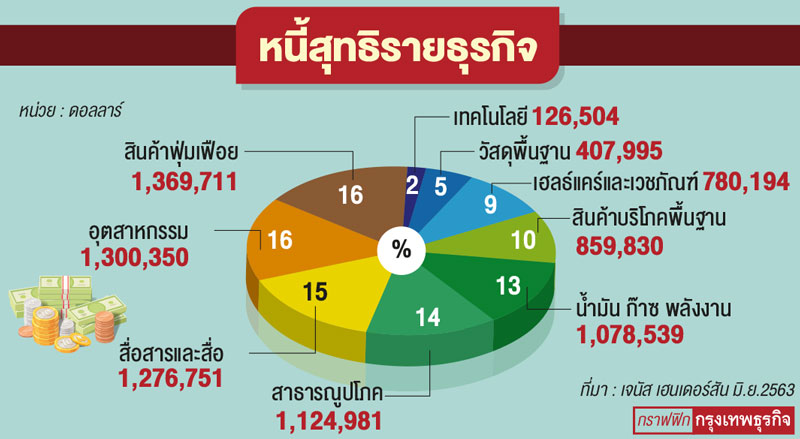
U.S. companies account for nearly half of the total corporate debt worldwide, amounting to $3.9 trillion, and have increased the fastest over the past five years compared to other major economies, except for Switzerland, which has seen several significant M&A deals.
Germany follows in second place with $762 billion, and it is home to the three most indebted companies in the world, including Volkswagen, which has the highest debt globally at $192 billion, only slightly below countries like South Africa and Hungary. Volkswagen's debt has increased due to its automotive finance subsidiary.
Conversely, one in four companies in the index has no debt at all, with some holding substantial cash reserves, the largest being Alphabet, Google's parent company, with $104 billion.
Meyer also stated that the credit market still has some potential to return to pre-COVID conditions, and the ongoing threat from the virus, especially in the U.S. where the number of infections has surged, remains a significant concern for investors. This trend is more challenging than previously assessed two months ago.
SOURCE : www.bangkokbiznews.com