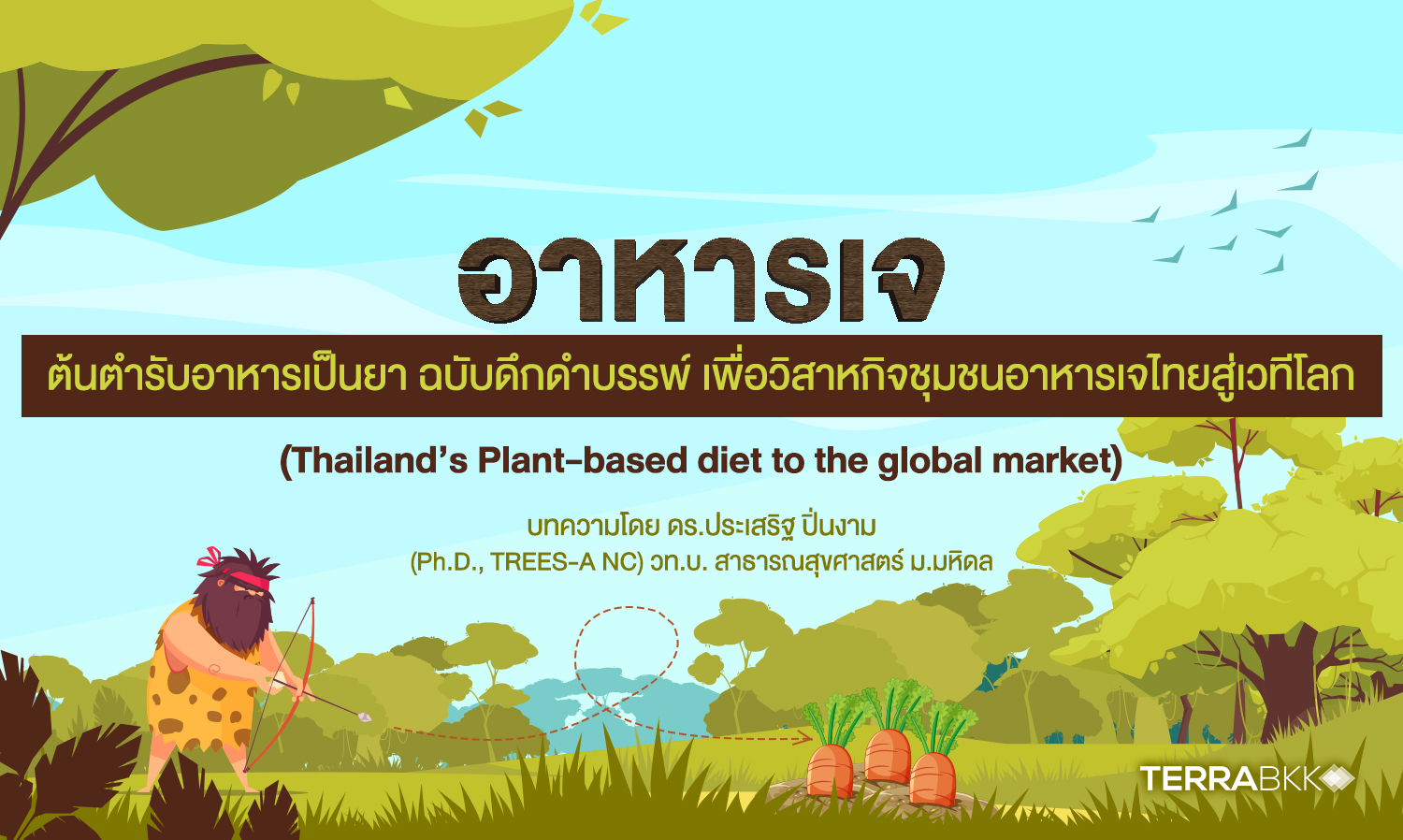
The Balance of the Four Elements: The Beginning of a Complete Life
Dr. Prasert Pinngam (Ph.D., TREES-A NC)
B.Sc. Public Health, Mahidol University
“Don't let your guard down” is a phrase that serves as a reminder for the Thai people. While many countries are still facing uncertain situations, Thailand is gradually improving. Additionally, there is a report indicating that Thailand ranks 6 out of 195 countries globally, and 1 in Asia, with details in each category as follows:
1. Disease prevention scored 75.7 points, ranking 3 in the world.
2. Ability to detect diseases and report quickly scored 81.0 points, ranking 15 in the world.
3. Response and mitigation of epidemic impacts quickly scored 78.6 points, ranking 5 in the world.
4. A strong and stable health system scored 70.5 points, ranking 2 in the world.
5. Country's potential, with a budget for disease prevention and control, scored 70.9 points, ranking 12 in the world.
6. Risk of threats scored 56.4 points, ranking 93 in the world.
(Source: Population and Social Research Institute, Mahidol University)
When evaluated academically, it is clear that Thailand has strong personnel and a medical service system. However, our weaknesses lie in political and economic sensitivity, as well as health literacy. This data must be assessed to design a comprehensive health system moving forward. Nevertheless, Thailand has not experienced severe outbreaks like developed countries such as the USA, Italy, and Spain, even though these countries possess technology believed to be more advanced than ours. Therefore, it is necessary to analyze additional data, as the outbreak of diseases involves factors beyond those indicated by strength indices, including climatic conditions. A report dated April 12, 2020 titled COVID-19 can be tracked on the basis of Latitude & Temperature by Sagar Bisoyi indicated that severe COVID-19 outbreaks predominantly occur in countries within the latitude zone of 30°N-50°N, with average temperatures between 5°C-15°C.
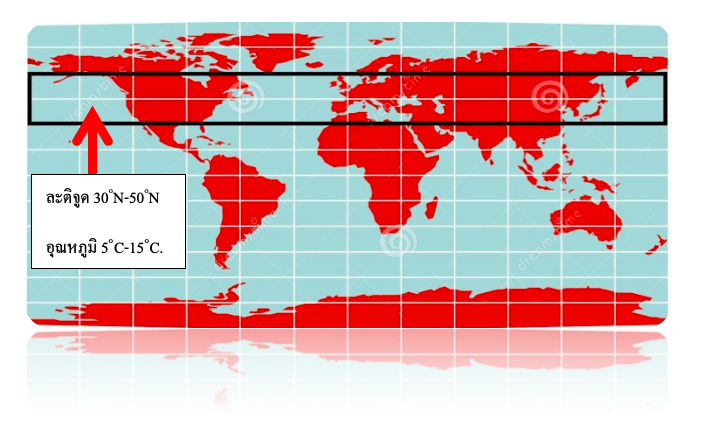
Map showing countries with severe COVID-19 outbreaks
The countries in this area include China, Italy, Spain, and the USA. However, this is a fact that hypothesizes the environmental conditions affecting the spread of COVID-19, which is a significant factor according to epidemiological principles.
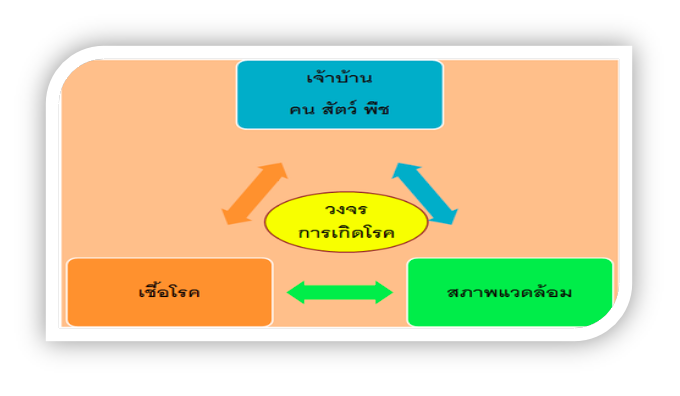
Therefore, understanding environmental issues is crucial for us to study and comprehend seriously, as all living things on this planet are related to the environment, commonly understood as the four elements: earth, water, air, and fire. These four elements are the products of the proper combination of dark matter, dark energy, space, and time through a phenomenon known as the Big Bang.
The Origin of the Four Elements Earth, Water, Air, and Fire
The origin of the four elements dates back 13.7 billion years ago when dark energy, dark matter, space, and time aligned to create the Big Bang. Within 2-3 minutes after, as the universe was dense and extremely hot, hydrogen nuclei or protons fused to form helium. After 380,000 years, at a temperature of 3000 Kelvin, hydrogen and helium nuclei could capture electrons, forming hydrogen and helium atoms respectively. This marked the beginning of the first transformation from energy to matter in the universe, and the construction of the universe's matter began in earnest thereafter, with photons (light) colliding with hydrogen and helium nuclei. Each collision transferred energy, allowing electrons to be captured by the nuclei, resulting in larger atoms from hydrogen to helium, lithium, deuterium, tritium, carbon, nitrogen, oxygen, magnesium, sodium, and finally iron. After more than 9,000 million years post-Big Bang, the combination of various atoms led to the formation of the solar system, including the sun, earth, and its planets as we know them today. Returning to our planet, after its formation 600 million years ago, the collision of atoms in the crust and atmosphere resulted in increasingly complex compounds, evolving into the cells of living organisms composed of carbon, hydrogen, oxygen, and nitrogen as we see today.
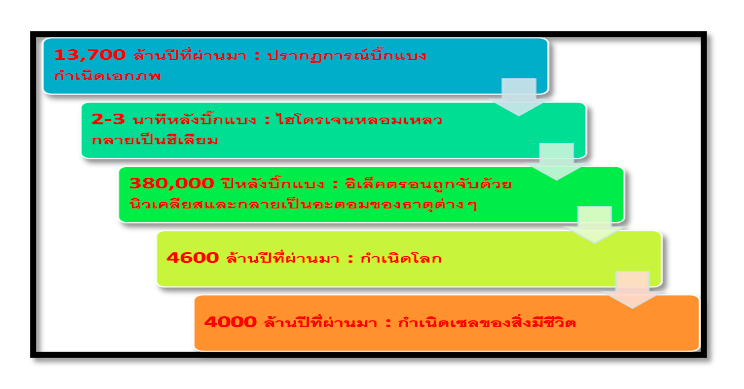
Diagram showing the sequence of events in the evolution of energy and matter into elements and living beings
The transformation from atoms to elements to compounds and increasingly complex structures into living cells is conditioned by concentration, temperature, pressure, density, and time, which are driving factors for the emergence of the four elements: earth, water, air, and fire, in perfect balance as we know them. When the balance of these elements is achieved, various forms of life emerge. Currently, due to global warming and numerous disasters occurring worldwide, there is an increasing analysis of the causes and related factors from various perspectives. One team, led by James Lovelock, has provided a perspective that we can no longer view the world from the same angle. This team has studied the earth's adaptation to changing environments and proposed that the earth is another form of living being with self-regulating systems according to changing environmental conditions, a concept known as the Gaia Theory, which is increasingly accepted today as it can clearly explain many phenomena.
Gaia Theory The Earth is a living entity that balances earth, water, air, and fire
All energy used on this planet comes from sunlight from the sun, which represents the element of fire. When sunlight interacts and transmits energy to the earth and water, both absorb energy from sunlight to the extent they can. The excess energy is reflected back into the earth's atmosphere. The varying rates of energy reflection from the earth and water lead to differences in the expansion of the atmosphere above the surface of the land and water. During the daytime, the atmosphere above the land expands more, rising higher than that over the water, causing air above the water to flow in to replace the air over the land, resulting in wind. At night, when the land and water do not receive sunlight, heat release still occurs, with water releasing heat more than land. Thus, air from the land flows in to replace the air from the water.
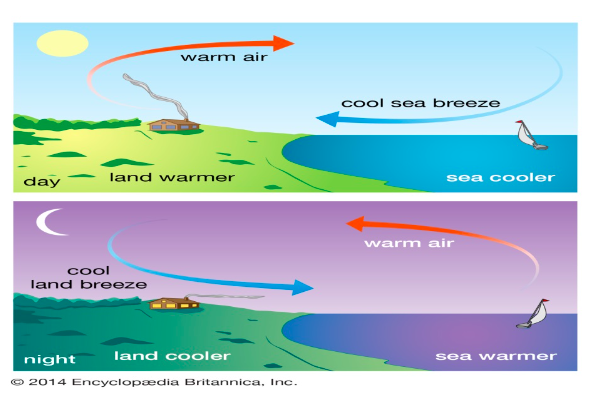
Diagram showing the circulation of wind during day and night
The cycle of energy transmission and circulation from the sun to this earth has existed since the earth's formation, with mechanisms that continuously maintain the balance of earth, water, air, and fire. The individual who has attempted to explain this self-regulating mechanism of the earth, now widely accepted, is James Lovelock, who established the Gaia Theory, with Lynn Margulis, the proponent of Endosymbiosis, contributing to the early development of this theory. The content of the theory was officially announced in a statement in Amsterdam in 2001, stating “The Earth has a self-regulating system comprising physical, chemical, biological, and human components”. The physical part of the earth extends from the crust down 100 miles to the liquid layer beneath the earth and up 100 miles above the earth's surface.
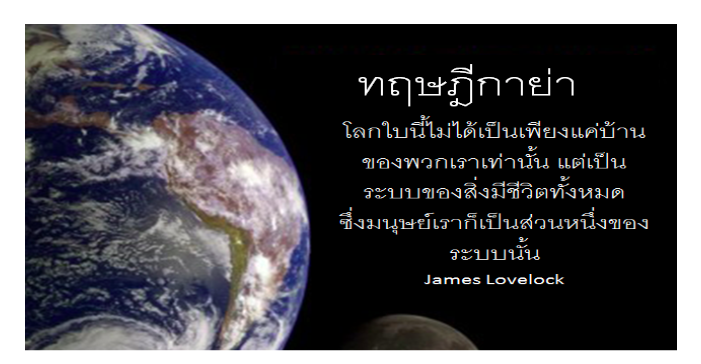
James Lovelock encourages us to view the earth as a living entity from a new perspective, emphasizing its ability to adapt to changing environments. In this context, the environment refers to the balance of earth, water, air, and fire. If something disrupts this balance, such as the current global warming caused by rising carbon dioxide levels, the earth's adaptive mechanisms, including melting ice, rising sea levels, acidification, and increased calcium dissolution in the seas, flooding, disasters, monsoons, and changing seasons over the past 20-30 years, should prompt us to consider that there are aspects of technology we have developed that still cannot analyze the causes of these occurrences. We often summarize various disasters as merely natural phenomena, while in reality, the causes stem from our actions. James Lovelock suggests reducing fossil fuel use and controlling natural resource consumption to align with what the earth can sustainably support. Recognizing that the earth has a self-regulating system that maintains the balance of earth, water, air, and fire, we, as members of this planet, should apply this same principle as a guideline for sustainable practices in the overall system.
Balancing Earth, Water, Air, and Fire for a Complete Life
After the first emergence of plants 850 million years ago, life on land began immediately as living organisms started to inhabit the soil, with suitable water or moisture, sufficient air, and appropriate temperatures. The balanced composition of these elements led to the evolution of life. The land has become a nurturing ground for life on this planet to this day. Unequal technological advancements have distanced life from the soil through chemicals, leaving once-living soil as mere dirt, which Dr. David Montgomery, author of the book Dirt: The Erosion of Civilization, refers to as the transformation from Soil to Dirt, which is lifeless soil. The United Nations has warned that soil degradation will lead to food shortages and massive migrations by 2030. Thus, the issue of degraded or lifeless soil has become a global problem today. Fortunately, many Thais are increasingly focusing on natural agriculture, with the most important principle being understanding the balance of earth, water, air, and fire based on the realities of each area, which are certainly not the same.
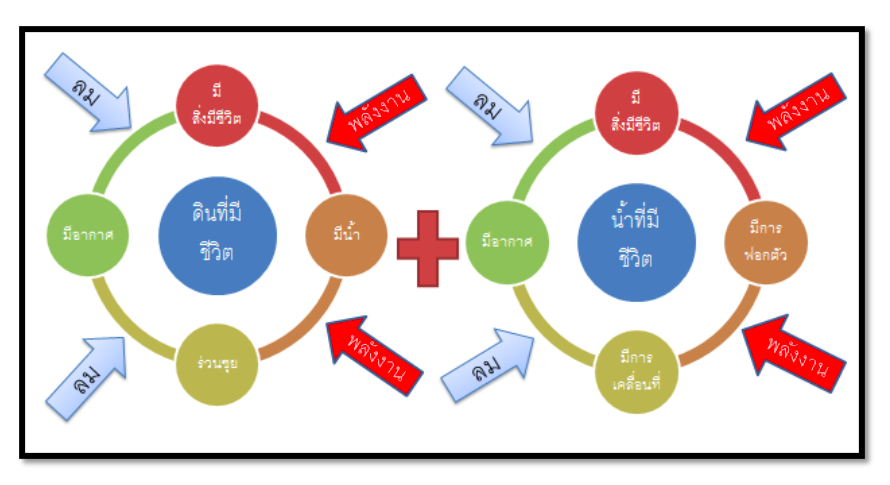
Diagram showing the components of living soil and water
The term balance of earth, water, air, and fire represents the preservation of an environment that allows soil and water to be alive, with sufficient air and appropriate temperature levels for the living organisms residing in soil and water. The methods that create this balance are the fundamental principles for establishing a complete living system.
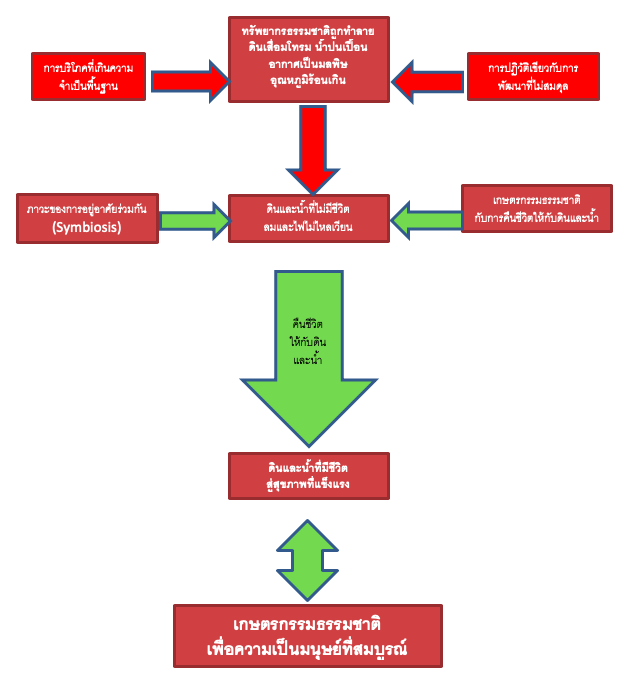
Diagram showing the balance of the four elements leading to a complete human being
From the beginning of the Big Bang to the emergence of the four elements through physical and chemical processes, atoms of various elements have formed and increased in size over time, evolving into increasingly complex compounds until they became organic matter. This then transitioned into biological processes, evolving from simple organic matter to simple cells adapting to different environments, eventually forming the structures of multicellular organisms as we see today. None of this would have occurred without suitable environmental conditions. Thus, we must acknowledge that we emerged from the balanced conditions of these four elements. If the four elements exist in imbalance, it can lead to abnormal conditions, such as the current pandemics or unusual locust population expansions in India. All these phenomena are interrelated. The methods we use to maintain the balance of earth, water, air, and fire for creating a complete life for humans, animals, and plants will have similarities and differences. Stay tuned for the next episode.
ABOUT THE AUTHOR
ดร.ประเสริฐ ปิ่นงาม (Ph.D., TREES-A NC) วท.บ. สาธารณสุขศาสตร์ ม.มหิดล