EIC Maintains Export Value Forecast for Thailand in 2020 at -12.9% as COVID-19 Continues to Heavily Impact the Global Economy
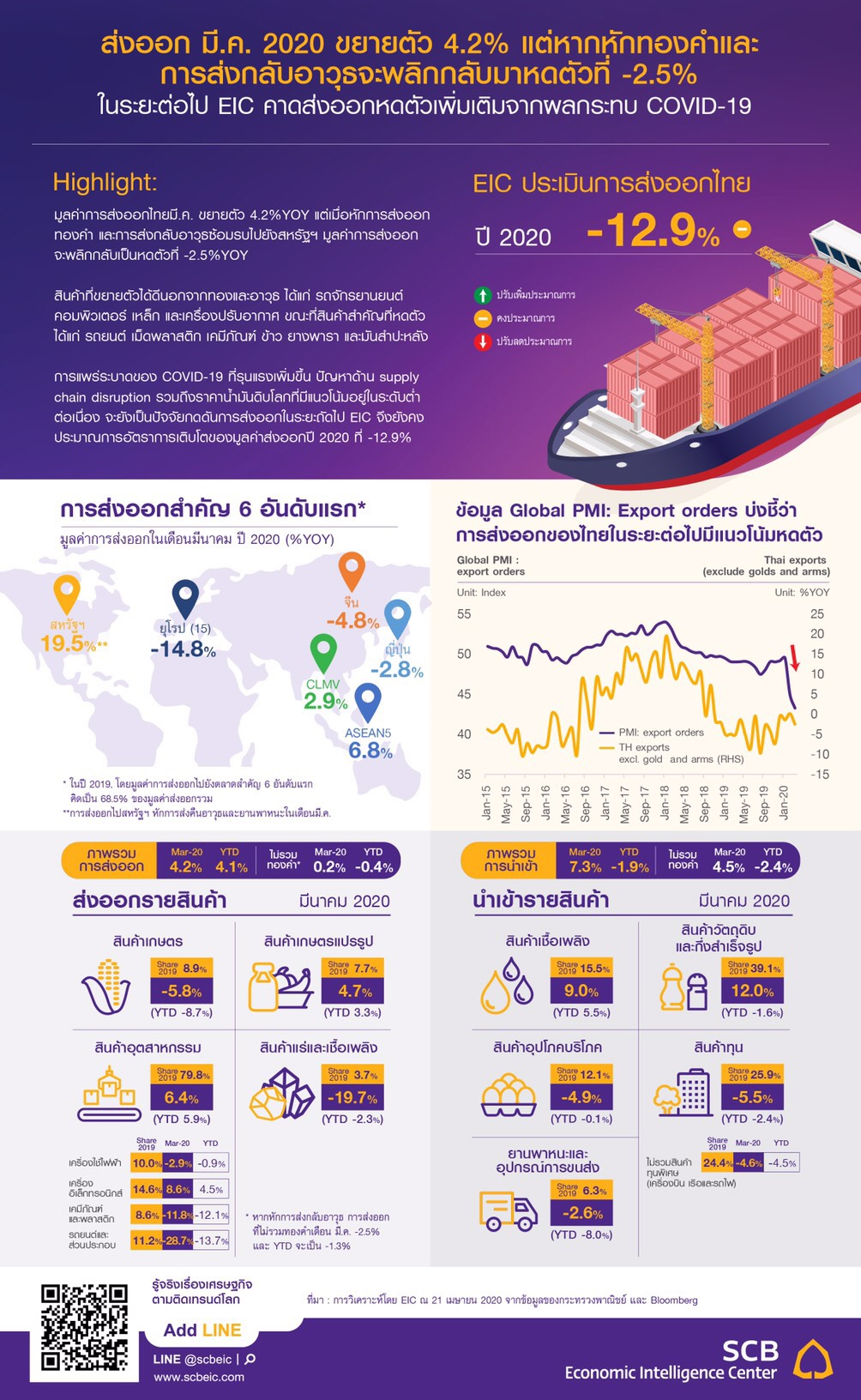
Dr. Kampon Adireksombat, Senior Director and Head of Economic and Financial Market Research at the Economic Intelligence Center - EIC of Siam Commercial Bank Public Company Limited (SCB), revealed the overall export value of Thailand for March 2020, which showed a growth of 4.2%. The products that performed well included motorcycles at 22.6%, computers at 17.6%, and air conditioners at 8.1%. Meanwhile, significant declines were seen in automobiles at -28.7%, plastic pellets at -15.3%, chemicals at -14.9%, rice at -13.3%, rubber at -24.7%, and cassava at -13.1%.
Gold exports continued to grow for the third consecutive month at 215.2%, driven by high gold prices, with major markets being Hong Kong, Australia, Singapore, and Japan. In the first quarter of the year, gold exports surged by 221%. Other vehicle products saw an astonishing growth of 1,263.2%, primarily due to the return of military training weapons to the United States, valued at approximately $559.8 million.
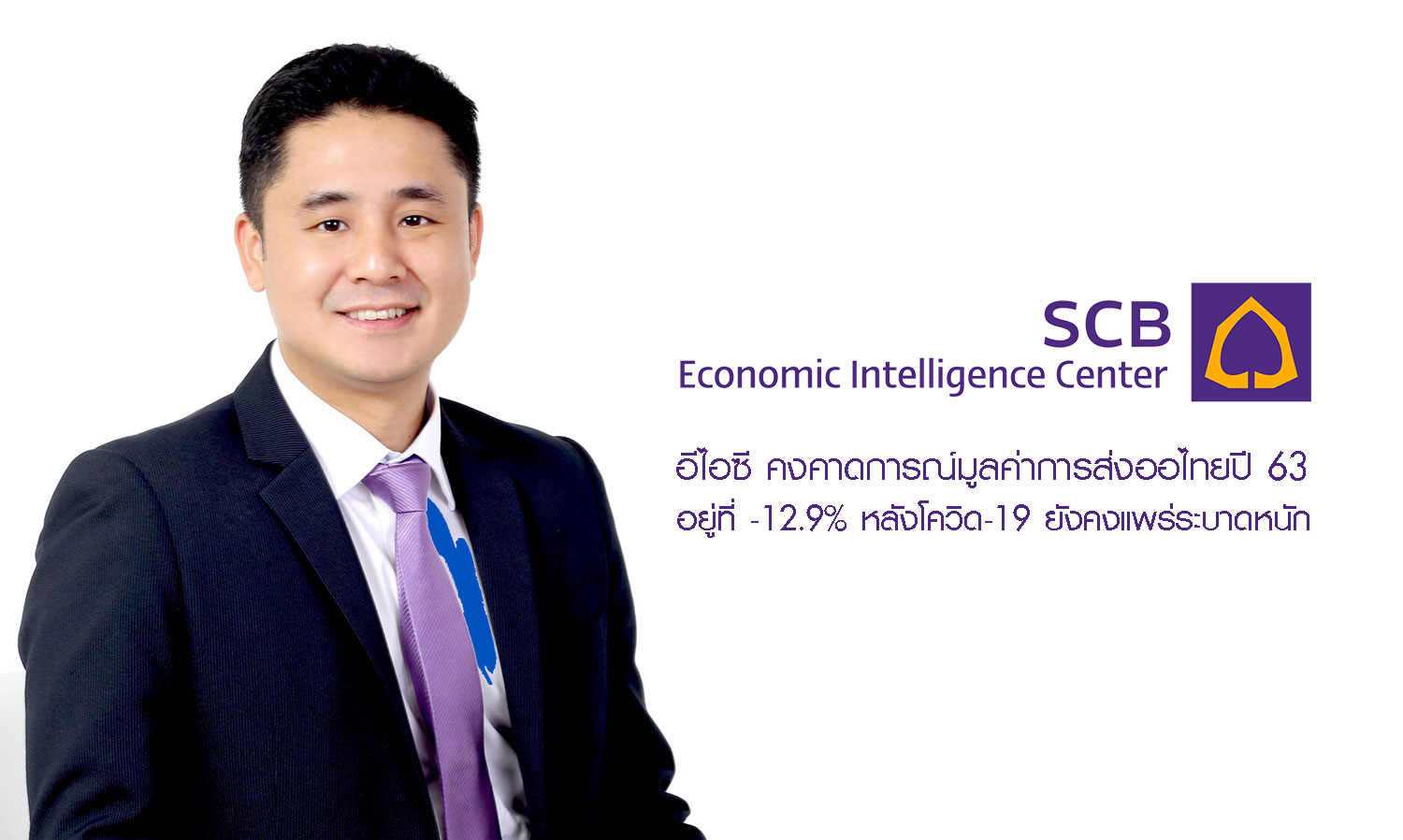
However, the EIC maintains its forecast for Thailand's export value in 2020 at -12.9% due to the severe COVID-19 outbreak and the ongoing global economic recession. Currently, there are over 2.4 million confirmed cases worldwide, with rapid spread in several key countries, leading to strict disease control measures that have disrupted economies in many nations.
For the global economy in 2020, it is expected to be heavily impacted by the COVID-19 outbreak. According to the latest IMF WEO report from April, the IMF predicts that the global economy will contract by over -3%, marking the largest contraction since the Great Depression. Additionally, examining the Purchasing Managers' Index for export orders reveals a rapid decline, indicating a growing trend of contraction in Thailand's exports in the near future.
Moreover, Thailand's exports may face challenges from supply chain disruptions due to strict disease control measures in many countries affecting global trade and impacting Thailand's export sector. This includes: 1. A decrease in Thailand's exports of intermediate raw materials, as they are part of the supply chain for many countries, and 2. Obstacles in producing export goods due to reliance on intermediate raw materials from several countries affected by the COVID-19 outbreak.
Furthermore, the significant drop in crude oil prices is another factor pressuring the decline in export value this year. Crude oil prices have fallen dramatically, reaching a low of $14.9 per barrel, the lowest price primarily due to decreased global oil demand amid the overall economic situation, as well as concerns about increased oil supply in the preceding period.