Siriraj Warns: If No Action is Taken, COVID Cases Could Surge to 300,000 by April 15, with 7,000 Deaths
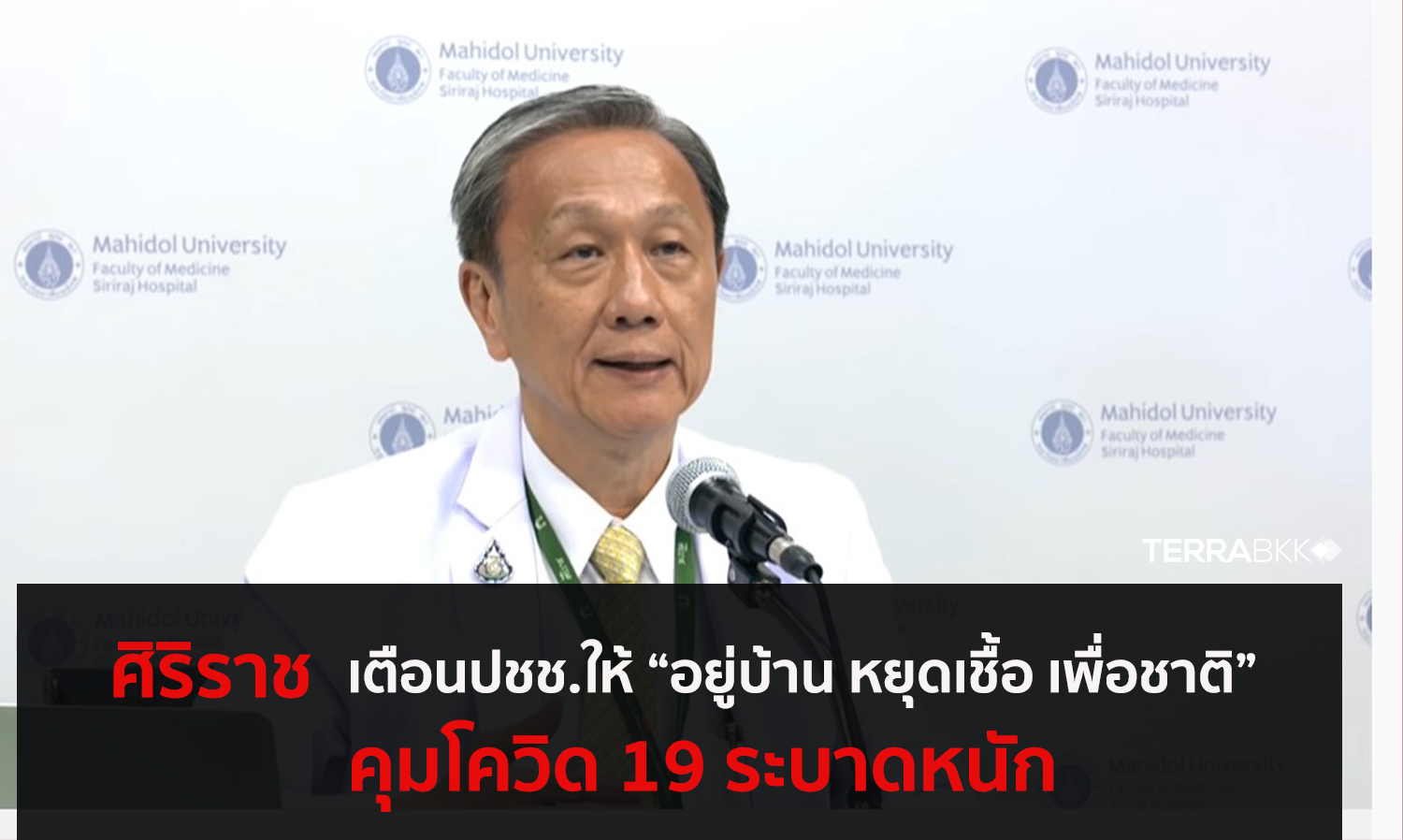
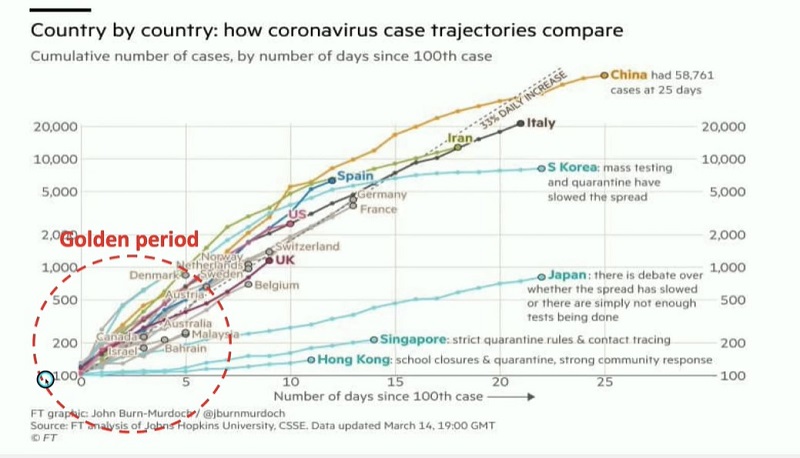
On March 23, Prof. Dr. Prasit Watanapa, Dean of the Faculty of Medicine Siriraj Hospital, Mahidol University, stated that COVID-19 cases in Thailand are beginning to rise significantly due to two major groups: nightlife venues and boxing stadiums. The global situation of COVID-19 can be divided into two categories: 1. Uncontrolled regions, such as Europe, where the number of cases doubles from 100 to 200 in about three days on average, and 2. Controlled regions, such as Japan, Singapore, and Hong Kong, where the increase from 100 to 200 cases takes about five days, which is relatively low compared to the European group.
In Thailand, the increase from 100 to 200 cases occurs in about 3.5 days. If we do nothing and allow the situation to continue, it is predicted that we will follow the trend of the uncontrolled countries, with an average daily increase of about 33%.
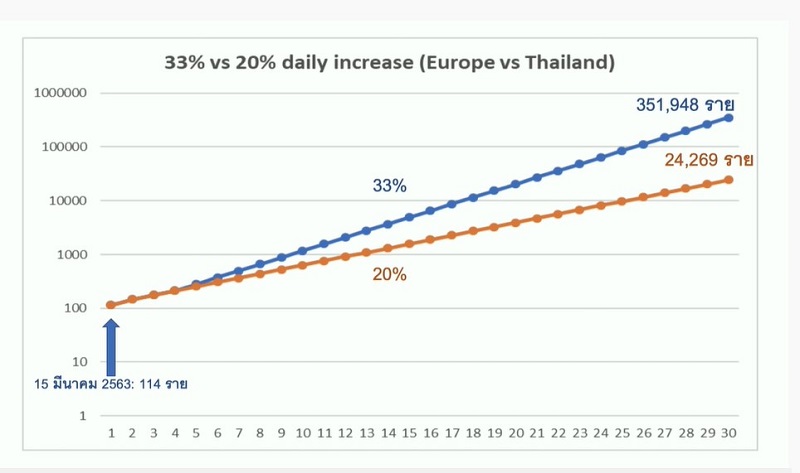
Prof. Dr. Prasit noted that the daily increase of new cases in Thailand has been observed to rise by 30, 50, 89, and 188 cases, with the current rate of increase being over 30 percent. If we do nothing and allow new cases to increase by 33% each day.
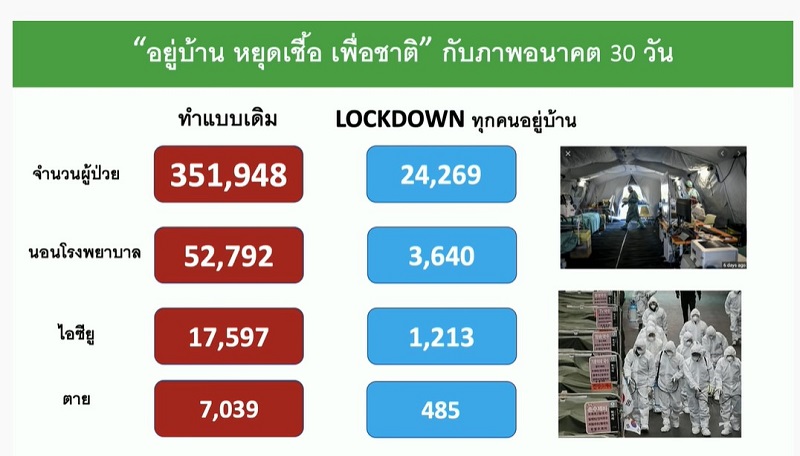
Statistical calculations indicate that since Thailand first reported over 100 cases on March 15, 2020, if no action is taken within 30 days and the public continues life as usual without “staying home to stop the spread for the nation,” by April 15, 2020, Thailand could see 351,984 COVID-19 cases. Based on the severity rates of various diseases, it is estimated that there would be 52,792 patients requiring hospitalization, 17,597 in ICU, and 7,039 deaths.
However, if we start taking action to reduce the number of new cases to 20%, it is projected that by April 15, the number of COVID-19 cases could be reduced to 24,269, with 3,640 hospitalized, 1,213 in ICU, and 485 deaths.
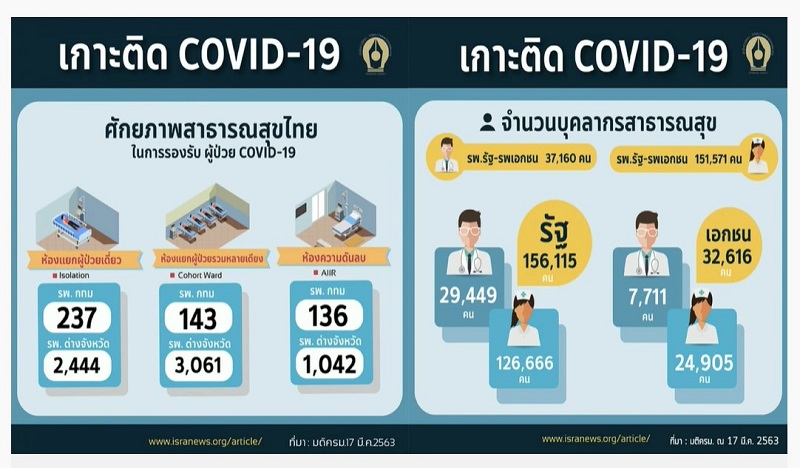
Considering the resources available, we have 237 single patient isolation rooms in Bangkok and 2,444 in other provinces. The cohort wards for less severe cases in Bangkok have 143 beds and 3,061 in other provinces, with 136 negative pressure rooms in Bangkok and 1,042 in other provinces. Additionally, the healthcare workforce includes 37,160 doctors and 151,571 nurses.
If we do nothing and allow this number of patients to flood in, the healthcare system will not be able to cope, exceeding the capacity of the entire country. This would lead to a backlog of patients in critical care. In this case, it will be necessary to allocate resources adequately. However, if we can control the new case increase to 20%, we will see that the number of patients will align with the resources we have.
Assoc. Prof. Dr. Monsak Chuchotirak, Deputy Director of Siriraj Hospital stated that Siriraj Hospital, Siriraj Mahaphiya Hospital, and the Kanchanaphisek Medical Center have established guidelines for the use of each type of room to treat patients appropriately. Many hospitals are currently accelerating their capacity to expand beds to accommodate future patients.
Prof. Dr. Prasit added that to prevent such a situation, the government has suspended travel for outsiders entering the country to prevent infected individuals from entering, especially those from high-risk areas in Europe. Currently, it is no longer possible to control the disease in a limited area. The temperature screening at airports can only detect fever in about 48% of cases. The best approach is for the government to require travelers entering Thailand to have a certificate confirming they are free of the virus, and those entering will be quarantined for 14 days, which is believed to deter some from coming, along with border closures.
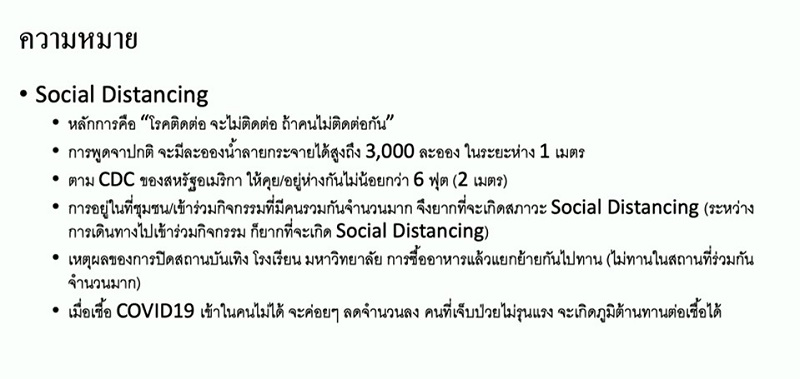
Additionally, measures to detect infected individuals must be implemented, including isolating patients and those with a history of contact with infected individuals, and closing high-risk venues such as schools and entertainment venues. The prevention of virus spread is what we are currently urging: stay at home to reduce the chance of transmission. While you may not be sick, going out could expose you to the virus. Maintaining social distance of at least 1-2 meters will help reduce transmission, as contagious diseases do not spread if people do not come into contact. If this can be maintained for three weeks, it is believed that by the fourth week, we will see a gradual decrease in the number of cases, slowing the outbreak.
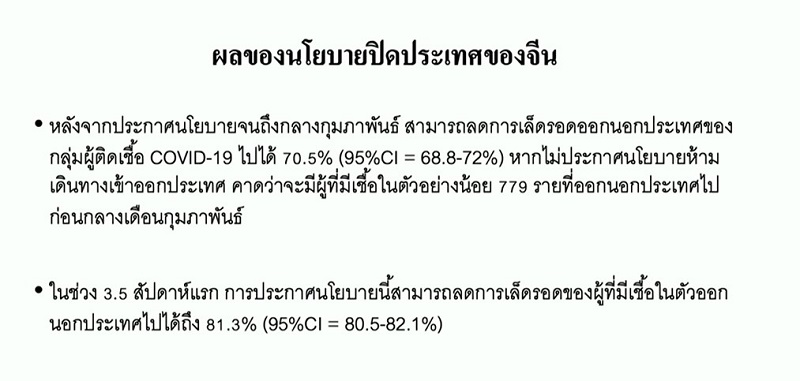
From the lessons learned from China's lockdown policy, it was found that after the announcement of the policy until mid-February, they managed to control the COVID-19 cases by 70.5%. Without this announcement, it is estimated that over 779 infected individuals would have traveled outside of China before mid-February, and in the first 3.5 weeks, they managed to reduce the leakage of infected individuals outside the country by 81.3%. This reflects the importance of this policy, which every country should adopt to establish standards for controlling infectious diseases, as a responsibility at the family, community, national, and global levels that everyone must contribute to.
“These efforts require collective action because we are currently fighting a virus. Therefore, having awareness and adhering to policies, controlling travel, and reducing gatherings will likely slow the increase in infection rates in the 4-6 weeks following full implementation, and slow the outbreak, reducing the number of infected individuals, allowing us to reach phase 4, with the expectation that the COVID-19 virus will disappear from Thailand within at least 9 months.
Moreover, the cooperation of the Thai people will be a crucial factor in determining the direction of the outbreak. Everyone is responsible for keeping the number of infected individuals below 350,000 or limiting it to 24,000.
Source: Faculty of Medicine Siriraj Hospital, Mahidol University