The COVID-19 Crisis? Lessons from South Korea and Taiwan
The COVID-19 pandemic situation in Thailand appears to be worsening, with an increase of 311 confirmed cases reported in just two days (March 22-23).
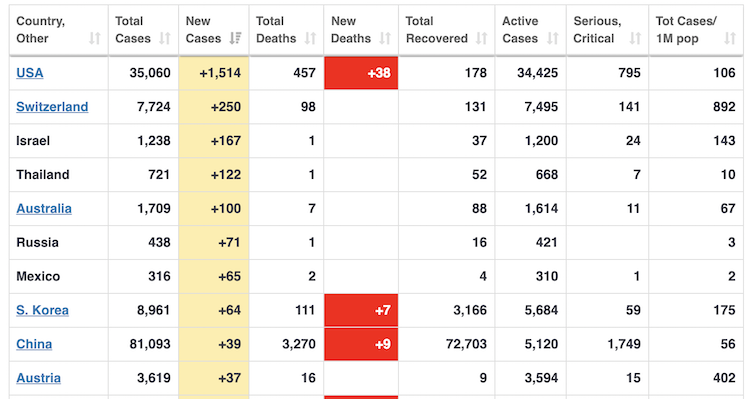
Source: https://www.worldometers.info/coronavirus/
Meanwhile, despite the government's announcement to close shopping malls and department stores (excluding supermarkets), public concern has only intensified. Many people are returning to their home provinces, which could lead to uncontrollable super spreader events.
This has led the public and media to focus on managing and controlling the population movement from Bangkok to other provinces, while also monitoring how the government will respond. Is Thailand taking the right measures?
Looking back at the measures taken by South Korea and Taiwan, it is evident that both countries share common traits in their response: clarity, speed, comprehensiveness, and decisiveness.
South Korea: Testing as Much as Possible to Prevent as Much as Possible
It all began with a 61-year-old woman who became the 31st confirmed case and carelessly caused a super spread phenomenon in South Korea, leading the country to have one of the highest rates of new infections globally. Initially perceived as unprepared, the South Korean government quickly escalated its response to the highest level by canceling public gatherings, events, and postponing school openings.
Although it may have seemed a bit late, South Korea proved that it is never too late.
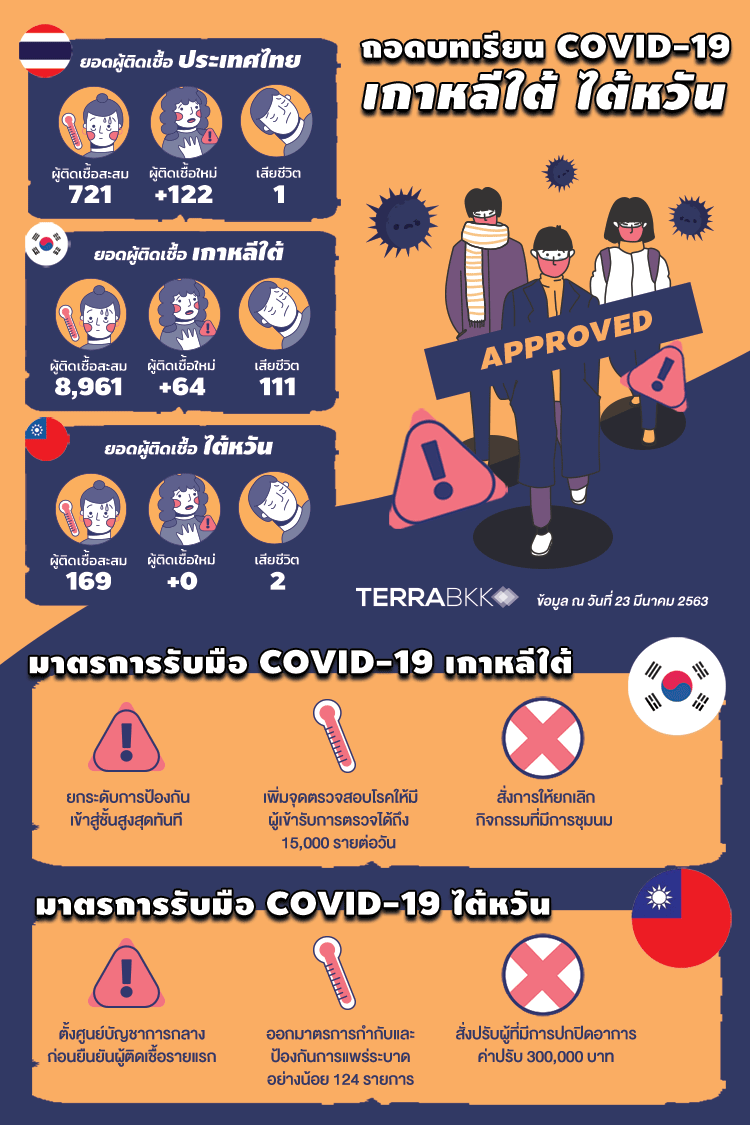
Intensive testing measures began with an immediate budget approval of nearly 800 billion baht to control the outbreak. This funding was allocated effectively, particularly to increase testing sites to accommodate up to 15,000 tests per day. Thus, it is no surprise that the number of confirmed cases in South Korea surged rapidly. Importantly, they reduced testing procedures by implementing drive-thru testing sites for convenience, saving time, and minimizing contact, allowing tests to be completed in just 10 minutes. This efficiency enabled public health personnel to act swiftly. Even though South Korea still reported 64 new cases, the rate of new infections has significantly decreased.
Taiwan: Speed and Decisiveness Under the Central Command Center
Since the World Health Organization was alerted by China about unknown pneumonia cases in Wuhan, the Taiwanese government immediately mandated the Department of Disease Control to screen passengers arriving from Wuhan. They also implemented measures requiring hospitals to test and report confirmed cases, isolating those involved, all before Taiwan announced its first confirmed case on January 21, 2020.
The swift management stemmed from the establishment of the Central Epidemic Command Center on January 20, one day before the official confirmation of cases. This center has already issued at least 124 measures to control and prevent the spread of the virus.
In addition to rapid management, the Taiwanese government has taken decisive action against those who conceal symptoms, imposing fines of up to $10,000 or approximately 300,000 baht. On another front, they have been resolute in distributing health supplies to the public, setting a price cap on masks at about 0.17 baht each and ordering officials to monitor retailers to prevent price gouging daily.
The readiness and decisive management have resulted in Taiwan having only 169 confirmed cases and just 2 fatalities.