Preparing to Face the U.S. GSP Suspension
Following the suspension of the Generalized System of Preferences (GSP) by the United States, effective April 25, 2020, businesses must prepare to respond. The Department of International Trade Promotion, in collaboration with the Department of Foreign Trade, the Ministry of Commerce, and the Export-Import Bank of Thailand, is rapidly implementing measures to address this situation, which includes four key measures: 1. Stimulating demand for Thai products, including those affected by the GSP suspension, in new potential markets. 2. Encouraging Thai businesses to leverage online trade as a shortcut to expand their markets abroad. 3. Providing training and information on various trade situations, including government measures, to ensure businesses are well-informed. 4. Promoting the development and value addition of products through branding, innovation, and marketing, demonstrating that the government is supporting Thai businesses, both small and large, while also being open to feedback on the current situation to analyze and find collaborative solutions.
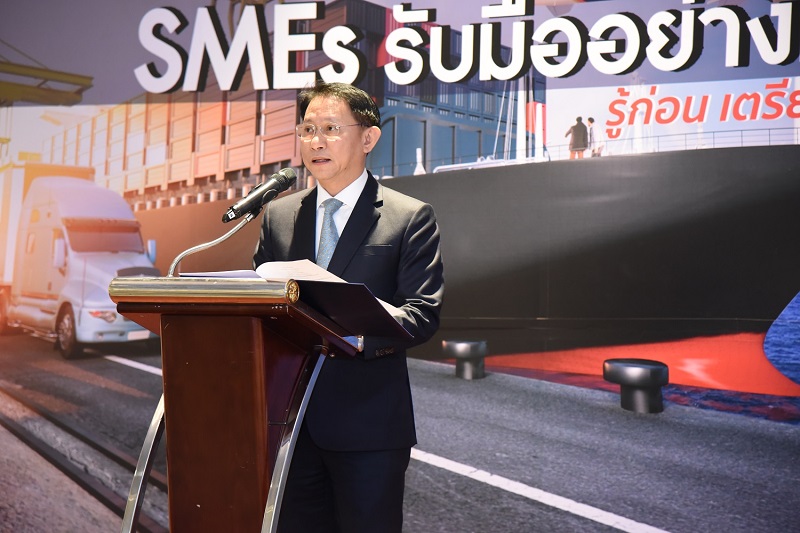
Dr. Sansern Samalapa, Assistant Minister of Commerce stated that the overall value of Thai exports in 2019 was $482.884 billion. The U.S. is a significant export market for Thailand, ranking third with a total trade value of $48.649 billion, accounting for 10% of Thailand's exports. Recently, on October 25, 2018, the U.S. announced the suspension of GSP privileges for Thailand, effective April 25, 2020, affecting 573 items (out of approximately 3,500 items that previously benefited from GSP). Key products affected by the GSP suspension include motorcycles, eyeglasses, machinery, and electrical equipment. It is anticipated that once the measures take effect on April 25, 2020, the value of Thai exports to the U.S. will decrease by approximately $28-32 million, or about 0.01% of total export value. Additionally, it is estimated that the GSP suspension will increase Thailand's export costs by about $50 million due to an average import tax increase of 4.5%.

Therefore, the purpose of the seminar is to 1) Build understanding of the basic information regarding GSP and accurate details about the GSP suspension, 2) Prepare to respond correctly to this situation and how to adapt to maintain competitive potential, and 3) View the crisis as an opportunity. This includes seeking new potential export markets to replace the old ones, such as opportunities in the Middle East and Latin America presented by trade representatives, and utilizing financial tools to support liquidity for businesses from state banks like EXIM Bank.
The Department of International Trade Promotion, as the agency responsible for developing and supporting export businesses, recognizes the impact of this issue. Therefore, discussions have been held to establish a working group within the Ministry of Commerce, involving the Department of International Trade Promotion, the Department of Foreign Trade, and external agencies such as the Export-Import Bank of Thailand (EXIM Bank), along with other relevant organizations, to collaboratively find preventive measures to assist Thai exporters in coping with future impacts and to create a detailed understanding of the reasons behind the U.S. announcement to revoke GSP privileges for Thailand. Consequently, the department has established four response measures for both the short and long term as follows:
- Stimulate demand for Thai products, including those affected by the GSP suspension, in new potential markets. Target markets this year include China, India, CLMV countries, Middle Eastern countries, and Latin American countries, which still have the potential to welcome Thai products in new alternative markets.
- Encourage Thai businesses to leverage online trade as a shortcut to expand their markets abroad through platforms like com, including accelerating the opening of Top Thai Flagship Stores on leading e-commerce platforms in foreign countries (China, India, Japan, Malaysia), which are crucial mechanisms for increasing the popularity of Thai products in online marketplaces and supporting quality products from Thai SMEs to penetrate international markets more quickly.
- Provide knowledge to businesses through seminars and training with in-depth information about the anticipated problems and impacts, as well as introducing insights about new potential markets to businesses affected and seeking to replace the U.S. market, while promoting and supporting Thai businesses in affected product categories to be aware of government measures and various credit measures from state banks, such as the Export-Import Bank of Thailand (EXIM BANK).
- Continuously develop and enhance product value through branding, innovation, and marketing, focusing on responding to the purchasing behavior of consumers in each country and adapting to global market trends, such as environmentally friendly products, health products, and products that cater to specific customer needs (Niche Market).
Thank you for the information from: Department of International Trade Promotion