What is Happening to Thai Agriculture and How Will It Transform Towards Sustainable Development? A Deep Dive Research from the Bank of Thailand
The annual academic seminar of the Bank of Thailand in 2019, titled “Transforming the Economy, Winning the Competition” Competitive Thailand, held on September 30, 2019, featured a presentation on “How Will the Landscape of Thai Agriculture Transform Towards Sustainable Development”. The authors included Somrat Chanrat, Pooying Uengphakorn Research Institute, Visanu Atthawanit from Kasetsart University, Phumasit Mahasuwichai from Khon Kaen University, Kranika Thamphanitwong from the Thailand Development Research Institute, and Jirat Jenphungporn from the Bank of Thailand.
The research indicates that the agricultural sector is crucial to Thailand's economy and society, employing over 30% of the country's workforce, encompassing 6.4 million households. However, the agricultural sector accounts for only 10% of the Gross Domestic Product (GDP), indicating that productivity in this sector is low and growing slowly compared to other economic sectors or even neighboring countries in Asia.
From the past to the present, Thai agriculture has undergone significant structural changes, similar to global trends, such as a decrease in labor usage, replaced by an increase in machinery and modern technology. The growth model of the agricultural sector has shifted from a focus on quantitative expansion, such as increasing cultivated areas and using more production factors, to growth driven by quality or productivity. In the past, Thailand was among the top countries in quality factor expansion but has continuously fallen to lower levels, being overtaken by neighboring countries.
What is happening to Thai agriculture, and how can we help Thai farmers compete, creating an “internal explosion” to transform Thai agriculture towards sustainable development? This research is one of the first attempts to build knowledge to answer these questions.
The first part begins by utilizing various significant agricultural big data from the country to piece together the larger picture of issues in Thai agriculture. The second part employs economic modeling to identify factors that significantly affect the productivity of Thai farming households, delving into what policies should start from and what enabling factors are necessary. Finally, this research uses field experiments to understand how to apply these enabling factors to farmers broadly by understanding their motivations through behavioral economics principles.
This research utilizes data from six major sources in the country, which, when integrated, allows for a detailed study of various dimensions of Thai agriculture at the plot, household, and labor levels, covering over 90% of farmers nationwide over the past decade, including:
- 1) Farmer registration from the Department of Agricultural Extension
- 2) Agricultural census from the National Statistical Office
- 3) Farmer debt statistics from the Bank for Agriculture and Agricultural Cooperatives
- 4) Participation in government policies from the Department of Agricultural Extension
- 5) Household economic and social surveys of farmers
- 6) Crop productivity per district and monthly farm gate prices from the Office of Agricultural Economics
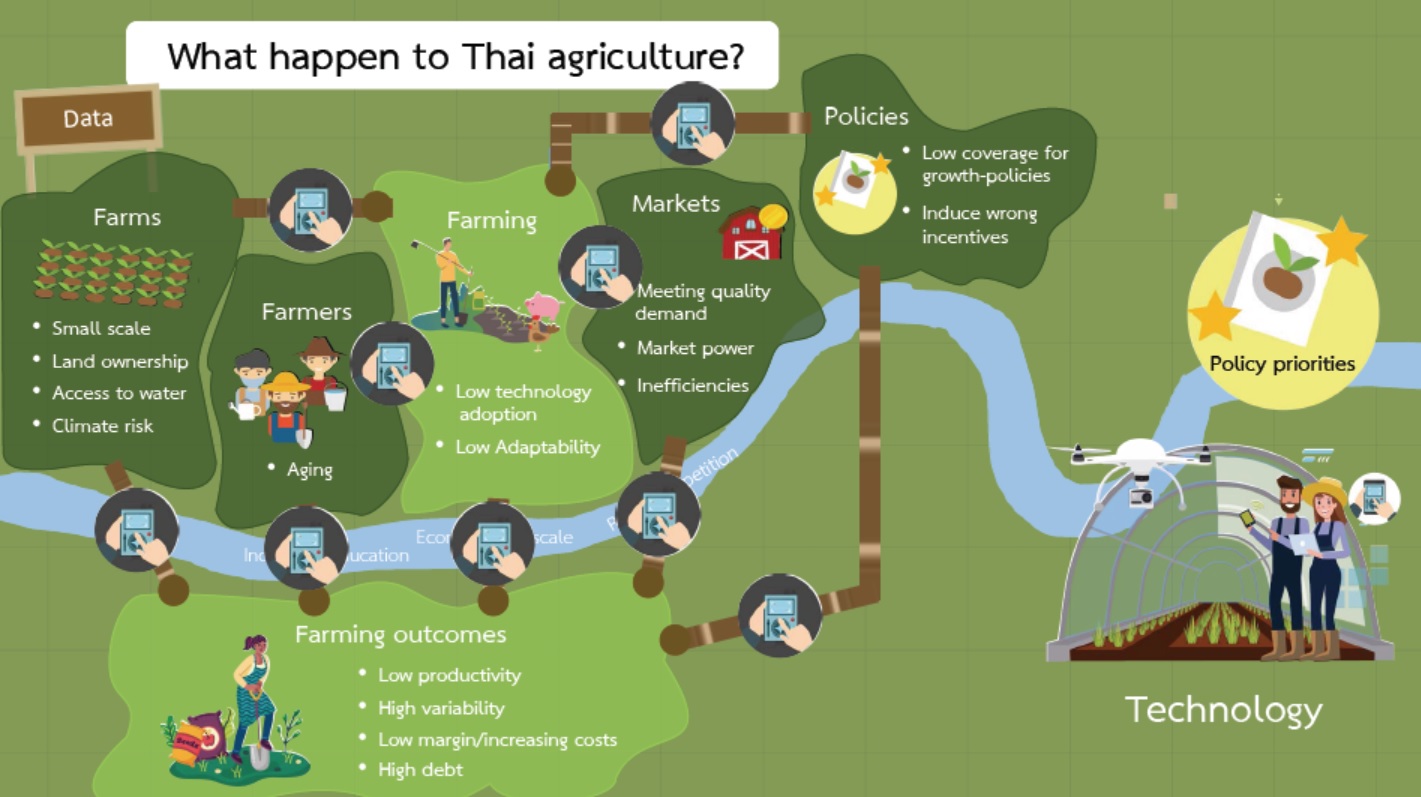
What is happening to Thai agriculture?
What is happening to Thai farms? Small is no longer beautiful, and the main challenge is how to ensure farmers have land ownership and access to water resources.
The research found that most Thai farmers are smallholders, with over half farming less than 10 rai, and only 20% farming more than 20 rai, which may not benefit from economies of scale in accessing resources and technologies. It was found that farmers in the lower northern region and upper central region have larger land sizes than in other regions. Over 40% of Thai farmers still do not have full land ownership, and over 58% lack access to irrigation and water sources. Additionally, Thai agricultural areas face increasingly frequent and severe natural disasters, particularly droughts and floods.
What is happening to Thai farmers? Aging is a structural problem and a significant challenge.
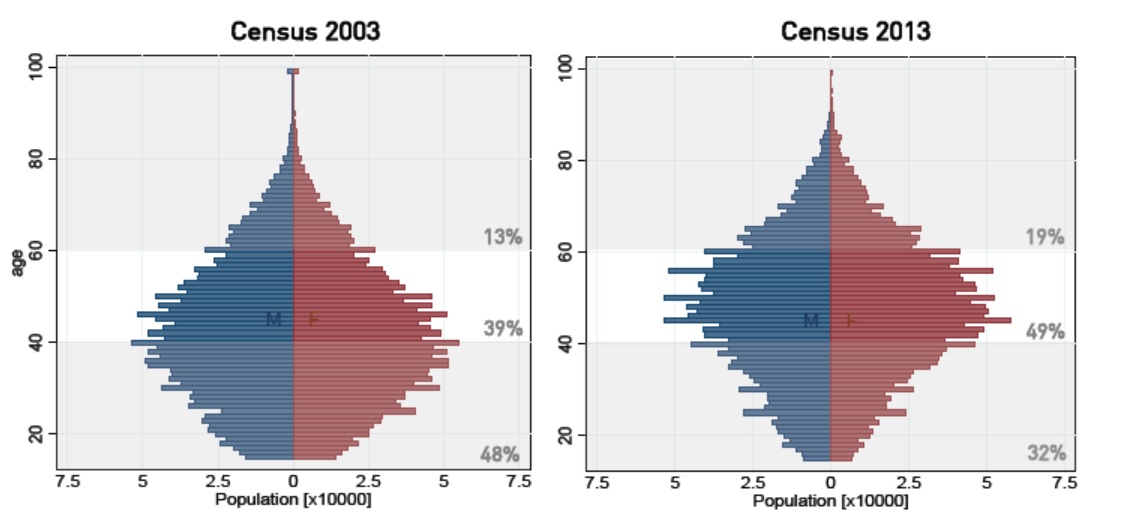
The research indicates that the Thai agricultural sector is aging at a faster rate than the overall population of Thailand. Over the past 15 years, the proportion of young labor (under 40 years) has significantly decreased, while the proportion of elderly labor (over 60 years) has increased. The aging issue has infiltrated agricultural households widely, with over half of Thai agricultural households having elderly labor, and household heads are aging. Another study by PIER shows that households with older heads tend to use less technology and have lower productivity than other households. However, this research also found that Thai agricultural labor has higher education levels, which presents a significant opportunity for the agricultural sector as we promote the use of technology and innovation to increase productivity.
What is happening to agricultural practices in Thailand? The main challenge is how to encourage farmers to widely adopt technology and have the motivation to adapt.
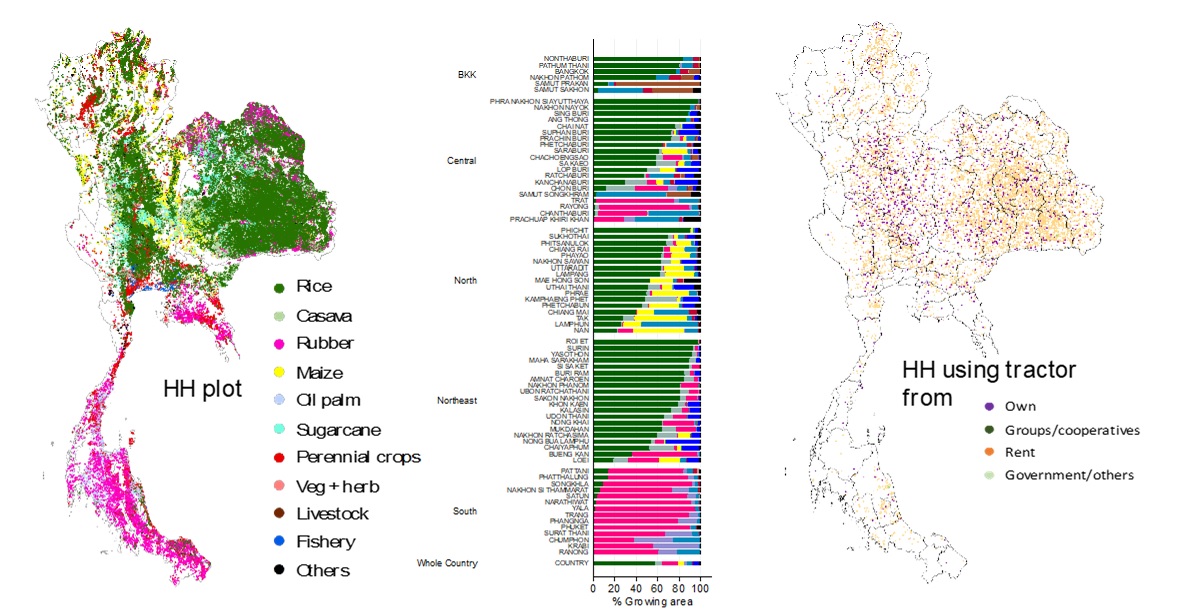
The research found that technology adoption varies significantly between small and large farms, across regions, and among different agricultural activities. It was found that most of our farmers still engage in traditional production methods, particularly monoculture, which has been shown to yield low returns but carries high risks (“high risk, low return”), especially for cash crops that are at high risk of global market oversupply.
Thailand's spatial concentration in agriculture creates opportunities to leverage economies of scale in various dimensions. The research highlights the emergence of modern machinery rental markets, which allows small farmers to access these resources more widely.
What is happening in the agricultural commodity market? The challenge is how to ensure farmers can benefit from the market system widely.
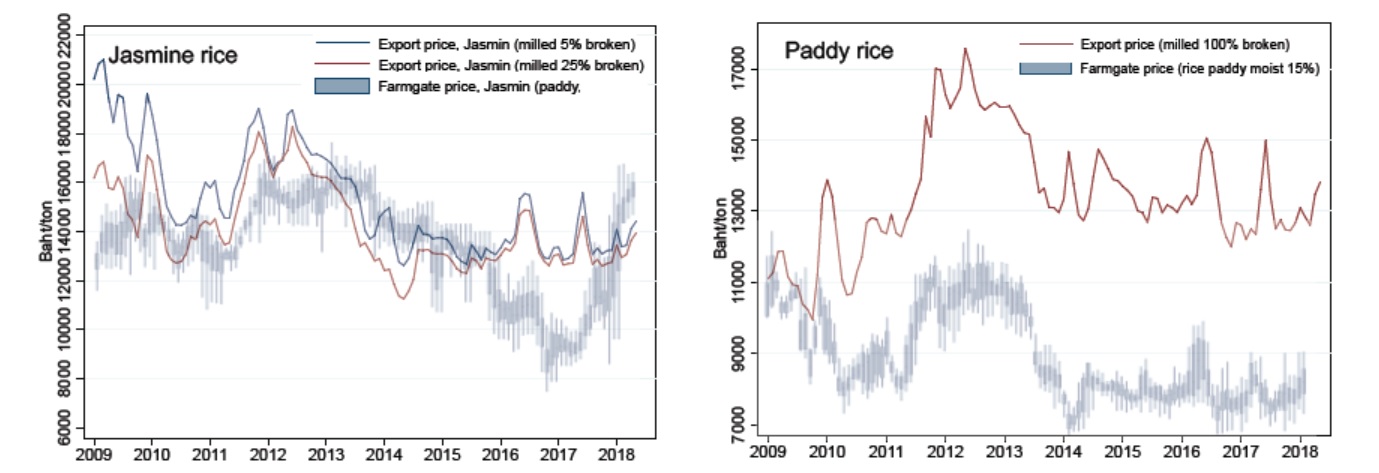
The research studied the price transmission of agricultural products from the global market (using export prices) to the prices received by farmers at the farm gate. It was found that in some markets, such as 15% moisture paddy rice, price transmission is effective, allowing farmers to benefit from rising global market prices. However, in some markets, particularly high-quality products like jasmine rice, price transmission is not as effective. From a producer's perspective, this reflects the challenge of how to enable farmers to produce high-quality products to compete in the global market. From a market structure perspective, competition among buyers, such as mills, and the distance from the farm to buyers are also crucial factors affecting farmers' benefits from the market system.
What is happening with Thai agricultural policy? The main challenge is how to create policies that motivate farmers to adapt without relying on government support.
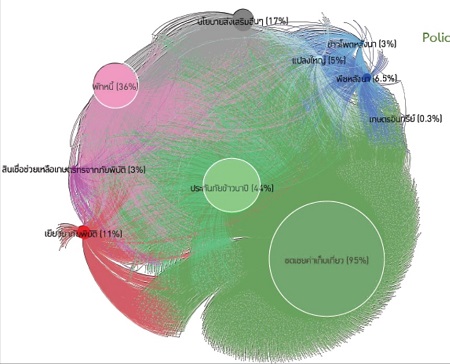
The research highlights the participation of rice farmers in government policies, with all registered farmers in 2018 reflecting that the most comprehensive policies for farmers are unconditional short-term assistance policies. Over 30% of farmers received at least three policies, and on average, farmers received assistance of 17,000 baht per household per year.
However, the research shows that unconditional assistance may inadvertently harm farmers by creating incentives for them not to adapt, continuing to grow monoculture crops, especially cash crops that receive continuous support, which are high risk but low return. Additionally, disaster relief assistance without conditions may prevent farmers from adapting to climate change and lead to riskier agricultural practices, such as off-season planting.
What are the results of farming? Productivity is low, and farmers are trapped in a debt cycle.
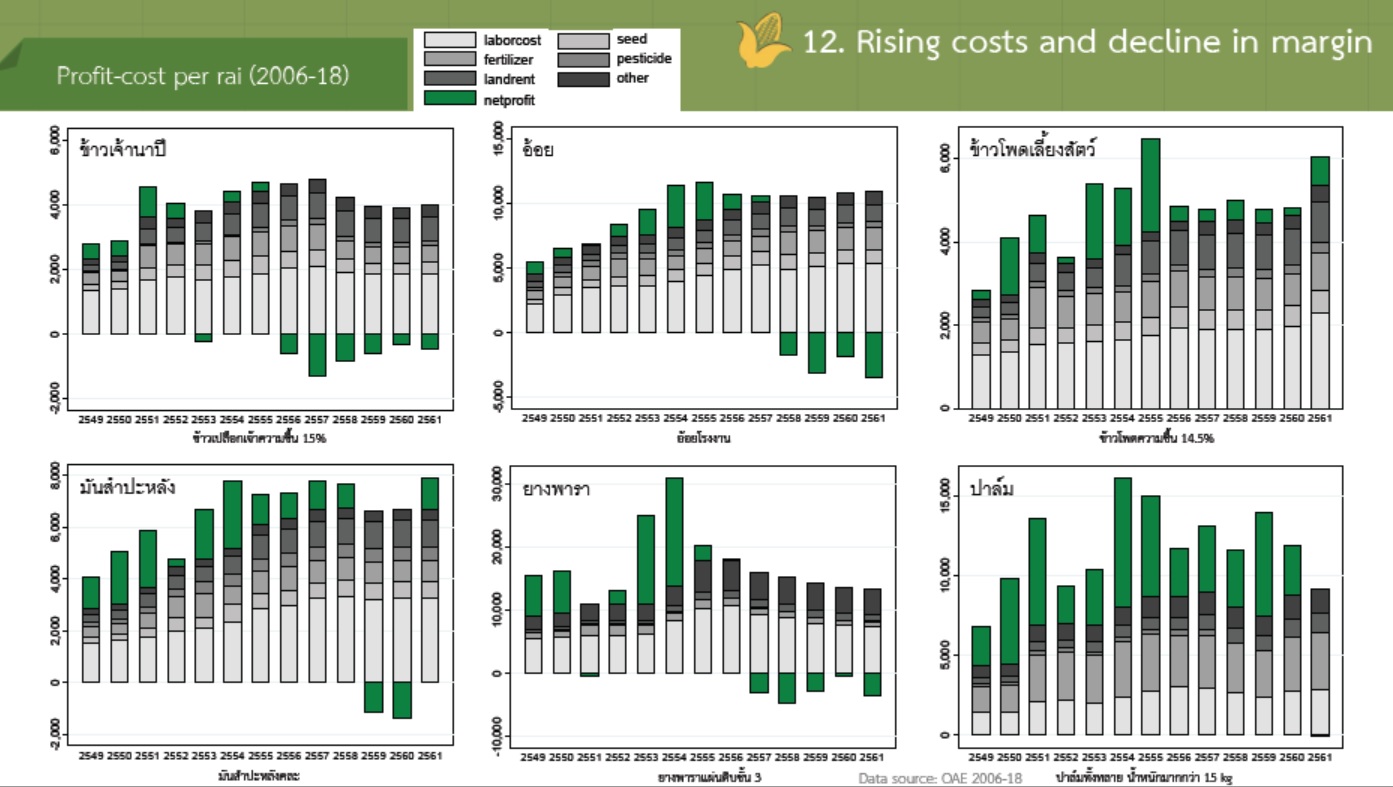
The research found that the productivity levels of farmers vary significantly, are volatile, and grow at an average of less than 1% per year. When examining the structure of income and production costs per rai, costs are continuously rising, contrary to net income, which has been negative for some crops for several years, resulting in increasing debt levels among farmers. If the bottom line of agriculture continues this way, farming will become a significant mechanism trapping farmers in a debt cycle.
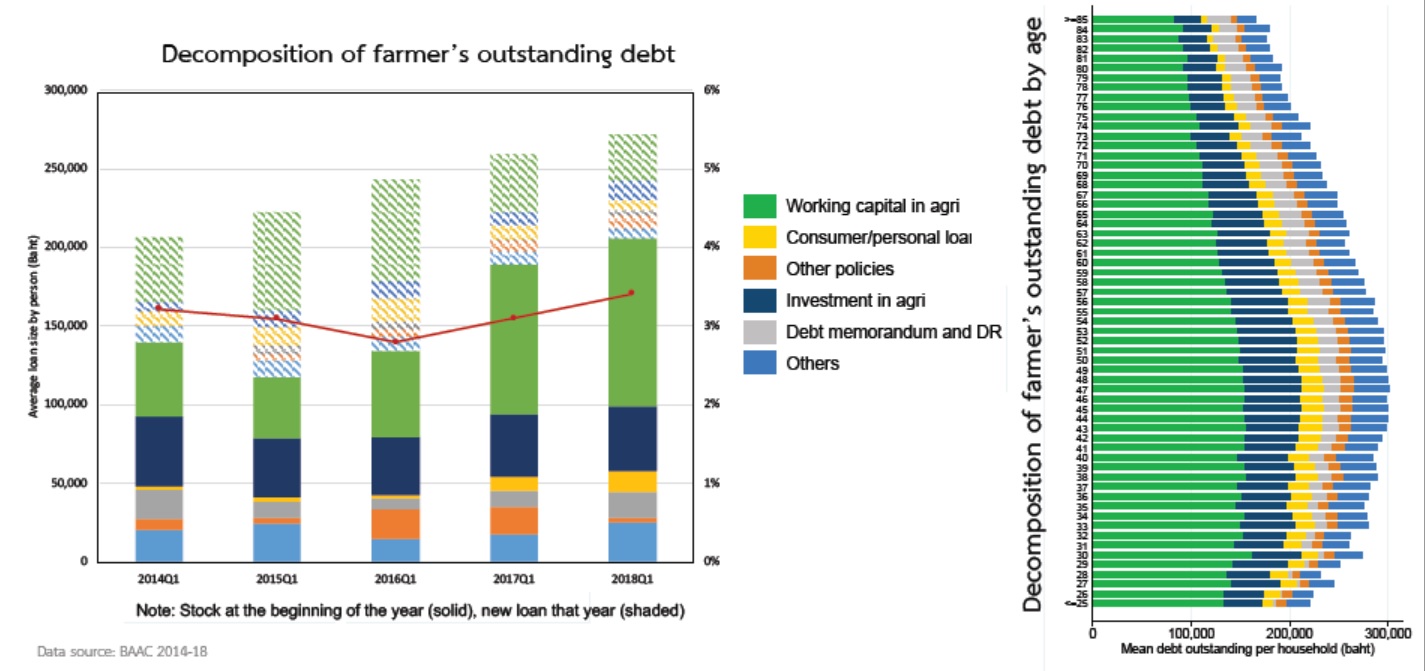
From the credit data of one million sample farmers, the research found that the average debt per person is nearly 270,000 baht, mostly from debts incurred for agricultural activities each year, which continue to accumulate, and the debt levels remain high among older farmers.
What factors are important for the productivity of Thai farming households?
This research utilized a stochastic frontier analysis model to filter factors affecting the productivity of Thai farming households, using household data over 12 years. It found that aging, variable weather conditions, and debt burdens significantly negatively impact productivity, while access to irrigation and technology positively affect productivity.
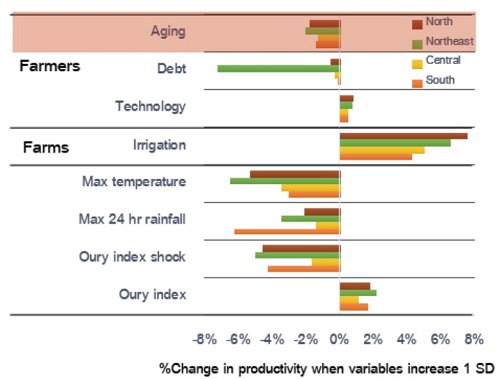
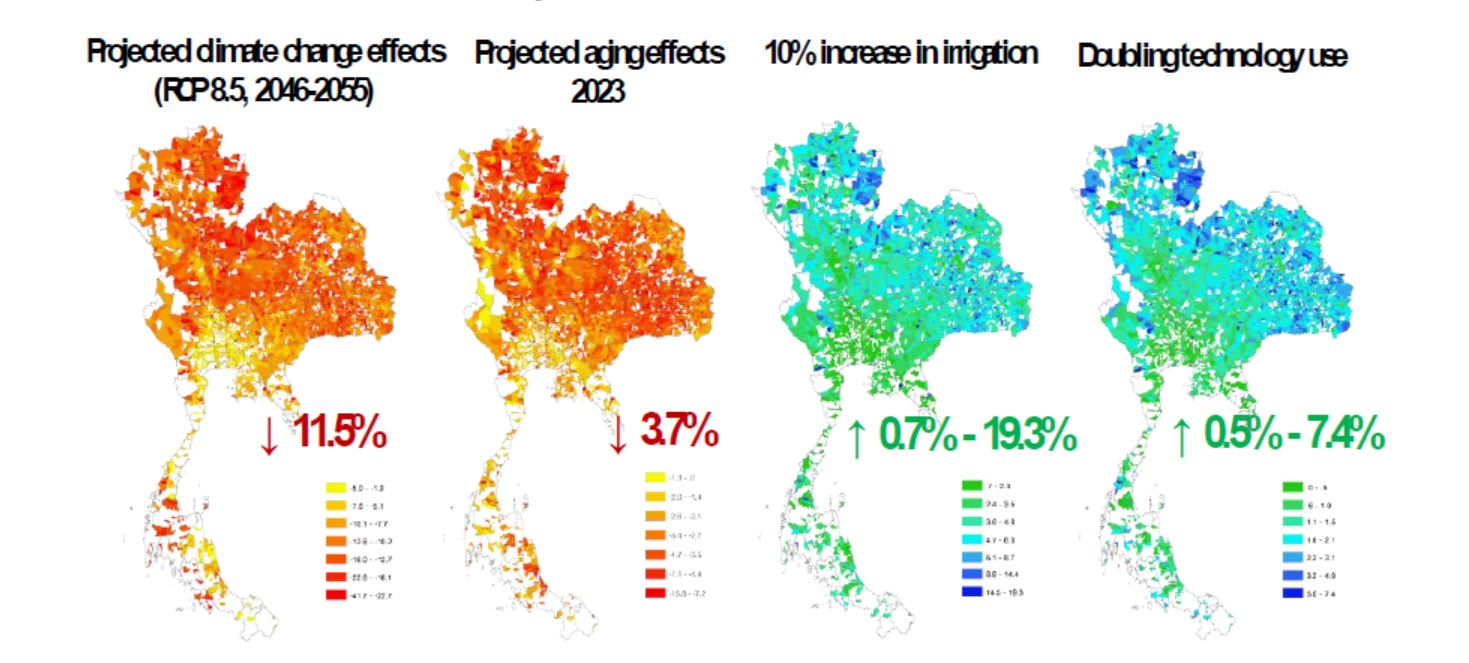
When forecasting the impact on productivity from projected climate change over the next 30 years from the Intergovernmental Panel on Climate Change (IPCC), it was found that household agricultural productivity would decrease by an average of 11.5%, with more significant reductions in the northern and northeastern regions, which is higher than the projected impact of aging over the next five years, which would reduce productivity by an average of 3.7%.
The research also reflects that essential enabling factors for increasing household productivity include expanding irrigation areas and utilizing technology. While the first enabling factor may have high costs and limited water resources, the research emphasizes that technology will be a crucial enabler.
Technology in Agriculture and the Second Green Revolution: Where is Thailand Now?
Many countries around the world have already entered the second green revolution, which involves developing technology in agriculture. This research also reviews Thai studies on technology development in Thai agriculture, noting that technology encompasses not only modern machinery but also knowledge, data utilization, and the optimization of production factors such as seeds, soil, water, and various production processes. It has been found that significant development has occurred, covering all production chains and agricultural markets.
Returning to the overall issues of Thai agriculture, technology has high potential to unlock various structural problems in the agricultural sector effectively. For instance, digital technology allows farmers to access knowledge and technology through the sharing economy, and entering markets via platforms can break down market system limitations. However, significant obstacles remain in ensuring that technology is widely adopted by farmers.
Behavioral insights: A crucial enabler for transmitting technology and policies to farmers
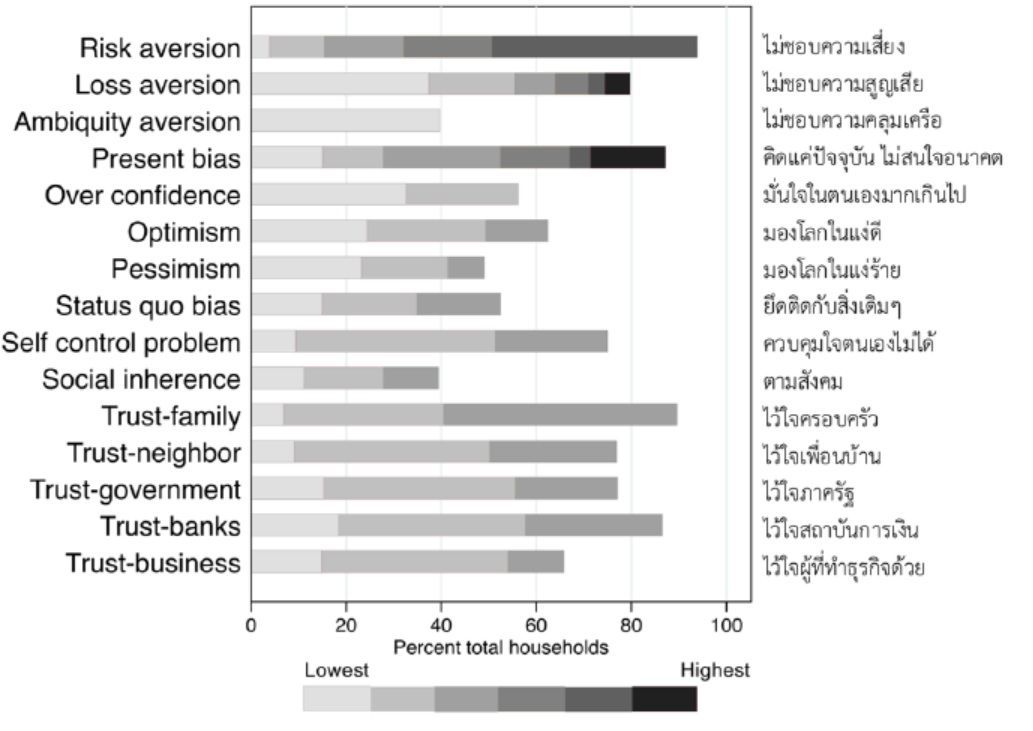
This research emphasizes understanding the behavior and behavioral economics of farmers, or behavioral insights, which are fundamental to learning, motivation, adaptation, and decision-making among farmers. The diagram illustrates the biases of over 250 sample farmers, highlighting that risk aversion and present bias (disregarding the future) are primary behavioral traits of Thai farmers. It is shown through economic experiments with farmers in the central and northeastern regions that technology transfer methods designed with these behavioral insights can enhance efficiency and reduce unintended impacts of policies on farmers' motivations.
In summary, how can Thai farmers compete sustainably? This research emphasizes three main enablers: 1) Data to identify problems, where to start, and what to address; 2) Technology to unlock various structural problems; and 3) Behavioral insights to enhance the efficiency of technology and policy transmission to farmers broadly.
Thanks to information from thaipublica.org