Dissecting the Plan to Assist Micro SMEs with 'Innovation'
Recently, many have begun to focus on the term Micro SME as the government prepares to push forward initiatives aimed at stimulating the economy under the policy of “Building an Entrepreneurial Society for Growth and Global Reach, Increasing Wealth and Sustainability”. When looking at GDP figures and various economic statistics, it must be acknowledged that Thailand still resembles a wide pyramid, with the base consisting of over thirty million impoverished farmers. Therefore, creating opportunities for “farmers” to transition into “entrepreneurs” is a primary mission for the Office of Small and Medium Enterprises Promotion (OSMEP).
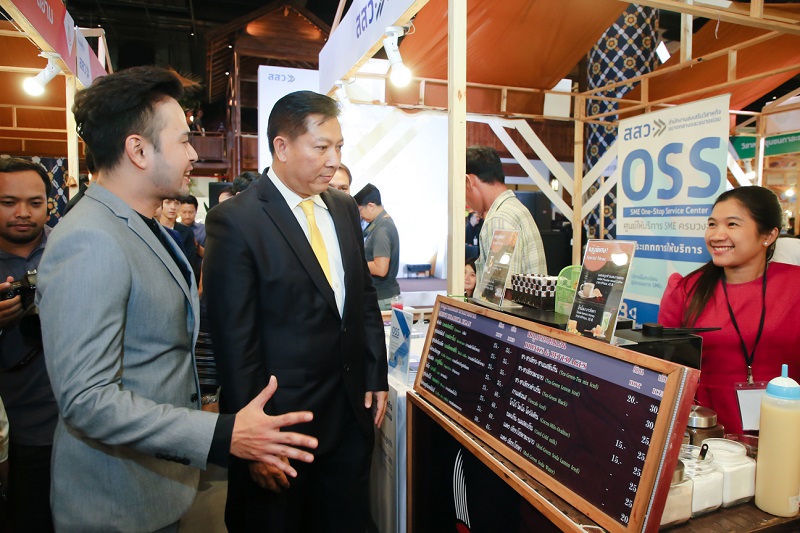
At the event “Integrating, Creating, Committed, Sustainable: The Ultimate Community Enterprise Network & Product Champion 2019, 2nd Edition” aimed at strengthening Thai community enterprises for robust and stable growth, ready for competition in the 4.0 era, while creating networks and generating income for 400 community enterprises during marketing activities throughout September at Icon Siam, generating approximately 15 million baht for entrepreneurs.

<\/span><\/span><\/strong><\/p>
Mr. Wachira Kaewkor Director of SME Service Provider Network Coordination and Acting Director of the Data and Situation Group, Office of Small and Medium Enterprises Promotion (OSMEP) stated that the Micro SMEs currently registered with us number 3.1 million, which includes micro businesses. Previously, we categorized businesses into small and medium sizes, but now we have included micro businesses under the same development plan. The Situation of SMEs and Future Opportunities Currently, the government is promoting various dimensions for groups to learn and develop themselves. It can be seen that in the past, our SMEs did not pay attention to standards, quality, or marketing, selling products in a very ordinary manner. With increased government assistance through various projects, they have improved and developed to meet the same standards, building consumer confidence. For example, OTOP products must have FDA approval, and to export, they must pass GMP and HACCP as much as they can. These factors have made entrepreneurs more alert and adaptable, but it is still not enough regarding product standards. Many businesses find that they sell well but still incur losses because they do not understand their true costs. We provide training to help them learn proper accounting, calculate costs, and understand the benefits of good accounting practices for sustainable growth. This allows them to secure bank loans, as banks are willing to assist; relying solely on our capital is insufficient. The Main Problem: Farmers as Entrepreneurs Farmers struggle to adapt and lack understanding of entrepreneurship. They produce within their local areas but lack knowledge in marketing, which is crucial and must be learned to keep pace with the world. Nowadays, the market is changing, and online systems are helping many groups. The government is trying to establish a structure for entrepreneurs nationwide to utilize. There have been significant changes because OSMEP collaborates with educational institutions and local educational units to implement projects that provide assistance and training. Some groups have excelled, but others, such as the elderly without children to assist them, face obstacles despite producing excellent products. To Survive, Development Must Stand Out In every community, products are often similar, which poses a significant problem. However, entrepreneurs must develop their products to have unique selling points and differentiate themselves. For example, we encountered rice crackers that were all the same. Originally, there may have been only one recognized producer, and new entrants must create differences in taste and product design, incorporating innovation. It’s not just about different colors or flavors; it must have good innovation. How can they acquire this knowledge? OSMEP encourages them to seek out universities with expertise and advisors for their specific products. Five Stars Preparing to Push into International Markets. We divide into two groups: offline markets and international markets. In promoting access to international markets, we select entrepreneurs who are ready and must have GMP or HACCP certifications to reflect their production capabilities. Then we study the feasibility of their products and whether there is market demand. We also look at global market trends, such as the current demand for organic products. We help them find unique aspects of their products and why consumers should choose ours, made in Thailand. We provide coaching until they succeed. For instance, we once took a paper producer to an exhibition in Japan. Although they had similar products, they noticed ours was different and liked it because of the added scent. They then suggested how to make the paper absorb odors for about a month, which became a challenge for the entrepreneur to develop. Now, they supply to Daiso in Japan, emphasizing the need for innovation.