Danish Commercial Banks Offer Negative Interest Home Loans for the First Time in History
Danish commercial banks are now offering home loans with negative interest rates for the first time in history, with a borrowing rate of -0.5% per year.
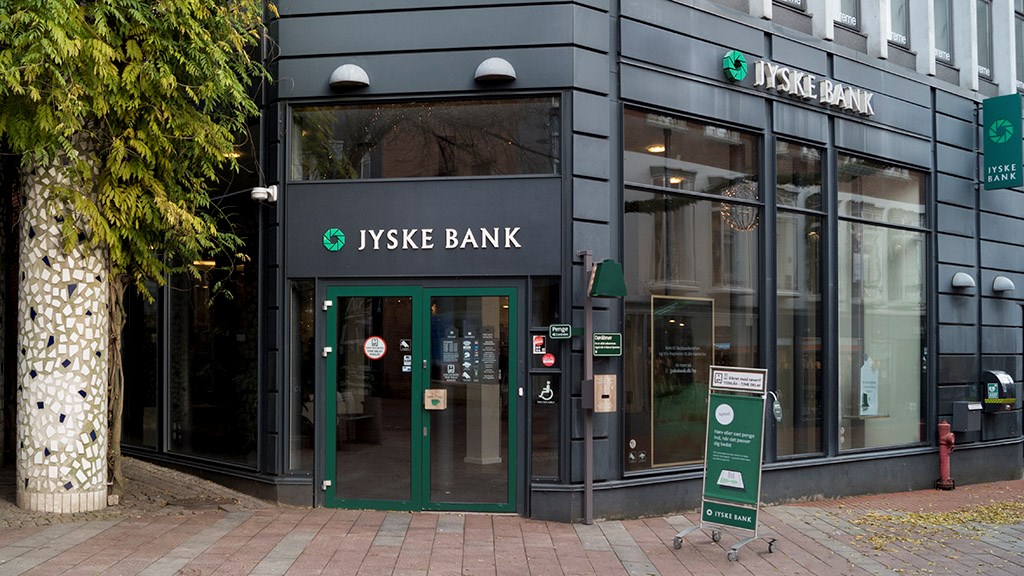
Jyske Bank, Denmark's third-largest bank, announced on August 5, 2019, that it has launched a 10-year long-term home loan with a negative interest rate of -0.5%. On August 7, Nordea Bank followed suit by offering a 20-year home loan at 0% interest and a 30-year fixed-rate home loan at 0.5% interest.
Jyske Bank stated that borrowers with negative interest still make regular monthly payments, but the outstanding debt decreases each month by more than what the borrower repays.
Mikkel Hoegh, a housing economist at Jyske Bank, explained that the bank does not directly give money to customers; instead, the outstanding debt decreases more than the borrower repays each month.
Additionally, the bank noted that this negative interest home loan is a short-term loan and cannot be used to pay off a home entirely. Therefore, it serves merely as supplementary financing for home repairs or to pay off some high-interest debt.
Jyske Bank has also created a guide to help customers better understand negative interest home loans.
Offering negative interest loans may seem like borrowers are receiving money back when applying for a home loan instead of paying interest to the bank as usual. However, this is not the case, as borrowers still have to bear the costs of loan fees and remain in debt, paying back slightly more than what they borrowed.
The use of negative interest rates may appear to mean that banks or lenders cannot make a profit, but this may not be the case. Denmark has a large market for debt securities backed by residential loans, known as Mortgage-Backed Bonds (MBB), which have a 200-year history and serve as a risk diversification source for institutional investors.
Mortgage-backed securities differ from Collateralized Debt Obligations (CDOs), which are debts from loans pooled together, converted into securities, and rated by credit rating agencies for resale to investors. This was a significant cause of the financial crisis in 2008, as some of the pooled residential loans were granted through non-transparent processes, leading to many CDOs receiving good credit ratings while containing subpar loans, ultimately causing their collapse.
However, in Denmark, the issuance of debt securities aligns with the funds invested. Every home loan issued has individual investors, mostly institutions like pension funds, who will receive the borrower's financial information before deciding to invest.
Under current practices, Danish homebuyers borrow money directly from investors through banks, but borrowers do not receive the full loan amount. For instance, if a borrower requests a loan of $100,000, they will receive $95,000 and still owe $100,000. The investor thus receives the $5,000 difference and will get back the full $100,000 in ten years.
In addition to repaying the full $100,000, homebuyers must also pay 0.3% interest and loan fees to the bank, which is where the bank makes its profit. However, investors pay 0.5% of the loan to the borrower throughout the contract period, meaning investors incur a loss.
For borrowers receiving 0.5% interest from investors, they effectively gain 0.2% from borrowing, while the bank earns 0.3% in interest and fees. Therefore, the ones who do not profit at all are the investors, who must pay 0.5% of the money they lend.
Why would institutional investors agree to invest in something they see as a guaranteed loss? The answer is that they are concerned about losing all their money from investments in other areas.
In fact, Danish institutional investors could invest in U.S. government bonds instead of residential loans, even though the returns are lower. The yield on 10-year U.S. government bonds fell to 1.74% from 1.90% during August 1-9, 2019. However, the exchange rate between the U.S. dollar and the Danish krone is highly volatile, with the dollar strengthening, requiring more kroner to purchase bonds.
Danish institutional investors worry that the strong dollar will be a temporary situation, and if the value of bonds in their own currency decreases, it will lead to greater losses than the 0.5% they pay for investing in residential loans.
Lise Nytoft Bergman, chief analyst at Nordea Bank, stated that it is quite concerning when investors are willing to lend for 30 years with only a 0.5% return, indicating that investors are very worried about the current financial market situation, and it may take a long time for conditions to improve.
Negative interest rates generally signal that lenders are cautious about market directions. Some banks are willing to accept slight losses during this period by offering low or negative interest rates rather than risk providing borrowers with high-interest loans that they may not be able to repay in the future.
Offering loans at negative interest rates is possible in Denmark, as well as in Sweden and Switzerland, where interest rates in the money market have fallen to levels that could shake the banking sector.
Recently in Switzerland, UBS informed its wealthy clients that it would start charging a deposit fee of 0.6% per year for deposits exceeding €500,000.
In Denmark, Jyske Bank's deposit interest rate has dropped to 0%, and commercial banks in Denmark are considering whether to implement negative deposit interest rates like Swiss banks. Importantly, no bank wants to be the first to lead the market in adopting negative deposit interest rates.
However, compared to the Bank of England's policy rate of 0.75% and the European Central Bank's (ECB) 0% interest rate, Denmark's interest rate is already at -0.4%. Although Denmark is a member of the European Union, it is not in the Eurozone and does not use the euro, but instead uses its own krone.
Denmark pegs its krone to the euro, so when the ECB adjusts interest rates, Denmark must also adjust its rates to maintain currency stability.
Furthermore, with the ECB's deposit interest rate at -0.4% and Denmark's standard interest rate at -0.65%, investors are not inclined to keep their money in the Danish financial market, as depositing money in Denmark would decrease the value of their deposits.
Eurozone countries were the first to introduce negative interest rates over five years ago as a short-term measure to stimulate the economy, and many countries continue to maintain low interest rates today.
In theory, negative interest rates would encourage businesses to borrow money for investment, allowing money to flow back into the economy, as the money spent would circulate multiple times, generating economic activity.
Conversely, negative interest rates may have a counterproductive effect. When interest rates fall below 0%, whether on government bonds or other safe assets, including cash and non-interest-bearing bank deposits, people may choose to hold cash and refrain from spending, leading to money not entering the economy.
Thank you for the information from thaipublica.org