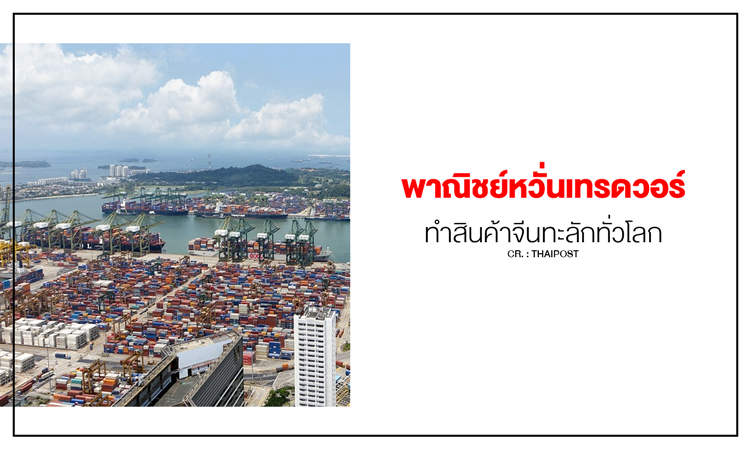
Commerce Ministry Concerned About Trade War Causing Chinese Goods to Flood Global Markets
On May 22, 2019, Mr. Adul Chotinisakorn, Director-General of the Department of Foreign Trade, revealed that since the United States began its trade war with China by imposing tariffs on Chinese imports from the first round to the latest increase in May 2019, the department has been closely monitoring the situation. Many parties are concerned that a significant amount of Chinese goods may be exported to various countries around the world, including Thailand, instead of being sent to the U.S., which could negatively impact Thai producers. If it is found that exports to Thailand are unusually high or that Thai producers of similar products are affected, such as experiencing declining sales or reduced market share, the department can take action under various laws it oversees to prevent, address, and remedy the impacts on affected Thai producers.
Additionally, if it is discovered that Chinese goods exported to Thailand falsely claim to be of Thai origin before being sent to the U.S. to evade U.S. trade measures, such as anti-dumping and countervailing duties (AD/CVD) and safeguard measures, the department can implement anti-circumvention measures (AC) under the Anti-Dumping and Countervailing Act concerning foreign goods.
“In previous AC cases, the department has continuously collaborated with U.S. Customs and other countries to conduct strict inspections after U.S. Customs indicated that there might be various types of goods from China, such as steel-related products, that the U.S. has imposed trade measures on, potentially misrepresenting their origin as Thai before being exported to the U.S. We have jointly inspected Chinese-owned manufacturing facilities in Thailand, including factories producing nails and metal hangers, and found instances of misrepresentation of Thai origin for exports to the U.S., leading the department to suspend the issuance of certificates of origin,” he stated.
Furthermore, if it is found that exports to Thailand are unusually high, the department can use safeguard measures under the Act on Protection Against Increased Imports to curb imports. However, this case would be aimed at preventing increased imports from around the world, not specifically targeting any one country.
If it is found that exports to Thailand are being dumped at prices lower than those in China or below cost, causing harm to Thai producers of similar goods, the department can initiate an investigation to implement anti-dumping and countervailing measures. If the final investigation results confirm that dumping is occurring and Thai producers are indeed suffering damages, the department will announce the imposition of anti-dumping duties on goods exported from China or other countries that are dumping in Thailand.
Mr. Adul further stated that the effects of the trade war not only slow down the global economy and trade but also provide Thailand with opportunities to export products to replace Chinese goods in the U.S. market and U.S. goods in the Chinese market, particularly agricultural products and certain food items that China does not import from the U.S., such as pork. Thailand needs to negotiate with China to export pork to China effectively. Additionally, Thailand should leverage the ASEAN-China Free Trade Agreement (FTA) to increase exports to China to replace U.S. goods, which will give Thailand a competitive edge over rivals.
Thank you for the information from www.thaipost.net