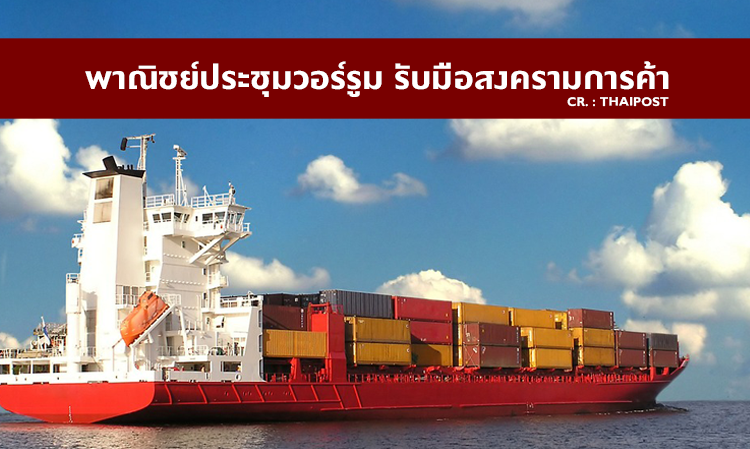
“Commerce” Monitors US-EU Trade Dispute
On July 11, 2019, Ms. Oramon Supthaweetham, Director-General of the Department of International Trade Negotiations, revealed that on July 1, 2019, the Office of the United States Trade Representative (USTR) announced a draft list of products that the US plans to impose retaliatory tariffs on against the European Union (EU). This follows the US filing a complaint against the EU at the World Trade Organization (WTO) in 2004, with a ruling in 2018 allowing the US to take retaliatory trade measures against the EU due to the EU's subsidies for its aviation industry, particularly for Airbus. These subsidies, which include funding for factory development and financing for aircraft design and development, are considered export subsidies that violate WTO rules and have caused significant harm to the US. As a result, the EU must revoke these measures, but it has yet to comply with the ruling, allowing the US to impose tariffs on EU imports.
Initially, the US identified 317 items in its announcement for retaliatory measures, including passenger aircraft fuselages, aircraft components from the UK, France, Germany, and Spain, as well as cheese, yogurt, olive oil, fruits, and brandy, among others. Recently, an additional 89 items have been added, such as pork, cheese, olives, whiskey, and steel pipes, with a total value exceeding $24 billion. Public comments will be accepted in August 2019 on these new items, after which the matter will be submitted to the WTO arbitration for consideration of the appropriateness and value of the retaliatory measures. However, the USTR stated that if the arbitrators issue a ruling before the comment period concludes, the US will immediately impose tariffs on the original list valued at over $20 billion. The WTO arbitration is expected to release its findings in September 2019.
The EU also announced a draft list of products for retaliatory tariffs against the US in April 2019, including ketchup, nuts, orange juice, chocolate, and vodka, with a total value of $12 billion. This is a result of the WTO ruling in 2012, where the EU filed a complaint against the US for providing subsidies to its aviation industry, particularly Boeing, which has harmed the EU's aviation sector. Currently, the EU is awaiting a ruling from the arbitrators regarding the appropriate level of retaliatory measures against the US for not complying with the WTO ruling.
“If the two economic superpowers do indeed impose retaliatory tariffs as announced, it is expected to impact global trade and various countries, as many products are interconnected in the production chain. Both the Thai public and private sectors need to closely monitor the situation to see if both parties can negotiate a resolution or how they will proceed to mitigate trade risks and adapt accordingly,” said Ms. Oramon.
Nonetheless, it is viewed that the dispute between these two economic giants underscores the importance of a multilateral trading system aimed at maintaining fairness and equality. WTO member countries must consider international trade rules, as violations of WTO commitments may lead to litigation and disputes being brought before the WTO's dispute resolution process, where the WTO's panel and appellate body will make decisions. This could result in allowing retaliatory trade measures, such as imposing tariffs on key products, if the losing party continues to refuse to comply with the ruling, which would adversely affect economic trade and the country's image in the global trading arena.
Thank you for the information from www.thaipost.net