iPrice Analyzes the Impact of the 2019 Election on E-commerce
It can be said that 'elections' are one of the 'festivals' that receive overwhelming popularity, much like Thailand's annual festivals. This is because every citizen must exercise their voting rights, and those working abroad may need to plan time off to return home to vote if there are no nearby polling stations for early voting. These factors all impact various businesses, and one that iPrice anticipates will be affected to some extent is 'e-commerce'. As people focus on finding polling stations, their preferred parties, or even booking transportation online, these activities lead to a decrease in 'online shopping' sales. But how much of a decrease? iPrice has compared the 10 days leading up to the election with the same period in February (February 15-24 vs. March 15-24) using Google Analytics for data collection. The results are as follows:
Comparison of website visitors between February 15-24 and March 15-24
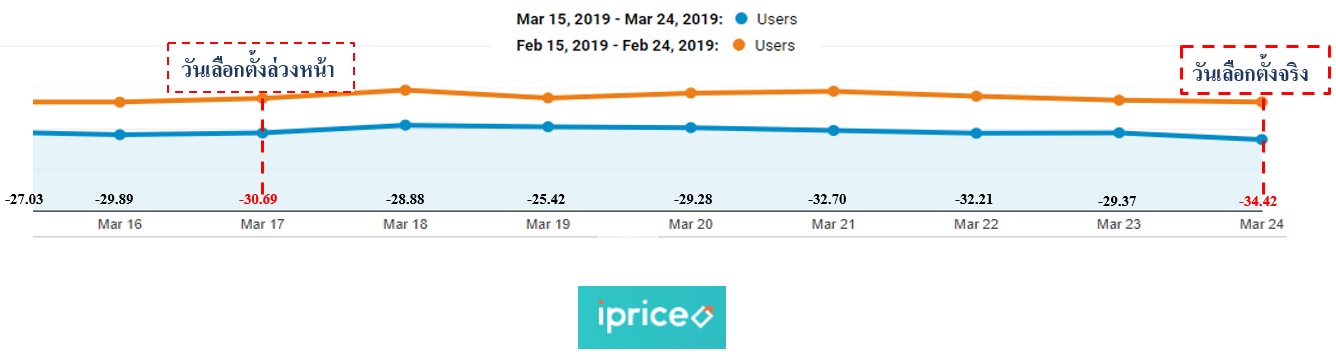
Although the impact is not as significant as during Songkran or New Year festivals, it clearly shows a difference in consumer behavior. It can be said that the election buzz began in the first week of March, as the graph shows a noticeable decline in product views on the website, which continued to drop in the second week when some areas began early voting. The most significant drop occurred on March 24, the day of the general election. Furthermore, on March 23 (one day before the election), a tsunami warning was issued for provinces along the Andaman Sea due to an earthquake around 6 PM that day, which may have diverted people's attention to news rather than online shopping.
Which political parties were searched the most on Google?
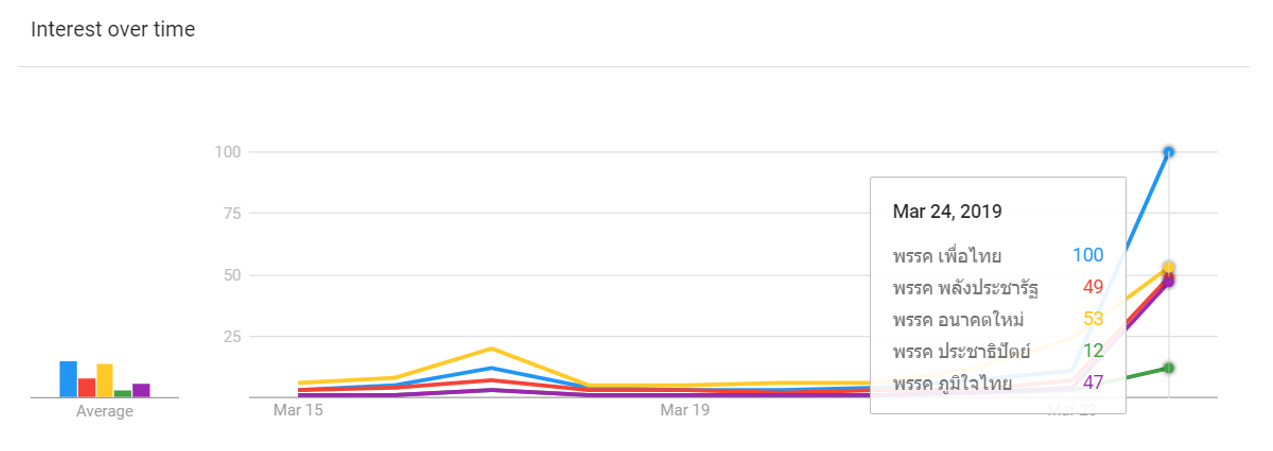
Using iPrice, Google Trends was also utilized to identify the most popular political parties searched in the 10 days leading up to the election, using keywords based on the top five parties. The parties with the highest search volume according to Google Trends were the Pheu Thai Party, Future Forward Party, Palang Pracharath Party, Bhumjaithai Party, and Democrat Party, in that order (ranked by the total Search Interest from March 15-24, the 10 days before the election).
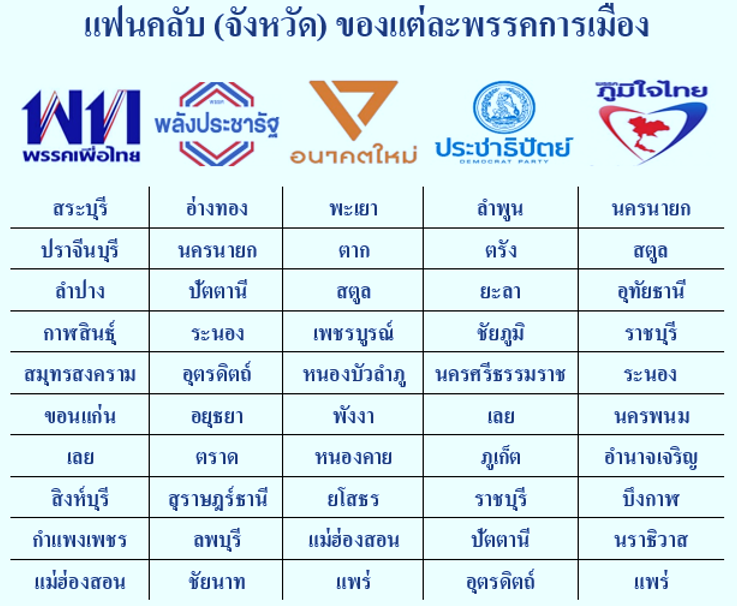
Which provinces support each leading political party?
Analyzing the search data for political party names from Google Trends by region reveals the popularity of each party in various provinces:
As expected, the 2019 election has impacted Thai e-commerce, but not to the extent of the Songkran and New Year festivals. This may be because most people had to leave their homes to vote, but not necessarily return to their hometowns to meet family or elders, which requires more time like during Songkran and New Year. Data collected after the election shows a steady increase in online shopping visits, suggesting that service usage will return to normal within a week after the election buzz fades away.
Written and analyzed by Kanitha Sasa-kul iPrice