Nexus Advises on Sustainable Development of Condominium Projects in Bangkok
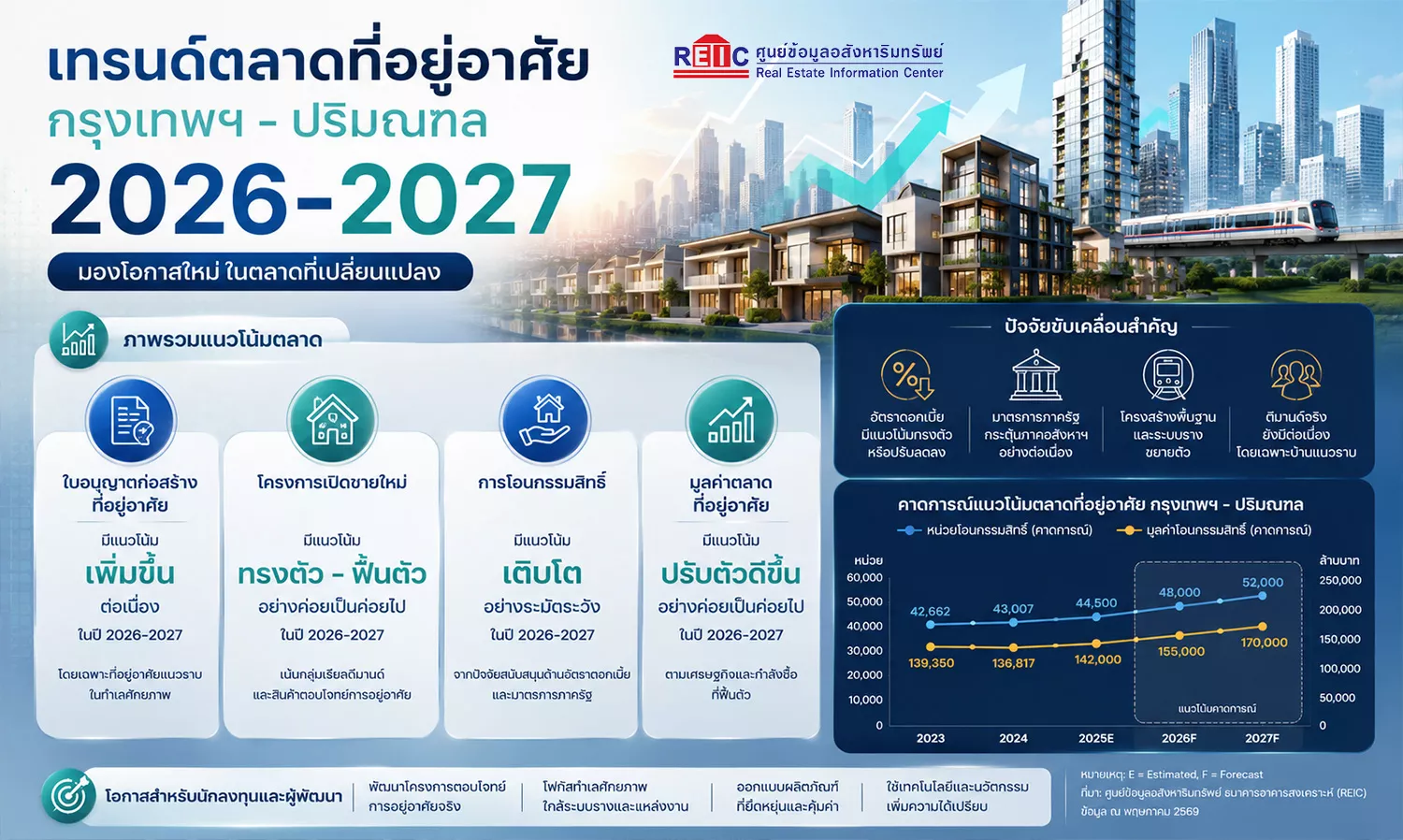
(August 28, 2018 – Bangkok) Nexus Property points out that land prices, location, and urban expansion are key factors driving the increase in condominium prices. The influx of foreign investors purchasing condos for long-term investment may only add some color to the real estate sector in the next 1-2 years. It is advised that developers consider the needs of Thai customers who are buying for actual living and should study the genuine demands of consumers before developing products. This approach will ensure that the products meet the highest demands for stable and sustainable growth in the condominium market.
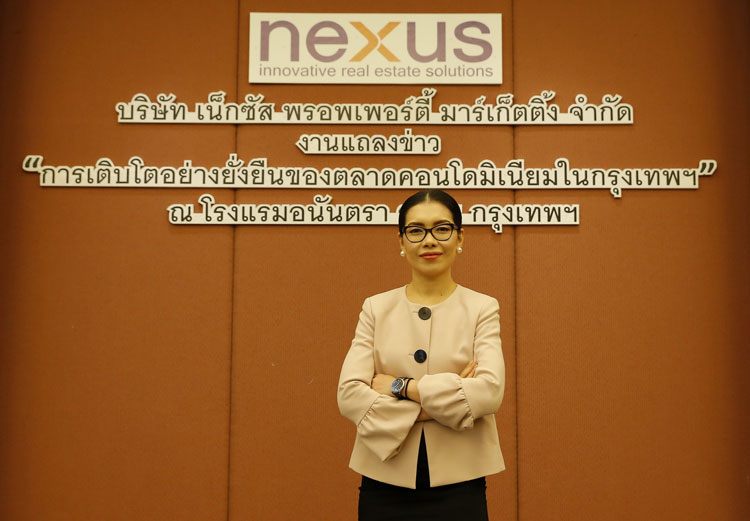
Ms. Nalinnarat Charoensupong, Managing Director of Nexus Property Marketing Co., Ltd., a real estate consultant, revealed that over the past few years, Nexus has continuously provided information about the condominium market. We found that the average supply growth rate is about 10% per year, with prices increasing by 8-12% annually. The rising condominium prices are primarily due to the increasing land prices and the scarcity of land. This change will compel developers to consider product development to meet the long-term sustainable growth of the market.
For the overall condominium market in the second quarter of 2018, the supply of condominiums in the Bangkok market grew by 9,395 units from 20 projects, bringing the total number of condominiums in the market to 573,000 units. The areas with the most new condominiums are Charan Sanitwong and Saphan Khwai, which are districts surrounding the city center.
In terms of pricing, the average condominium price in the market increased by 5% in the first half of the year, reaching 137,100 THB/square meter. However, when focusing on the city center market, it remains the segment with the highest price adjustment at 6% or 223,000 THB/square meter. The areas surrounding the city center saw a 4% increase to 110,000 THB/square meter, while the outer market increased by 3% to 75,000 THB/square meter, respectively.
Regarding the demand for condominiums in Bangkok over the past few years, it has been found that more than 80% of the demand comes from Thai people buying for actual residence. However, in the past 1-2 years, there has been an increase in purchasing power from foreigners, primarily buying through brokers for investment purposes, both short-term and long-term for rental, as they expect annual returns and price appreciation. However, it is well known that rental prices do not grow at the same rate as condominium sale prices. Therefore, in the long run, investors may primarily expect profits from increased resale prices, while rental prices may not be significantly high. If we consider that foreigners may hold condos at a ratio of 49%, it may only be seen in some projects, and ultimately, the market that should be primarily focused on remains the Thai market.
The overall changes in the condominium market over the past 7-10 years show that the first change is 1) in location. As the city expands, transportation development also grows, leading to the expansion of condominiums. Notably, the supply ratio has significantly increased in the past 7 years in two outer locations: Thonburi-Phetkasem, which had only 13,000 units in 2011, has now increased to 66,000 units as of Q2 2018. Another area, Ngamwongwan-Tiwanon, has grown from 17,000 units in 2011 to 73,000 units.
2) Changes in room sizes have been observed, with the size of condominiums shrinking significantly over the past 10 years. For example, a 1-bedroom condominium that used to be 65 square meters is now only 28 square meters. Proportionally, the size has decreased by more than half compared to 10 years ago. Similarly, a 2-bedroom condominium that used to be 120 square meters is now only 45-48 square meters.
3) In terms of room mix, the proportion of different unit types has changed significantly compared to several years ago. In one project, 2 and 3-bedroom units used to dominate the project, while 1-bedroom units accounted for only 20-30% of the project. However, nowadays, 1-bedroom units have become the primary focus in the development of condominiums, and it is rare to find 3-bedroom units in new projects. With smaller room sizes, the number of units in each project has increased. For example, a 2-rai plot that used to yield 300 units in high-rise condominiums can now yield 500 units with the same saleable area, which is a factor contributing to the high supply growth of condominiums in recent years.
4) Changes in price per unit for mid-market and city condominiums start at around 1.5 million to 3 million THB per unit, accounting for more than 70% of the total units in the market, making it the largest market in Bangkok. However, the price per unit has been limited by the purchasing power of buyers, forcing developers to alter their project development strategies to keep costs within the defined price per unit. In recent years, due to rising land prices, project locations have moved further away from the city center, often along the future subway lines or into smaller alleyways as 8-story buildings.
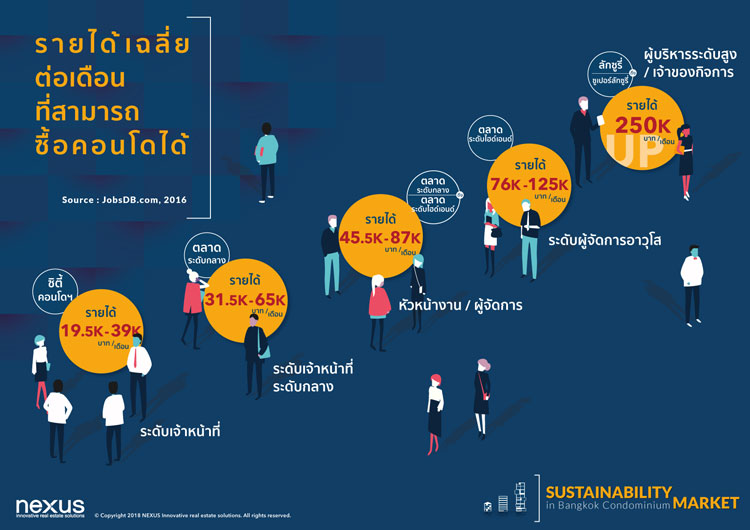
Analyzing the income distribution among workers in Bangkok, it is found that those in officer-level positions earn no more than 35,000 THB per month and can afford to buy a 1-bedroom condominium in the city condo segment priced below 2.5 million THB. Meanwhile, mid-market employees, such as senior officers or supervisors with incomes up to 65,000 THB per month, can start purchasing. For high-end condominiums, buyers must be at the manager level or above, with incomes of 120,000 THB per month. In the luxury and super-luxury segments, only business owners and top executives can afford them. With condominium prices increasing by an average of 7-8% per year over the past few years, prices have risen faster than the income of some Bangkok residents. While it is possible to buy units at higher prices, it may result in smaller units in the same location or the same-sized units in more distant locations.
“In summary, the sustainable growth of the condominium market in Bangkok still relies primarily on the Thai market, while the foreign market serves as a supplement, aimed at long-term investment due to rising condominium prices. Rental factors may only enhance the attractiveness of investments. In the medium to long term, condominiums in Bangkok will continue to expand into suburban areas to accommodate the lifestyle of those working from home, and the central business district may also expand to areas surrounding the city center, such as Rama 9, Bang Sue, Phahonyothin, and Ratchadapisek. This will lead to urban expansion, and the condominium market in the outskirts will continue to grow, while the growth of the second-hand condominium market will increase due to lower prices compared to new condominiums and larger room sizes that meet actual living needs. We may not see this in central Bangkok in the next 1-2 years, but in the long run, such trends will emerge in the Bangkok market, similar to major cities around the world like New York or Tokyo,” Ms. Nalinnarat concluded.
Thank you for the information from nexus.co.th