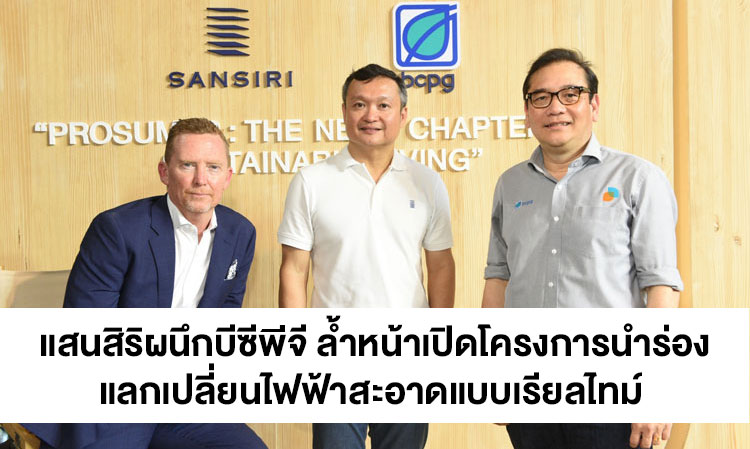
Sansiri Partners with BCPG to Launch the World's Largest Real-Time Clean Energy Exchange Project Using Blockchain at T77
Aiming to be a model for a smart green energy community under the concept of Green Sustainable Living, with clean energy production accounting for 20% of total consumption, helping to reduce carbon dioxide emissions equivalent to planting 400 rai of forest. Sansiri homeowners will see a 15% reduction in electricity costs per unit by September.
Sansiri, in collaboration with BCPG, has announced the successful implementation of a new peer-to-peer energy exchange system using blockchain technology at the world's largest residential project and the first of its kind in Southeast Asia. The pilot energy exchange system is now operational at the Sukhumvit 77 project, or T77, with official trading expected to commence in September this year. This marks a strategic partnership that combines expertise across industries between leaders in Thailand's real estate and renewable energy sectors, under the Energy Management for the Future strategy, creating a phenomenon that transforms consumers into "prosumers"—where Thai citizens can be both producers and consumers of clean energy from renewable electricity, and sell excess energy produced to community members. This initiative aims to create a new chapter in sustainable living and advance the sustainability of renewable energy use in Thailand. It is expected to reduce electricity costs and environmental impacts by cutting carbon dioxide emissions equivalent to planting 400 rai of forest, with clean energy production reaching 20% of total electricity consumption at the T77 project. Homeowners can save up to 15% on their electricity bills, with plans to expand this initiative to over 20 of Sansiri's real estate projects by 2018 under the Smart Green Energy Community development plan.
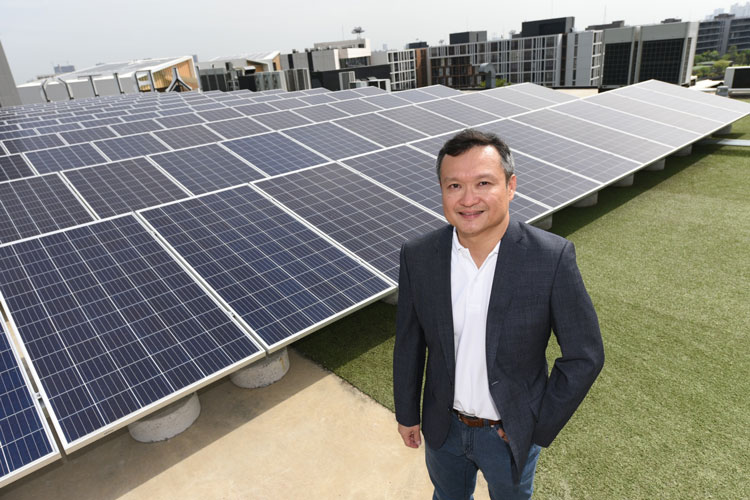
Mr. Uthai Uthaisangsuak, CEO of Sansiri Public Company Limited, stated, "Sansiri is committed to creating sustainable living communities through smart, environmentally friendly, and energy-efficient approaches (Green Sustainable Living) by continuously seeking new environmentally friendly technologies, which has long been a significant agenda in our business operations. One of Sansiri's goals is to incorporate renewable energy into all projects under the Energy Management for the Future strategy. Currently, solar energy technology is gaining widespread popularity, and we have initiated the installation of solar power systems in several ongoing projects. Partnering with BCPG as a strategic partner takes our Green Sustainable Living agenda to the next level by implementing a peer-to-peer solar energy system using blockchain technology in selected condominiums and single-family homes across more than 20 projects. This marks a significant step in developing energy innovations for residential projects in Thailand and Southeast Asia, and it is the largest energy exchange through blockchain in the world. This revolutionary energy distribution system will create a sustainable living experience for Sansiri homeowners, highlighting that residents will be both producers and consumers simultaneously as prosumers for the first time, enabling us to create a new exchange system in the energy market that transcends previous limitations. The clear benefits for Sansiri homeowners living in projects with this system include savings on electricity bills, as every unit of clean energy produced can save up to 15% on their electricity costs, while also fostering pride among residents for their participation in environmental stewardship by reducing their carbon footprint through clean energy production accounting for 20% of total electricity consumption at the T77 project, which helps reduce approximately 530 tons of carbon dioxide emissions per year, equivalent to planting 400 rai of forest."
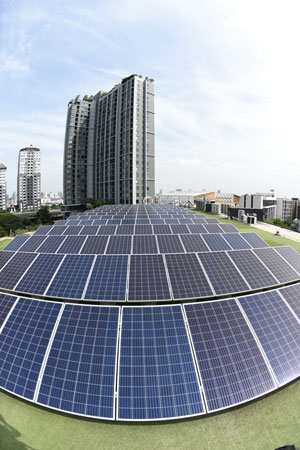
BCPG and Sansiri have installed a solar energy exchange system using blockchain technology at the Town Sukhumvit 77 (T77) project, which is Sansiri's mega project comprising various residential types and a complete lifestyle hub on over 50 rai in the heart of Sukhumvit 77. Official trading is expected to begin in September this year. The rooftop solar energy system has a total installed capacity of 635 kilowatts, with allocations of 54 kilowatts for Habito Mall, a lifestyle community mall within the project, 413 kilowatts for Bangkok Prep International School, and 168 kilowatts for Park Court Condominium, along with a dental hospital participating in the energy exchange within the project. Additionally, this system has been installed at Sansiri's precast concrete factory with a power generation capacity of 150 kilowatts. By 2021, Sansiri plans to install solar energy trading systems in over 31 new projects, with a total power generation capacity of 2 megawatts.
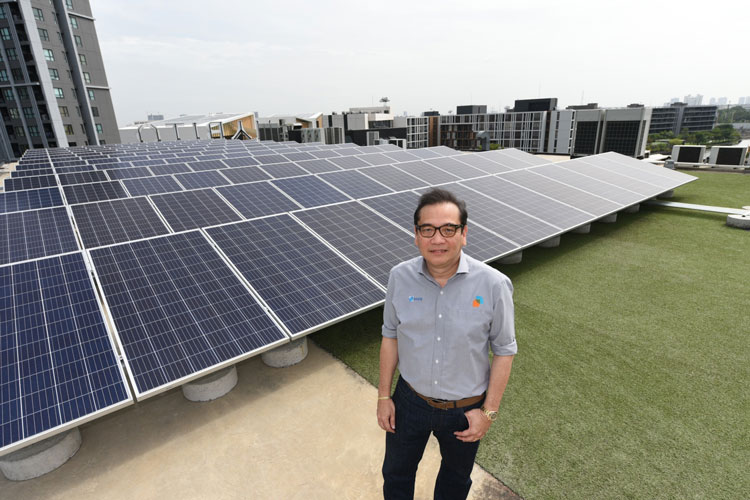
Mr. Bandit Saphiangchai, CEO of BCPG Public Company Limited, stated, "As a leader in the renewable energy business in the Asia-Pacific region, BCPG is committed to creating a sustainable energy future in collaboration with various partners by utilizing innovative and intelligent technologies to manage electricity efficiently. Starting with the pilot project for internet-based electricity trading at T77 in collaboration with Sansiri and Power Ledger, a pioneer in global renewable energy trading platforms from Australia, we expect to be ready for actual trading in September after the pilot phase. This marks our first step in residential projects in Thailand and the launch of an energy trading platform in Southeast Asia, allowing Sansiri homeowners to become both consumers and producers of electricity, or prosumers, who can trade surplus clean energy via the internet with project participants, helping to save approximately 15% on their current electricity bills."
The advantage of using blockchain technology is that it enables real-time trading of clean energy through a peer-to-peer network via a secure, fast, transparent platform, eliminating errors in transactions without intermediaries, with lower prices and reduced pollution through the use of clean energy, following the Low Cost, Low Carbon concept.
In this pilot project at T77, there are four participating buildings with energy storage systems or batteries within the project, connected to the Metropolitan Electricity Authority (MEA) grid. Each participant has different electricity usage behaviors (load profiles) and potential for solar energy production. Initially, the electricity produced from rooftop solar panels in each building will be used within the building, allowing each building to use electricity at a lower cost than previously purchased. In cases where there is excess electricity produced, each building can exchange that electricity within the platform. In a fraction of a second, various scenarios of electricity usage and production can occur, where buildings may produce more than their demand or not enough to meet their needs. If the produced electricity exceeds the demand, the system will sell the surplus to other users through the P2P system. If there is still excess, it will be sold to the energy storage system for later sale, and if the storage system is full, the electricity will be sold to the MEA grid. In cases where the demand for electricity exceeds what can be produced, the system will purchase from the P2P system, from the energy storage system, and from the MEA in that order.
All of these operations are made possible by the blockchain technology used to process the suitability of determining buyers and sellers at a frequency level of seconds, with BCPG's application available on both computers and mobile phones. This pilot project for electricity trading at T77 is one of the largest projects in the world and among the first of its kind globally. Initially, it is expected that this pilot project will be able to produce electricity for this community up to 20% of total electricity demand, which not only allows for self-generated clean electricity production and trading through the P2P system but also increases the value of each building or home, enhancing opportunities for obtaining loans as well."
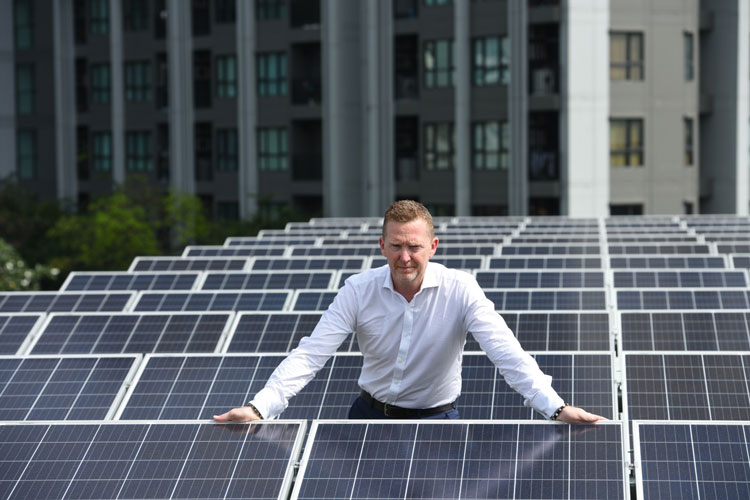
Mr. David Martin, Managing Director and one of the founders of Power Ledger, added, "Our vision is to empower consumers worldwide with energy management (Democratization of Energy) while maintaining the value of existing energy distribution networks. We are committed to reforming the energy industry by utilizing technology to help consumers save on electricity costs, sell surplus energy at favorable prices, and use cleaner energy. The use of blockchain technology in energy trading and exchange will create an automated trading platform for both residential and commercial buildings to sell surplus energy to customers who can choose at a price they are comfortable with. Collaborating with Sansiri and BCPG marks the first step for the real estate business in Thailand and Southeast Asia to promote collaboration between community consumers and energy producers to jointly create a sustainable energy future."
For the electricity trading between buildings, all parties can act as both buyers and sellers through pre-agreed smart contracts, where those needing electricity will buy from those producing surplus at the lowest price, while those producing more than needed will sell to the highest bidder. Transactions will use Sparkz Tokens, which are akin to coupons in a food court, serving merely as symbols for trading electricity within the system, unrelated to cryptocurrency processes and unaffected by exchange rates. This is another advantage of our platform, which can separate the levels of access and exchange into two steps: between consumers and BCPG, and between BCPG and Power Ledger to mitigate risks for consumers regarding cryptocurrency. Our past successes in the P2P Energy Trading system include collaborations with Western Power and Curtin University in Australia, and with Northwestern University in Chicago, USA. We are confident that this platform will also succeed in Thailand."
Mr. David concluded, "The ultimate goal of Sansiri in introducing world-class technology in clean energy innovation for energy savings in this pilot project is not to focus on revenue from electricity sales but to create an exceptional living experience and build sustainable living communities in Thailand and Southeast Asia. Additionally, we aim to serve as a case study for the successful implementation of electricity trading systems in residential projects or communities at a macro level, supporting Thailand's transition to energy democracy, similar to successes achieved in many countries, while also contributing to alleviating the government's burden of investing in large power plants to meet increasing demand. Sansiri remains committed to seeking partners to jointly develop environmentally friendly technologies and innovations in real estate to continue advancing sustainable living practices."
Thank you for the information from www.sansiri.com