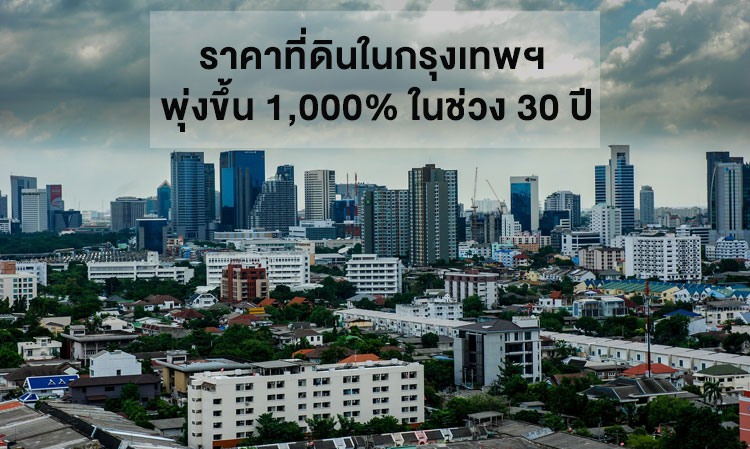
Land Prices in Bangkok Surge by 1,000% Over 30 Years
Bangkok, July 11, 2018 – Land prices in the central areas of Bangkok have increased by over 1,000% since 1988, when CBRE first opened its office in the city 30 years ago.
Land prices rose significantly during the “Asian Tiger” era from 1988 to 1996, before the market stalled due to the financial crisis in 1997.
The growth of land prices began to rise again in the mid-2000s, with rapid increases in the last two years for land in key urban areas or CBDs.
In the late 1970s and into the 1980s, two large land transactions occurred: an 8-rai plot on Sathorn Road was purchased by the original developer of Empire Tower for about 125,000 baht per square wah, and a 21-rai plot on Wireless Road, previously the home of the manager of Standard Chartered Bank, was sold to the M Thai Group for approximately 250,000 baht per square wah, which has now been developed into All Seasons Place.
The most recent land sale in the Sathorn area was an 8-rai plot belonging to the Australian Embassy, which sold for about 1.45 million baht per square wah in 2017. In the Lumpini area, SC Asset purchased an 880-square-wah plot on Lang Suan Road for approximately 3.1 million baht per square wah. The highest land transaction in Thai history was the sale of a 23-rai plot of land belonging to the British Embassy in 2018 to a joint venture between Central Group and Hongkong Land.
The increase in land prices is not uniform, and the changes are aligned with the urban development patterns of Bangkok.
Historically, the business center was located on Charoen Krung Road, and the government center was situated in the Rattanakosin Island area. In the 1950s and 1960s, the business center shifted to Silom and Surawong Roads.
Bangkok grew significantly in the 1970s and 1980s, but there was no clear definition of the city center, and development expanded due to the construction of new roads. However, these factors have changed in recent times.
Two major changes affecting land prices are the opening and expansion of public transportation systems, with the first BTS line opening in 1999 and the MRT's dark blue line commencing operations in 2004.
This public transportation system has transformed the lifestyles of people in Bangkok, both in terms of work and daily life. By the late 2010s, Bangkok's public transport system will cover approximately 460 kilometers, compared to London's 402 kilometers of underground rail.
The popularity of Bangkok's public transport, with over 1.2 million users daily, has increased land values near stations, although not all lines or stations enjoy equal popularity. Part of the land value is determined by the popularity of each transport line and station.
“Another important factor determining land prices is the regulations regarding urban planning and building control laws, particularly concerning the size of buildable areas. It is evident that if the buildable area is limited, land prices will not increase dramatically,” said Kulwadee Sawangsri, Executive Director and Head of Investment and Land at CBRE Thailand.
Urban planning regulations and building control have become more stringent and complex, and they are now a significant factor in determining land prices.
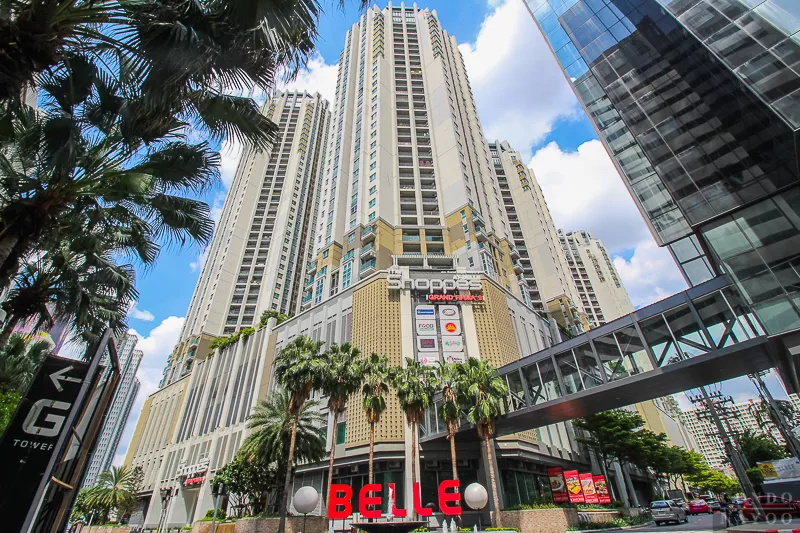
In the 1970s and 1980s, Bangkok expanded significantly, but in the 1990s, it became a more centralized city with the emergence of high-rise condominiums and the growth of modern office spaces. The city center has been more clearly defined, and new developments have arisen on underutilized land, such as the 105-rai plot that is now home to One Bangkok at the intersection of Rama IV Road and Wireless Road.
Land prices have begun to represent a larger proportion of overall development costs, as land prices have been growing faster than construction costs. The overall value of project development has increased, primarily due to rising land prices, resulting in higher selling prices for condominiums and necessitating increased income to make rental income-generating projects viable.
CBRE predicts that land in central Bangkok will continue to be the most sought-after location for developing hotels, office buildings, shopping centers, and other types of buildings, such as hospitals. Bangkok will see a clearer definition of the city center, and project development will expand along the transport routes surrounding the stations.
The increase in land prices will depend on the feasibility of project development and the returns expected from such developments, which will vary based on what projects can be developed and at what price points customers are willing to buy or rent once the projects are completed.
As freehold land in the central areas with development potential becomes increasingly scarce, CBRE expects land prices to continue to rise. At times, land prices exceed the total value of the buildings on the land, leading to more instances of old buildings being demolished and new projects being developed on the same land. We have already seen the demolition of Kieng Huan Tower 1 on Wireless Road and Vanissa Building on Chidlom Road, as well as plans to demolish Dusit Thani Hotel and redevelop the area. However, to date, demolitions have only occurred with single ownership buildings.
Currently, condominium laws require unanimous consent from all owners to demolish a building for it to be sold and redeveloped, which has never happened in our country, even though there are some condominiums where the total value of all units combined is less than the value of the vacant land used to build that condominium. The sale of all units and subsequent redevelopment has occurred in other countries, particularly Singapore, where the proportion of owners required to agree to sell the entire building is lower than in Thailand.
CBRE views it as challenging to obtain 100% approval from co-owners in Bangkok to sell all units to a property developer.
“Assuming that urban planning regulations remain unchanged and the size of buildable areas stays the same, land in Bangkok's CBD is likely to continue to rise in price,” concluded Aliwassa Pathanapibul, Managing Director of CBRE Thailand.
The increase in land prices will not be at a constant level and will align with economic cycles and real estate development.
Thank you for the information from www.cbre.co.th