A Story of 'Elders and the New Generation': 30 Years of Life in Doi Tung on the Path to Sustainability, Achieving Today Through 'Rule of Law and Community Guidelines' That Work
The study visit and academic seminar titled “Empowering Communities and Vulnerable Women for Sustainable Development,” organized by the United Nations Office on Drugs and Crime (UNODC) and the Thailand Institute of Justice (TIJ) from January 25-27, 2018, included a visit to the Chiang Mai Women’s Correctional Institution, one of the model prisons under the Bangkok Rules, as well as a study visit to the “Doi Tung Development Project” (a royal initiative) in Chiang Rai Province.
On January 26, 2018, Her Royal Highness Princess Pachara Kitiyabha, UNODC’s Goodwill Ambassador for the Rule of Law in Southeast Asia, led a delegation of ambassadors, senior officials from the ASEAN Department of Corrections, and representatives from international organizations to study the Doi Tung Development Project to learn about crime prevention and sustainable development through a development-led approach.
Additionally, there was a discussion with village elders about “the lives and living conditions of villagers before the Doi Tung Development Project and the benefits gained from supporting alternative development,” as well as a sharing session with the youth in the area regarding “new challenges and promoting community adaptation to changing environments.”
The “Doi Tung Development Project,” under the auspices of the Mae Fah Luang Foundation, is a royal initiative of Her Royal Highness the Princess Mother, which provides opportunities for the local villagers in Doi Tung, a hill tribe community, to stop opium cultivation, cease deforestation, and abandon shifting cultivation, turning instead to legal occupations that generate sustainable income.
Over the past 30 years, the lives and living conditions of the villagers in the Doi Tung area have changed dramatically. Villagers have become acquainted with the cultivation of cash crops such as coffee and macadamia nuts, have taken on roles in forest conservation, have helped monitor drug trafficking and use in their villages, and have learned various activities promoted by the Doi Tung Development Project, including agriculture, handicrafts, food, tourism, and Doi Tung coffee shops.
The success of the Doi Tung Project has gained international recognition, with UNODC praising it in 2003 for its significant role in reducing the cultivation of narcotic plants and sustainably addressing poverty.
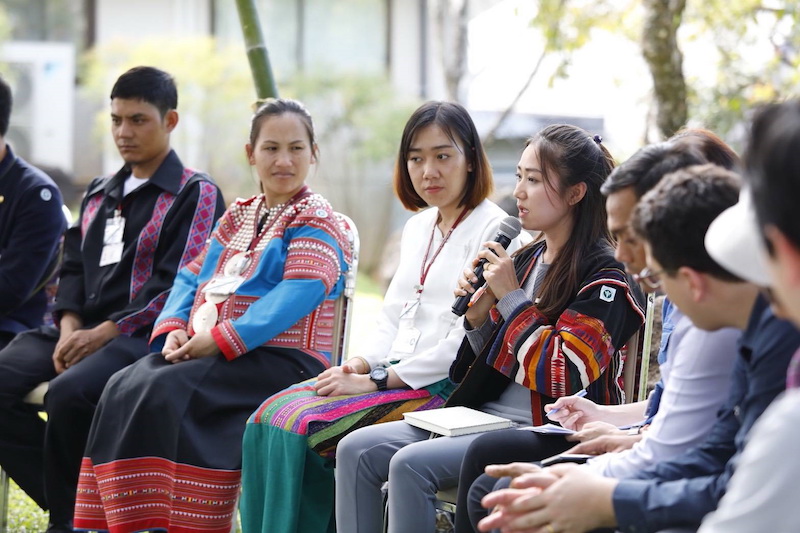
The academic seminar “Empowering Communities and Vulnerable Women for Sustainable Development,” organized by UNODC and TIJ
from January 25-27, 2018. Image source: Thailand Institute of Justice (TIJ)
Veerachit Waranchitkul, the head of the Mae Fah Luang Subdistrict Administrative Organization, as a village elder, recounted that when the Doi Tung Project first arrived, he and the villagers were apprehensive because they did not yet have Thai citizenship or ID cards. In the first two years, many people did not accept the project because they could not envision its benefits and thought the bureaucratic system would not last long, leading to a lack of continuity and visible results.
However, once the project began to establish infrastructure, such as water supply, electricity, and roads, and implemented systematic education and work, the villagers began to see the true development of the project. Subsequently, they adapted and communicated with the project, leading to mutual understanding and trust in the Doi Tung Development Project to this day.
Another benefit the community gained from the project was in addressing the issue of drug problems. The Doi Tung community had the opportunity to learn about this issue through the project and from other areas. Additionally, with the royal initiative working in the area, villagers had more opportunities and choices for livelihoods, steering them away from drug trafficking or use.
Today, it can be said that 95% of the Doi Tung area is drug-free, with some villages having no drug users at all, while in those that do, only 1-2 individuals are affected. This is due to the existence of community guidelines and a village committee that helps monitor and oversee the situation.
“In the past, this area had drug problems, with cultivation and buyers present, and some individuals would use drugs or buy from Myanmar to sell in Thailand. But today, we have “community guidelines” to prevent villagers from engaging with drugs. If anyone is found involved, they will face penalties according to village rules, as waiting for legal action may take too long, and officials may come and go,”
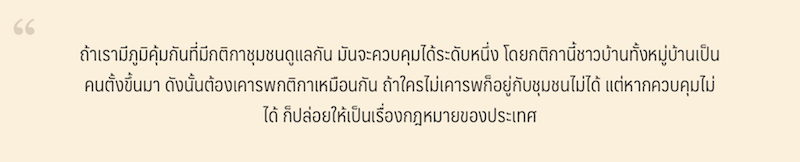
“Jintana Nakwichetr,” a former village head of Mae Fah Luang Subdistrict, shared that before the Doi Tung Development Project came to the area, life was quite difficult, with limited access to water and electricity. When the project arrived, there was still uncertainty about its potential to help, but after coordination with the project and the villagers’ cooperation, they have witnessed continuous development over the past 30 years.
“The Doi Tung Development Project has transformed the lives of villagers, providing them with better living conditions, dignity, and occupations that generate income, enabling them to be self-reliant. In the past, we could not achieve this; we had no opportunities. But today, villagers are thriving, earning income, building homes, and sending their children to higher education. When their children graduate and find jobs, parents feel happy and live even better than before.”
Regarding drug issues, currently, many villages are classified as white villages, with no users or dealers. Each month, village meetings focus on drug issues, urging parents to monitor their children, and a village committee helps oversee the situation, such as checking for sudden wealth or frequent vehicle changes to investigate the source of income.
If the committee notices suspicious activity at Mr. A's house, they must investigate. This method has been quite effective. Each month, the committee conducts inspections, making village management easier, but it requires seriousness. Rules are rules, and violations are addressed accordingly.
If someone is found using drugs, the first step is to issue a warning, record it, call the parents for a discussion, and then send the individual for rehabilitation. If they return and continue using, they will be fined into the village development fund, amounting to 10,000 baht, which will certainly be paid by the parents since the youth have no money. Thus, parents must monitor their children. However, if drug use occurs for the third time, we will expel them from the village.
Moreover, individuals in the Doi Tung Development Project area are issued membership cards for the project. However, if anyone violates drug-related rules, their membership will be revoked immediately. For those in Doi Tung without land for farming, the project allocates 2 rai of land per person, but if anyone engages in drug-related activities, their land will also be reclaimed.
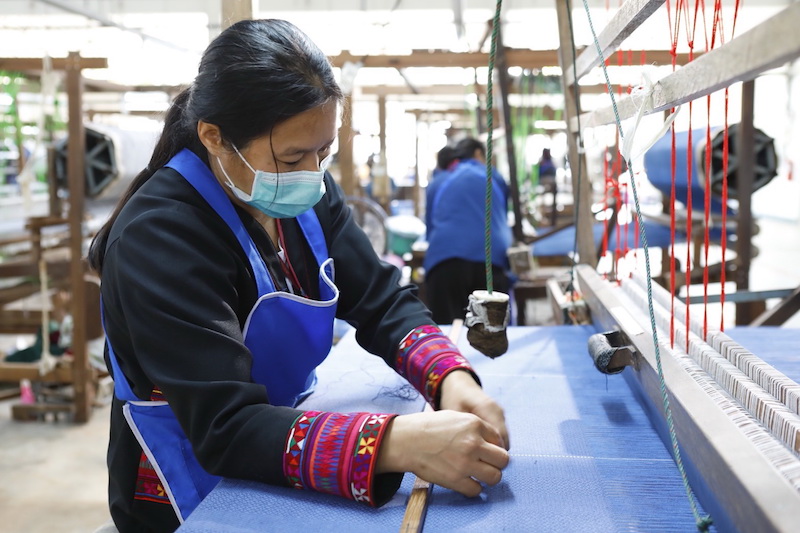
Image source: Thailand Institute of Justice (TIJ)
“Orawan Sophonamnuaykit,” an Akha weaver, shared that before the Doi Tung Project arrived, she farmed and grew corn. After the project came, she voluntarily joined the Doi Tung weaving factory and has been working there for 23 years. Initially, she could not speak Thai and was illiterate, but she received education and can now read, write, and perform arithmetic.
Interestingly, she noted that the role of women before and after the Doi Tung Project is entirely different. Previously, women in the village had no rights, could not socialize, and had to stay home to farm and care for children. Now, they have equal rights with men. Currently, Orawan has four children and a warm family, with all her children graduating from university due to the support from development, providing them with life choices.
“Jatupong Apipornpaisarn,” a social development officer for the Doi Tung Development Project, shared his experiences regarding the project from the perspective of the new generation, recalling that over 30 years ago, during the time of his grandparents and parents, the main occupation of people in Doi Tung was agriculture. They had to clear weeds and cut trees because they had no other options.
This is the reality for hill tribes everywhere. They practiced shifting cultivation, grew rice, rotated crops, and had areas for opium cultivation, with some involved in illegal trafficking of weapons, animals, and drugs.
However, after the development project was introduced, hope emerged since the time of their parents. The Princess Mother initiated development, and even though she is no longer with us, the villagers continue to pass on knowledge to the next generation, encouraging them to pursue honest livelihoods. The Princess Mother created jobs for us.
Not only did she create jobs, but she also promoted education, not expecting us to remain in Doi Tung forever. Therefore, the hope of the people here, especially the new generation, is to elevate the quality of education and self-learning so that in the future, they can become good citizens in other communities as well.
Today, we have citizenship, and the Princess Mother has given us a place to live and dignity. We possess knowledge and can be good citizens. This is the hope of my generation, the new generation, that we will continue to pass on this way of thinking to future generations.
However, there are still some young people who make mistakes, but not everyone wants to do wrong. Some who err are aware of it, while others may not realize it, as they are caught in processes involving drugs, crime, or encroachment on forest areas.
Especially regarding encroachment, I believe some do it out of necessity to survive. However, one thing I have learned from among the ethnic brothers and sisters is that they often reflect that Thai law tends to be applied to the poor but not to those in positions of power. This is a common perspective among ethnic groups. Many cases we have raised have gone silent.
Image source: Thailand Institute of Justice (TIJ)
Regarding forest conservation in the Doi Tung area, we have planned the use of forest areas to achieve a balance between conservation and utilization. We have “conservation forests” within each village boundary, “utilization forests” where villagers can gather and use resources, and “economic forests” which include “coffee” and “macadamia,” with “Assam tea” recently added as the three main crops in our area.
For farming areas, we have clear boundaries for surveying. When villagers are well-fed and satisfied, everyone helps out and takes responsibility for care. We provide knowledge to the community so they understand the value of each type of forest, such as watershed forests that provide water and moisture.
Thus, every village already has community guidelines regarding drug issues and forest preservation, and everyone feels a sense of responsibility to help care for them. When the community benefits without needing to clear forests or cut trees, they recognize that coffee, tea, and macadamia are their assets, and they must help conserve them.
Thasanee Sophonamnuaykit, a teacher at Ban Khahyang Development School in Mae Fah Luang District, Chiang Rai Province, shared about promoting community efforts to prevent drugs among children in schools and the community, stating that as a teacher, we “build immunity” for children regarding drugs, especially since we are in a border area with risks. We create “learning spaces” to foster a good environment for them, including learning spaces for children and youth, as well as creating learning areas about “living harmoniously with forests.”
“In reality, we want to teach children to recognize their own value. This value does not mean competing with others but understanding what they are good at and knowing that there are people who love them, even those who are orphaned or those who do not have the same educational opportunities as others. We all have value in our lives today.”
We emphasize showing children the impacts of drugs, how they affect anyone's body, and what risks they take. For example, consuming alcohol can lead to liver damage, and smoking can cause lung issues. Additionally, we encourage children to think about their future aspirations and what they are doing now.
“What we do today will lay the foundation for future generations. For children who excel in education, we will fully support their educational endeavors because education is a crucial part of building individuals and allowing them to pursue various aspirations.”
Today, nearly half of the staff working in the Doi Tung Development Project come from the local villages, representing the new generation. Therefore, the challenge we want to address now is not about building roads or creating excellent infrastructure, but rather about inspiring the new generation to improve themselves.
Even though the world has changed significantly, with information, environmental conditions, and various technologies, we are not resistant to change. We adapt to the world’s changes, utilizing social media and teaching in schools, similar to regular schools.
However, one thing our community still preserves and takes pride in is the culture of each ethnic group and traditions that do not infringe on the rights of others. We continue to promote these values without change. Thus, we strive to instill pride, dignity, and self-worth in individuals, encouraging them to build on their identities positively.
In our classrooms, we teach about the various ethnic groups because we live together as one large family. For example, we organize courses for Akha children to learn about the Lahu ethnic group. We have never discriminated against each other based on ethnicity.
Our teaching aligns with the Ministry of Education's standards, enabling children to read and write. Some can speak 2-3 languages, while we also integrate community identity into our curriculum, fostering pride and dignity in oneself.
This is the voice of the elders and the new generation in the Doi Tung Development Project area regarding new challenges in promoting community adaptation to the rapidly changing environment today.
Note: Some images accompanying this article may not be related to the content.