
Mastercard Reveals Growing Confidence in the Thai Economy
The Mastercard Consumer Confidence Index survey indicates that Thai people are increasingly confident in the economy, reflecting their belief in economic conditions, employment, and quality of life, especially among consumers in the millennial group who believe in the growth of the Thai economy.
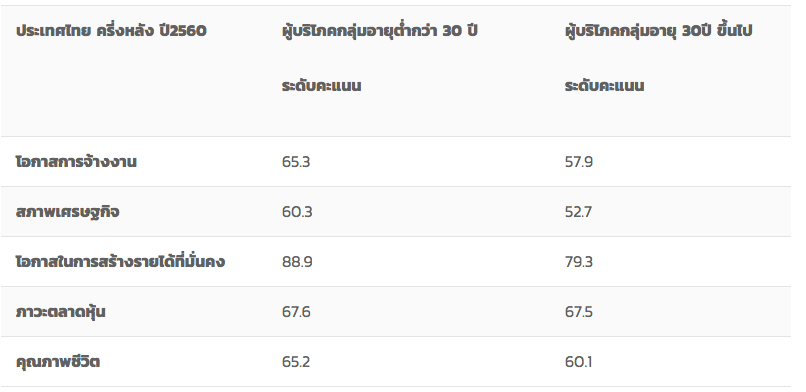
The Mastercard Consumer Confidence Index (Mastercard Index of Consumer Confidence) for the second half of 2017 shows that consumers in Thailand are more confident in the economy, with an overall consumer confidence index of 65.1 points. This reflects a confidence in economic conditions, employment, and quality of life. Thailand ranks ahead of Australia (54.0 points), Malaysia (45.9 points), Japan (51.0 points), and Taiwan (44.2 points). In the Asia-Pacific region, the Philippines has the highest confidence (94.5 points), followed by China and Cambodia (92.2 points), Myanmar (91.7 points), and Vietnam (89.5 points). The survey also found that Thai consumers in the millennial group (aged 18 – 29 years) have a confidence level of 69.5 points regarding the Thai economy in the next six months, which is higher than the confidence level of adult consumers (aged 30 and above) at 63.5 points.
Economic growth, driven by the tourism industry and trade within the Asia-Pacific region, has resulted in a consumer confidence index for the region of 68.5 points. Since the second half of 2017, consumer confidence has increased, with millennials (aged 18 – 29 years) rising by 6.3 points and adult consumers (aged 30 and above) increasing by 5.0 points. The report indicates that consumers are more confident about economic conditions, the stock market, and employment, particularly regarding stock market confidence, which increased by 10.2 points among consumers under 30 years old.
Between October and December 2017, a total of 9,141 respondents aged 18 to 64 from 18 countries in the Asia-Pacific region were surveyed to share their views on five economic aspects over the next six months: economic conditions, employment, income, stock market conditions, and quality of life. The index is calculated on a scale from 0 to 100, where 0 means feeling the worst and 100 means feeling the best, with scores between 40 and 60 considered moderate. Note that the index and related reports cannot be used as indicators of Mastercard's financial performance.
Key Findings from the Asia-Pacific Survey
- The overall consumer confidence in the Asia-Pacific region varies by country. The consumer confidence index in the Philippines (94.5 points) is the highest in the region, with consumer confidence in the stock market increasing (+11.3 points), stable income opportunities increasing (+5.3 points), and quality of life improving (+4.4 points) in the second half of the year.
- In contrast, Sri Lanka (39.5 points) has seen a decline in consumer confidence, with confidence in quality of life (-4 points) and economic conditions (-3.2 points).
- Increased retail spending, combined with domestic tourism in Hong Kong over the past six months, has resulted in the highest increase in consumer confidence among those under 30 years old, rising by 21.8 points. Previously low consumer confidence has improved in job opportunities (+32.5 points), economic conditions (+23.3 points), stock market conditions (+19.3 points), income confidence (+18.9 points), and quality of life (+15.2 points).
- Due to tensions along the South Korean border, consumer confidence has decreased among those under 30 years old (-28.3 points) and those over 30 years old (-18.4 points). South Korea's consumer confidence has dropped two levels from positive to moderate. Another market where consumer confidence has decreased for both groups is Bangladesh, where confidence among those under 30 years old has decreased (-8.1 points) and among those aged 30 and above has decreased (-9.5 points).
- Consumers under 30 years old in 11 markets have seen increased confidence, including Australia (+4.8 points), Myanmar (+4.4 points), and Thailand (+2.1 points). Markets with significant increases in consumer confidence include the Philippines (+6.9 points), Taiwan (+8.6 points), Malaysia (+6.2 points), and Singapore (+5.3 points). The market with the most significant improvement in consumer confidence is New Zealand (+15.1 points).
- Adult consumers (aged 30 and above) from 4 out of 18 Asia-Pacific markets have seen a decline in scores, including Indonesia (-3.1) and Cambodia (-1.9). Markets with declining scores include Bangladesh (-9.5) and South Korea (-18.4).
Consumer Confidence Index in Thailand for the Second Half of 2017
Research Methodology
Respondents were asked five questions to share their views on predictions for the next six months regarding economic conditions, job opportunities, domestic stock market conditions, stable income opportunities, and their quality of life. All responses are converted into five indices that are averaged to create the Mastercard Consumer Confidence Index (Mastercard Index of Consumer Confidence, MICC). The MICC index and the five component indices are scored from 0 to 100, where 0 indicates the worst level of confidence, 100 indicates the best level of confidence, and 50 indicates moderate confidence.About the Mastercard Consumer Confidence Index
The Mastercard Consumer Confidence Index survey has been conducted for over 20 years, collecting data from over 200,000 interviews, making it an unparalleled research effort in terms of data size and the duration of data collection across the Asia-Pacific region.
This survey is the longest-running and most comprehensive compared to similar surveys in the region. In June 1997, the index revealed a decline in consumer confidence just one month before the Thai baht depreciated, leading to a subsequent economic crisis in the region. Again, in June 2003, the index indicated a decline in employment confidence in Hong Kong, dropping to a score of only 20.0, which later reflected an unemployment rate in Hong Kong that surged to a peak of 8% in September of the same year.
The survey began in the first half of 1993 and has been conducted continuously since then, with results published twice a year. Currently, there are 17 markets (countries) in the Asia-Pacific region under survey, including Australia, Bangladesh, China, Hong Kong, India, Indonesia, Japan, Malaysia, Myanmar, New Zealand, the Philippines, Singapore, South Korea, Sri Lanka, Taiwan, Thailand, and Vietnam.
Thank you for the information from www.veedvil.com