Developers Cautiously Launch New Residential Projects... Expecting 100,000-108,000 New Units in Bangkok and Surrounding Areas in 2018 (Kasikorn Research Center)
Key Points
- Although the economy in 2018 is expected to continue recovering, leading to increased confidence among property developers to launch new residential projects, they still face various challenges. The growth in the number of unsold residential units at the end of 2017 pressures developers to cautiously introduce new projects. The Kasikorn Research Center predicts that the number of new residential units launched in Bangkok and its vicinity in 2018 will be between 100,000 and 108,000 units, representing a growth of 0-2% from 2017.
- While the high-end condominium market is characterized by buyers with purchasing power who are sensitive to economic conditions, the market size remains limited. Additionally, some demand for high-end condominiums has already been absorbed, leading to a cautious approach for investments in high-end condominium developments in 2018.
- The middle-income housing market continues to be a focus for property developers due to its large base of potential buyers. The investment strategy for developing middle-income housing projects emphasizes finding suitable locations and designing comprehensive living functions.
- The low-income housing market is expected to slow down, prompting developers to delay investments in new low-income housing projects while accelerating marketing efforts to sell existing unsold units.
Despite the anticipated continuous recovery of the Thai economy in 2018, property developers still face challenges, including intense market competition and limited demand for housing. Therefore, the strategy for developers in 2018 is likely to focus on investing in residential projects along public transport routes.
Forecast for 2018: New Residential Units in Bangkok and Surrounding Areas Expected to be 100,000-108,000 Units
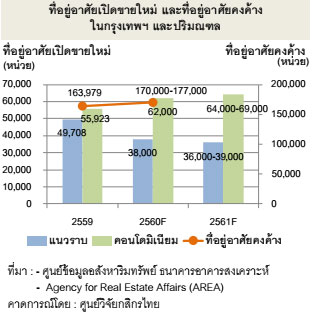
In the final quarter of 2017, there were no factors to support an increase in housing demand, leading developers to likely delay launching new residential projects compared to the first nine months of the year. Instead, they are focusing on selling existing units through promotional campaigns to stimulate purchasing decisions, such as offering cash discounts, freebies, or vouchers, and selling all units at the same price. However, these promotions have not fully stimulated housing demand, resulting in an increase in unsold units at the end of 2017. The Kasikorn Research Center estimates that the number of unsold units in Bangkok and its vicinity at the end of 2017 will be between 170,000 and 177,000 units, representing a growth of 4-8% from the end of 2016.
For 2018, the Kasikorn Research Center believes that the economy is likely to continue recovering, which is a positive sign for the housing market, leading property developers to be confident and launch new residential projects. However, the competitive landscape in the housing market remains intense, as developers continue to introduce new projects to the market.
While demand for housing in 2018 remains limited, both among actual homebuyers, who are gradually recovering their purchasing power but face high prices for new residential units, and among investors, who are likely to slow down their investments due to fierce competition in the rental market, particularly in the condominium rental sector.
Additionally, the growth in the number of unsold units at the end of 2017 puts pressure on property developers to cautiously set their targets for launching new residential projects in 2018 and may require them to adjust their plans throughout the year in response to changing market conditions.

Source: - Real Estate Information Center, Government Housing Bank
- Agency for Real Estate Affairs (AREA)
Forecast by: Kasikorn Research Center
The Kasikorn Research Center anticipates that the number of new residential units launched in Bangkok and its vicinity in 2018 will not be less than 100,000 units, estimated to be between 100,000 and 108,000 units, representing a growth of 0-2% from 2017. The number of new residential units in 2018 is expected to be similar to the previous two years, with the growth primarily driven by the expansion of the condominium segment, as the limited space for developing horizontal projects and the progress of the extension of the subway stations are likely to attract property developers to continue launching condominium projects in 2018.
However, the high level of unsold units necessitates close monitoring of the adjustment plans for launching new residential projects and the ability to sell off existing units throughout the year, which is a crucial factor determining whether the number of unsold units at the end of 2018 will remain high compared to the end of 2017.
Investment Development Strategies and Sales of Residential Projects in 2018
The Kasikorn Research Center believes that the strategy of property developers in 2018 will continue to focus on investing in residential projects along public transport routes, as the progress of the expansion of public transport routes, such as the extension of subway stations, opens up new areas for developers to develop new residential projects. Developers are likely to adjust their investment and sales strategies based on different segments.
Source: Kasikorn Research Center- Demand for high-end condominiums has already been partially absorbed... Developers are expanding their market to different buyer segments.
In 2017, the high-end housing market began to face increased competition due to the active launch of high-end residential projects in the past. Property developers are focusing on differentiating their high-end projects, both condominiums and horizontal projects, by investing more in technology and innovation. They are incorporating technology and innovation into design, construction, and facilitating living, particularly in housing technology (Prop Tech), such as creating smart homes with sensors or controlling various systems via the internet, developing security systems, and creating various applications for resident services.
The Kasikorn Research Center believes that in 2018, property developers with land in prime locations, such as the city center and business districts, can choose to invest in developing high-end condominiums in the form of Mixed-use Projects that include condominiums and other properties, such as office buildings, hotels, shopping centers, etc., to generate long-term income through additional rental income, beyond just revenue from condominium sales. The appeal of high-end condominium projects in the Mixed-use format is likely to attract both actual homebuyers and investors.
The Kasikorn Research Center observes that while the high-end housing market is characterized by buyers with purchasing power and is sensitive to economic conditions, the market size remains limited, especially among Thai homebuyers. Additionally, some demand for high-end condominiums has already been absorbed in 2017, leading to a cautious approach for investments in high-end condominium developments in 2018. Developers may expand their market to different buyer segments within the high-end condominium category, including general high-end condominiums, which are expected to see price increases, and opportunities to target investors, as well as Super Luxury condominiums that still have potential to expand their customer base to foreign buyers. Developers with partnerships with foreign firms may have an advantage due to their credibility and marketing channels, allowing them to penetrate the foreign buyer market more effectively.
Regarding investment strategies for developing high-end horizontal projects in 2018, property developers are likely to continue focusing on investing in projects with a limited number of units, emphasizing location selection, even if they are not adjacent to public transport routes, as they face limitations in land availability for horizontal project development. However, they should be located near major roads or expressways that provide convenient access to the city.
- The strategy for developing middle-income housing focuses on finding suitable locations and designing living functions that meet value-for-money criteria.
The middle-income housing market is expected to remain a priority for property developers due to its large base of potential buyers. Middle-income homebuyers prioritize location and value for money. Therefore, the Kasikorn Research Center believes that the investment strategy for developing middle-income housing projects in 2018 will emphasize finding suitable locations, even if they are not adjacent to public transport routes, but can be accessed by various means or are not difficult to reach public transport systems. Additionally, there will be a focus on designing comprehensive living functions to meet value-for-money criteria.
Furthermore, the sales strategy for middle-income condominium projects in 2018 may target younger individuals entering the job market who do not yet have debt burdens and are looking for their first home. Meanwhile, the sales strategy for middle-income horizontal projects may target families planning to expand, as well as working-age individuals with higher incomes who wish to transition from living in condominiums to townhouses or single-family homes. They may also highlight the flexibility of living space compared to condominiums, such as layouts that can be modified or expanded.
- Developers are likely to delay investments in low-income housing projects while accelerating marketing efforts to sell off existing unsold units.
The low-income housing market in 2018 is expected to continue slowing down from 2017, as it is a market where buyers are often denied credit and are highly sensitive to economic conditions. The Kasikorn Research Center believes that in 2018, property developers will likely delay investments in low-income housing projects while also needing to accelerate marketing efforts to sell off existing units, both horizontal projects and condominiums. The rising prices of housing in suburban areas due to the progress of public transport expansion projects are likely to impact the purchasing power of low-income housing buyers, who prioritize price.
Thank you for the source from www.kasikornresearch.com