New Normal: The New Standard in Real Estate Boosts Diverse Opportunities for Investors
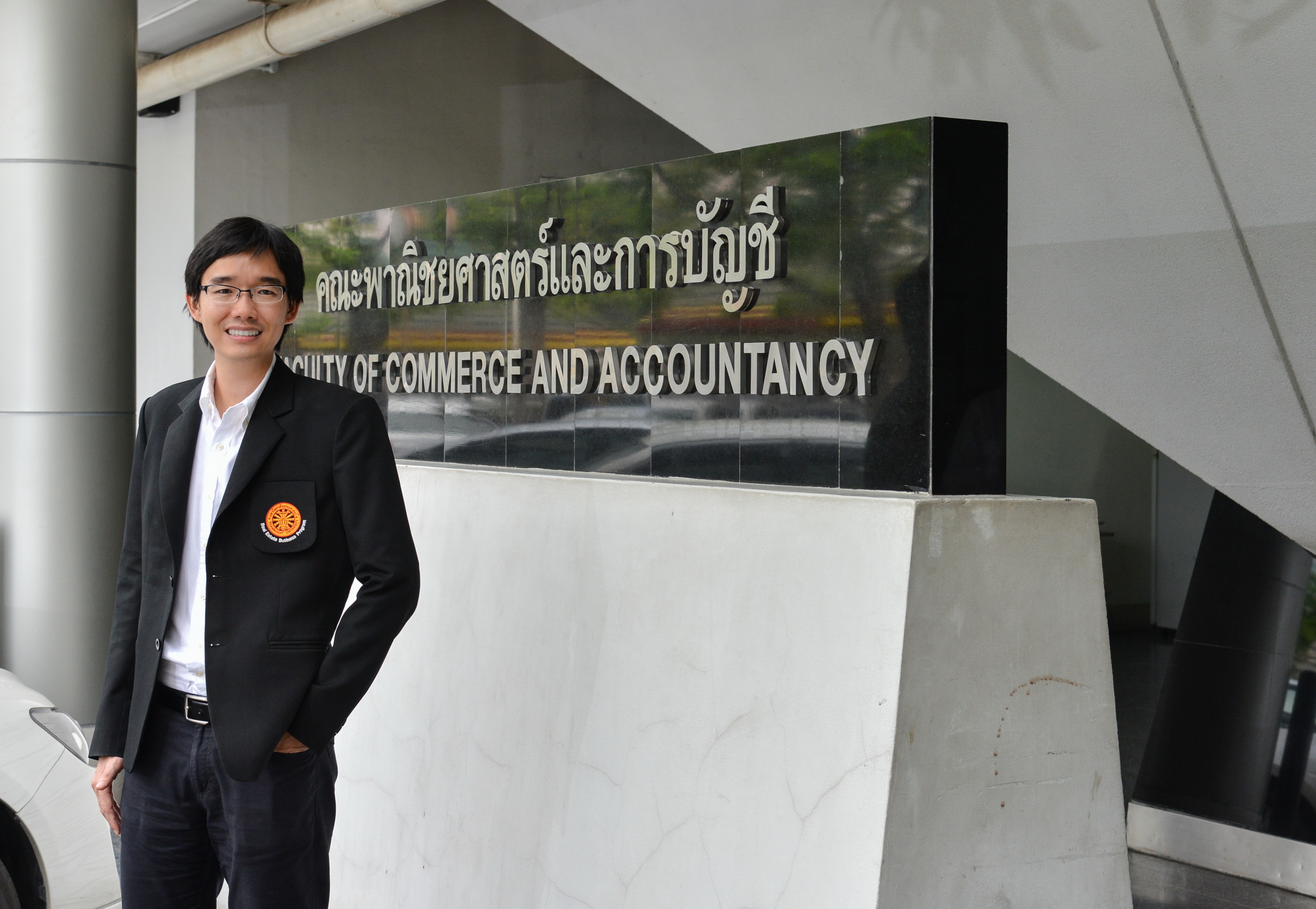
In the real estate market, which may not seem particularly vibrant recently and appears to be in a state of equilibrium compared to the capital market, experts have a different perspective. Assistant Professor Dr. Niti Rattanapreechawech, Director of the Real Estate Business Program at Thammasat University's Faculty of Commerce and Accountancy, sees the current real estate market entering a New Normal era, a new form of normalcy! This mirrors the overall situation of the Thai economy and the global economy, which continues to have opportunities for growth in new directions.
The Overview of the Real Estate Business Market Creates Diverse Opportunities
Assistant Professor Dr. Niti stated that when discussing the real estate market, most people primarily think of the residential market. However, in reality, the real estate business encompasses various types beyond just residential properties, including commercial real estate such as office buildings, shopping centers, and hotels-resorts. Although the overall real estate market may appear stable, there are still diverse opportunities in each type of real estate.
In the residential market, while the condominium market may seem less favorable at the moment due to a large number of new projects, especially in areas that are not in high demand, a broader view reveals that sales of condominiums from major developers have exceeded their targets. This is likely due to alarmingly low deposit interest rates. Additionally, the residential market is not limited to condominiums; there are also single-family homes and townhouses. A closer analysis shows that the current market for real demand, or housing that has genuine purchasing interest, such as single-family homes and townhouses, is performing well.
“The overall residential market will become clearer after this. The real demand market still has potential, while speculation in the condominium market is likely to decrease. Meanwhile, long-term investment buyers remain, which will lead to a healthy and sustainable housing market,” said Assistant Professor Dr. Niti.
As for the office building market, it is considered a type of real estate that is still performing quite well, with continuous demand. Thailand remains an investment hub in the region, leading to the expansion of Thai companies that require more office space, as well as foreign investors seeking rental office space. Moreover, new office building projects are not abundant each year.
In the retail market, particularly in Bangkok, new projects continue to emerge. However, the rise of online shopping and social media sales has impacted the retail market, potentially hindering its growth. Operators in this market must adapt by enhancing both online and offline sales and creating activities to draw customers from online platforms to their physical stores.
Regarding the hotel-resort market, competition remains high among hotel businesses and those renting out condominiums through platforms like Airbnb. The hotel market in Bangkok has a considerable supply, but trends for smaller hotels and hostels are showing positive growth signals. This is partly due to low-cost airlines providing consumers with more travel options and partly because younger travelers seek new experiences to share on their social media networks. This represents new growth opportunities for the real estate business.

Changes in the Real Estate Sector in the New Normal Era
Assistant Professor Dr. Niti mentioned that changes in the real estate sector during the New Normal era, where technology plays a significant role, require real estate operators across all types to adapt. Similarly, the academic sector must also adjust. The Master of Science in Real Estate Business (MRE) program, which has been offered for over 20 years since the post-1997 economic crisis, has continuously adapted to align with the rapidly changing real estate market.
Currently, the trend of technology in real estate, or Prop Tech, is gaining momentum, prompting the MRE program to incorporate technology-related content into its curriculum. This allows students to learn how technology impacts the real estate business and how to utilize it effectively. Two years ago, the program added Property Management as a mandatory course, previously an elective, due to its increasing importance. Over the past decade, the real estate market has expanded rapidly, leading to new projects that, once completed, lack knowledgeable experts to manage them.
“As an educational institution developing curricula and creating experts for the real estate business, we have adapted our programs to align with real-world situations to meet market demands effectively!” said Assistant Professor Dr. Niti.
Given the significance of the real estate sector's impact on the overall economy, the Director of the MRE program at Thammasat University emphasized that understanding the real estate business thoroughly is crucial. Real estate is a specialized field, and experts in this area require knowledge from various disciplines for analysis, including design, construction, law, accounting, finance, marketing, and property valuation.
During the 1997 economic bubble, the real estate sector was viewed as a business that caused economic collapse, as real estate is the starting point for many other businesses. If real estate fails, many other businesses are at risk of following suit. At that time, Thailand lacked institutions providing accurate knowledge or information about the real estate sector. There was no learning or understanding in business practices, leading to an oversupply of projects and contributing to the bubble crisis, resulting in significant losses and debts for many. Understanding the specifics of each type of real estate business can reduce risks and enhance opportunities for successful operations, which is the core of the real estate business curriculum at Thammasat University's Faculty of Commerce and Accountancy, offering both undergraduate (BRE) and graduate (MRE) programs.
A Globally Recognized Curriculum
Assistant Professor Dr. Niti stated that the real estate business curriculum at Thammasat University's Faculty of Commerce and Accountancy has received collaboration from the World Bank, the Land Department, and the University of South Australia. The expertise of faculty members and partnerships with both public and private organizations have made the program recognized and accredited by global educational standard organizations such as the Association to Advance Collegiate Schools of Business (AACSB), European Quality Improvement System (EQUIS), and The Royal Institution of Chartered Surveyors (RICS). Additionally, it has consistently ranked in the Top 100 globally by Eduniversal Best Masters Ranking, which is a significant highlight of the program.
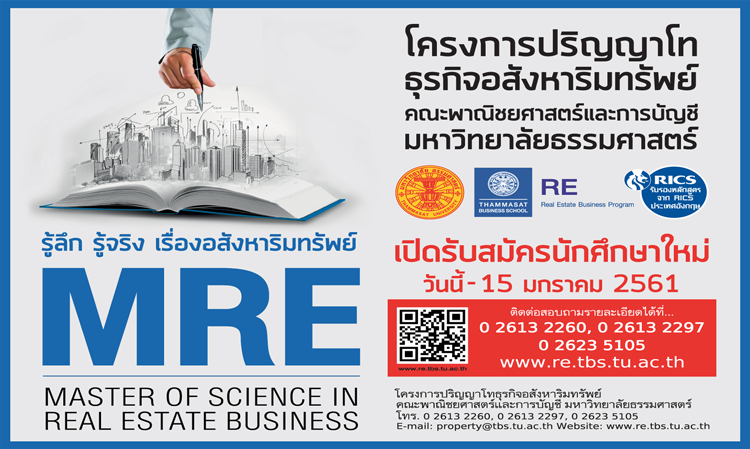
The Real Estate Business Program at Thammasat University's Faculty of Commerce and Accountancy, specifically the Master of Science in Real Estate Business (MRE) program, is now accepting applications for the 18th cohort (MRE #18) from today until January 15, 2018. Interested individuals can inquire for more details at 0-2613-2260, 0-2613-2297.
Thank you for the information from www.re.tbs.tu.ac.th