
Criteria for Assessing the Housing Market Condition by Dr. Prasart Tangmittatham, Supalai Research Center
Currently, the understanding of the criteria used to assess the housing market condition is still incorrect. For example, the number of newly launched units is merely an indicator of opportunities to acquire new land for developers' projects, but it does not indicate how many consumers will actually purchase the newly available housing. Additionally, it does not take into account the number of unsold housing units that are still on the market.
Efforts to describe the market condition through the percentage increase or decrease in the number of units sold are also incorrect. This is because the number of units sold depends on the availability of suitable land for new projects entering the market or the promotional efforts of developers for specific types of housing, such as the booming townhouse market.
In reality, the demand for housing should expand at a rate close to the population forming new households, or even the population that is growing but not forming new households. This rate should be relatively stable and should not fluctuate significantly, as has been observed.
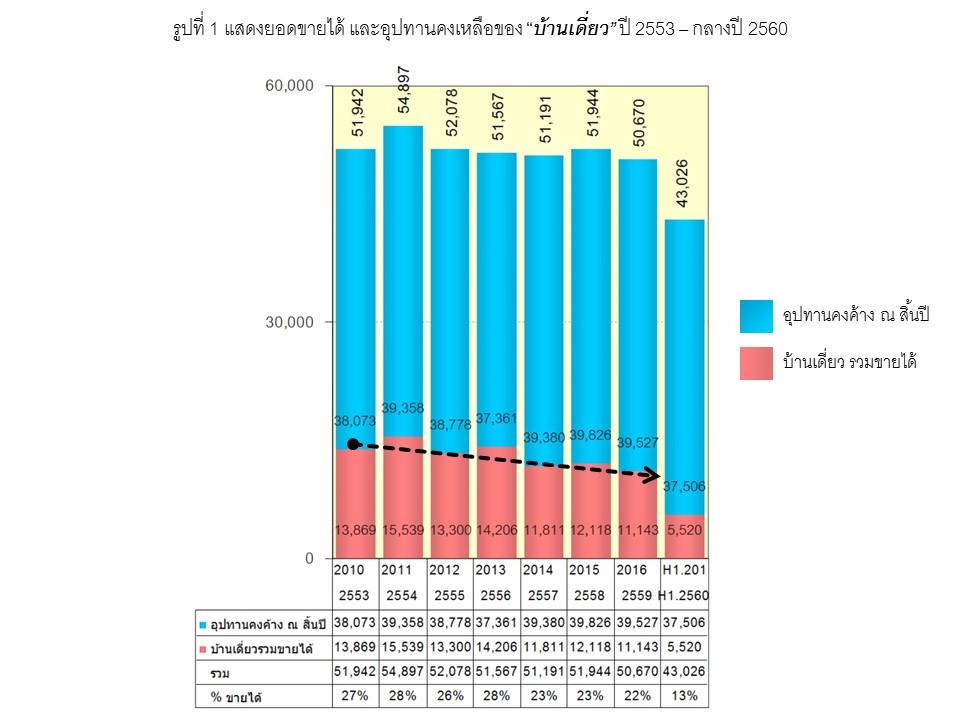
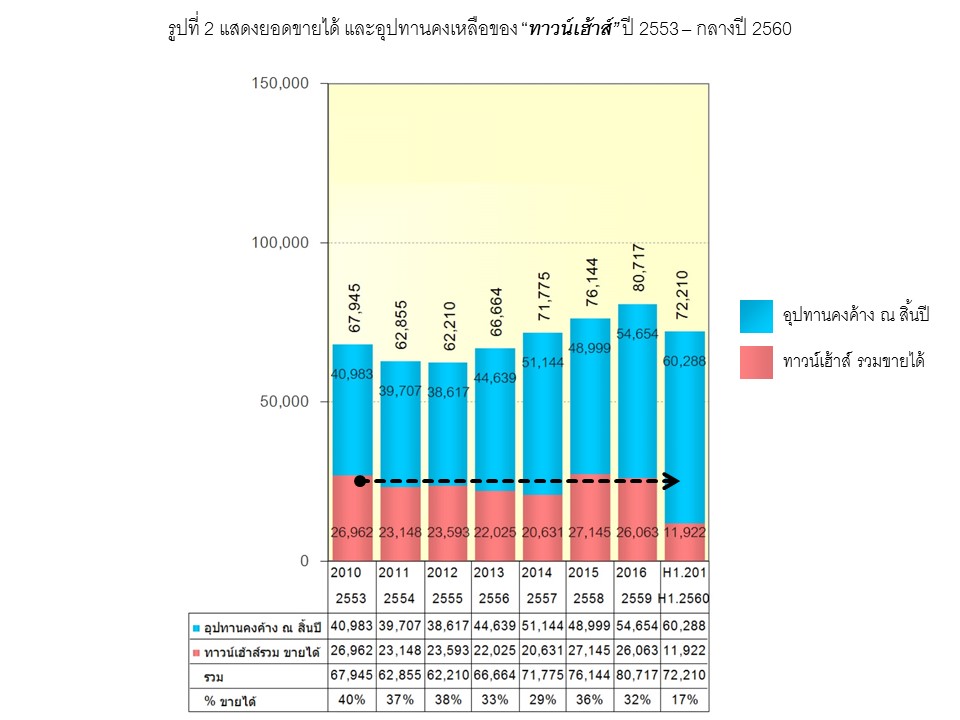
The rapid increase in land prices over the past five years has resulted in more consumers being unable to afford single-family homes, creating an opportunity for developers to offer townhouses in locations between suburban and urban areas on a large scale. This has led to a long-term decline in the number of single-family homes sold (as shown in Figure 1), while the number of townhouses has significantly increased (as shown in Figure 2).
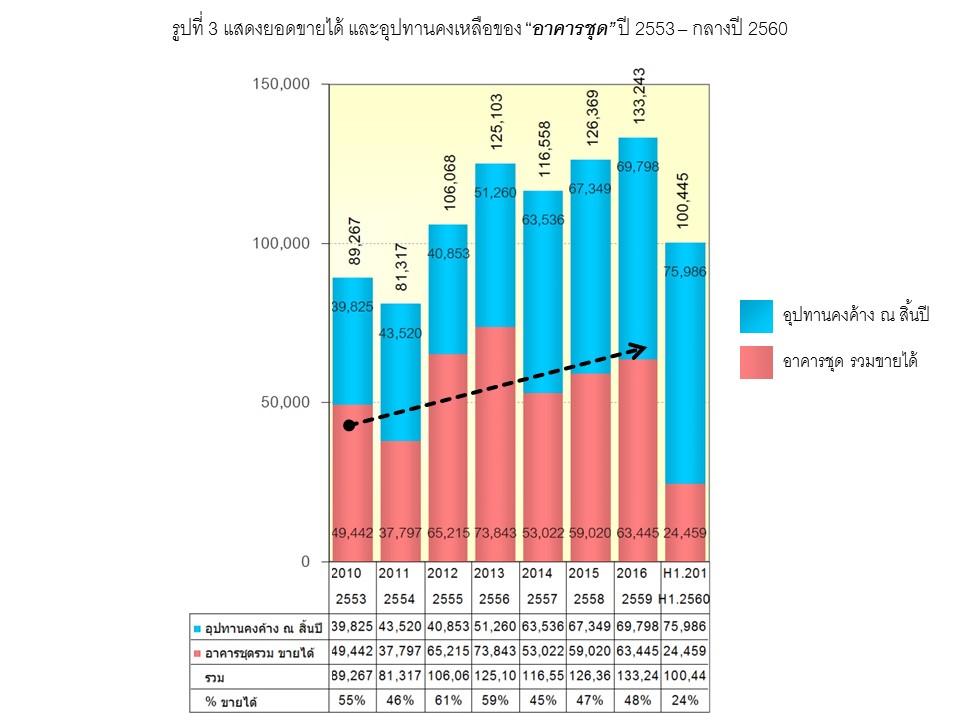
At the same time, traffic congestion has led to a significant rise in the number of condominium projects in urban areas, and during the same period (as shown in Figure 3), the number of condominium units sold has surpassed that of single-family homes and townhouses combined.
However, the acquisition of land for developers' projects does not solely depend on the developers themselves; it also relies on whether landowners are willing to sell. Sometimes, the availability of land for projects may increase in certain years, but afterward, developers must seek new land sellers, which takes time. This explains the erratic increases and decreases in the number of housing units available for sale and the number of units consumers can purchase, leading to fluctuations in the number of units sold by several tens of percent from year to year. It is evident that the population does not increase or decrease by several tens of percent annually.
Sometimes, when a large number of housing units are offered for sale and consumers purchase them all at once, the number sold afterward may decrease because the demand has already been met, similar to the case of first-time car buyers.
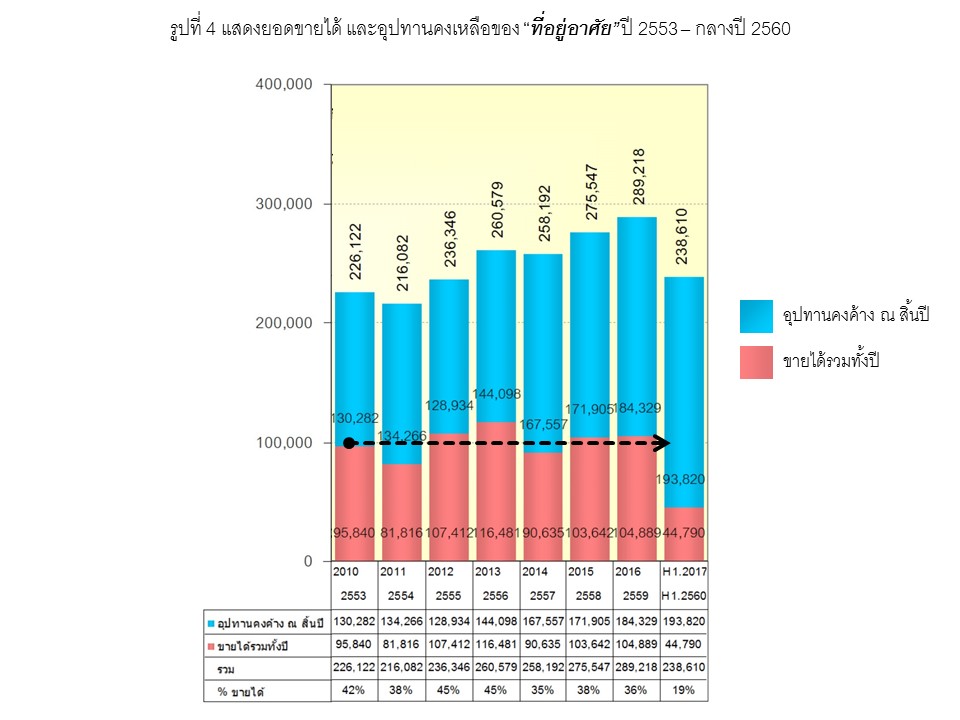
Nevertheless, the short-term demand for housing over the next five years is relatively stable (as shown in Figure 4). Therefore, we should stop using percentage increases and decreases to describe the housing market condition.
Thank you for the information from www.supalai.com