Thai Condominium Association Launches Executive Program for Real Estate Business Development (Smart Property Developer) Class 5 Aiming to Create New Era Leaders in Real Estate to Adapt to Industry Changes
When home loans are not just a concern for buyers but a significant challenge for the entire Thai real estate industry, factors such as location, price, house design, and loans become critical barriers that determine the fate of home buyers, developers, and the overall real estate business in Thailand. Despite many consumers wanting to own homes—many projects have products in desirable locations—some buyers are genuinely committed to building a future for themselves. However, when it comes to applying for loans, the common issues faced by all parties are loan rejections, incomplete documentation, high debt burdens, and difficulty proving income.
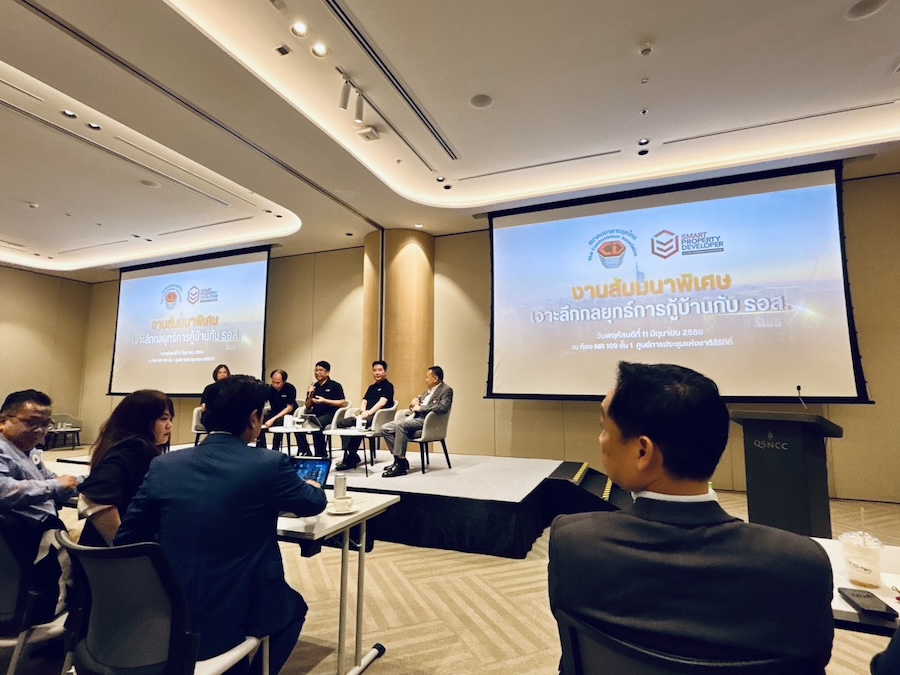
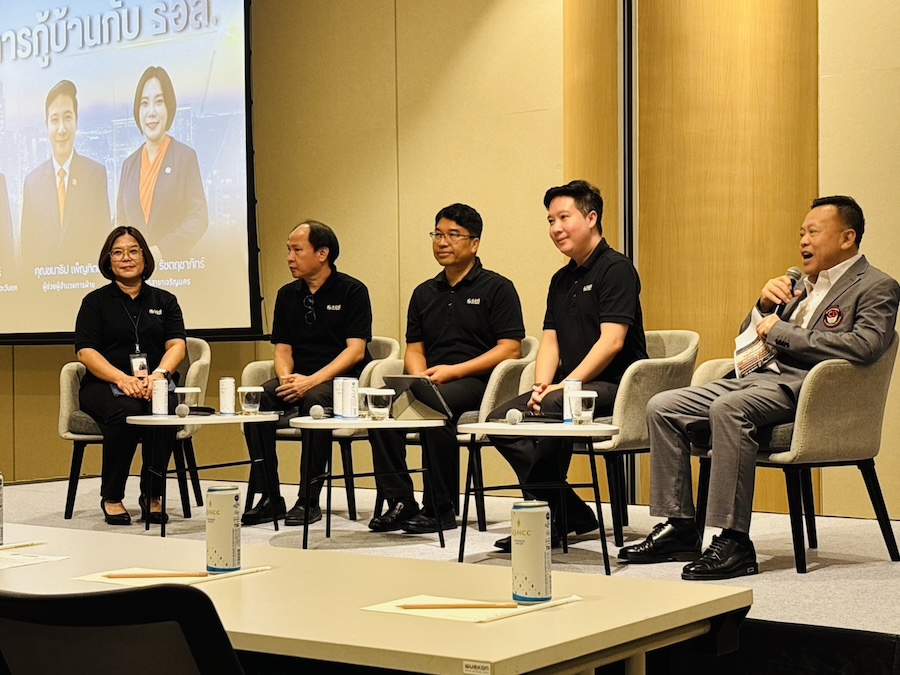
New professions often do not meet the traditional criteria of the lending system. These issues are no longer the problem of just one party but a collective challenge for the entire system that requires understanding, a shift in mindset, and closer collaboration. Key points were drawn from a special seminar titled “In-Depth Strategies for Home Loans with GHB,” organized by the Thai Condominium Association in collaboration with the Government Housing Bank (GHB) to provide real estate operators with direct information from lending experts who work with real cases daily.
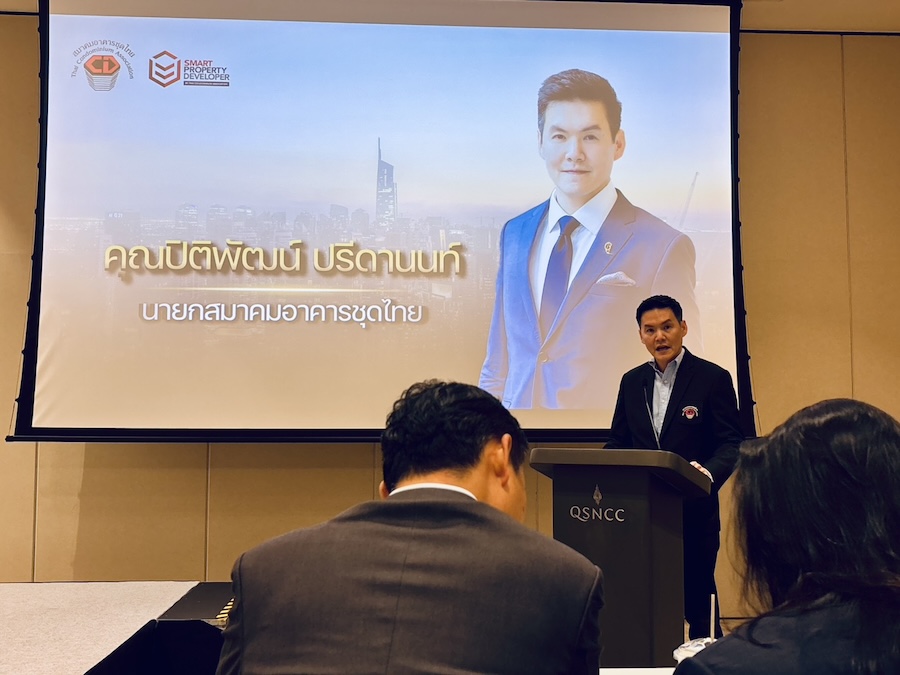
✨ The President of the Thai Condominium Association highlighted that loans are a significant challenge in the housing market. In his opening remarks, Mr. Piti Phat Pridanont, President of the Thai Condominium Association, reflected on the issues faced by developers in the real estate industry. Currently, housing loans are extremely challenging, especially given the high loan rejection rates. Developers must work together to find new strategies to increase home buyers' access to loans. The heart of this event is to update loan products and understand the real-world issues in loan approvals, what causes problems, and how developers can better prepare their clients. The President also praised GHB's role as a bank with a clear mission to support Thai people in home ownership, which differs from conventional financial institutions as it does not view home loans merely as financial products but as a crucial mechanism for creating housing opportunities.
✨ GHB's Transition from a Lending Bank to a “Home Thinking Partner.” In its new role, GHB aims to be more than just a home loan bank by presenting the concept of “Beyond Housing Bank,” aspiring to be a “home thinking partner” for both customers, home buyers, and real estate developers. This role is vital because current loan cases are not limited to traditional employees with clear incomes but include new professions, freelancers, small business owners, those working outside their fields, and younger generations who may not have strong financial histories. GHB wants to convey that not every case facing issues will be immediately rejected; many cases still have “solutions” if buyers, projects, and banks analyze them systematically.
GHB is one of the mechanisms that helps facilitate access to housing for Thai people during a time of high pressure in the lending market. According to data presented at the event, GHB has played a crucial role in the Thai housing system continuously, both in policy and lending, revealing that:
▪️ GHB has supported housing loans for over 4.8 million families in Thailand.
▪️ Each year, GHB injects over 200 billion baht into the economy through loans.
▪️ In 2026, GHB aims to issue new loans totaling over 240 billion baht.
▪️ GHB has welfare units that have signed MOUs with approximately 31,874 agencies.
▪️ Certain welfare client groups can borrow up to 110% of the collateral value.
▪️ The repayment period can be extended up to 40 years.
▪️ GHB allows multiple co-borrowers if they can demonstrate a relevant relationship.
▪️ LGBTQ+ groups can co-borrow as “partners” and hold joint ownership.
Three Main Reasons Why Clients Fail to Secure Home Loans, According to GHB's Analysis of Loan Applications:
1. High debt burdens are the most significant issue in an era where household debt remains high. Some clients have real incomes, but when combined with existing debts such as credit cards, personal loans, car loans, or other debts, their ability to repay a home loan does not meet the bank's criteria.
2. Unclear income documentation, especially among small company employees, private businesses with weak documentation systems, or those with multiple income sources but lacking clear evidence such as pay slips, income certificates, social security, taxes, or consistent bank statements.
3. Freelancers and new professions often lack verifiable financial discipline. Many young people have real incomes but work as freelancers, creators, small business owners, or in new professions where banks require more supporting information. If there are no bank statements, no proof of income, or no continuous savings history, it can complicate loan consideration.
“Financial School” as a Tool for Building Discipline Before Owning a Home. One of the most talked-about projects at the event is “GHB Financial School,” designed to assist clients who are not yet ready to apply for loans today but have the potential to become homeowners in the future. The main target group for this project includes:
▪️ Those with inconsistent credit bureau histories.
▪️ Freelancers who do not yet have clear income evidence.
▪️ Employees in small private businesses or unstable businesses.
▪️ Recent graduates or young workers preparing to own homes.
The principle of this project is simple but meaningful: to allow clients to practice “simulating debt” before having actual obligations.
If clients want to borrow for a home and estimate that they should repay around 5,000 baht per month, the bank will require them to deposit that amount into a GHB account continuously for 12 months without missing a month. If they miss a deposit in any month, they must start counting anew. This method creates an additional burden but serves to prove financial discipline, ensuring that clients can genuinely handle the repayment before entering long-term debt.
Interestingly, GHB has also developed a Financial School x Developer model to align with actual transactions in the real estate market. In practice, many clients already need to make down payments on projects. If they have to deposit another sum with the bank simultaneously, it may become too burdensome.
The new approach allows clients to deposit money into their GHB account first and then transfer it to pay for down payments or rents with the project. The system can also keep a record of continuous payment history, meaning clients can pay down payments or rents as usual while the bank helps document their financial discipline over 12 months. Once the period is complete, GHB will use the lowest deposit amount over the 12 months to calculate the loan amount. This model benefits both buyers and developers as it transforms the waiting period into a systematic credit-building process.
Key conditions of the Financial School project include:
▪️ Clients must deposit continuously for 12 months.
▪️ If they miss any month, they must start counting anew.
▪️ Total debt obligations must not exceed 60% of income.
▪️ Loan amounts under the project are limited to a maximum of 3 million baht.
▪️ Homes priced over 3 million baht are allowed, but the excess must be covered by down payments or reduced to meet the criteria.
▪️ It must be a first mortgage contract.
▪️ Applicable to projects from developers participating with GHB, such as Fast Track, Smart Fast Track, or related partner projects.
GHB emphasizes that developers must help communicate and follow up with clients continuously, as some clients may misunderstand, such as depositing two months' worth of money at once and then skipping the next month, which cannot be counted as continuity.
Another interesting point from GHB speakers is the reminder that many cases that seem likely to be rejected at first may still have solutions if analyzed correctly. Common strategies used to assist clients include:
▪️ Reducing some existing debt burdens.
▪️ Adding co-borrowers.
▪️ Waiting for credit history to stabilize.
▪️ Paying off some debts and allowing appropriate intervals.
▪️ Requesting additional income documentation.
▪️ Analyzing multiple income sources together.
▪️ Choosing loan products suitable for the client's profile.
An example raised during the event was a 52-year-old client with a steady income but only six months of work history and an 18-year loan term remaining. Based on general criteria, they might qualify for a loan of about 1.2 million baht while the house price is around 1.8 million baht. However, with further analysis by the bank regarding income documentation, debt burdens, and loan product options, the loan amount could be adjusted closer to the house price.
The point of this case is that the problem does not always lie with the client lacking opportunities; rather, all parties must work together to look comprehensively before concluding “no.”
Another aspect reflecting changes in the housing loan system is the acceptance of LGBTQ+ groups to co-borrow as “partners.” GHB stated that there is currently no discrimination against LGBTQ+ individuals in loan applications; if they are partners, they can co-borrow and hold joint ownership. This is an important signal of a financial system adapting to accommodate increasingly diverse family structures and relationships.
From the presentation at the event, GHB highlighted several features that developers can utilize to inform clients:
▪️ There are many welfare MOU groups covering civil servants, state enterprises, private sectors, and agencies in the stock market.
▪️ Certain welfare client groups can borrow up to 110%.
▪️ DSR for some groups can be considered higher, such as civil servants and private welfare groups.
▪️ Maximum loan term is 40 years.
▪️ More than one co-borrower is allowed if there is a relevant relationship.
▪️ Life insurance is not mandatory; taking insurance may affect interest rates.
▪️ Currently, credit scoring is not the main deciding factor; actual documents and income are considered.
▪️ There are flexible measures and various products to support different client groups.
▪️ Increasing acceptance of freelance professions, especially for loans not exceeding 5 million baht.
▪️ A team is ready to provide consultations and services off-site.
This information is highly beneficial for project sales teams as it can help screen, advise, and prepare clients before loan applications more effectively.
In addition to general home loans, GHB also discussed loans related to green buildings or buildings using eco-friendly materials, stating that special interest rates are accessible for related groups, including:
▪️ Loans for flats, apartments, and rental homes.
▪️ Project development loans.
▪️ Loans for environmentally certified buildings.
▪️ Loans for installing solar roofs or renovation loans for energy efficiency.
Sustainability is not just about the project's image but is increasingly linked to financial costs and loan conditions. For real estate developers, designing projects to meet environmental standards may not only be a selling point but also part of future financial strategies.
Another message GHB wants to convey is the adaptation of technology and services. Currently, GHB has the GHB ALL GEN application that allows users to transfer, pay, deposit, withdraw, repay loans, and submit preliminary loan requests. After clients submit their requests, staff will contact them within a specified timeframe.
Additionally, GHB has other digital channels such as websites, chat options with staff, AI systems, and Line Buddy for various notifications. GHB emphasized on stage that in an era where lending competition is changing, “speed” is crucial. The team must respond to clients and projects more quickly, both on business days and during off-site sales activities.
For developers, this is a point that can be immediately leveraged, as having a bank that understands the project, is willing to go on-site, and helps analyze cases from the beginning will reduce the risk of losing clients during the closing phase.
In summary, owning a home today must start from a collaboratively designed readiness, and the issue of loan rejections is not trivial. It is not a problem that can be solved by merely shifting the burden onto clients. If all three parties do not share information from the outset, the chances of loan approval may disappear along the way.
The challenge for the Thai real estate market today is not just to sell homes but to help clients be “ready to own homes” with quality, from planning debt burdens, preparing income documentation, building financial discipline, selecting suitable loan products, to using tools like financial schools to transform those who are not ready today into stable homeowners in the future.
.