Why 'Access to the Digital World' is the First Step to Transforming the Pink Economy?
In this new era driven by innovation and technology, the dimension of gender diversity has come a long way beyond mere societal acceptance.
Today, "diversity" has become a crucial cog in the wheel of “economic opportunity,” helping to elevate quality of life and generate revenue for the national economy.
Looking back, economic funds typically responded to people within the traditional societal frameworks. However, in an age where consumers are increasingly complex, embracing diversity opens doors to new markets known as the "Pink Economy," which is immensely valuable and continues to grow every year.
Consumer groups with diverse sexual identities often possess high purchasing power, distinct tastes, and are willing to support brands or innovations that truly understand their identities.
Creating spaces, platforms, or innovations that embrace all groups is no longer just about maintaining a good organizational image; it is a business strategy and national policy that can significantly add value to the economy.
However, to reach an economy of diversity, the first door that all sectors must unlock together is creating “Access” or equal access. Because if the most advanced innovations and technologies in the world are created but only a select few can use them, or if a large group is excluded simply due to gender identity, those innovations will not be able to create a broad positive impact.
Opening the Door to Digital Rights: Adjusting Thailand's Innovation Compass for True Access to Opportunities
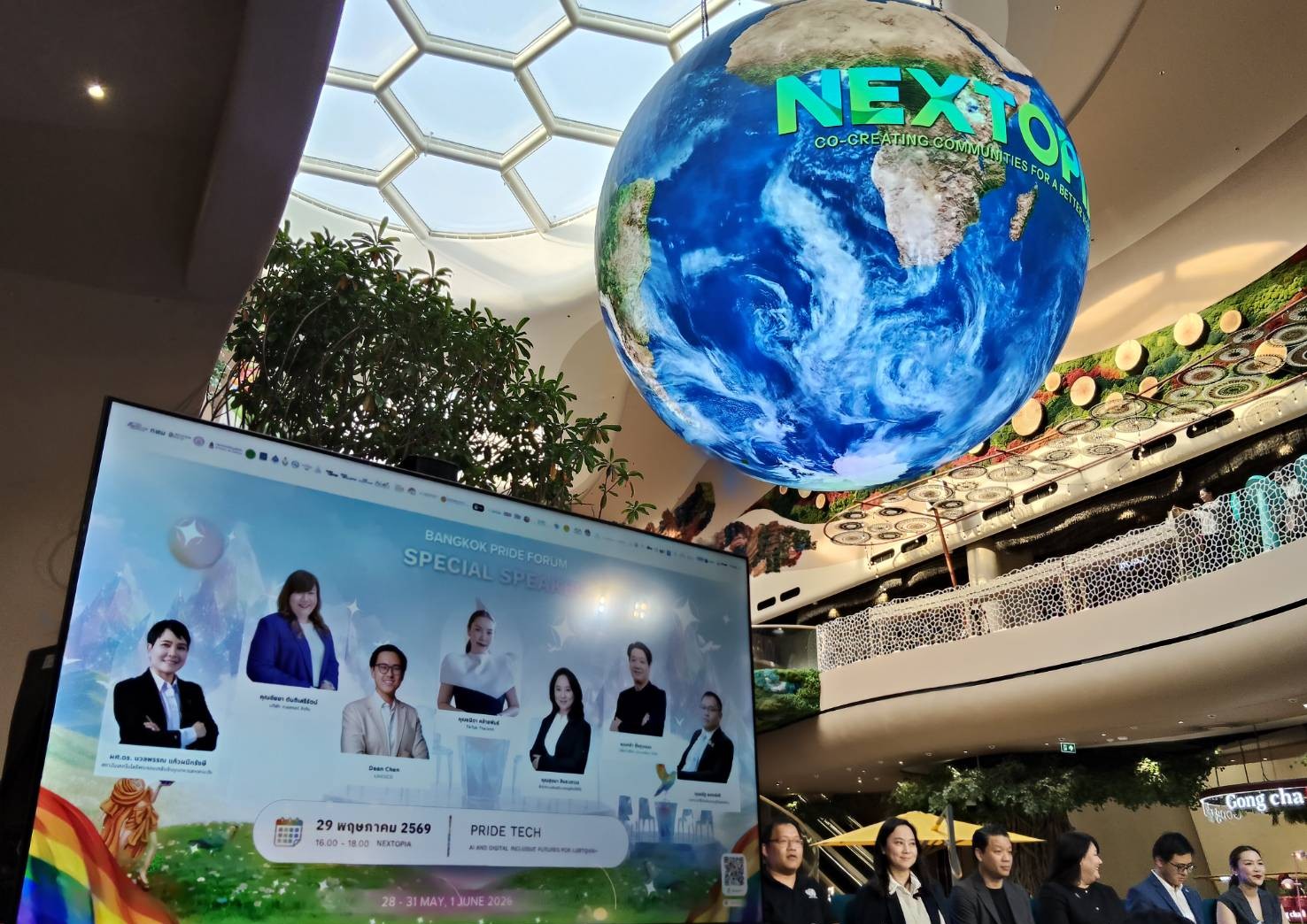
At the BANGKOK PRIDE FORUM 2026, during the panel discussion "PRIDE TECH: AI AND DIGITAL INCLUSIVE FUTURES FOR LGBTQIAN+", it reflects a significant phenomenon that Thailand is accelerating its efforts to turn the wheels of innovation alongside equality, with a key milestone being the establishment of Thailand as a true "Inclusive Innovation Hub" for the Asia region.
The discussion brought together speakers who drive innovation to pose new questions, from AI and Data to UX/UI, on how we can create a digital world that “leaves no one behind,” because equality in the real world must also occur online, including:
- Chalida Khaiphan, Director of Public Policy for Southeast Asia, TikTok
- Kla Tangsuwan, CEO of WiseSight (Thailand) Co., Ltd.
- Aiya Tantiserirat, Co-Managing Director & Head of Partnership at Tellscore Co., Ltd.
- Dean Chen, Associate Program Specialist, Education Section, UNESCO Regional Office in Bangkok
- Asst. Prof. Dr. Nuanphan Kaewpanrangsri, Faculty Member, Department of Industrial Arts, Faculty of Architecture, Arts, and Design, King Mongkut's Institute of Technology Ladkrabang
- Natt Phayongsri, Senior Computer Scientist, Ministry of Digital Economy and Society
- Suchana Sinthawathavorn, Director of Quality of Life Development and Security Promotion, Digital Economy Promotion Agency (depa)

The essence of the discussion to establish Thailand as a leader in Inclusive Innovation that all sectors must drive together from today includes:
- Access (Equal Access): Promote seamless access to digital platforms and innovations for everyone, regardless of gender or age, by truly understanding the context and usage conditions of each platform.
- Safety by Design: Create a safe online space (Digital Safe Space) with systems to monitor, supervise, and prevent inequality or discrimination.
- Inclusivity as Economic Opportunity: View diversity not just as a social issue but as an "economic opportunity" that can enhance the quality of life and livelihoods for everyone.
Breaking Through Data & Online Marketing: Creating Access to Career Platforms for Modern Workers
If you ask how ready Thailand is to lead in diversity, the answer lies in online behaviors and digital data generated daily. From the perspective of data experts and consumer behavior analysts, it is clear that Thai society has a strong foundation in this regard, as evidenced by the power of policy advocacy and equality reflected on various social media platforms.
"Data in the digital world clearly shows that Thailand ranks among the top countries using social media to drive diversity policies," said Kla Tangsuwan from WiseSight Thailand.
This reflects that the power of online communities in Thailand is not just about entertainment or creating temporary trends, but a driving force that engages in discussions, presents ideas, and continuously raises awareness about equality.
This data confirms that Thai society is ready to embrace new innovations that meet the needs of diverse groups, and this is a treasure trove of information that businesses can leverage to create services that resonate with modern consumers better than in other countries.
When looking at how to apply this data in the marketing and content creator industry, leading platforms have already demonstrated that embracing diversity can be done immediately and yield clear business results. Breaking down gender barriers in collaboration with influencers and content creators not only fosters equality but also enriches the diversity of perspectives in advertising, positively impacting brands in terms of sincerity and understanding of consumers.
"Tellscore has transcended traditional gender boundaries by allowing identification as LGBTQ+ or Non-binary for over 8 years to connect brands with creators equally," added Aiya Tantiserirat from Tellscore.
This is a clear example of creating Access in the realm of employment, enabling all creators to access job opportunities from leading brands equally, measured by their work, creativity, and ability to communicate with audiences, rather than being limited by traditional prefixes or gender identity.
A Bridge from the Government: Creating a Health System Accessible to All
Creating innovations that embrace everyone cannot be sustainably achieved without structural and policy support from the government. As the overseer of the country's digital landscape, the Ministry of Digital Economy and Society plays a crucial role in designing mechanisms to bridge gaps and create pathways for all citizens to safely cross into the future.
"The government is moving forward to reduce the digital divide, transforming bureaucratic systems into unified data connections for everyone's convenience, while driving laws and a safe internet network (Thailand Safer Internet Coalition) to monitor, assist, and protect against cyberbullying," said Natt Phayongsri from the Ministry of Digital Economy and Society.
At the same time, the key agency promoting the digital economy, depa, has expanded this concept into clear practices by supporting funding and incubating new technology businesses (Startups) that target the diversity market, turning the principle of equality into a driving force for the country.
"depa is ready to provide funding support for Startups developing diversity platforms to create new options and enhance the quality of life for citizens," said Suchana Sinthawathavorn from the Digital Economy Promotion Agency.
A tangible success from this support is the application Pride Healthcare, an innovation in HealthTech that addresses the pain points of the LGBTQIAN+ community by allowing users to access (Access) medical services that understand their physiology and psychology, with specialized doctors providing consultations online in a private, safe, and equitable manner. Such innovations not only improve people's health but also create new job markets for medical personnel and establish a business model with high growth potential.

Rooting Out Bias from the Source: Creating a Mindset for Equitable Access to Innovation
If we want to change the digital future sustainably, addressing issues at the downstream may not be sufficient. It is crucial to revisit and change the mindset and perspectives from the upstream, particularly in educational institutions that shape the next generation of technology developers and designers to have a DNA of understanding equality and access.
In the panel discussion, the education sector opened interesting perspectives on how to teach the new generation to abandon traditional binary thinking that views the world in black and white or only as male and female, but rather to see humanity with greater diversity and nuance.
"Start changing mindsets from university, teaching students to design Digital Products (UX/UI) by creating sensitive Personas, abandoning the traditional male-female framework to produce products that truly understand and embrace everyone (Equity by Design)," said Asst. Prof. Dr. Nuanphan Kaewpanrangsri from King Mongkut's Institute of Technology Ladkrabang.
When designing digital products, whether applications, websites, or operating systems, if developers start with options limited to male or female, those innovations will immediately create barriers for other groups. However, if the mindset shifts to Equity by Design, or intentionally designing for equality and access from the outset, the resulting products will be flexible, easily accessible, and provide a good user experience for everyone.
From a business perspective, this will help expand the user base, extend the duration of platform usage, and significantly build brand loyalty.
International Standards in a Safe Digital Space
As the world enters the era of artificial intelligence (AI), the ensuing concern is that AI systems may learn and replicate existing human biases, leading to widespread discrimination, such as job application resume screening that may filter candidates based on gender or facial recognition systems that malfunction with diverse groups. This has become a significant global challenge that organizations worldwide are urgently seeking to address.
Large organizations like UNESCO have played a vital role in pushing Thailand and the region to recognize the importance of ethics in AI development, emphasizing that technology should serve all humans equally, not create gaps and barriers to social access.
"Innovation is not just about technology; it’s about people. UNESCO is collaborating to develop tools to assess the ethical impacts of AI in Thailand to detect and prevent AI models from replicating gender biases," said Dean Chen from UNESCO.
The development of these ethical impact assessment tools will become an important standard for future technology developers, ensuring that AI systems created in Thailand are transparent, fair, and safe for all users. This elevates the standards of Thailand's technology industry, making it accessible and safe for everyone, while also attracting investment from global technology companies that prioritize governance and sustainable development (ESG).
This concept aligns with the TikTok platform, which emphasizes maintaining this space as a community where everyone can share stories, reach audiences, and confidently generate income.
"TikTok prioritizes creating a safe space that allows everyone to express themselves and fully enjoy various features, committed to supporting diversity continuously for the fifth year," said Chalida Khaiphan from TikTok Thailand.
The commitment of large platforms to Safety by Design policies and close collaboration with communities helps create a digital ecosystem conducive to the growth of the creative economy, allowing LGBTQIAN+ groups to use this space to build their brands, sell products, showcase work, or drive social campaigns without limitations.
These efforts translate back into revenue and job opportunities that everyone can truly access in today’s economy.
The Next Step for Thailand Towards Driving Real-World Economic Power
The conclusion from PRIDE TECH at the BANGKOK PRIDE FORUM 2026 sends a signal to society and the business sector that issues of diversity and equality should not just be confined to advertising banners in June or merely hashtags on social media.
Because the global trend has reached a point where equal access is stability, and diversity is economic wealth.
And on social media, it has already shown how strong Thailand is as a leader and driving force for diversity. It is time for all sectors to seriously join hands to take that energy out of the digital screen and create a Thai society that embraces everyone safely and happily in the real world.