Unlocking the Secret of Brand Wellbeing with Human-AI Partnership to Create Repeat Purchase Experiences in Real Estate
The advent of AI has led marketers and entrepreneurs to quickly adopt it in their work, primarily focusing on using AI to generate vast amounts of content, accelerate workflows, and reduce costs. At the same time, there are concerns that AI will "replace" human jobs, leading to unemployment.
The question is, how can we maximize the benefits of AI?
At the annual seminar TerraHint Brand Series, organized by TerraBKK.com, now in its 8th year, a new dimension was introduced under the theme “TerraHint Brand Series 2025 | The Wellness Blueprint #LiveWellWithFormula”. This significant gathering aims not only to serve as a platform for exchanging perspectives but also to push and elevate the Thai real estate industry to overcome economic challenges and transition from traditional housing development to creating “better quality of life” for people at all levels.
The Era of Communication in Tea
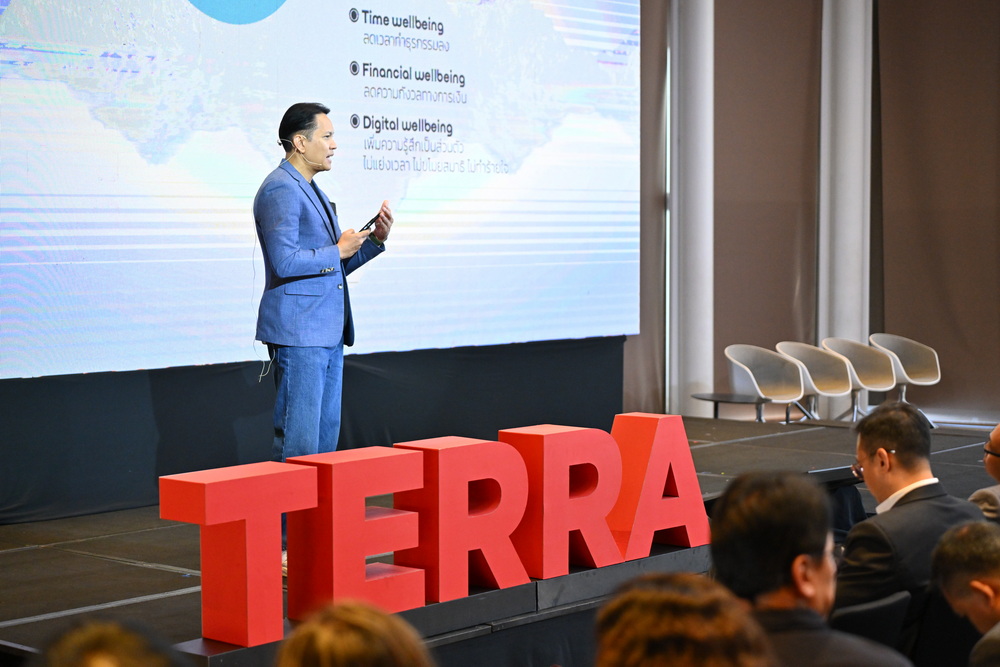
One of the seminar topics delved into tools that will lead brands to a new dimension of sustainability, under the theme “Unlocking Customer Value Chain by AI: AI in Creating Added Value in Customers' Minds”, presented by Mr. Paruj Daorai, Founder of Laterall Co., Ltd. and President of the Digital Advertising Association of Thailand (DAAT). He opened with the acknowledgment that in this era, people are interested in using AI to create content or reduce costs, but the more important concept is the strategic collaboration between humans and AI, which is not just a technical tool but a “mindset” that will elevate brand communication to be more meaningful.

Mr. Paruj pointed out a significant phenomenon that marketers must face, which he refers to as “Brand Fatigue”. This is the state of brand exhaustion due to the volume of media and messages people receive daily, which is 100 times greater than 20 years ago. In every space where people spend time, every platform is infiltrated with advertisements and communications, resulting in brands being everywhere but lacking meaning.
“Everyone is trying to make their brand ubiquitous, but when it is everywhere, it becomes gray because it is seen so much that it starts to become a pattern. People don’t hate the brand, but they don’t feel anything special about it.”
This saturation of communication has led to a diminishing value of each message sent out. Creating differentiation that aims to stand out from every brand in the world has become nearly impossible. This is the starting point for seeking a new model for brand creation, which is Brand Wellbeing.
“We don’t need to be the only one in the world, but we should be a brand that is meaningful to a group of people that is important to our business.”
Creating Shared Value with H&AI through Three Pillars
Instead of focusing on traditional branding or communication, Mr. Paruj suggests viewing Brand Wellbeing as a new era of competition based on three pillars that must work together in balance:
- Brand Health: This refers to credibility and trust, which leads to repeat purchases.
- Consumer Wellbeing: This involves understanding consumers' lives in various dimensions.
- Societal Wellbeing: This is about creating a positive impact on society and culture, which is something brands must already do.
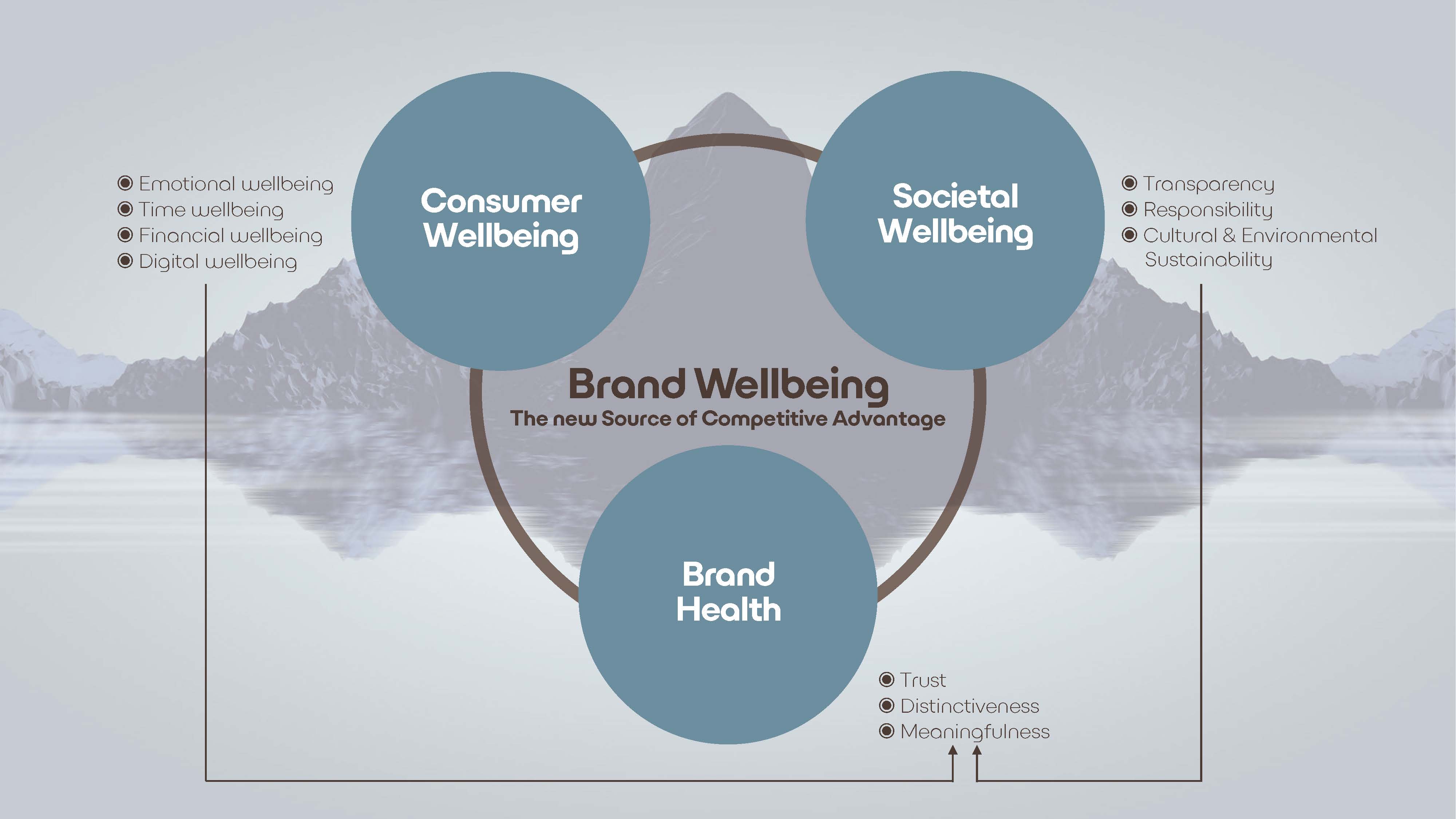
When these three components work together strategically, they will lead to trust, meaningfulness, and distinctiveness for the brand. This represents a new perspective that branding today is not just about "telling someone what I am or how I am good for you" but about taking action and providing real experiences through understanding customer dimensions, including Emotional Wellbeing (helping reduce frustration), Time Wellbeing (helping save time), Financial Wellbeing (offering suitable financial options), and Digital Wellbeing (making them feel safe and comfortable in the digital world).

Value Exchange: Exchanging Value for Information and Trust
In the digital age where data is immensely valuable, brands must view their relationship with consumers as “Value Exchange”. Brands should not just hope to gain information from customers but must first provide something valuable in return. If consumers receive value, they will be willing to exchange personal information for it, as seen in the case of a sanitary pad brand creating a free period tracking app in exchange for customer data.
“The unavoidable question is, how does your brand improve their lives, and this cannot be achieved through advertising alone.”
Answering this question will lead to using technology and AI to solve problems for people, rather than just being a tool to produce content tenfold. A clear example is a credit card company that can quickly address scam issues and create a sense of security for customers during those crucial five minutes, leading to lifelong brand loyalty because it genuinely benefits them.

From Campaign-Based to Experience System
The key to adapting is shifting the perspective from campaign-based marketing, which is done and over with, to an Experience System that is interconnected and central.
This experience system may center around a brand's Line Official Account or application, where all marketing activities consistently return to this point, creating continuity and long-term value, avoiding the production of excessive content that must be budgeted and overlooked by people. Ultimately, marketing should not be about quantity but about “creating wellbeing for people.”
The Supportive Roles of Human and AI
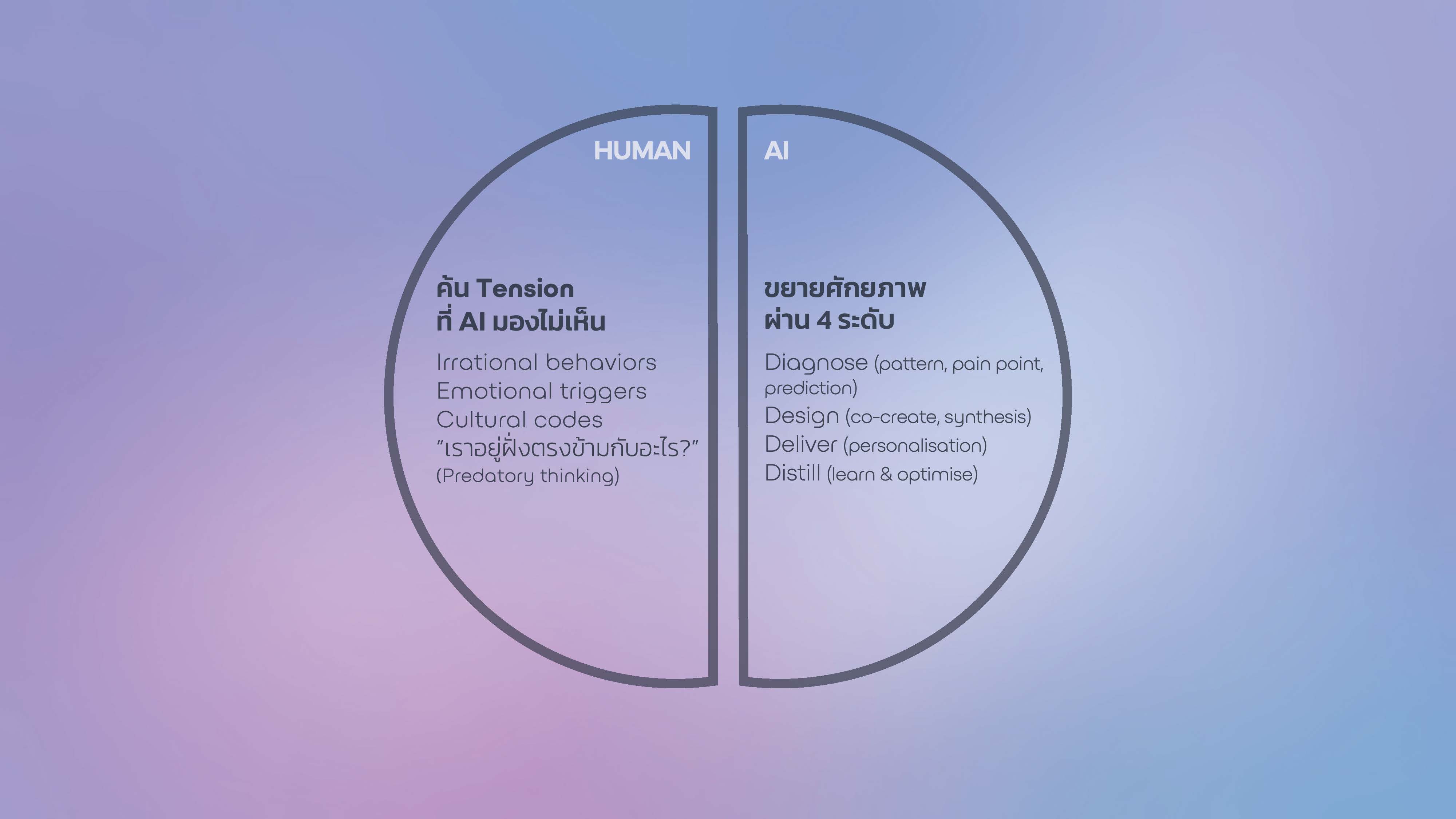
Mr. Paruj Daorai emphasizes the clear division of roles in the collaboration between humans and AI, asserting that AI is merely a tool, while humans are the ones who lead the search for truth to help brands transcend the limitations of traditional communication.
The role of humans is to use intuition and empathy to uncover complex truths. Humans must be the ones to "find Tension" and the irrational behaviors of people that AI cannot see, as people often use reason to explain decisions made based on emotions.
Moreover, humans also play a role in identifying Emotional Triggers and Cultural Codes that change rapidly, especially among younger generations, such as Gen Z's discomfort with receiving calls from strangers or overly formal communication. Another crucial role of humans is to employ Predatory Thinking, or looking for the "enemy" that the brand will stand against to create a distinctive stance, such as opposing the complexities of bureaucratic systems.
Conversely, the role of AI is to process and present solutions efficiently. AI will be used to identify patterns from vast amounts of data to determine when and how irrational behaviors leading to Pain Points occur. Additionally, AI helps identify Pain Points and create Prediction Models to forecast future behaviors, which is more interesting than using AI to produce content that everyone can create.
“The role of humans that AI cannot assist with is finding Tension that AI cannot see,” Mr. Paruj reiterated.
Case Study: AI for Tangible Wellbeing
Spotify Wrapped & Daylist (Time & Emotional Wellbeing)
- Wrapped: Uses AI to process listening behavior throughout the year and summarizes it into the user's Personality, motivating people to share and feel invested in the platform, making it hard to switch away. The uniqueness lies in using AI to create content for artists that users have listened to throughout the year to "thank" users personally, fostering emotional bonds.
- Daylist: Transforms from annual to daily and hourly, with AI learning what genres users listen to at different times and creating playlists that vary throughout the day, improving people's daily lives in small ways.
- Results: Leads to continuous “repeat purchases” (Subscription Base) by providing targeted Value Exchange, making their lives smoother and happier.
IKEA Place (Financial & Digital Wellbeing):
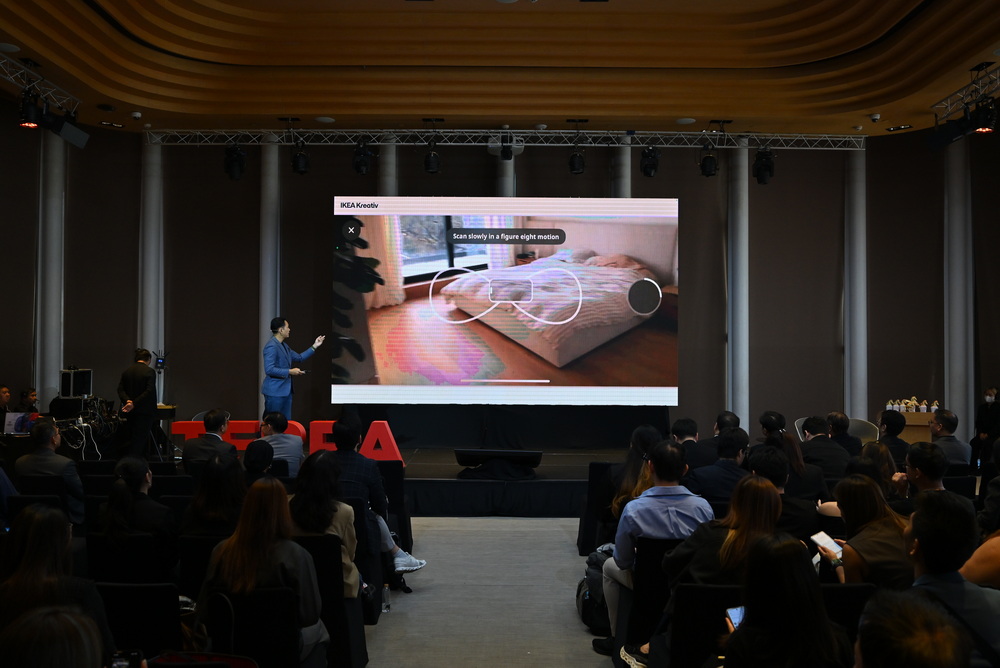
- Seeing that people already use AI to design and arrange furniture, IKEA created an application that allows AI to “remove” existing furniture in the room and place IKEA furniture in suitable corners and sizes by taking a photo of the room.
- Results: Helps customers visualize their dream home more easily without having to physically move items, aligning with the principle of selling furniture, which is selling dreams and solving Pain Points that customers cannot envision when deciding to purchase large items.
All of this reflects that AI is not meant to cause unemployment but to assist in developing products and services that genuinely meet customer functional needs.
Modern branding is “communication” in every action.
Returning to the real estate business, repeat purchases are the true growth of real estate brands. For marketers, property developers, and investors, the conclusion is that “buying is a small matter, but repeat buying is a big deal.”
In real estate, the buying cycle is long, and opportunities for repeat purchases may not be as frequent as with regular products. Therefore, the term "repeat purchase" must be interpreted broadly to encompass “word-of-mouth,” “long-term loyalty,” and “purchasing other products or services within the ecosystem.” If brands focus solely on conversion and relentlessly seek new leads, they will never grow sustainably because there are no loyal inner customers, leading to a lifetime of exhaustion.
This loyalty can only occur when brands use H&AI to address the “vortex of no escape” of post-sale issues, such as complaints, maintenance, or conflicts within projects, which are matters that technology can help design to resolve as quickly as possible, allowing customers to feel safety and care during critical moments related to our brand. Thus, repeat purchases are more about emotion than reason.
“Not everything needs advertising, but everything we do with every customer and every person is a form of communication... this is modern branding.”
Every action, every post, every policy, every experience that customers receive, whether intentional or unintentional, is all communication and brand building. Creating content or storytelling is just a small part of a world filled with so much content that people are starting to “feel nothing about anything anymore.”
Therefore, the success of Brand Wellbeing depends on strategies focused on creating better experiences for people, using H&AI as a tool rather than just a means to increase workload.
This is the time to view AI as more than a trend but as a “function” that helps brands understand customers on a deeper level and turn dreams into tangible realities for consumers, creating wellbeing that brands deliver at every moment of life.
#TerraBkk #TERRAHINT #BrandSeries2025 #TerraHintBrandSeries2025
#LiveWellWithFormula #TheWellnessBlueprint #Wellness #Hospitality #Ai #Marketing