Green Building: The New Standard in Global Real Estate
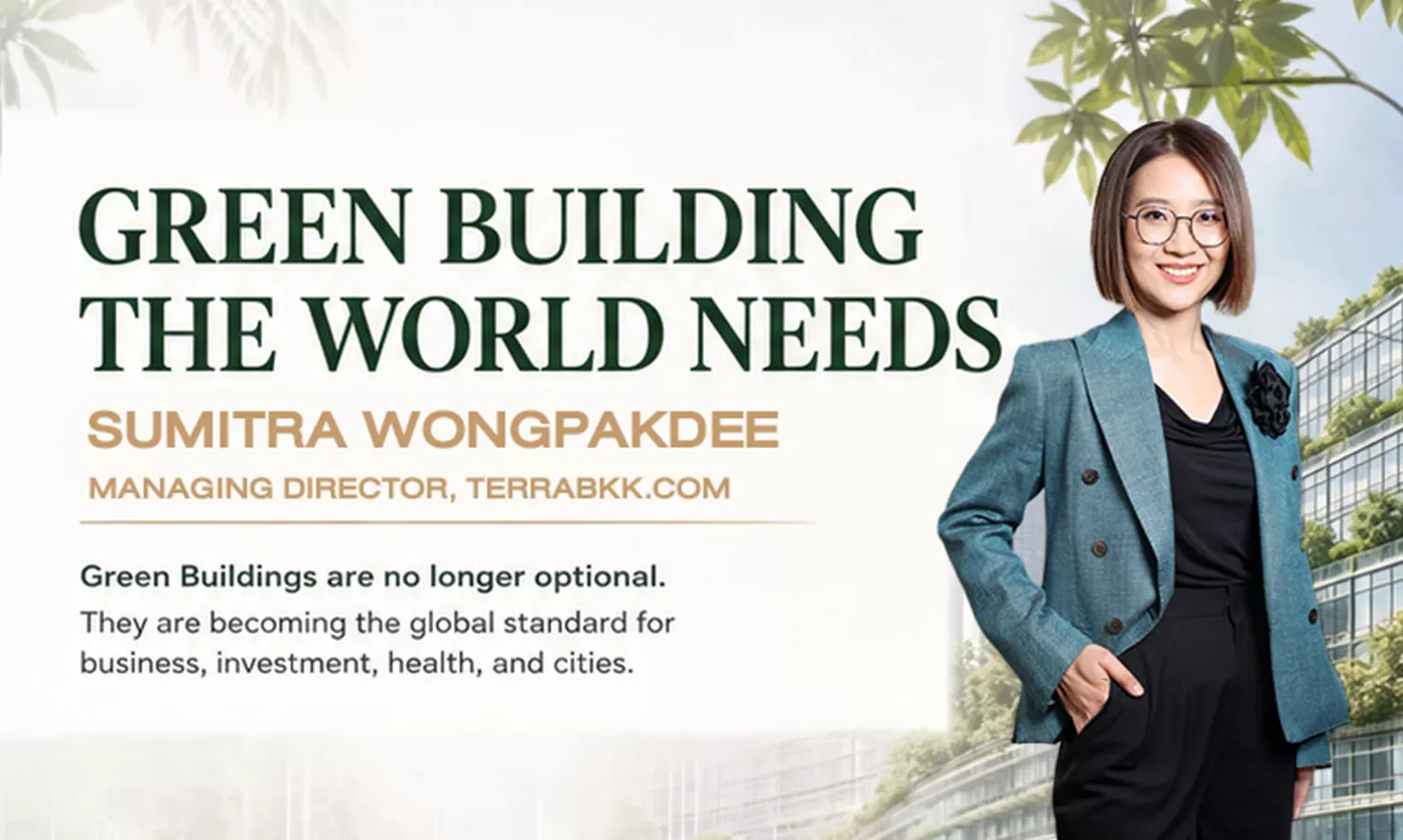
Green Building is no longer just about energy-efficient buildings; it is becoming the "new standard" in global real estate, integrating Sustainability, Asset Value, Resilience, Community Impact, and Well-being. Today, large organizations worldwide are seriously pursuing Net Zero, ESG, and Sustainability goals under carbon regulations and disclosure requirements, such as the EU's CSRD and California's SB 253.
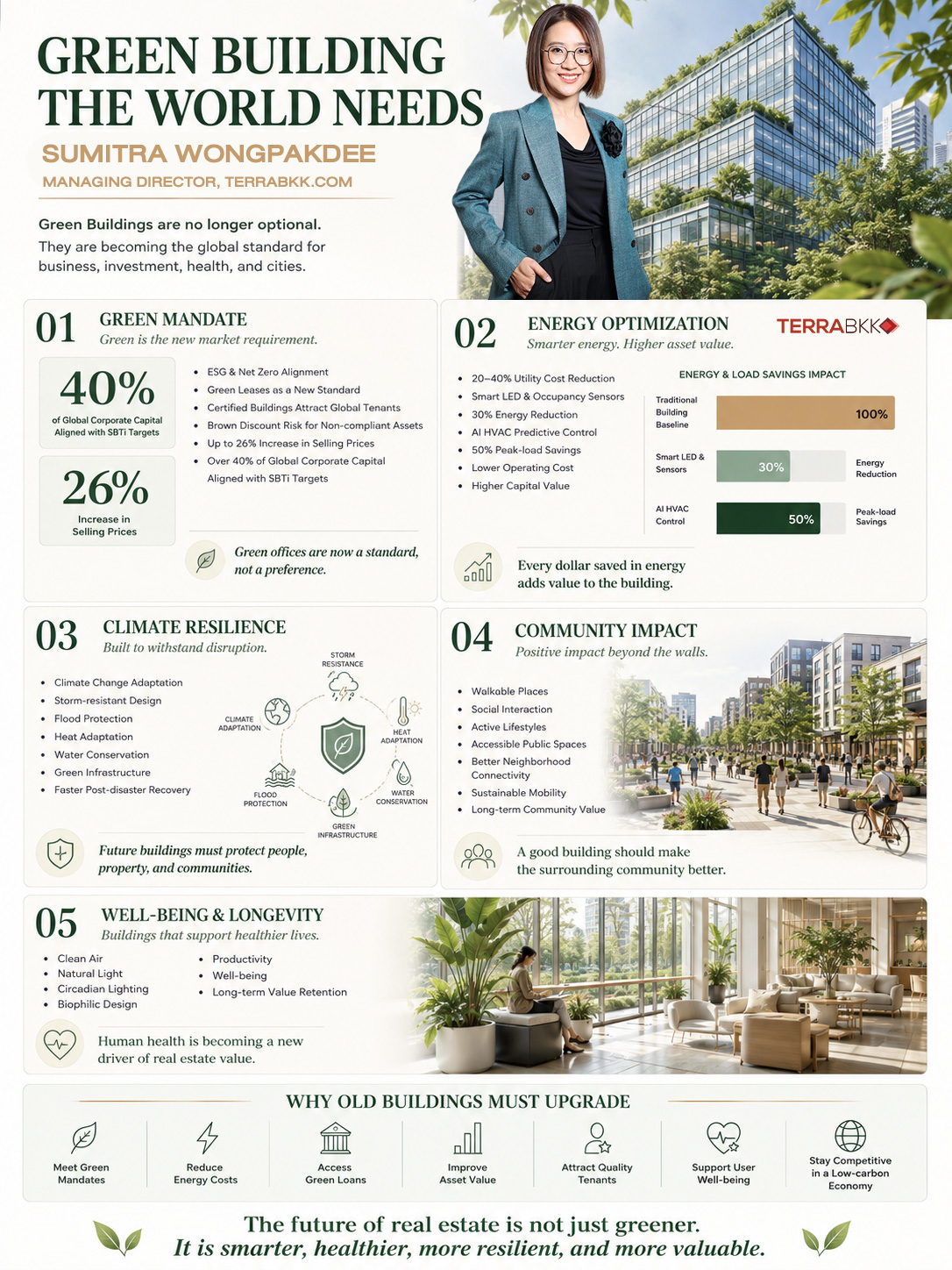
Data indicates that over 40% of Global Corporate Capital aligns with SBTi targets, reflecting that global funding is shifting towards businesses and assets with clear carbon reduction goals. The new Green Mandate from global tenants means that sustainable office buildings and rental spaces are becoming essential conditions for tenants, especially organizations that need to align their workspaces with their company's ESG objectives. Conversely, buildings that do not meet green standards may face risks known as Brown Discounts, or devaluation in the market, as they fail to meet sustainability regulations and the demands of modern tenants. Meanwhile, low-carbon and Green-certified buildings have the potential to create higher value, with data showing that green buildings can see Transaction Selling Prices increase by up to 26%. This means that Green Building is not just about image; it is about competitiveness, asset value, and the future of buildings in the global market.
Energy Optimization is another key aspect of the new Green Building era, focusing on smart energy management to optimize energy and resources efficiently.
Smart building technologies, such as Smart LED, Occupancy Sensors, and AI HVAC Predictive Control, enable buildings to manage energy based on actual usage, reducing waste and enhancing internal system efficiency.
Data shows that using technology to improve energy efficiency in buildings can help reduce Utility Costs by approximately 20–40%.
▪️ Smart LED & Occupancy Sensors can reduce energy consumption by about 30%
▪️ AI HVAC Predictive Control can reduce Peak-load by around 50%
Importantly, reducing energy costs impacts not just monthly expenses but also long-term value, as every cost reduction can reflect back as increased asset value. For Institutional Grade office buildings, a mere 30% reduction in energy expenses could translate into asset value increases of several million dollars. Therefore, Energy Optimization serves as both an environmental strategy and a financial strategy for real estate.
Resilience: Buildings that Must Withstand a Volatile World
The modern world is facing increasingly severe changes, including rising temperatures, heavy rainfall, flooding, storms, disasters, and economic shocks along with fluctuating energy costs.
Thus, the buildings that the world needs are not just "environmentally friendly" but must also possess Resilience—the ability to withstand and recover from change.
Elements of resilient buildings may include:
▪️ Design to withstand storms and high winds
▪️ Flood protection systems
▪️ Use of materials and surfaces that reduce heat
▪️ Natural ventilation systems
▪️ Rainwater management and reuse
▪️ Green spaces and green infrastructure
▪️ Design that helps communities recover faster after crises
This concept makes Green Building not just about carbon reduction but about protecting lives, property, community continuity, and long-term economic value. Community Impact from buildings that are good for themselves to buildings that are good for the city should also create positive impacts on the community, city, and surrounding people. One project can change the behavior of local residents, promoting walking, outdoor living, social interactions, connectivity with transport systems, and the vibrancy of neighborhoods.
Good buildings should be designed to:
▪️ Promote walking and an Active Lifestyle
▪️ Provide easily accessible public spaces
▪️ Foster a sense of community
▪️ Connect with surrounding neighborhoods, services, and transport systems
▪️ Support sustainable travel, such as walking, cycling, and public transport
▪️ Enhance the livability and value of surrounding areas
This represents a shift in perspective from buildings that are good for themselves to buildings that are good for the city. Ultimately, buildings do not exist in isolation but within the ecosystem of the city, people, and community. Well-being is the New Value Driver of modern real estate. One of the most critical aspects of the new Green Building is Well-being, Productivity, and Longevity. Today's building users do not just want workspaces or residences; they seek environments that promote better health, improved living, enhanced work performance, and quality long-term living. The demand for Well-being is no longer confined to homes or leisure spaces but occurs everywhere, from office desks to bedrooms, living rooms, and communal areas of residences.
Modern building users prioritize:
▪️ Clean air
▪️ Natural light
▪️ Circadian Lighting
▪️ Biophilic Design
▪️ Green spaces
▪️ Good ventilation systems
▪️ Quietness, safety, and privacy
▪️ Environments that reduce stress
▪️ Spaces that support relaxation and physical recovery
In the office market, Well-being can be linked to Productivity and attracting quality talent, while in the residential market, Well-being connects to quality of life, long-term health, and family safety. This is why Well-being has become the "New Value Driver" of modern real estate. How should old buildings adapt as Green Building becomes the new standard? As Green Building becomes the new market standard, old buildings can no longer rely on outdated thinking. Upgrading old buildings means restructuring their capabilities to meet the new world in terms of energy, technology, health, safety, and climate risk management. Key approaches include:
▪️ Enhancing energy efficiency
▪️ Reducing operational costs
▪️ Adapting building systems to support smart technology
▪️ Improving air quality and lighting
▪️ Increasing green spaces and relaxation areas
▪️ Upgrading water and energy management systems
▪️ Enhancing climate risk resilience
▪️ Aligning buildings with ESG standards and Green Certification
These upgrades help buildings better meet Green Mandate requirements, increase access to Green Loans, and make buildings more attractive to quality tenants, especially organizations that prioritize ESG and Net Zero. Green Building is the new direction for cities and long-term investments. Overall, Green Building represents the new direction for urban development and long-term investment.
The buildings of the future must be:
▪️ Good for the environment
▪️ Good for business
▪️ Good for users
▪️ Good for the community
▪️ Good for the future of the city
In a world where sustainability has become a condition of the new economy, Green Building is not just an option for future buildings but the new standard in global real estate.