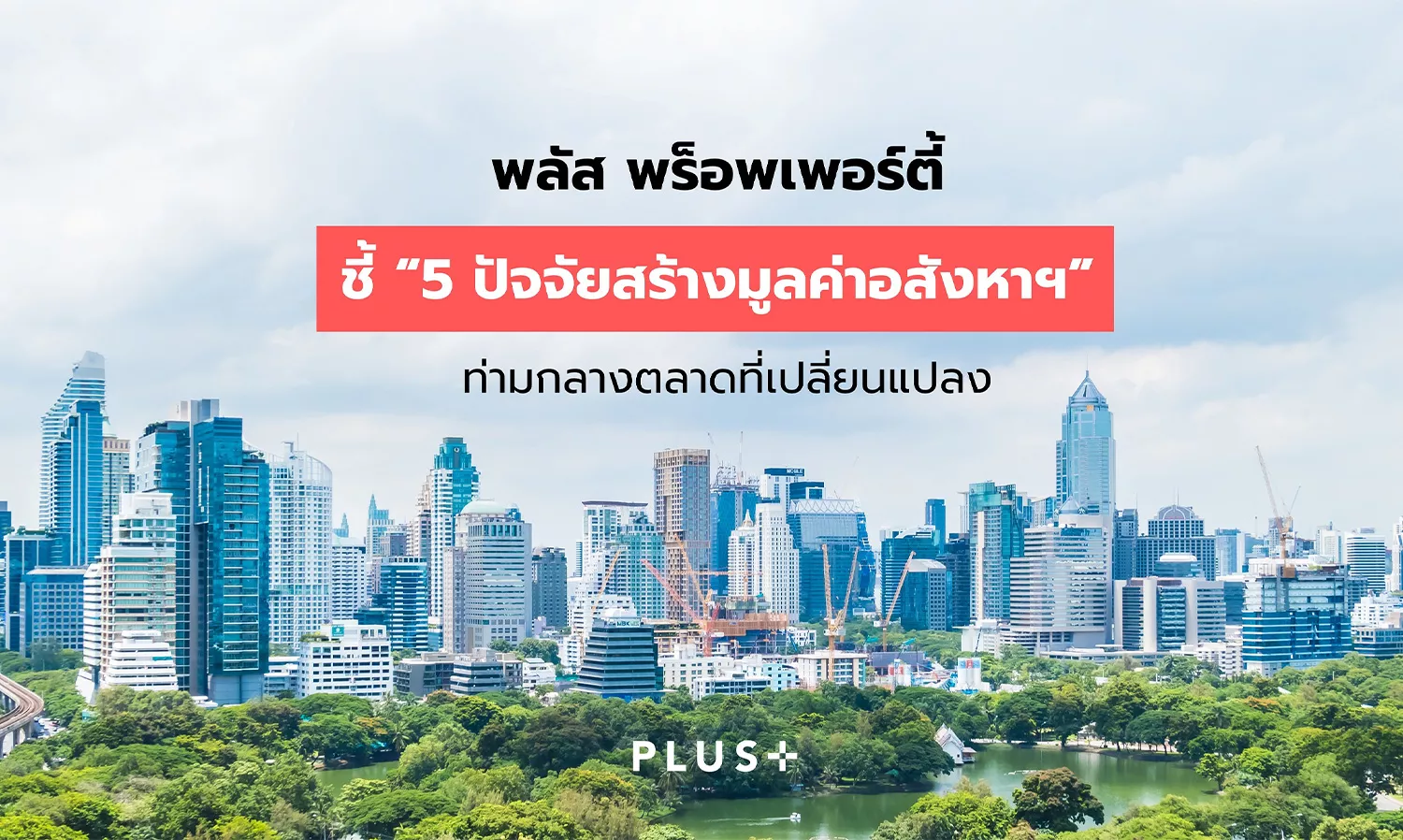
Plus Property Identifies 5 Factors That Create Real Estate Value Amid a Changing Market
Recently, the Thai real estate market has faced pressure from economic factors and purchasing power limitations, leading to a slowdown in consumer buying decisions. However, a deeper analysis reveals that the demand for housing has not disappeared; it is merely adapting to the changing market context. A clear trend is that an increasing number of consumers are opting for second-hand homes due to their affordability. At the same time, the rental market continues to grow, driven by credit constraints and an increasing demand for flexible living arrangements.
This shift reflects a "new way of thinking" among consumers who are placing greater importance on value, financial burdens, and long-term risks. Decisions are now based on whether the chosen "asset will enhance life and retain value in the future."
In this context, investment opportunities in real estate remain available, particularly in assets that meet rental demand. Additionally, there are factors from foreign buyers seeking second homes in Thailand, especially in Phuket, which continues to boom. Concurrently, owner-occupiers are focusing on the potential of properties, particularly luxury projects that are still expanding, with consumers prioritizing quality of life in their living environments.
It can be said that choosing to buy or invest in brands that offer comprehensive product and service designs—addressing both the aesthetic appeal of projects and practical functionality, as well as the real-life living experience—provides a significant advantage in enhancing project value over the long term.
Plus Property, as an expert in property management and residential living with over 30 years of experience, summarizes 5 key factors that play a role in creating and maintaining added value in real estate to assist in making informed decisions when purchasing or investing in potential real estate projects:
Functionality — Flexible functions that meet real usage needs
Designing spaces that can be adapted to the behaviors of residents, creating room layouts that are practical for daily life, such as appropriate space proportions, flexibility in future usage functions, and building layouts that consider light direction, wind, and access to common areas, are all elements that impact both the quality of living and the value of the asset.
Future-Ready Technology — Technology that supports the future
Implementing concepts like Smart Building and the Internet of Things (IoT) in buildings, such as the LIV-24 system, which ensures 24-hour security while monitoring the status of devices and systems within the building in real-time, allows for efficient maintenance planning and reduces the risk of malfunctions that could affect usability, impacting both costs and asset value.
Sustainability — Sustainability that reflects value
Designing with energy and environmental considerations helps reduce living costs and is increasingly important to buyers and renters today, especially among new-generation consumers who choose products from brands with a sustainability stance. This can be seen in the use of eco-friendly materials, building orientation for natural light and airflow, heat-reducing materials, and systems that help reduce energy consumption in homes.
Safety & Privacy — Safety and privacy
Standard security systems and designs that consider privacy are fundamental to a good quality of life. Attention should be given to access control systems, clearly defined usage zones, and designs that minimize disturbances between units, such as room spacing and the orientation of balconies or windows, all of which affect residents' feelings of safety and privacy.
Experience — Tangible living experiences
The quality of management and service defines the "feel" of living, impacting occupancy rates, rental yields, and the project's image. This can be assessed by the quality of project maintenance, such as cleanliness and upkeep of common areas, responsiveness in service or problem-solving, and the management standards upheld by professional teams, which are crucial factors that genuinely reflect the long-term quality of the asset.
An example that clearly reflects this concept is "98 Wireless," a luxury project on Wireless Road by Sansiri, managed by Plus Property. Over a period of 9 years, the project has seen an average selling price increase of over 70%, reaching approximately 1 million baht per square meter, demonstrating that quality design, combined with continuous management and maintenance, plays a significant role in creating and maintaining added asset value over the long term.
As the real estate market and consumer behaviors evolve, selecting assets with a strong foundation that can continuously create added value is crucial for both investors and residents, ensuring that today's decisions will continue to hold value in the future.