War Changes the World, but the Impact Remains the Same: Strategic Perspectives on Domestic and International Investment in Thailand's Real Estate Sector
Strategic perspectives on domestic and international investment in Thailand's real estate sector by Dr. Kongkiat Opaswongkarn, Chairman of the Executive Board of Asia Plus Group Holdings Public Company Limited, at the THAILAND Real Estate Leader event presented by Asia Plus Group Holding: Home Buyers x The NEXT Real on March 24, 2026. Every time the world faces a major war, the most affected market is not the stock market, but rather "energy", as oil is not just a commodity but the "cost of the entire economic system". When energy prices surge, every sector from production and transportation to the cost of living is immediately impacted in a chain reaction.
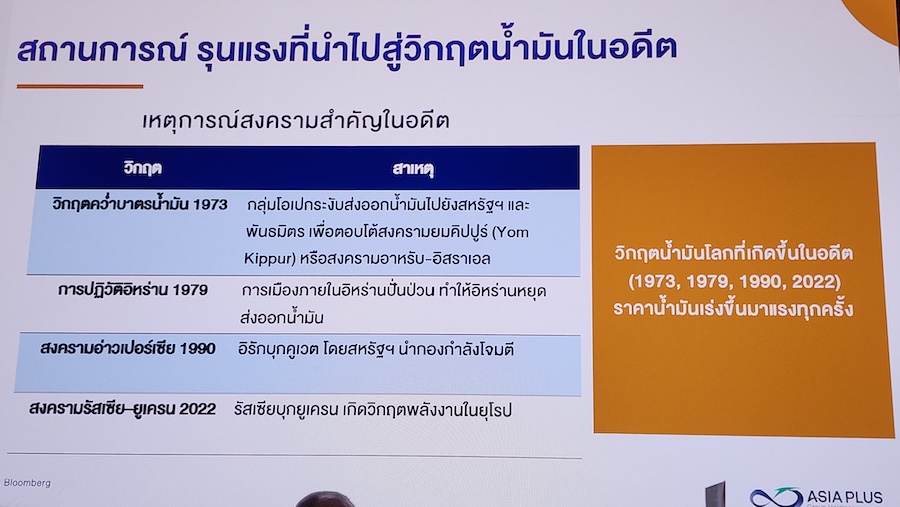
4 Wars, 4 Lessons the World Will Never Forget
- Oil Crisis 1973: Oil prices soared from $3 to $12 (+300%) before gradually easing the following year, caused by OPEC's suspension of oil exports to the U.S. and its allies in response to the Yom Kippur War (Arab-Israeli War).
- Iran Revolution 1979: Prices jumped from $13 to $34 (nearly 3 times) and remained high due to internal political turmoil in Iran, leading to a halt in oil exports.
- Gulf War 1979: Prices rose from $17 to $46 (+171%) before falling back to near previous levels after Iraq invaded Kuwait, followed by U.S.-led military action in the Russia-Ukraine War 2022.
- Russia-Ukraine (Gulf War 1990): Prices increased from $78 to $128 (+64%) and then dropped to around $95 due to Russia's invasion of Ukraine, causing an energy crisis in Europe.
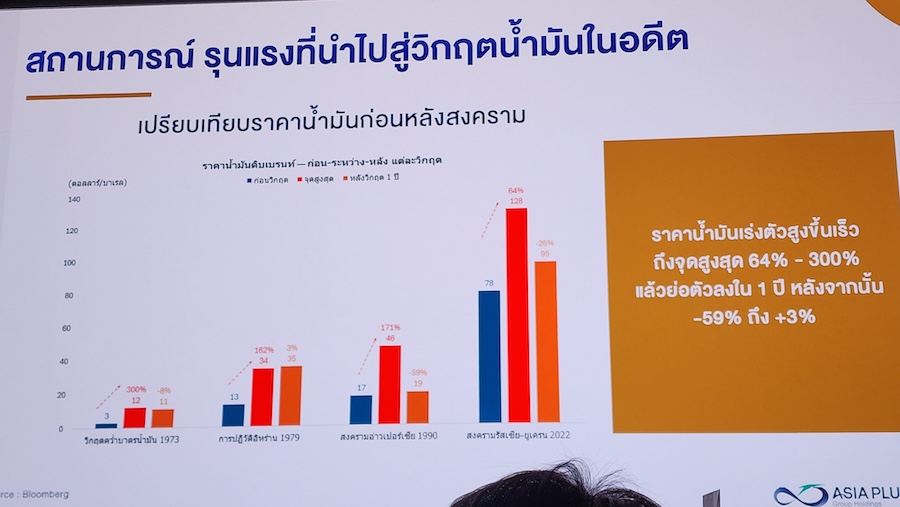
These are instances where oil prices surged during shocks and then gradually adjusted as situations stabilized, along with recurring impacts every time such events occur.
- Inflation spikes immediately (6–14% YoY)
- GDP slows or enters recession as rising energy costs push expenses onto consumers, leading to reduced purchasing power and businesses slowing down investments, resulting in economic recession almost every time.
Observation: If oil prices rise over 50%, the economy has a high chance of recession.
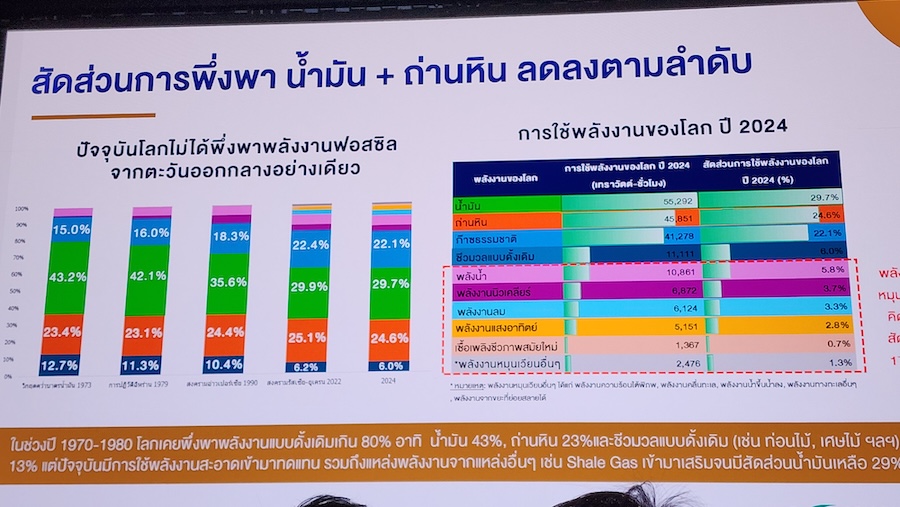
The world is beginning to change the energy game; from relying on oil at 43.2% in 1973 to 29.7% today, with renewable energy now accounting for 17.8%. Although the world has not completely moved away from oil, the diversification of energy sources has lessened the impact of current wars compared to the past. The latest war has caused global stocks to decline, with the Thai SET down by 5% to 6%, while gold and silver have not always served as safe havens (no asset is 100% safe). Investors are selling off risky assets to hold cash, while energy-related and liquid assets have risen.
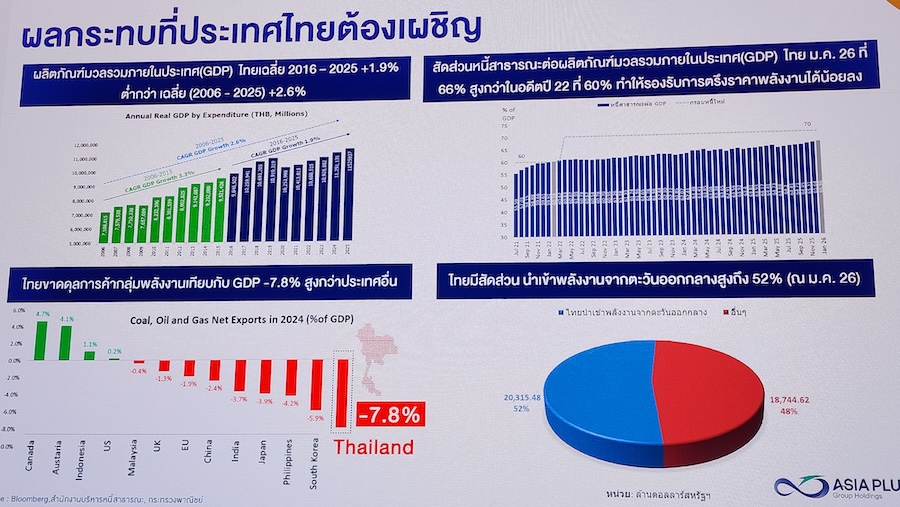
The vulnerability of energy stems from an energy deficit of -7.8% of GDP, with nearly 50% imported from the Middle East. If issues arise in energy transport routes, such as the Strait of Hormuz, Thailand will be immediately affected in terms of costs and inflation, increasing the state's burden from public debt, which is about 66%, and necessitating energy subsidies of 1.3 to 1.4 billion baht per day.
3 War Scenarios
- Ends quickly (< 1 month)
- Lasts 1–3 months → High inflation + tourism slowdown + real estate slump
- Lasts > 3 months → Severe impact on the entire economy, stagnant tourism, high construction costs, reduced profit margins
The Thai real estate market has previously weathered several major crises, particularly during the Tom Yum Goong crisis when property prices fell sharply before gradually recovering in line with economic cycles. Currently, the market has an outstanding value of about 800 billion baht and new supply of about 200 billion baht, indicating that the market still has driving forces. However, developers must "choose locations, select products, and identify target customers" accurately.
Opportunities Hidden in Crisis lie in foreign investments, especially from those seeking long-term housing and safe assets, such as long-term leases, as well as increased ownership in locations attracting foreign interest, such as Phuket, Pattaya, Bangkok, and Chiang Mai. Southeast Asia is becoming the "new destination for global capital" due to geopolitical factors and quality of life.
Finally, "Every crisis will return to equilibrium", as history shows that cities like New York after 9/11, London, or Tokyo can recover over time. Ultimately, "Cash is King".