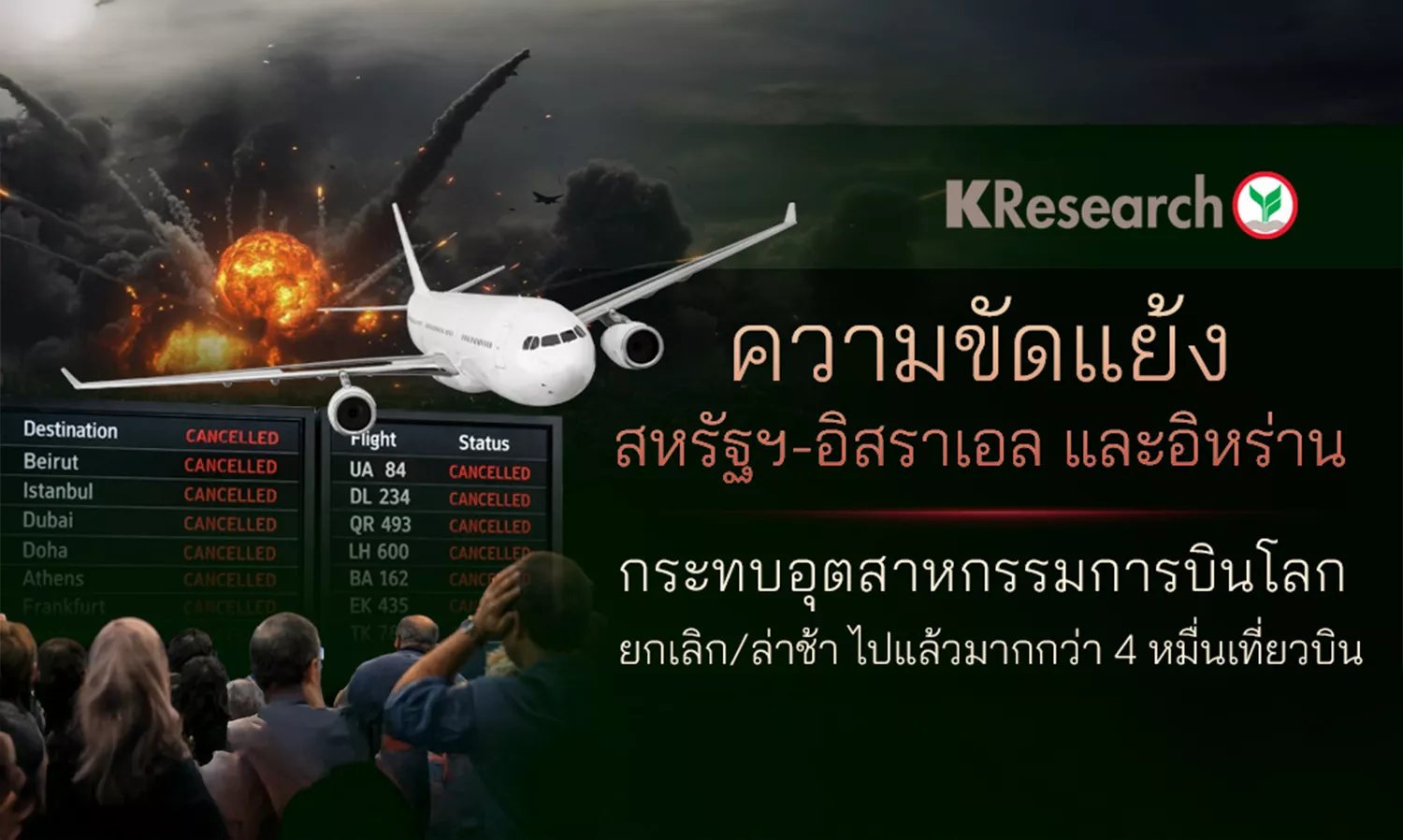
Middle East Conflict Affects Global Aviation: 40,000 Flights Canceled, Costs Surge by 76%
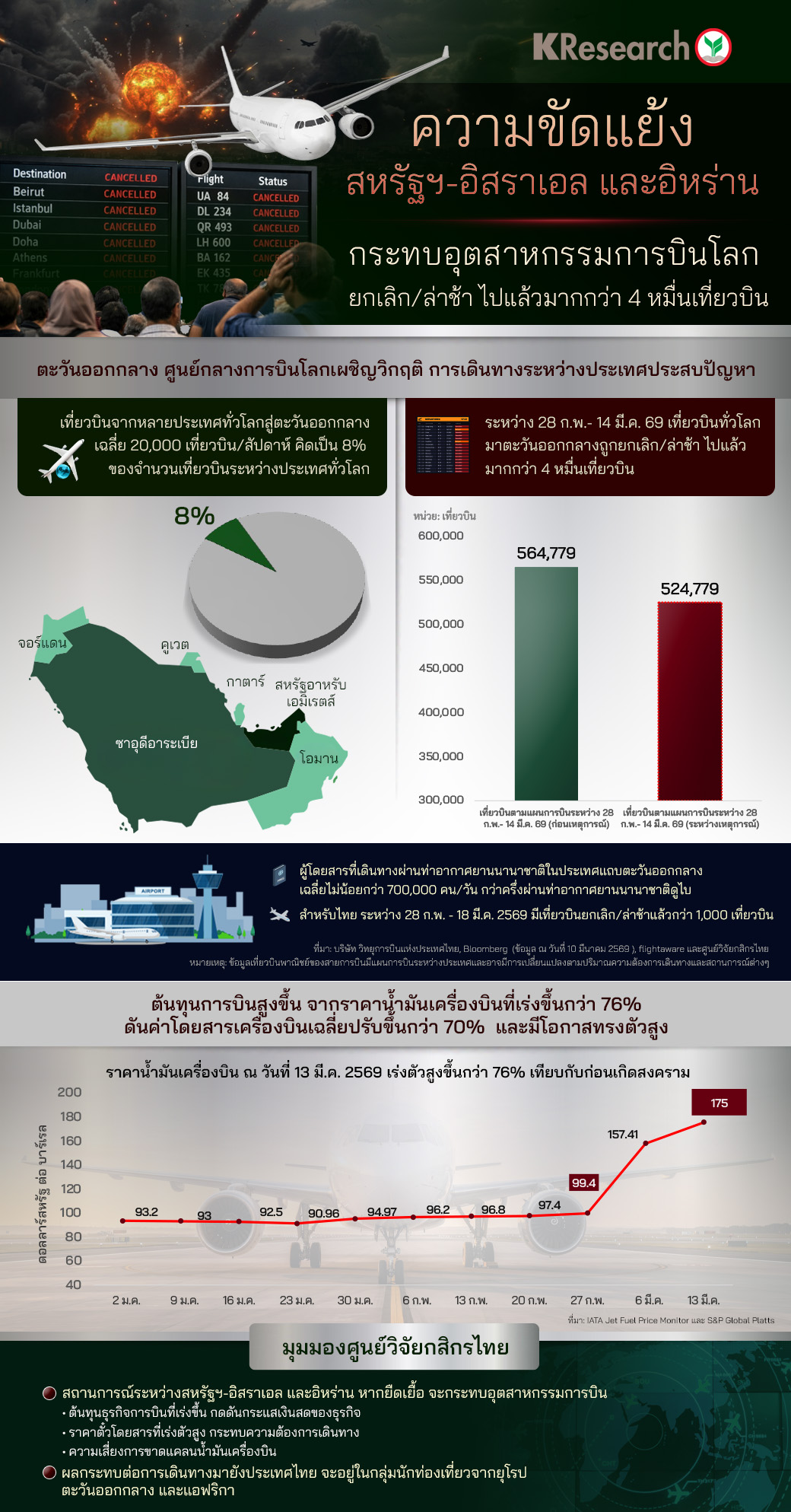
The ongoing conflict between the United States, Israel, and Iran is significantly shaking the "global aviation industry," particularly in the Middle East, which is a strategic hub for intercontinental flight routes connecting Europe, Asia, and Africa. Recent data from Kasikorn Research Center clearly indicates that from February 28 to March 18, 2026, over 40,000 international flights have been canceled or delayed, marking an unusually high level that has a cascading effect on the entire global aviation system.
The core of the issue lies not only in the "safety of airspace" but is expanding to include rapidly increasing "structural costs."
-
Soaring fuel costs impact the entire pricing structure
<\/li> <\/ol>
Jet fuel prices have surged by over 76% compared to the period before the conflict, reflecting geopolitical tensions that directly affect energy supply.The result is an immediate increase in airline operating costs that cannot be absorbed in the long term, forcing airlines to pass the burden onto passengers.
-
Airfares have risen by an average of over 70%
<\/li> <\/ol>
As the cost structure changes, global airfares have increased by more than 70% on certain routes, particularly those that must avoid Middle Eastern airspace, resulting in longer flight distances, increased fuel consumption, and longer travel times.This trend is likely to "stabilize at a high level" if the situation does not improve.
-
The Middle East: An unavoidable strategic point for the world
<\/li> <\/ol>
The Middle East is a central aviation hub connecting over 700,000 passengers daily through major airports in the region.When this area becomes risky, airlines worldwide must reroute, which not only increases costs but also reduces the efficiency of the entire aviation network.
-
Impact on Thailand: Clear signs emerging
<\/li> <\/ol>
Thailand, which relies on tourists from Europe, the Middle East, and parts of Africa, may be affected by rising travel costs.During the same period, over 1,000 flights related to Thailand have been canceled or delayed, reflecting the shock that is beginning to transmit into the tourism sector and the economy.
 <\/p>
<\/p>
Strategic Analysis
This situation is not merely a "short-term event" but reflects a new risk structure in the aviation industry.
• Geopolitical risks have become a key variable in costs.
• The global flight route structure is likely to require long-term adjustments.
• Airlines that manage energy costs effectively will gain a competitive advantage.This crisis is shifting the "balance of the aviation industry" from price competition to competition in risk and cost management. If the conflict continues to drag on, the aviation world may enter a new era where high fares are not the exception but become the new standard for international travel.
-
-
-