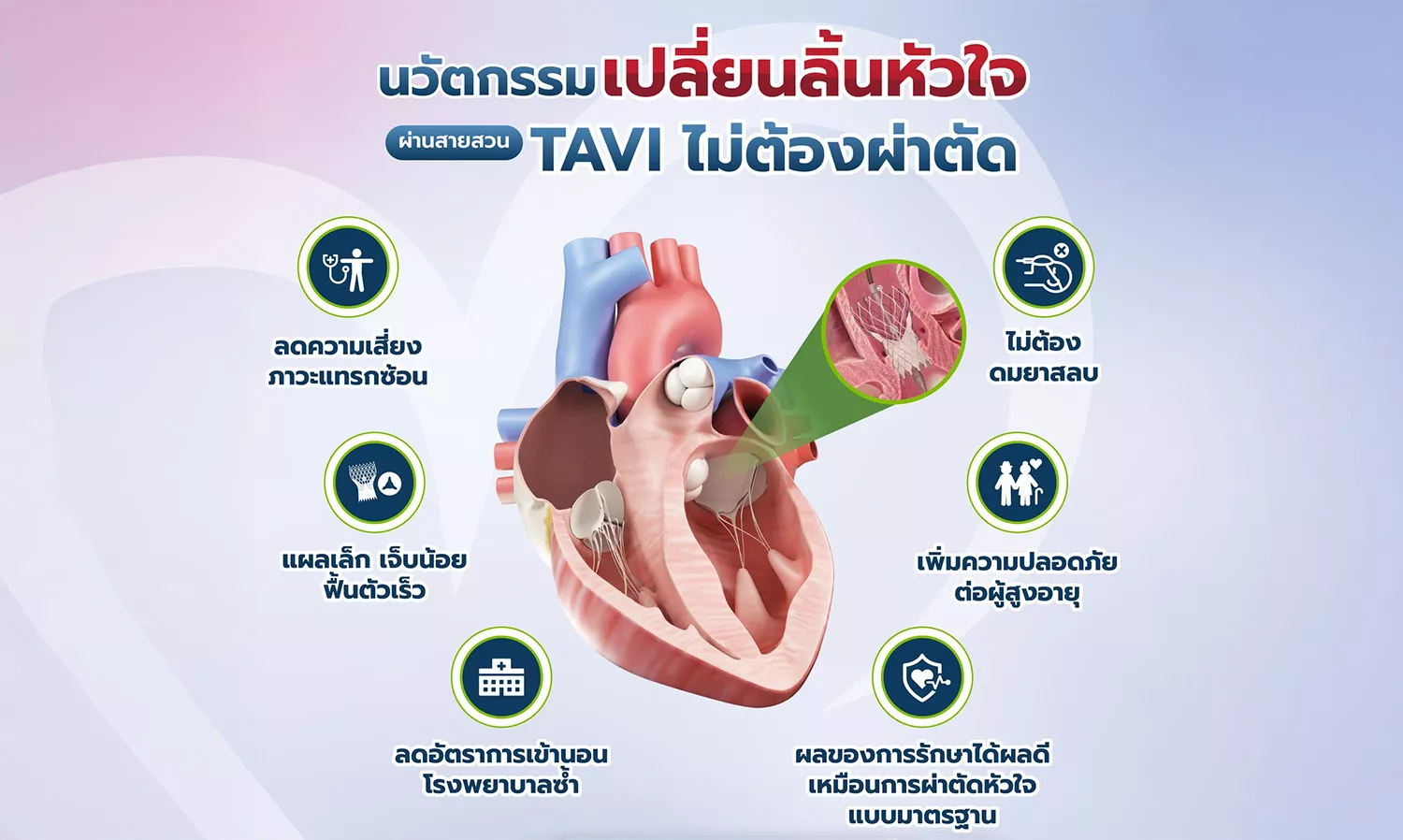
Easily Fatigued and Uncomfortable Lying Flat? You May Be at Risk for 'Valvular Heart Disease'. Doctors at Vimut Hospital Highlight 'TAVI' as a New Non-Surgical Heart Valve Repair Option
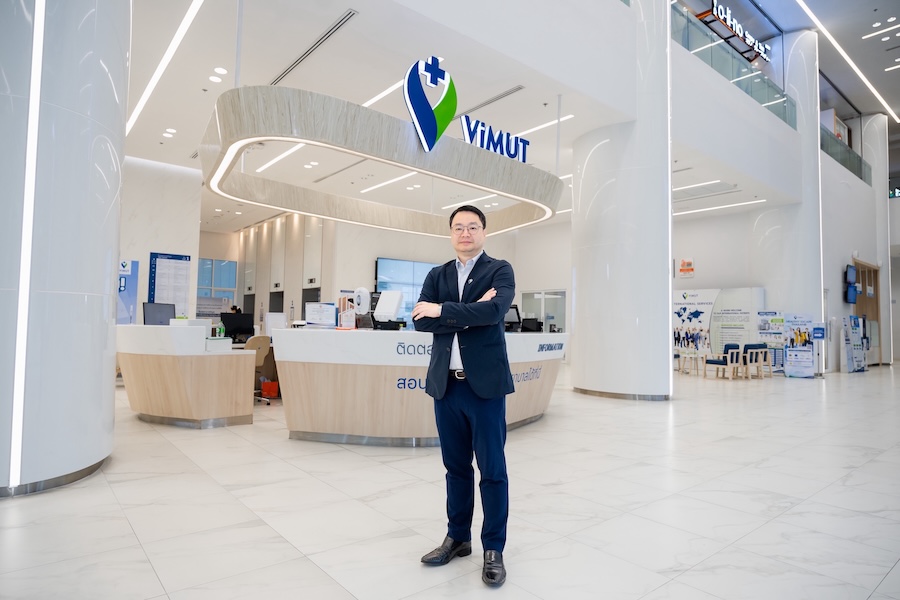
Many people may not realize that unusual fatigue or discomfort when lying flat can be warning signs of 'Valvular Heart Disease', a silent threat that is gradually damaging the heart. By the time one becomes aware, the condition may have already progressed to a severe stage, potentially requiring risky open-heart surgery with a long recovery period, which can cause significant anxiety for patients. However, there is now a new treatment option available using Transcatheter Aortic Valve Implantation (TAVI), a technology that does not require open-heart surgery, reducing risks and allowing for quicker recovery. This is an alternative for patients in severe conditions. Nonetheless, early prevention of the disease is also crucial. Today, Dr. Suwanit Triamchanchuchai, Director of Vimut Hospital and a specialist in cardiology at the Heart and Vascular Center, will share simple self-observation methods to recognize this disease early, along with self-care guidelines to reduce risks and current heart valve treatment technologies that instill confidence in patients.
"Valvular Heart Disease" is a Silent Threat That Becomes More Dangerous If Left Untreated
Valvular Heart Disease (Valvular Heart Disease) is a disorder affecting the heart valves, which can be categorized into two simple types: leaky valves and stenotic valves. Normally, humans have four heart valves that open and close to control blood flow. When the valves malfunction, it can cause blood to flow backward or not flow properly, leading the heart to work harder. The concerning aspect is that this condition often develops slowly, allowing the body to compensate, making it difficult to notice early signs. By the time one becomes aware, the disease may have already progressed to a severe stage.

"Valvular Heart Disease" Does Not Discriminate by Age; Anyone Can Be at Risk
Many may think that valvular heart disease only occurs in the elderly, but in reality, it can affect individuals of all ages. In young children, valve abnormalities may be present from birth or may result from severe infections that damage the heart valves. In adults and the elderly, the primary cause often stems from age-related degeneration of the heart valves, leading to leaks or calcium and fat deposits that harden the valves, causing stenosis. Additionally, individuals with chronic conditions such as hypertension, diabetes, and high cholesterol levels are also at increased risk for valvular heart disease.
Unusual Fatigue is Not a Minor Issue; It is a Warning Sign of “Valvular Heart Disease”
Dr. Suwanit Triamchanchuchai points out this silent threat, stating, "The initial symptoms of valvular heart disease include unexplained fatigue or weakness, which many may dismiss as trivial. However, if left untreated, symptoms may worsen, such as discomfort when lying flat or swollen legs. More dangerously, complications may arise, including heart enlargement, pulmonary edema, arrhythmias, or risks of stroke and paralysis. Therefore, if you start feeling fatigued during regular activities, do not hesitate to get screened by a doctor for timely treatment."
Age 35+: Check Your Heart Without Waiting for Symptoms
Upon reaching the age of 35, even if you appear healthy on the outside, your internal health may begin to decline. Doctors recommend regular heart health check-ups without waiting for symptoms. At the Heart and Vascular Center of Vimut Hospital, our specialized medical team has a diagnostic approach for valvular heart disease consisting of four main steps for accuracy, starting with a chest X-ray to assess heart size, followed by electrocardiogram (ECG) to check heart rhythm and electrical activity, and then echocardiogram and Exercise Stress Test (EST) to thoroughly evaluate heart function. Early detection not only helps reduce the severity of the disease but also allows for more effective personalized treatment planning.
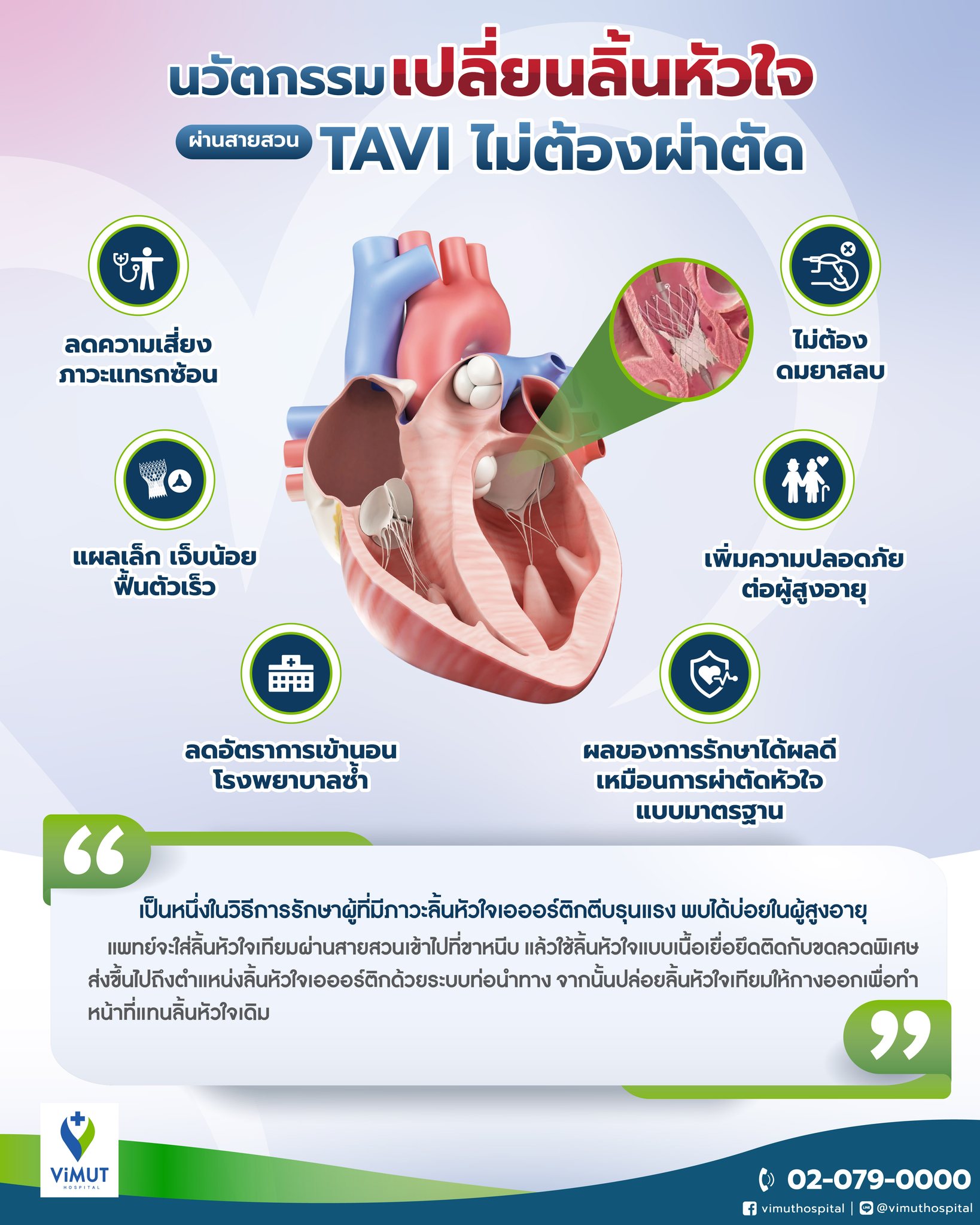
Transcatheter Aortic Valve Implantation (TAVI) is a procedure to replace the aortic valve via catheter without surgery, offering high safety, with patients able to return home in 2 days.
Treatment for patients with non-severe valvular heart disease focuses on symptom management, such as prescribing medications to control heart rhythm, cholesterol-lowering drugs, or antihypertensives, along with managing chronic conditions. Dr. Suwanit Triamchanchuchai explains, "In cases of severe valvular heart disease, doctors may consider surgical valve replacement, which traditionally required open-heart surgery, a major operation that necessitates stopping the heart and a recovery period of about 2 weeks. However, with the advent of TAVI, a new treatment innovation that allows for the insertion of a prosthetic valve via catheter, there is no need for open-heart surgery or stopping the heart, significantly reducing the risks associated with major surgery. The procedure involves smaller incisions, and recovery takes only 1-2 days, allowing patients to return to their normal lives."
“We can build a protective barrier against valvular heart disease starting today. Begin with heart health check-ups at age 35 and, if results are normal, consider rechecking every 5 years. Alongside this, maintain a balanced lifestyle: eat well, manage a healthy weight, exercise regularly, and avoid alcohol and smoking. However, if you have chronic conditions such as hypertension, diabetes, or high cholesterol, strive to keep them within normal ranges. It is crucial not to overlook minor warning signs like ‘unusual fatigue’ and to consult a doctor promptly, as early detection can lead to more effective treatment,” Dr. Suwanit Triamchanchuchai concluded.
Those interested in consulting with doctors at Vimut Hospital can inquire for more information and schedule appointments at the Heart and Vascular Center on the 6th floor of Vimut Hospital, open daily from 08:00–17:00. Call 02-079-0042. Additionally, you can download the ViMUT Application to make appointments in advance or use the online consultation service (Telemedicine) via Line @vimuttelemed or the ViMUT Application to receive preliminary advice from specialized doctors conveniently, as well as to follow up on treatment results continuously without the need to travel, reflecting Vimut Hospital's commitment to “understanding every complexity for precise treatment.”