
Kasikorn Research Center Predicts 34.1 Million Foreign Tourists to Thailand in 2026, Up 4% - Urges Adaptation to New Balance and Increased Spending per Trip through Strengths like MICE and Medical & Wellness
The Kasikorn Research Center indicates that the Thai tourism situation has reached a turning point, as the return of foreign tourists to pre-COVID levels is becoming increasingly difficult. Without action, the economic momentum is likely to weaken amid fierce competition in the international tourism market. It is expected that in 2026, the number of foreign tourists visiting Thailand will reach 34.1 million, an increase of 4%. However, the average spending per trip remains low. The Thai tourism sector needs to adapt to a new balance, focusing on encouraging tourists to increase their spending per trip through Thailand's unique tourism products, including MICE (Meetings, Incentives, Conferences, and Exhibitions) and Medical & Wellness services.
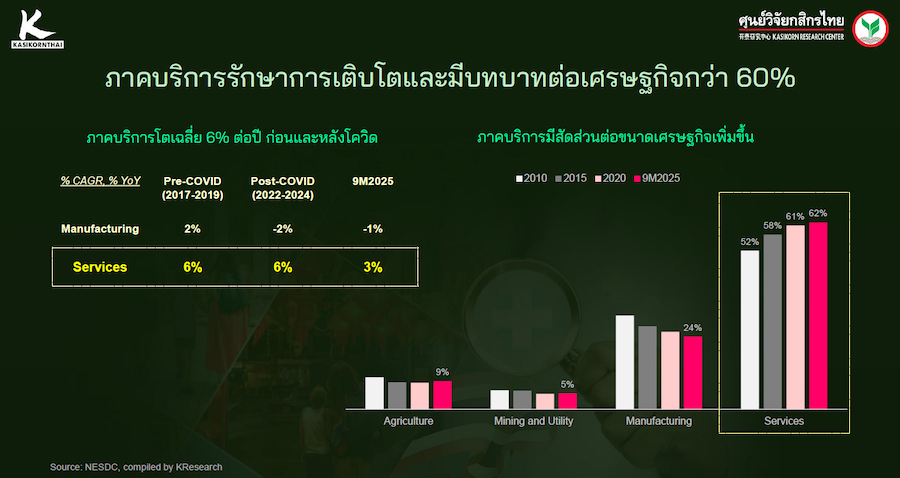
Ms. Kewalin Wangpichyasuk, Deputy Managing Director of Kasikorn Research Center Co., Ltd. discussed the tourism trends in Thailand, highlighting four observations: 1. The gap between income from foreign tourists in Thailand and expenses of Thais traveling abroad is narrowing almost by half. 2. The signs of losing competitiveness are becoming clearer. 3. The European and Indian tourist markets have not fully compensated for the loss of tourists from China and ASEAN. 4. There is still much work to be done in distributing tourist density from major tourist cities to secondary cities.
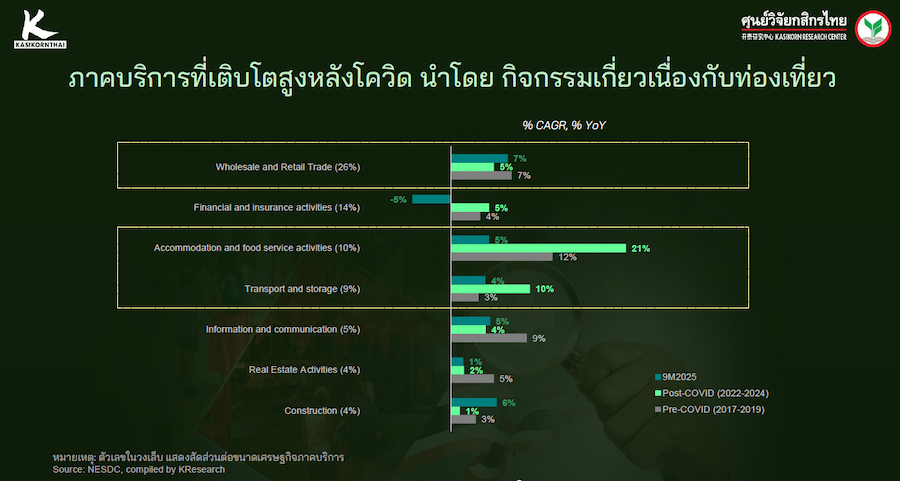
Ms. Warithorn Sirisattayawong, Research Executive at Kasikorn Research Center Co., Ltd. stated that in 2026, the foreign tourist market in Thailand is expected to recover with the return of Chinese tourists, projecting a total of 34.1 million visitors, a 4% growth from a 7% decline in 2025. Although the numbers are increasing, they still fall short of potential, affecting the recovery of tourism revenue and the average spending per trip, which remains lower than pre-COVID levels. As increasing numbers becomes challenging, revenue growth will require new tourism products with higher trip costs, such as targeting the entertainment sector, organizing MICE events like concerts featuring world-class artists, hosting global sports competitions, attracting world-class amusement parks to invest in Thailand, and tapping into the health and medical tourism market. While this is not easy, effective marketing could lead to an increase in tourists in the future.

Ms. Wannawisa Sriratana, Research Executive at Kasikorn Research Center Co., Ltd. mentioned that the Medical & Wellness sector, while a tool to boost tourism revenue, still faces challenges, particularly with the declining number of primary patients, increased competition, and existing structural issues. It is anticipated that in 2026, the number of foreign patients and revenue will grow slowly at 0.4% and 3.7%, respectively. To increase tourism revenue, Thailand must focus on specialized medical services that require longer treatment and recovery times, as well as expand services into preventive health care and wellness that align with global trends, such as longevity and the rising incidence of non-communicable diseases (NCDs).
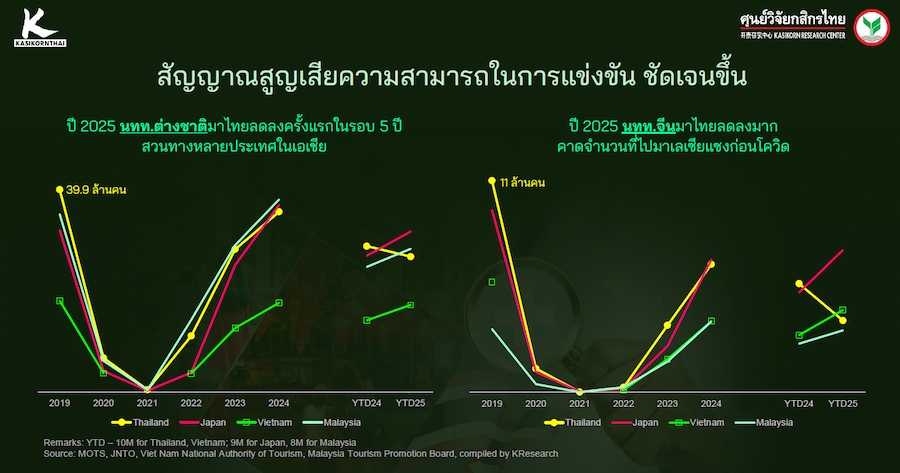
In summary, the Kasikorn Research Center has four proposals to advance Thai tourism: 1. Restore confidence, especially among Chinese tourists, whose proportion has halved from pre-COVID levels to about 14%. 2. Focus on increasing spending per trip through Thailand's unique tourism products by setting clear goals and enhancing the ecosystem. 3. Encourage Thais to travel domestically. 4. Promote secondary tourist cities with local identities, such as Geographical Indications.