Tips for Choosing a Second-Hand Home Wisely
Amidst the ongoing economic challenges from both domestic and international factors, consumers are tightening their belts and planning their finances carefully. The real estate market, which involves high-value assets, remains a crucial factor in daily life. Although the market is not experiencing explosive growth, there is still a genuine demand from buyers who need homes at this time. This has made second-hand houses and condominiums an attractive option for those seeking affordable housing solutions.
According to data from the “Analysis of the Second-Hand Housing Market Nationwide, Q2 2023” by the Real Estate Information Center (REIC) of the Government Housing Bank, there are 189,382 second-hand housing units listed for sale, which is a 34.6% increase, with a total value of 758,502 million baht, up 5.6% compared to the same period last year (YoY). The most commonly listed second-hand homes across the country are priced at no more than 1 million baht, accounting for 28.6%, followed by those priced between 1.01 - 1.50 million baht at 15.6%, and those priced between 2.01 - 3 million baht at 15%.
Most of the transferred ownership units for second-hand housing are priced at no more than 1 million baht, making up 35.1%, followed by those priced between 2.01 - 3 million baht at 18.2%, and those between 1.01 - 1.50 million baht at 17%. This reflects that most consumers are still looking for housing within an accessible price range, supported by measures to reduce property transfer registration fees (from the usual 2%) and mortgage registration fees due to simultaneous property transfer registration (from the usual 1%) to just 0.01% for properties priced under 7 million baht, which also applies to second-hand housing transactions, helping consumers own homes more affordably.
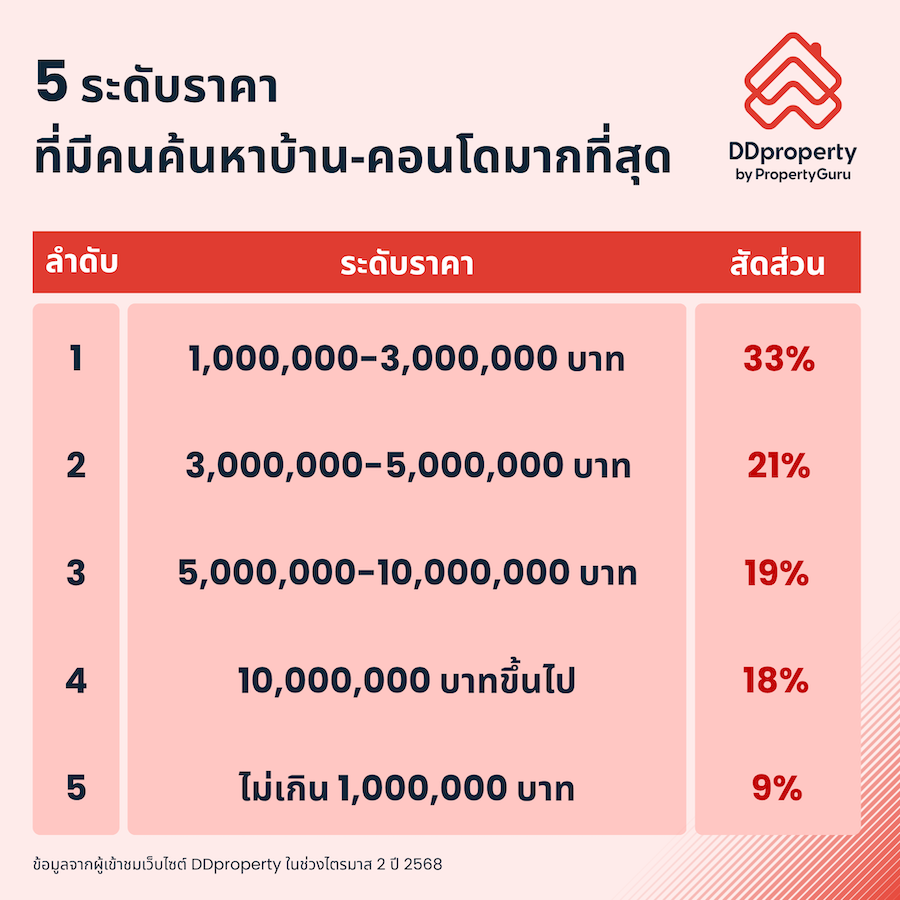
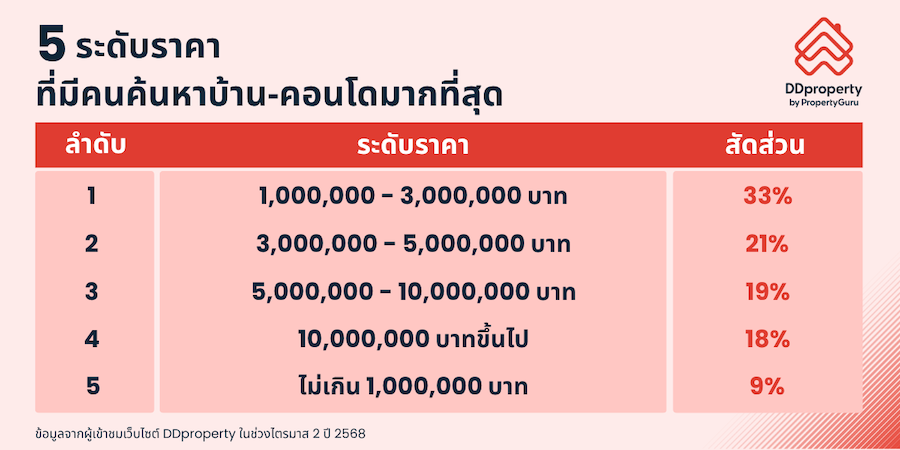
Data from website visitors to DDproperty during Q2 2023 shows that there is a high demand for housing, whether single houses, townhomes, or condominiums, in the price range of 1-3 million baht, accounting for as much as 33%.
Highlighting the Advantages of Second-Hand Homes/Condos as a Value-Driven Choice
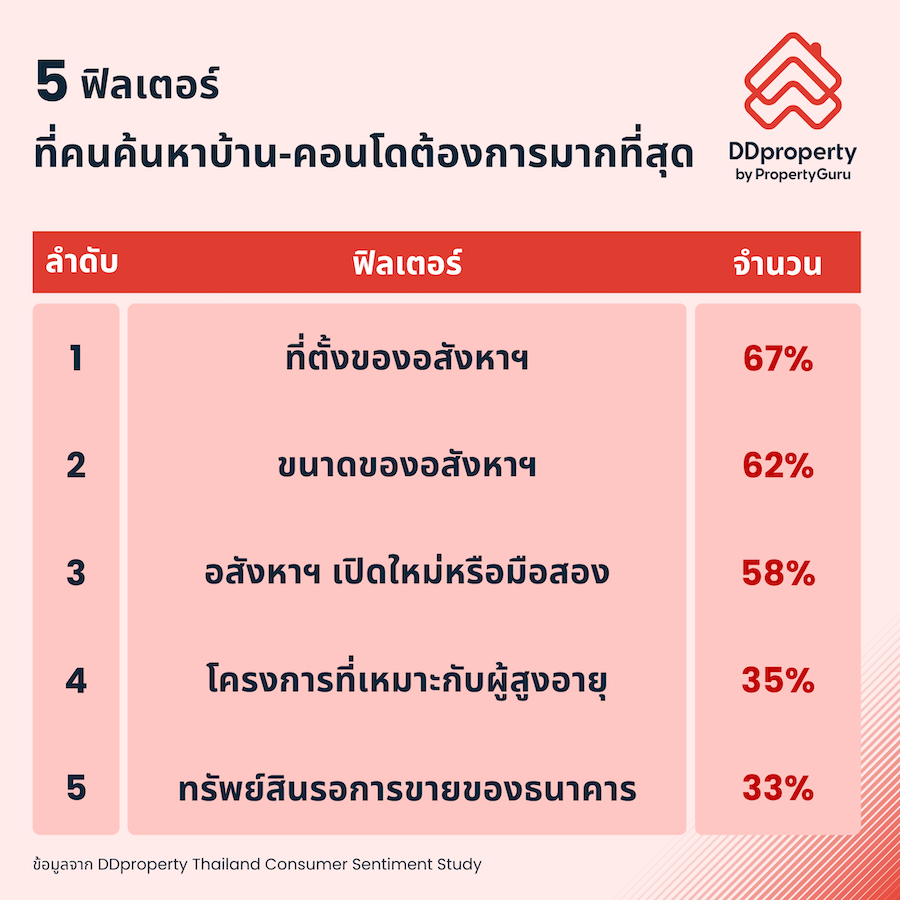
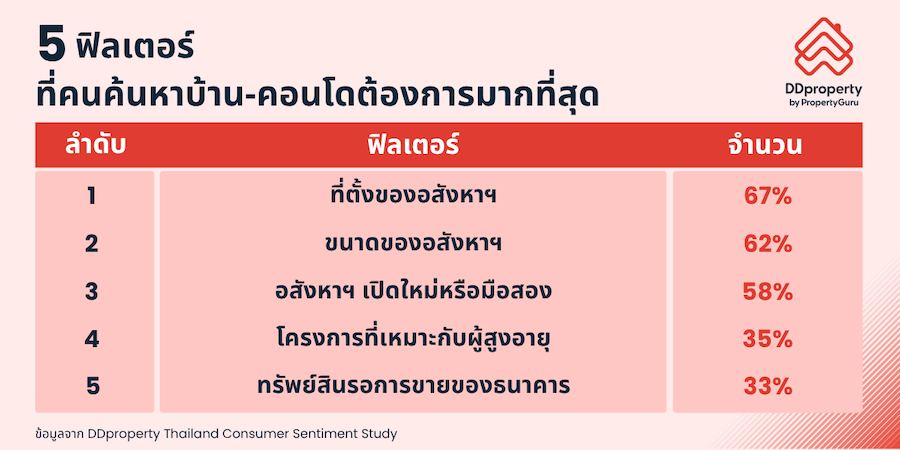
According to consumer sentiment surveys regarding the housing market conducted by DDproperty, Thailand's number one real estate platform, nearly 3 out of 5 respondents (58%) believe that filters for searching new and second-hand homes are essential when looking for housing online. Meanwhile, 1 in 3 respondents (33%) expressed a desire for filters to help find bank-owned properties (Non-Performing Assets or NPA), reflecting consumer interest in second-hand homes/condos, as well as investors looking to renovate for profit. Therefore, second-hand homes/condos have become an appealing option for those prioritizing quality alongside value.
DDproperty highlights key advantages of second-hand housing that consumers should not overlook, serving as guidelines for making informed decisions when choosing a new home that meets their needs and effectively manages their budget.
- Value for Money, More Negotiable: Amid economic challenges affecting consumer income, purchasing a second-hand home is an attractive option. Considering depreciation, second-hand homes are often priced lower than newly launched projects, allowing consumers to choose homes that fit their budget. Additionally, buying a second-hand home or condo offers more flexibility as buyers can negotiate directly with sellers, who may include appliances and furniture, leading to satisfactory pricing for those on a tight budget.
- Opportunity to Own in Rare Locations: Most consumers prioritize living in developed areas with complete public utilities, close to public transport, and surrounded by amenities. This results in high demand for housing in prime locations. Coupled with continuously rising land prices, especially in Bangkok, construction costs have also increased. Therefore, new projects in these areas are limited, making second-hand housing an appealing option for those wanting to own homes/condos in developed areas where new projects are hard to find.
- See the Actual Environment Before Moving In: When visiting second-hand homes/condos, buyers can assess the quality of construction, decoration, and structural integrity to determine if the price is justified. It's also a good opportunity to see the actual environment of the project, security systems, and common areas, as well as meet nearby neighbors. Buyers should visit during peak hours to observe traffic conditions in the area before making a decision and comparing with other projects.
- Older Construction Systems Convenient for Renovation: Current housing projects often use new construction systems, such as precast concrete, while second-hand homes built long ago typically use older construction methods, like brickwork. The advantage of brick-and-plaster structures is that they are easier to modify, allowing for renovations without affecting the main structure, suitable for those planning to renovate their homes in their preferred style or expand living space in the future.
- Renovating Increases Investment Opportunities: Second-hand housing projects that are renovated to look new and modern can increase their value and create opportunities for resale or rental. With the affordability of second-hand homes and their locations in high-demand areas, there is significant interest from real demand buyers, making it an attractive strategy for investors to purchase second-hand homes for renovation, as it offers the potential for quick returns on investment and lower holding costs compared to new projects.
5 Techniques to Boost Confidence: Verify Before Buying Second-Hand Housing
While second-hand housing perfectly meets the needs of value-seeking buyers, the purchasing process differs significantly from buying new projects. Therefore, consumers should understand all aspects thoroughly. DDproperty recommends 5 techniques to boost confidence when purchasing second-hand housing, ensuring consumers are prepared for all essential points, leading to a confident and smooth homeownership journey.
- Inquire About Property History and Reasons for Sale: Consumers should ask the original owner or real estate agent about the reasons for selling to inform their decision and assess potential hidden risks, such as selling due to debt, issues with neighbors, or family inheritance disputes. Additionally, they should inquire about living conditions from nearby neighbors and search online for any past negative history or environmental issues affecting the property, such as flood risks, high PM 2.5 dust levels, or proximity to industrial areas that could pose risks.
- Thoroughly Check the Condition of the Home Before Deciding: Second-hand homes/condos may have deteriorated over time. Consumers should personally inspect the structure and systems, such as electrical and plumbing, to ensure they are functioning well, as there may be issues the previous owner did not disclose to avoid price reductions. For example, settling ground around the house, cracks in beams, or matching cracks on both sides of walls may indicate structural problems. If such issues are found, buyers should hire experts or engineers to assess repair costs. Additionally, buyers should schedule visits at different times to observe details, such as afternoon sunlight affecting living conditions or leaks during rainy days, before negotiating with the seller about repairs or price reductions.
- Verify True Ownership: Before agreeing to a sale contract, buyers should thoroughly verify that the seller is the true owner according to the documents issued by the land department. This includes checking if the land title deed or condominium ownership document is genuine by observing important details on the documents or obtaining a copy of the land title deed from the land office for comparison. This is to prevent cases where sellers forge deeds to sell properties belonging to others or if the property is under legal dispute or seizure, which could lead to future issues after the sale. In cases where the sale must be agreed upon with others, such as relatives of the original owner, the seller must present a land power of attorney (Form Tor Dor 21) along with supporting documents before proceeding with the transaction.
- Inquire About Obligations with the Juristic Person: Buyers should ask the juristic person about the obligations of the property they intend to purchase in detail, including whether the previous owner has outstanding debts for common area fees or other expenses with the juristic person, to avoid inheriting these debts later. The seller should clear these obligations and obtain a “debt clearance certificate” from the juristic person to present during the ownership transfer at the land office. Additionally, buyers should inquire whether the project has any encumbrances, such as shared access with outsiders, which would require the project to bear maintenance costs for the road, as it is not a public road under government care, potentially leading to future disputes. If the project is located in an expropriation area, buyers should clarify with the juristic person whether any part of the project is at risk of expropriation.
- Clearly Define Contract Details: Once a suitable property is selected, buyers should schedule a sale agreement with the seller to prevent the property from being sold to someone else. The agreement must clearly outline various details, especially the agreed sale price, deposit amount, payment timeline, and the date of ownership transfer. The seller will then provide a copy of the land title deed or condominium ownership document to the buyer for loan application purposes. However, both buyers and sellers should agree on who will bear the costs on the transfer day, whether they will share the expenses, or if the seller will cover any additional promotional costs, which must also be clearly specified in the contract.
Buyers of second-hand housing must keep all important documents intact to confirm ownership rights and serve as legal evidence, including:
- Legal documents, including the sale agreement and land sale contract (Form Tor Dor 13)
- Copies of ID cards and house registration of both buyer and seller
- Consent documents from spouses (in case of marriage)
- Power of attorney documents if the buyer or seller authorizes someone else to act on their behalf, which must also include copies of ID cards and house registration of the authorized person
- Copies of the land title deed or condominium ownership document
- Transfer documentation details
- Rights and legal documents (Form Tor Dor 1)
- Property valuation record (Form Tor Dor 86)
- Tax payment record (Form Tor Dor 16)
- Debt clearance certificate issued by the juristic person, valid for no more than 7-15 days from the date specified in the document (depending on the requirements of each juristic person)
The essence of a home is not in its newness or age, but in being a safe retreat that meets the living needs of all members. Therefore, the true value of a home is not measured by price but by the happiness it brings to its residents. This is why, each time buyers choose a new home, they must pay attention to every detail. Although the journey to homeownership may not be easy, everyone can start learning on their own. DDproperty (www.DDproperty.com) has compiled steps for purchasing both new and second-hand housing, along with informative articles on real estate, and serves as a source for buying/selling/renting properties in various locations across the country, providing guidance for those looking for their dream home with confidence.