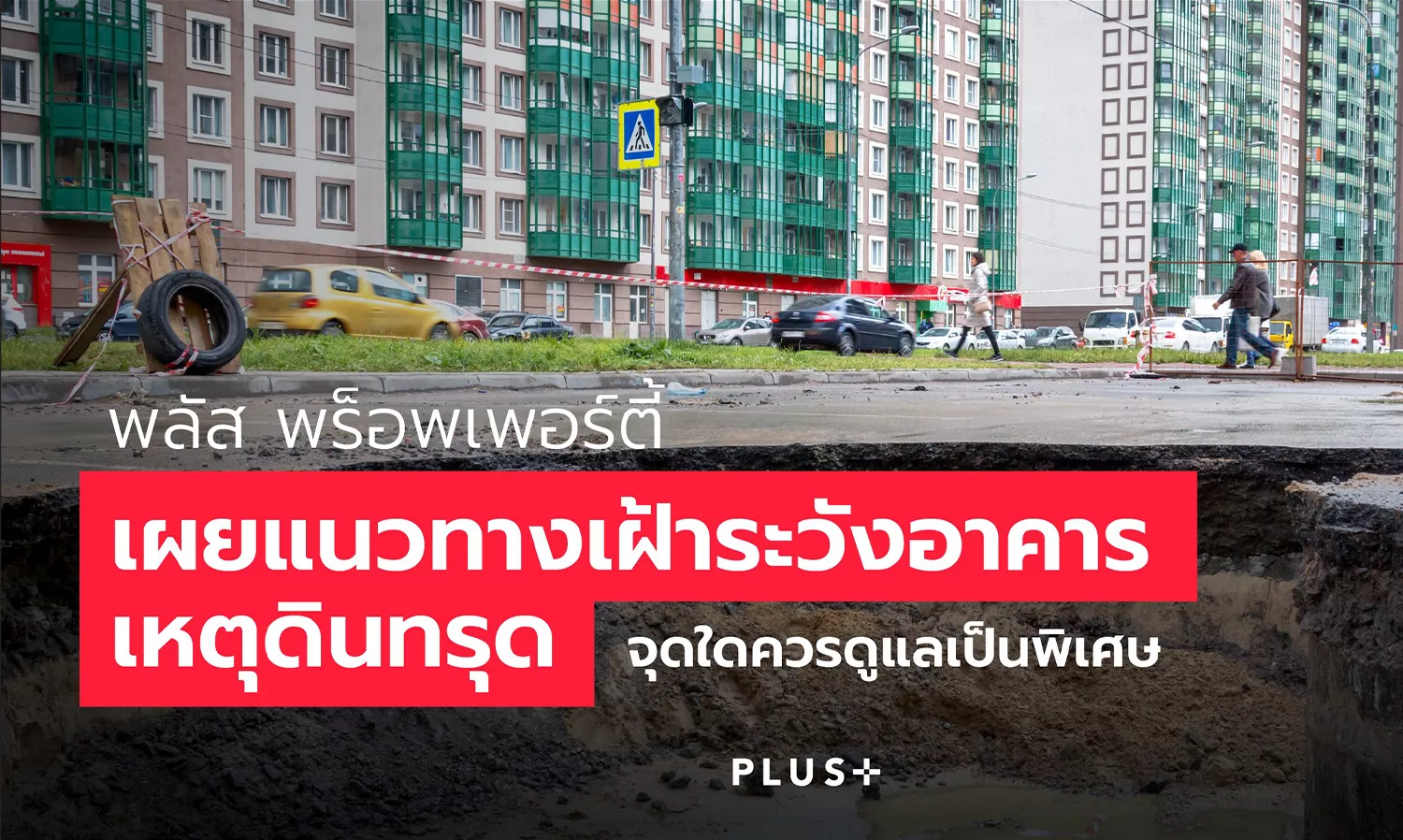
Plus Property Reveals Guidelines for Monitoring Buildings Due to Ground Subsidence: Key Areas to Watch Closely
Ground subsidence is one of the structural challenges that buildings and urban communities may face, especially in soft soil areas or densely constructed regions like Bangkok. This can impact the safety of residents and the long-term value of properties. Therefore, having a systematic monitoring approach is crucial to help mitigate risks and ensure timely preparedness.

Mr. Pakin Ekkathikom, Director of Building Resource Management at Plus Property Co., Ltd. stated that buildings that require special monitoring for subsidence include those near water sources and large construction sites. Typically, the building management team conducts regular visual inspections of the surrounding areas, which may reveal cracks or changes in the surface levels of pathways, roads, lawns, and fences that deviate from normal conditions. If these changes pose safety risks or affect the building's usability, a detailed inspection by experts, such as civil engineers, is necessary to assess the damage and find solutions.
The impacts of such subsidence can affect both pedestrians and vehicles, potentially leading to accidents. Furthermore, significant subsidence can damage utility systems that run through or are attached to the subsiding areas, such as electrical lines, water pipes, and communication systems, thereby affecting the building's functionality.
However, buildings are designed with strong structures to support weight and have foundations anchored in the ground. The surrounding areas, such as roads or sidewalks, are often separate from the building's structure and consist of slabs on compacted soil, making them more susceptible to subsidence, especially for buildings near deep excavation sites or water sources. Therefore, special monitoring is essential. If soil erosion prevention measures are inadequate, it can lead to soil flow or subsidence, creating voids that can damage the building or adjacent areas.
Thus, for buildings near water sources or large construction sites, it is advisable to increase the frequency of inspections. If abnormalities are detected, it is crucial to consult structural experts, such as civil engineers, to investigate and find preventive measures to avoid severe damage to the building.
Additionally, it is recommended to discuss with nearby construction projects to understand their preventive measures regarding the aforementioned issues, including environmental concerns such as dust, noise from construction, and responsibilities for preventing damage that may impact the buildings we manage.
Although ground subsidence can sometimes occur due to natural phenomena and cannot be completely controlled, continuous monitoring, integrating technical inspections and risk management, will help reduce the likelihood of severe incidents, enhance user confidence, and ensure that buildings remain safe and ready for use at all times.